This page contains affiliate links. If you purchase through them we may earn a small commission at no extra cost to you. Learn more
Using Equity Release to Fund Solar Panels: Is It Worth It?
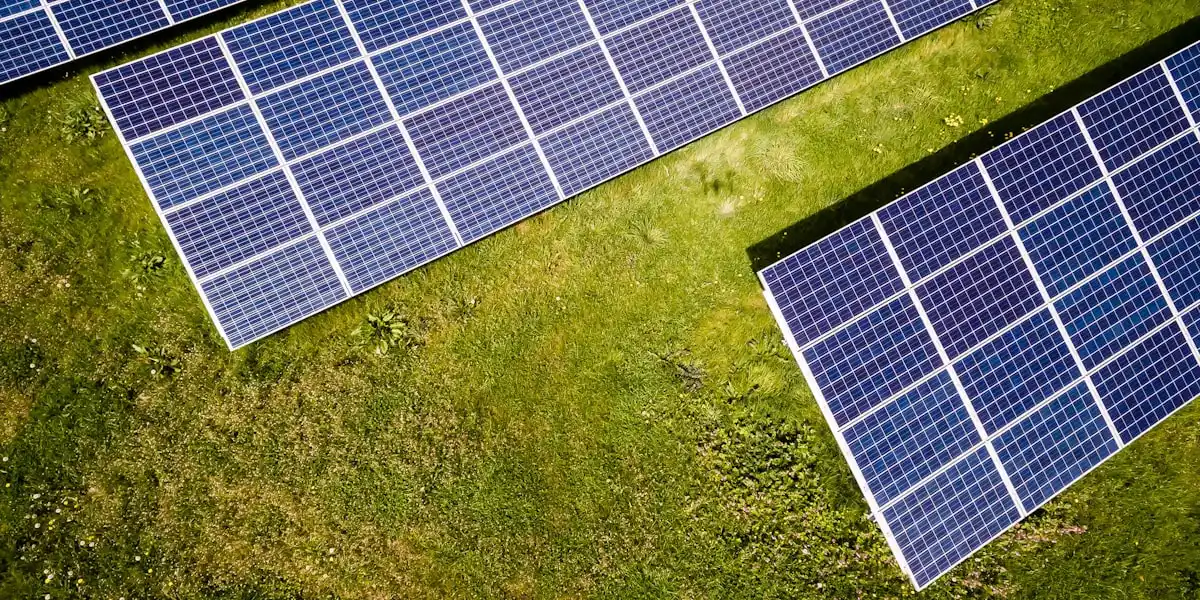
Equity release is one of those options that comes up when retired homeowners want to reduce energy bills but can't easily access traditional lending. It can work — but the numbers are tight, and the risks are real. This article walks through the maths, the alternatives, and what to check before going down this route.
This article is for information only and does not constitute financial advice. Equity release is a lifetime mortgage or home reversion plan. To understand the features and risks, ask for a personalised illustration.
What Is Equity Release?
Equity release is a financial product available to homeowners aged 55 and over in the UK. It allows you to unlock money tied up in your property without selling your home or making monthly repayments.
There are two main types:
Lifetime mortgage — the most common type. You borrow a lump sum (or draw money down over time) against your home's value. Interest is charged each year, but rather than making payments, the interest rolls up and is added to the loan. The total — original loan plus accumulated interest — is repaid when you die or move into long-term care, usually from the sale of the property.
Home reversion plan — you sell a share (or all) of your home to a reversion company in exchange for a lump sum or regular payments, while retaining the right to live there rent-free. These are less common and have different risk characteristics.
For the purposes of solar financing, the relevant product is almost always the lifetime mortgage, since you are borrowing a specific amount for a specific purpose.
Why Retired Homeowners Consider It for Solar
The situation is familiar: you own your home outright or with substantial equity, you are on a fixed income (pension, benefits, savings), your energy bills feel unmanageable, and you have read that solar can cut those bills significantly. But you cannot easily get a personal loan because your income is too low for standard lender criteria, or you simply do not want to commit to monthly repayments.
Equity release removes the monthly payment problem. You access the capital, pay for the solar installation, and leave the loan to be settled from your estate eventually.
That logic is understandable. But before going further, it is worth stress-testing the numbers.
The Maths: Does It Stack Up?
Equity release interest rates — called the Monthly Equivalent Rate (MER), which compounds annually — typically run between 5% and 7% as of early 2026. A rate of around 6% MER is a reasonable midpoint to use for illustration.
A typical 4 kWp solar system costs £5,000–£7,000 installed (see solar panel costs). Adding a 5 kWh battery brings that to £8,000–£11,500. For this example, assume you borrow £7,000 for solar panels alone.
Compound interest erodes the financial benefit quickly
Unlike a personal loan with monthly repayments, equity release rolls all the interest up into the loan balance. That means you are paying interest on interest every year — and the total grows faster than you might expect.
At 6% MER, here is how a £7,000 loan grows:
- After 5 years: ~£9,370
- After 10 years: ~£12,540
- After 12 years: ~£14,100 (roughly double the original loan)
- After 15 years: ~£16,790
- After 20 years: ~£22,450
This is not a fixed repayment — the longer you live in the property, the larger the amount repaid from your estate.
Now compare that to what the solar system actually saves. A well-performing 4 kWp system in an average UK location might generate around 3,400 kWh per year. At a self-consumption rate of 50% (the rest exported), and using the April 2026 flat tariff of 24p/kWh plus a basic SEG export rate of around 4p/kWh for the exported portion:
- Bill saving: 1,700 kWh × 24p = £408/year
- SEG income: 1,700 kWh × 4p = £68/year
- Total annual benefit: ~£476/year
Over 15 years (assuming flat energy prices, which historically have not been flat): ~£7,140 total
If you have added battery storage and genuinely achieve 70–80% self-consumption, that figure improves to perhaps £700–900/year, or £10,500–13,500 over 15 years.
Against an equity release repayment of ~£16,800 at the 15-year mark, even an optimistic solar saving scenario results in a net financial loss from the equity release route alone. The numbers only begin to look more favourable if energy prices rise significantly — which they may, but is not guaranteed.
When Equity Release Might Still Make Sense
Despite the maths being tight, there are circumstances where it could be a legitimate option to explore:
- You have no other borrowing options — you do not qualify for grants, you have no savings, and no family or community route exists
- You plan to stay in the property long-term — the sooner the estate is settled, the less compound interest accrues; the longer you live there, the more it accumulates
- Property value growth significantly outpaces the interest rate — UK house prices have historically grown, which means equity release debt may represent a shrinking share of total property value over time
- Your primary goal is comfort and bill reduction, not financial return — for some people, lower energy bills and greater warmth have non-financial value that is worth the cost
- You are combining it with other improvements — if you are using equity release for a broader retrofit (insulation, heat pump, solar together), the economics of the combined spend may look different
Even in these cases, getting independent financial advice first is essential — not optional.
When Equity Release Is Unlikely to Make Financial Sense
It is worth being direct about the scenarios where equity release for solar is difficult to justify on financial grounds:
- You qualify for a grant — Warm Homes Discount, ECO4, Home Upgrade Grant, or devolved schemes (Nest in Wales, Warmer Homes in Scotland) could cover solar at zero or reduced cost. Always check eligibility before considering any borrowing. See the solar grants guide.
- A family member could help — an informal family loan, even at a modest interest rate, is almost always cheaper than equity release and does not erode your estate in the same way
- You have savings earning less than the equity release rate — if your savings are in a standard account earning 3–4%, using them for solar is more cost-effective than borrowing at 6% and letting the compound interest accumulate
- You are likely to move within five to ten years — equity release triggers repayment when you move into long-term care or die, but some lifetime mortgages also impose early repayment charges if you choose to move. Factor this in.
Alternatives to Explore First
Before considering equity release, it is worth working through this list:
1. Grants — check your eligibility The Warm Homes Plan (successor to ECO4) is the primary UK-wide route for households on lower incomes or with poor EPC ratings. Devolved nations have their own programmes. Local authorities sometimes run additional schemes. This should always be your first step.
2. Green loans and eco mortgages A number of UK banks and building societies now offer green personal loans at 5–8% APR specifically for energy improvements. Unlike equity release, these are fixed-term with monthly repayments, so the total cost is predictable and usually lower. They require a regular income to service.
3. Drawdown lifetime mortgages If you do proceed with equity release, a drawdown facility — where you only release money as you need it, rather than a lump sum — reduces the amount on which interest accrues. A smaller initial drawdown for a solar installation limits the compound interest problem compared to releasing a large lump sum.
4. Community energy schemes Some community energy organisations offer installs or investment routes for local residents. These vary significantly by area.
5. Salary sacrifice (if still working) If you are still employed in any capacity, salary sacrifice for solar-related equipment (typically EV chargers) exists — though solar panels themselves are not currently a standard salary sacrifice benefit.
Check your EPC before making any decision
Your current EPC rating matters twice here: it determines whether you qualify for certain grants, and it affects whether solar is likely to make a meaningful improvement. An EPC assessment — typically around £60–120 — is a sensible first step before committing to any financing route.
The EPC Benefit: A Partial Offset
Solar panels typically improve a property's EPC rating by one or two bands. This matters for equity release in two indirect ways:
First, a higher EPC rating is increasingly relevant to property value — with buyers and mortgage lenders paying more attention to energy efficiency. If your property's value rises partly as a result of the solar installation, this partially offsets the equity release debt growing in the background.
Second, some lenders — including certain equity release providers — offer slightly more favourable terms for energy-efficient properties. This is an evolving area and worth discussing with an adviser.
Neither of these effects is guaranteed to outweigh the compound interest cost. They are factors to weigh, not a justification to proceed on their own.
If You Decide to Proceed: Practical Steps
If you have worked through the alternatives and equity release remains the most viable route, these are the steps worth taking:
1. Get qualified independent advice You must use an adviser with a specific equity release qualification (typically the CeRER — Certificate in Regulated Equity Release). Your standard IFA may not hold this. The Equity Release Council maintains a directory of members.
2. Look for Equity Release Council membership Providers who are members of the Equity Release Council must offer a no-negative-equity guarantee (you will never owe more than the value of your home) and the right to remain in your property for life. These are important protections.
3. Consider a drawdown facility Rather than releasing a single lump sum, a drawdown lifetime mortgage lets you access funds in stages. For a solar installation, you might release only what you need, then leave the remainder undrawn — reducing the amount on which interest accumulates.
4. Get a personalised illustration By law, any equity release provider must give you a personalised illustration showing the projected loan balance at various future points. Review this carefully alongside your solar savings projections.
5. Involve your family if appropriate Equity release affects your estate. If you have children or other beneficiaries, involving them in the conversation early avoids surprises later.
For detailed guidance on equity release products and how they interact with property modifications, see Unmortgageable.
Early repayment charges can apply
Some lifetime mortgages include early repayment charges if you choose to repay the loan before it is triggered by death or moving into care — for example, if you decide to downsize. Check the terms carefully before signing, and discuss this scenario explicitly with your adviser.
The Bottom Line
Equity release is not the right route for most people looking to fund solar. The compound interest problem means the financial returns from solar are often partially or fully absorbed by the cost of borrowing. The maths can work in specific circumstances — primarily when no other option exists, energy prices rise significantly, and you plan to stay in the property for a long time — but it requires careful calculation, not optimism.
The sensible order of operations is: check grants first, explore green loans, consider using savings, look at family options — and only then, with independent qualified advice, consider equity release if nothing else fits.
~£16,800
Projected equity release repayment on a £7,000 solar loan at 6% MER after 15 years
Compare all solar finance optionsShare this article
Order your Energy Performance Certificate online — see how solar improves your home's energy rating. Required before selling or renting. All assessors are fully accredited.
Affiliate link — we may earn a small commission at no extra cost to you
Stay informed
Get free solar updates direct to your inbox
Related reading

How to Pay for Solar in the UK: Finance Options Compared
Every way to finance solar in the UK compared — cash, loans, green finance, leases, rent-a-roof, and what to avoid. Includes grants-first checklist.

How Much Do Solar Panels Cost in the UK in 2026?
UK solar panel costs 2026: realistic prices by system size, what is included, and what to push back on in your quote.

Solar Panel Grants and Funding UK 2026
A plain-English guide to every solar grant, scheme, and funding route available in the UK in 2026 — including ECO4, GBIS, HUG2, BUS, and devolved schemes.


Switch to Octopus Energy
Get 50 credit when you switch. We get 50 too — win-win.
What does this mean for YOUR home?
Design your perfect solar setup in under 3 minutes. Free, no sign-up required.
Build Your Solar System