This page contains affiliate links. If you purchase through them we may earn a small commission at no extra cost to you. Learn more
Solar Panel Carbon Footprint: Manufacturing, Payback, and Lifetime Savings
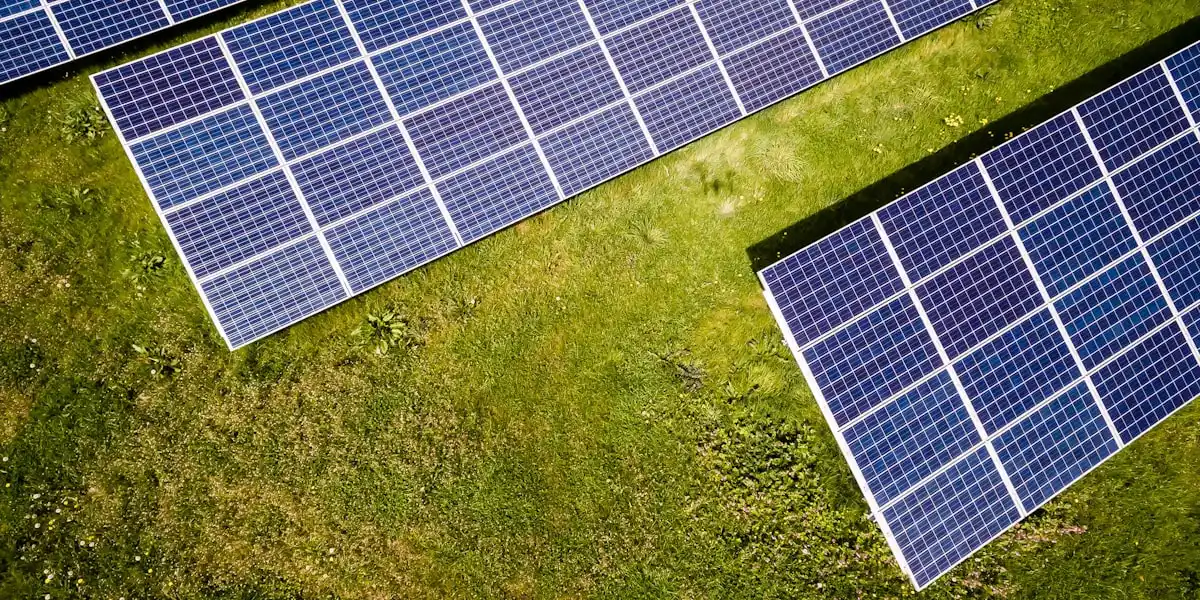
Do solar panels actually have a carbon footprint?
Yes — and it is worth understanding what that means before drawing conclusions about whether solar is genuinely clean.
Every solar panel requires energy to manufacture: mining silicon, refining it into wafers, assembling cells, and fabricating the aluminium frame and glass cover. That energy comes largely from the global industrial grid, which in the case of Chinese manufacturing (where the majority of panels are made) is still heavily coal-dependent. The result is a measurable quantity of CO₂ that is embedded in the panel before it ever generates a watt.
This is sometimes called the embodied carbon or carbon cost of the panel. It is real, and honest discussion of solar's environmental credentials has to account for it.
The key question is not whether that carbon exists, but how quickly the panel offsets it through clean generation — and what the net position looks like over its full lifespan.
The manufacturing carbon cost
Estimating the embodied carbon of a solar panel requires lifecycle analysis — a detailed accounting of every stage from raw material extraction through to delivery. Studies vary depending on manufacturing location, panel technology, and methodology, but figures for a standard monocrystalline silicon panel cluster in the range of 400–600 kg CO₂ per kilowatt-peak (kWp) of installed capacity.
For a typical UK home installation:
The inverter, mounting rails, cables, and installation logistics add a further 10–20% on top of the panel manufacturing figure. A complete 4 kWp installation might therefore carry an embodied carbon total in the range of 4,000–6,000 kg CO₂.
Country of manufacture matters
Panels made in Europe or the USA carry a lower embodied carbon than those manufactured in China, because the electricity used in production is drawn from a less carbon-intensive grid. If embodied carbon is a priority for you, it is worth asking your installer about panel origin — though European-made panels do typically cost more.
Carbon payback period
The carbon payback period is the time it takes for a panel's clean generation to offset the CO₂ produced during manufacturing — the point at which the system moves into genuine carbon credit.
The calculation depends on two figures:
- How much electricity the system generates per year — a 4 kWp system in the UK typically generates around 3,600 kWh/year (using an estimate of 900 kWh per kWp, reflecting average UK irradiation)
- The carbon intensity of the grid electricity being displaced — currently around 233g CO₂ per kWh (DESNZ 2024 figures)
Multiplying these together: 3,600 kWh × 0.233 kg CO₂/kWh = roughly 840 kg of CO₂ avoided per year.
Now divide the embodied carbon by the annual offset:
5,000 kg embodied CO₂ ÷ 840 kg/year offset = approximately 6 years
That figure is the conservative estimate at the midpoint of the embodied carbon range. If you use the lower end of the manufacturing figure (4,000 kg), payback falls to around 4.75 years.
Why some sources quote 1–3 years
You may see much shorter carbon payback estimates in industry literature. These often assume panel-only embodied carbon (excluding inverter and BOS), use generation figures for southern Europe rather than the UK, or reference older grid intensity figures. The 4–6 year range given here is a more conservative UK-specific estimate for a complete installed system.
Calculate your system's carbon offset
The calculator below uses the UK grid average of 233g CO₂/kWh and a generation estimate of 900 kWh per kWp per year — consistent with UK average irradiation. Adjust the sliders to match your intended system size and how long you plan to keep it.
Carbon offset calculator
Every kWh you generate from solar displaces grid electricity and its associated carbon emissions.
941
mature trees for a year
71k
car miles offset
79
London-Barcelona return flights
Based on the UK grid average of 233g CO₂/kWh. As the grid decarbonises, each kWh of solar will offset less carbon — but your panels generate clean electricity regardless. Includes 0.5% annual degradation.
Lifetime carbon savings
Once the carbon payback period has elapsed, every kWh generated is a net carbon saving. Over a 25-year panel lifespan, accounting for a modest 0.5% annual output degradation, a 4 kWp system generates approximately 85,000 kWh in total.
At 233g CO₂/kWh, that represents roughly 19,800 kg of CO₂ displaced — call it 20 tonnes — before subtracting the manufacturing carbon.
After accounting for an embodied carbon of 5,000 kg, the net lifetime saving is approximately 15,000 kg of CO₂ — or 15 tonnes.
To put that in perspective:
- The average UK household emits around 2.5–3 tonnes of CO₂ per year from electricity consumption alone
- 15 tonnes of net savings is equivalent to roughly 5–6 years of that household's electricity carbon emissions
- It is also equivalent to planting and nurturing around 700 mature trees for a year, or taking a petrol car off the road for about three years
The grid decarbonisation effect
There is an important nuance here that cuts both ways.
The UK grid has decarbonised dramatically over the past decade. In 2012 the average carbon intensity was around 500g CO₂/kWh. By 2024 it had fallen to 233g/kWh — less than half. As more wind, nuclear, and other renewables come online, that figure will continue to fall.
This means two things for solar:
Good news on the manufacturing side: The factories making your next panels are themselves drawing on a cleaner grid, so future panels will carry lower embodied carbon than older estimates suggest.
The displacement effect shrinks over time: As the grid gets greener, each kWh of solar displaces less carbon than it would have done in 2012. A solar panel installed in 2030 will avoid less CO₂ per kWh than one installed today, because the baseline grid electricity it displaces will itself be lower-carbon.
This does not undermine the case for solar — it simply reframes it. Even a very clean grid retains gas peaking plants that fire up during high-demand periods. Solar generation (particularly at peak afternoon demand in summer) displaces those gas plants directly. The marginal carbon intensity of the electricity solar replaces is often higher than the grid average, meaning the real displacement benefit may be better than headline figures suggest.
End-of-life recycling
A solar panel's carbon story does not end when it stops generating. Modern crystalline silicon panels are around 85–95% recyclable by mass — glass, aluminium, and copper can all be recovered and reused in new manufacturing.
The UK currently has limited dedicated solar recycling infrastructure, but European WEEE (Waste Electrical and Electronic Equipment) regulations cover panels, and the PV Cycle scheme provides a route to responsible recycling for panels from participating manufacturers.
Recovering and reusing panel materials means the embodied carbon of future panels falls slightly — because recycled silicon, glass, and aluminium require less energy to process than virgin materials. It is a small but real part of closing the lifecycle loop.
For more detail on what happens to panels at the end of their life, see the solar panel recycling guide.
The honest picture
Solar panels are not carbon-free — they carry a real manufacturing footprint, and that should be acknowledged rather than glossed over. But the numbers are clear: under UK conditions, a typical system moves into net carbon savings within five or six years, and over a 25-year lifespan it avoids substantially more CO₂ than it took to produce.
For most UK households, solar is one of the most carbon-effective investments you can make in a home — considerably more impactful per pound spent than many other green home improvements.
Share this article

Energy-saving LED lighting — make the most of your solar electricity with efficient bulbs and fixtures
Affiliate link — we may earn a small commission at no extra cost to you
Stay informed
Get free solar updates direct to your inbox
Related reading

Are Solar Panels Worth It in the UK? The Honest Answer
Are solar panels worth it in the UK in 2026? Honest assessment of costs, savings, payback, and who benefits most.
Solar Panels Pros and Cons: The Honest UK Guide
Solar panel pros and cons for UK homes. Genuine advantages, real disadvantages, and what the salespeople won't tell you.
Solar Panel Recycling in the UK: End of Life Guide
What happens to solar panels at end of life in the UK? WEEE regulations, recycling processes, where to recycle, costs, and the growing recycling industry.


Switch to Octopus Energy
Get 50 credit when you switch. We get 50 too — win-win.
What does this mean for YOUR home?
Design your perfect solar setup in under 3 minutes. Free, no sign-up required.
Build Your Solar System