This page contains affiliate links. If you purchase through them we may earn a small commission at no extra cost to you. Learn more
Free Solar Panels UK: What's the Actual Catch?

"Free solar panels" is one of the most searched terms in the UK solar market. The phrase appears in adverts, on doorsteps, and across social media. It is also one of the most misleading — because in every case, "free" means something specific, and the catch is always real.
This guide explains every type of "free solar" currently available in the UK, what each one actually offers, and what you give up in each arrangement.
Three Very Different Things Called "Free Solar"
When someone offers free solar panels, they usually mean one of three distinct things:
- Rent-a-roof / free solar lease — a company installs panels on your roof at no upfront cost and keeps ownership of the system (and most of the financial benefits)
- Power Purchase Agreement (PPA) — you pay per unit of electricity generated, at a discounted rate, rather than buying the system
- Government grants (ECO4, Warm Homes) — genuinely free for households that meet strict eligibility criteria
Understanding which type is being offered is the essential first step. Many "free solar" adverts are actually leads for the first type — rent-a-roof — or simply re-named paid finance products.
Rent-a-Roof Schemes
Rent-a-roof (also called solar lease, or free solar schemes) was the dominant model in the UK between 2010 and around 2018, when the Feed-in Tariff made it commercially viable.
How it worked (and still works where offered):
- A solar company installs panels on your roof at no upfront cost
- They keep ownership of the panels — typically for 20–25 years
- They receive all Feed-in Tariff or SEG income from the government
- You benefit from cheaper electricity — any solar electricity generated while your appliances are running reduces your grid import
What you get:
- Reduced electricity bills (roughly £150–£300/year, depending on your usage during daylight hours)
- No upfront cost
- The company handles maintenance and insurance for the system
What you give up:
- All export income (SEG payments) — worth £80–£150/year or more
- The ability to upgrade, modify, or remove the system without the company's permission
- A complication when selling your house — the lease transfers with the property, which some buyers and mortgage lenders find problematic
- Any future uplift in the system's value
- Full control of the roof — the company has a legal right to access it
The financial reality: The company installs a £6,000–£8,000 system on your roof. Over 25 years at current rates, that system might save you £3,750–£7,500 in electricity bills and earn £2,000–£3,750 in SEG payments. The company captures the SEG and may charge you for maintenance if the contract allows it. You get the electricity benefit but none of the ownership.
If you had bought the system outright, you would have all of those benefits.
Rent-a-Roof and House Sales
Rent-a-roof schemes create what is known as a "solar lease" on your property title. When you sell, the buyer's mortgage lender may object to the arrangement — particularly smaller lenders. Some buyers will reduce their offer to account for the complications. Before entering a rent-a-roof scheme, take legal advice on the lease terms and understand the exit clauses.
Are Rent-a-Roof Schemes Still Being Offered?
The rent-a-roof model became much less common after 2019, when the Feed-in Tariff closed to new applicants. Without FiT income, the economics were marginal for solar companies. The Smart Export Guarantee that replaced it pays significantly less.
Some companies still offer rent-a-roof arrangements in 2026, particularly in areas with high electricity prices or for larger roof areas. They are far less common than they were in 2015–2018, but the sales pitch has not changed — and the "free solar" language is still in use.
If you encounter a rent-a-roof offer:
- Read the full lease agreement (not just the sales brochure)
- Check how long the term is and what the exit provisions are
- Verify what happens to the system at end of term (do you get ownership, or do they remove it?)
- Take independent legal advice before signing
Solar Power Purchase Agreements (PPAs)
A Solar PPA is a financial arrangement where:
- A company installs panels on your roof at no upfront cost
- You pay for the electricity generated at a discounted rate (typically 10–20% below the standard tariff)
- The company owns the system and collects the SEG income
Example: Standard electricity costs 24p/kWh. Under a solar PPA, you might pay 18–20p/kWh for solar-generated electricity. You save 4–6p/kWh on any solar electricity you use.
What you get:
- Cheaper electricity than the grid rate, for any solar electricity you use
- No upfront cost
- Company handles maintenance
What you give up:
- More per kWh than if you owned the system (you would pay 0p/kWh for your own solar electricity)
- SEG export income (company receives this)
- Flexibility to leave or modify the arrangement (PPAs have long terms, often 15–25 years)
PPAs are more common in the commercial sector (offices, warehouses, schools) than domestic. In the domestic market, they are sometimes offered under "free solar" branding.
PPA vs Ownership: The Maths
With a PPA at 18p/kWh for solar electricity: if you self-consume 1,500 kWh/year, you save 6p per unit = £90/year vs the grid rate. If you owned the system outright and paid 0p for solar electricity, you would save 24p per unit = £360/year. The PPA saves you money versus the grid but far less than ownership. Over 20 years, the difference is significant.
ECO4: Genuinely Free Solar for Eligible Households
ECO4 (Energy Company Obligation 4) is a government scheme funded by energy suppliers (who pass the cost to all bill-payers via their standing charges). It provides free home energy efficiency improvements — including solar panels — to eligible households.
Eligibility criteria:
ECO4 is means-tested and property-rated. To qualify, you typically need to:
- Receive a qualifying benefit (Universal Credit, Pension Credit, Tax Credits, Income Support, ESA, or similar)
- OR have a household income under approximately £31,000 (varies by scheme variant)
- AND have a property with an EPC rating of D, E, F, or G (poorly insulated)
What you get if eligible:
- Free solar panel installation (fully MCS-certified)
- Often bundled with insulation and other measures
- You own the system and receive SEG payments
How to apply: Contact your energy supplier (all major suppliers participate) or use a registered ECO4 assessor. Do not pay anyone to apply — applications are free.
The reality check: ECO4 is a real scheme with real funding, but it is oversubscribed and criteria are strict. The majority of UK homeowners do not qualify. If you are on benefits or a low income and have a poorly-rated home, it is worth applying. If you are not on benefits and your home is reasonably insulated, ECO4 is not for you.
Fake ECO4 Offers
'Free solar panels under ECO4/government scheme' is one of the most commonly used phrases by rogue solar salespeople. Genuine ECO4 is administered through energy suppliers, not doorstep salespeople. If someone knocks on your door claiming to offer free solar under a government scheme and asks for personal details, this is very likely a scam or mis-selling operation. See our solar scams guide.
The Warm Homes Plan
The UK government's Warm Homes Plan (announced 2024, being rolled out 2025–2028) is a significant expansion of home energy upgrade funding. It aims to help up to four million households improve their homes, with a focus on low-income and fuel-poor properties.
Solar panels are expected to be included in the mix of eligible measures, alongside insulation, heat pumps, and electric heating upgrades.
As of April 2026, the Warm Homes Plan is being implemented in phases:
- Warm Homes: Local Grant — through local authorities, for low-income homeowners and private renters
- Warm Homes: Social Housing — for social housing providers
- Warm Homes: Energy Performance Discount — for owner-occupiers via energy suppliers (eligibility details still being confirmed)
Eligibility focuses on low income and poor EPC ratings — similar to ECO4 but with expanded criteria and funding.
How to find out if you're eligible: Contact your local authority or check with your energy supplier. Eligible households will be identified through a combination of benefit claims and property data. Do not pay a third party to "check eligibility" — this is free.
Home Upgrade Grant (HUG) and Local Schemes
Local authorities in England operate the Home Upgrade Grant (HUG) — separate from ECO4 and the Warm Homes Plan — for off-gas-grid households with low incomes. Solar can be included. Contact your local council directly to check availability in your area.
Scotland has the Home Energy Scotland Cashback Grant, which includes solar panels at up to £5,000 cash back for eligible homeowners — not free, but substantially subsidised. Wales has Nest and Arbed schemes for low-income households.
The Reality Check: What "Free Solar" Actually Means
Here is a plain summary of the "free solar" landscape in April 2026:
| Scheme | What It Actually Is | Who Benefits | SEG? |
|---|---|---|---|
| Rent-a-roof | Company owns system; you get cheaper electricity | Company gets most benefits | No (company keeps it) |
| Solar PPA | You pay discounted rate per kWh | Company owns system | No (company keeps it) |
| ECO4 | Genuinely free — if you qualify | Low-income households on benefits | Yes |
| Warm Homes | Free/subsidised — phased rollout | Low-income households | Yes |
| "Free solar" advert | Usually a lead for rent-a-roof or paid finance | Read the small print | Depends |
For the majority of UK homeowners — not on benefits, in a reasonably efficient home — "free solar" does not genuinely exist. The choice is between paying upfront (or through solar finance) and owning a system that generates full returns, or taking a rent-a-roof/PPA where someone else captures most of the value.
At current electricity prices (24p/kWh) and SEG rates (3.3–5.2p basic), a properly owned 4kW solar system is a strong financial proposition on its own merits, with 7–12 year payback for most UK homes. The question of whether to pursue a "free" scheme depends entirely on whether you qualify for ECO4 or the Warm Homes Plan.
If you do not qualify for grant schemes, the more useful question is whether solar finance options make the upfront cost manageable — which is a different answer from "free", but often a better deal.
Share this article

OVO has carefully selected trusted teams across the UK to install solar panels and heat pumps. Enjoy the personal touch of a local expert with the peace of mind of a household name.
Affiliate link — we may earn a small commission at no extra cost to you
Stay informed
Get free solar updates direct to your inbox
Related reading
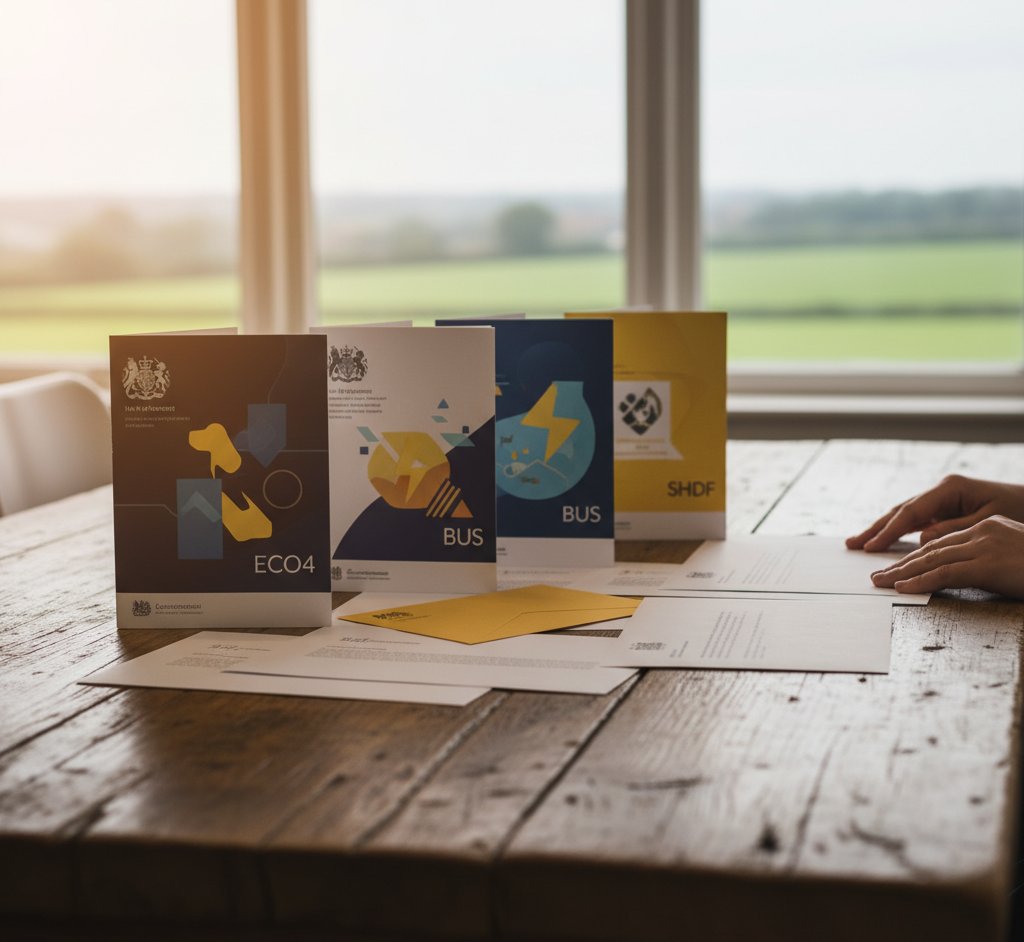
Solar Panel Grants and Funding UK 2026
A plain-English guide to every solar grant, scheme, and funding route available in the UK in 2026 — including ECO4, GBIS, HUG2, BUS, and devolved schemes.
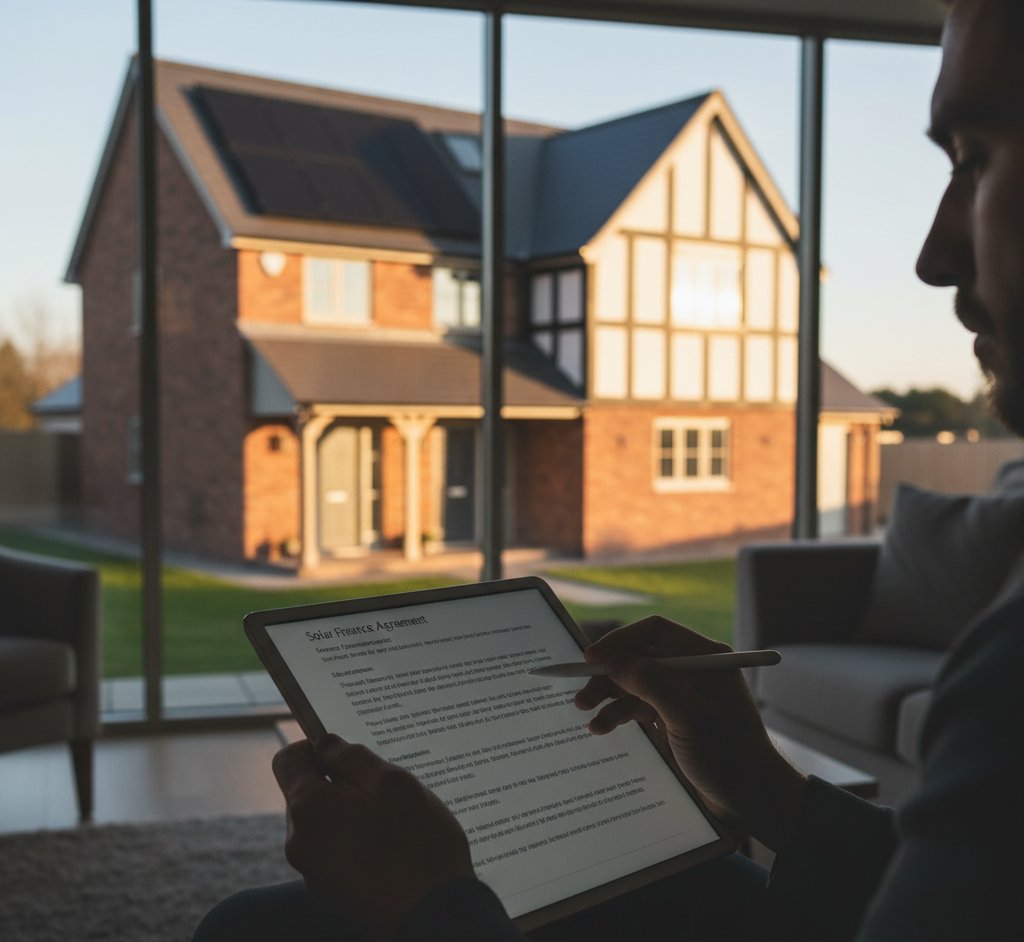
Solar Panel Finance Options UK
A clear-eyed look at every way to finance solar panels in the UK — personal loans, green loans, 0% finance, green mortgages, and whether paying outright is always better.

Solar Panel Scams and Rogue Installers: Red Flags to Spot
How to spot solar panel scams and rogue installers in the UK — red flags, fake schemes, pressure tactics, and how to verify any installer before signing anything.

Switch to Octopus Energy
Get 50 credit when you switch. We get 50 too — win-win.
What does this mean for YOUR home?
Design your perfect solar setup in under 3 minutes. Free, no sign-up required.
Build Your Solar System