This page contains affiliate links. If you purchase through them we may earn a small commission at no extra cost to you. Learn more
Solar Panel Costs by Region UK: Why Prices Vary So Much

Two homeowners can receive quotes for the same 4kW solar system, with the same number of panels, from similarly qualified installers — and the figures can differ by £1,500 or more simply because they live in different parts of the UK. This guide explains what drives those regional differences and how to use that knowledge when comparing quotes.
How much do solar panels cost by region?
The table below shows typical installed costs for residential solar across UK regions in 2026. These are whole-system prices — panels, inverter, mounting, cabling, labour, and commissioning — with VAT at 0% as is correct for residential solar.
The national average from verified data sits at £1.10–£1.50 per watt installed. London and the South East consistently come in at the top of the range or above it; the North East typically sits below it.
Why does it cost more in London and the South East?
The higher prices in London and the Home Counties are not a reflection of better workmanship, superior components, or more thorough installations. They reflect the structural cost of running a business and employing tradespeople in one of the most expensive parts of the country.
Labour rates. An MCS-certified solar installer in London or Surrey earns significantly more than one doing the same job in Leeds or Sunderland. That difference filters directly into your quote. Labour typically accounts for £1,000–£2,000 of the total system cost, so even a 30% differential in day rates adds several hundred pounds.
Scaffolding. Scaffolding hire in London costs more than in other regions, partly due to higher transport and logistics costs and partly due to demand. For a standard two-storey house, scaffolding might add £300–£600 to a quote nationally — at the London end of that range, and often higher.
Parking and access. Urban installations in inner London, Bristol, or Brighton frequently involve restricted parking for install vans, congestion zones, and narrow access. These logistical complications cost time, and time costs money.
Business overheads. An installer's office rent, van leasing costs, insurance, and administrative expenses are all higher in the South East. Those overheads have to be recovered somewhere, and they show up in quotes.
Higher Price Does Not Mean Higher Quality
A quote from a London installer at £8,000 for a 4kW system is not inherently better than a quote from a Yorkshire installer at £5,500 for the same system. The components — panels, inverter, mounting — are sourced from the same manufacturers regardless of where the installer is based. Always check MCS certification, reviews, and the warranty terms rather than using price as a quality signal.
What drives regional cost differences?
Five factors account for most of the variation you will see across the UK.
1. Local labour rates. This is the biggest single driver. Wage expectations and living costs vary enormously across the UK. An installer operating in rural Wales or the North East has lower wage costs than one based in inner London, and that flows through to the customer price.
2. Scaffolding costs. Scaffolding is not just about roof height — it is also about local scaffolding hire rates, availability, and how long the equipment needs to stay on site. Urban areas with restricted access often cost more to scaffold than rural or suburban properties.
3. Travel time and fuel. In areas with lower installer density, teams may travel longer distances to reach customers. That travel time is either absorbed into overheads or reflected in quotes. In areas with many active installers — the South East has more MCS-registered businesses per capita than most regions — competition keeps margins tighter but base costs are higher.
4. Level of competition. Counterintuitively, having more installers in an area does not always mean lower prices. The South East has many installers but also the highest underlying costs. The North West and Yorkshire have strong competition among local businesses, which helps keep prices at the lower end of the national range even when labour rates are reasonable.
5. Property type and roof complexity. Certain regions have higher concentrations of property types that cost more to install on. Victorian terraced housing in northern cities often has straightforward, steep-pitched slate roofs — relatively quick to install on. London has a higher proportion of flat-roofed extensions, complex multi-pitch roofs, and heritage properties where additional care is needed.
Does cheaper mean worse?
No. The cost difference between a North East installer and a London installer reflects the economics of where they operate, not their technical capability or the quality of materials they use.
Solar panels, inverters, and mounting hardware are bought from the same manufacturers and distributors whether an installer is based in Newcastle or Newbury. The panels on a roof in Durham are the same LONGi, JA Solar, or Trina panels going onto a roof in Surrey. The Grid connection rules and MCS certification requirements are identical across Great Britain.
What matters when assessing quality is not the price but the installer's MCS certification, their warranties (on both workmanship and system performance), their reviews, and how clearly they explain what is included in the quote. A well-reviewed MCS-certified installer in Sheffield offering a £5,200 quote is preferable to an uncertified installer anywhere in the country offering a "deal" at £4,500.
MCS Certification Is Your Baseline
Every installer who claims MCS certification can be verified at the MCS installer database. MCS certification is required to access the Smart Export Guarantee (SEG) — the scheme that pays you for electricity you export to the grid. An installer who cannot produce their MCS certificate number is not worth pursuing regardless of the price they quote.
Do you get more electricity in the south?
Yes, and it matters for payback calculations. The UK's solar irradiance — the amount of sunlight energy reaching a given area — varies by around 15–20% between the far south of England and the north of Scotland.
In practical terms:
- South East England (Kent, Sussex, Hampshire): A 4kW system typically generates around 3,800–4,200 kWh per year
- Midlands: The same 4kW system typically generates around 3,400–3,700 kWh per year
- North of England and Scotland: The same 4kW system typically generates around 3,000–3,400 kWh per year
That 600–1,000 kWh annual difference has a real effect on payback period. At a self-consumption rate of around 50% and a grid electricity rate of 24p/kWh (plus SEG export at roughly 4–5p/kWh for the remainder), the gap between a high-output southern installation and a lower-output northern one is roughly £60–£100 per year in benefit.
This does not mean solar is not worthwhile in Scotland or the North. It simply means the payback arithmetic is slightly different, and you should use location-specific generation estimates rather than national averages when running the numbers.
Regional payback comparison: a worked example
To make the regional picture concrete, consider the same 4kW system installed in two locations — an example in London and an example in Newcastle.
London, South East
- Installed cost: £7,500 (mid-range for the region)
- Annual generation: approximately 3,900 kWh
- Self-consumption (50%): 1,950 kWh saved at 24p/kWh = £468/year
- Export (50%): 1,950 kWh exported at 4.5p/kWh = £88/year
- Total annual benefit: approximately £556/year
- Simple payback: approximately 13.5 years
Newcastle, North East
- Installed cost: £5,500 (mid-range for the region)
- Annual generation: approximately 3,200 kWh
- Self-consumption (50%): 1,600 kWh saved at 24p/kWh = £384/year
- Export (50%): 1,600 kWh exported at 4.5p/kWh = £72/year
- Total annual benefit: approximately £456/year
- Simple payback: approximately 12 years
In this example the Newcastle installation has a shorter payback period despite generating less electricity, because the lower installation cost more than offsets the reduced output. This illustrates why regional cost differences are not necessarily a disadvantage for northern homeowners — the economics often work out comparably or better.
These Are Illustrative Figures
The worked example above uses simplified self-consumption assumptions and mid-range costs. Your actual payback depends on your household electricity usage pattern, your installer's quote, your roof orientation and tilt, any shading, and the SEG rate your chosen supplier offers. Use the numbers as a framework for thinking, not as a prediction.
How to use this information
Understanding regional pricing helps you evaluate quotes more intelligently. Here is how to put it into practice.
Use cost per watt as your benchmark. Take the total installed price, divide it by the system size in watts, and you get a cost-per-watt figure. This normalises for system size differences and lets you compare quotes fairly — whether the system is 3.5kW or 6kW, and whether you are in Cardiff or Cambridge.
For example: a £6,200 quote for a 4kW (4,000W) system works out at £1.55/W. A £7,800 quote for a 5kW (5,000W) system from a different installer works out at £1.56/W. On a per-watt basis these are essentially identical despite the different headline prices.
How to Calculate Cost Per Watt
Always compare solar quotes using cost per watt (total price divided by system size in watts). This normalises for system size differences and gives you a fair comparison regardless of where you live. A 4kW system at £6,000 is £1.50/W. A 5kW system at £6,800 is £1.36/W. The larger system is better value per watt installed, which matters when choosing between proposals.
Get three quotes from local installers. The regional averages in the table above are useful for a sanity check, but your actual quotes will depend on your property, roof, and which installers operate in your area. Three quotes give you a working sense of what the local market is charging without any single installer being able to mislead you on price.
Check the cost-per-watt range for your region. If your quotes are coming in materially above the top of the range for your area, it is worth asking the installer to break down the quote line by line. There may be a legitimate reason — an unusual roof, a long cable run, a consumer unit upgrade — but it is always reasonable to ask.
Do not optimise for price alone. A quote that is significantly below the regional range may reflect a less experienced installer, cheaper components, or a company that will not be around when you need to claim the workmanship warranty in year five. The goal is fair value, not the lowest possible number.
For detailed guidance on reading and comparing quotes, the solar panel quotes guide covers exactly what to look for and the questions worth asking before you sign anything.
Share this article

Order your Energy Performance Certificate online — see how solar improves your home's energy rating. Required before selling or renting. All assessors are fully accredited.
Affiliate link — we may earn a small commission at no extra cost to you
Stay informed
Get free solar updates direct to your inbox
Related reading
How Much Do Solar Panels Cost in the UK in 2026?
UK solar panel costs 2026: realistic prices by system size, what is included, and what to push back on in your quote.

Solar Panel Cost Per Watt UK 2026: Where to Get the Best Deal
We checked prices at 5 UK suppliers to find the real cost per watt for solar panels in 2026. The results might surprise you.
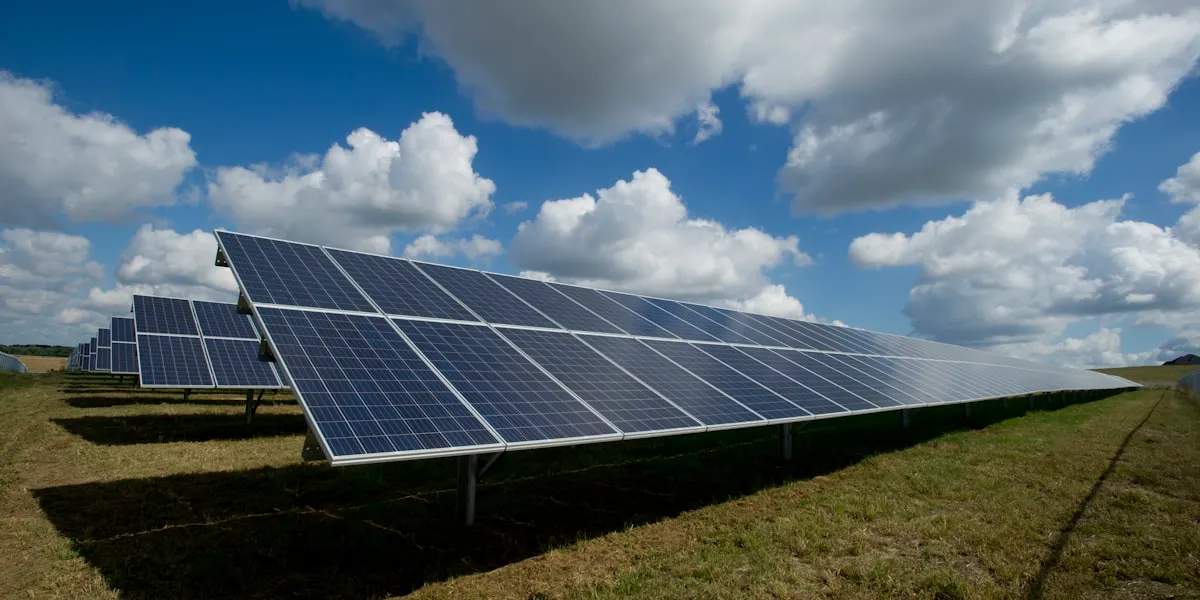
Solar Panels by Location: UK City, County, and Regional Guides
Find your local solar guide. City, county, and regional guides covering costs, installers, and irradiance across the UK.


Switch to Octopus Energy
Get 50 credit when you switch. We get 50 too — win-win.
What does this mean for YOUR home?
Design your perfect solar setup in under 3 minutes. Free, no sign-up required.
Build Your Solar System