This page contains affiliate links. If you purchase through them we may earn a small commission at no extra cost to you. Learn more
Solar Panels on a Terraced House: What You Need to Know

Can you get solar on a terraced house?
Yes — and more people do than you might expect. The main differences from a detached or semi-detached installation are practical ones: less roof space, potentially more shading, and some extra complexity around scaffolding access. None of these is a dealbreaker, but they're worth understanding before you get quotes.
The roof space reality
A typical mid-terrace roof offers around 15–25 square metres of usable space on one slope. Compare that to 30–40 m² for a semi-detached and 40–60 m² for a detached house.
With modern 450W panels (each roughly 1.7m × 1.1m, so about 1.9 m²), a 15–20 m² terraced roof can typically fit 7–10 panels. Allow for some space around the edges (installation guidelines require a clear perimeter) and the realistic fit for most terraces is 6–9 panels.
That's a system of roughly 2.7–4 kWp (kilowatt-peak — the headline power rating). At UK average yields, that generates around 2,300–3,400 kWh per year.
Is that enough to be worthwhile?
For a 1–2 person household, 2,300–3,000 kWh covers 65–100% of annual consumption. For a 3-person household using around 3,400 kWh per year, a smaller terraced system covers 65–90%. That's a genuinely useful contribution, even if it's not full self-sufficiency.
The chimney stack problem
This is the most common issue on terraced houses. A chimney stack — especially one positioned mid-roof — can cast a shadow over a significant portion of the panels for part of the day. Even partial shading on one panel can reduce the output of the whole string of panels (a string is a series of connected panels), depending on how the inverter is configured.
The solutions are:
Optimisers or microinverters — devices fitted to each panel individually that allow the unshaded panels to continue operating at full output even when one panel is shaded. They add cost but are often worthwhile on shaded roofs. Ask your installer whether they're included in the quote.
Panel placement — an experienced installer will position panels to minimise the impact of chimney shading, placing them where shadow falls least during peak generation hours. This is part of why a shading analysis matters.
Removal or reduction — if you have an old chimney stack that's no longer used, it might be worth considering removal (subject to planning and structural advice). This is a separate conversation, but worth mentioning if shading is significant.
Ask for a shading analysis
A proper shading analysis uses software to model how your chimney, neighbouring buildings, and any trees affect panel output across the whole year. Any serious installer should offer this. If a quote is produced without one, that's a concern — ask for it.
Orientation: front or back roof?
Most UK terraces run in rows with properties facing north–south or east–west. This determines which slope your panels go on:
North–south terrace (the house faces north or south): your rear roof faces either south or north. South-facing is ideal. North-facing is generally not viable for solar — avoid it.
East–west terrace (the house faces east or west): your roof slopes face east and west. East-facing generates most in the morning; west-facing generates most in the afternoon. Either alone produces roughly 75–85% of what a south-facing roof would generate. Both slopes combined (if you split the panels) can actually outperform a pure south-facing roof across the day.
Don't assume east or west means solar isn't worthwhile. For many terraces it absolutely is.
Scaffolding access: the practical complication
Installing panels requires scaffolding. On a detached or semi-detached house, the installer can usually erect scaffolding along the relevant wall without much difficulty.
On a mid-terrace, both sides of the property are party walls (shared with neighbours). Scaffolding access to the rear is typically via the back garden — either through the house, through a shared alleyway, or over a back gate. The installer needs to assess this before quoting.
Things to check:
- Is there alleyway access to the rear? Is it wide enough for materials?
- Does the alleyway have a gate? Who owns it? Do you need neighbour access?
- If access is through the house, is there a clear route for panel delivery?
This is usually manageable, but it can add cost compared to a straightforward detached installation. Make sure your quotes reflect the actual access situation — don't accept a quote produced without a site visit.
Insist on a site visit before accepting a quote
Some installers quote remotely using satellite imagery. For a terraced house with potential shading and access complications, this isn't enough. Insist that an installer visits in person before you commit to anything. A quote produced without a site visit cannot account for scaffolding complexity, chimney shading, or roof condition.
Planning permission in conservation areas
Many UK terraces — particularly Victorian or Edwardian rows — sit in conservation areas. Solar panels on residential buildings generally fall under permitted development rights, meaning you don't need planning permission, as long as:
- Panels don't protrude more than 200mm from the roof surface
- Panels are not installed on a wall or roof slope that faces a highway (in some interpretations)
- The property is not a listed building
In a conservation area, the same rules apply as elsewhere for solar on roofs — it's still usually permitted development. However, some conservation areas have Article 4 directions that remove permitted development rights. Check with your local planning authority before proceeding if you're in a designated area.
Listed buildings are a different matter entirely — they require listed building consent, which is not always granted.
What battery size makes sense for a terraced system?
A 10 kWh battery (kilowatt-hour — a measure of storage capacity) is well-matched to a larger detached system. For a 2.7–4 kWp terraced system, a 5 kWh battery is more appropriate — it's large enough to store a full summer day's surplus, and you're not paying for capacity you'll rarely fill.
A 5 kWh battery currently costs in the region of £3,000–£4,500 installed. Combined with a smaller terraced solar system, the total outlay is meaningfully lower than a large detached installation — and the payback arithmetic can still be sound.
The honest summary
Solar on a terraced house involves some real constraints: less roof space, potential chimney shading, and more complex scaffolding access. These make it slightly more complicated than a detached installation — but not unfeasible.
A well-designed 6–9 panel system on a terraced house can generate 2,100–3,400 kWh per year, covering a substantial portion of a small household's electricity consumption. Paired with a 5 kWh battery and a smart tariff, it becomes a genuinely useful energy setup rather than just a token green gesture.
The key is getting quotes from installers who actually visit the property, carry out a shading analysis, and design the system for your specific roof rather than a generic one.
Start with the roof suitability guide to assess whether your particular terrace is a good candidate, then use the how many panels guide to size up what you could realistically fit.
Share this article

Energy-saving LED lighting — make the most of your solar electricity with efficient bulbs and fixtures
Affiliate link — we may earn a small commission at no extra cost to you
Stay informed
Get free solar updates direct to your inbox
Related reading
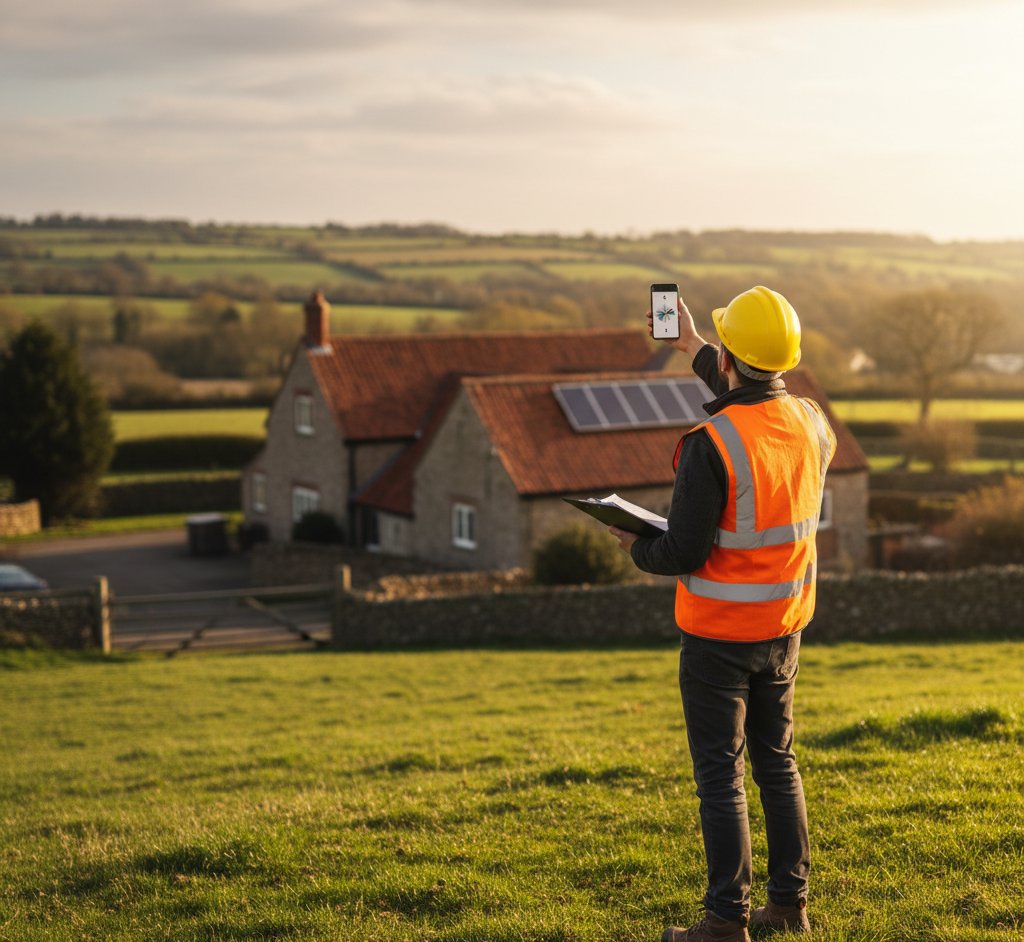
Is My Roof Suitable for Solar Panels?
Find out if your roof can take solar panels — covering direction, angle, shading, structural condition, and options for tricky roofs.

How Many Solar Panels Do I Need? UK Guide
Work out how many solar panels your UK home needs. Simple formula based on your electricity usage, roof space, and budget.
How Much Do Solar Panels Cost in the UK in 2026?
UK solar panel costs 2026: realistic prices by system size, what is included, and what to push back on in your quote.


Switch to Octopus Energy
Get 50 credit when you switch. We get 50 too — win-win.
What does this mean for YOUR home?
Design your perfect solar setup in under 3 minutes. Free, no sign-up required.
Build Your Solar System