This page contains affiliate links. If you purchase through them we may earn a small commission at no extra cost to you. Learn more
How Many Solar Panels Do I Need? UK Guide

Start with your electricity use, not your house size
The most common mistake people make when sizing a solar system is to ask "how many panels does a 3-bedroom house need?" House size is a rough proxy — but what actually determines the right system size is how much electricity you use.
A 3-bedroom house where two people work from home full time uses much more electricity than the same house where two people are out at work all day. An electric car or heat pump can easily double a household's annual consumption.
So before anything else: find your annual electricity consumption in kWh (kilowatt-hours — the unit on your electricity bill) from your last 12 months of bills or your smart meter app.
The simple formula
Once you have your annual usage in kWh, the maths is straightforward:
Step 1: Annual kWh ÷ 850 = kWp needed
The 850 figure is the typical annual yield per kWp (kilowatt-peak — the rated output of your system) for a south-facing roof in the UK. It's a national average — your actual yield may be slightly higher (south of England, unshaded roof) or lower (Scotland, partially shaded).
Step 2: kWp ÷ 0.45 = number of panels
This assumes modern 450W panels, which are now the standard for residential installations. (Panel output has increased significantly in recent years — 450W panels were cutting-edge a few years ago and are now commonplace.)
Example
A household using 3,400 kWh per year:
- 3,400 ÷ 850 = 4 kWp system needed
- 4 ÷ 0.45 = 8.9 → 9 panels
Typical sizes by household type
| Household | Annual usage | System size | Panels (450W) |
|---|---|---|---|
| 1–2 bed flat / small house | ~2,000 kWh | ~2.4 kWp | ~6 panels |
| 3 bed house (typical) | ~3,400 kWh | ~4 kWp | ~9 panels |
| 4 bed house | ~4,500 kWh | ~5.3 kWp | ~12 panels |
| 4 bed + EV | ~6,500 kWh | ~7.6 kWp | ~17 panels |
| 4 bed + EV + heat pump | ~9,700 kWh | ~11.4 kWp | ~26 panels |
These are starting points. Your actual usage may differ — check your bills.
What limits the number of panels?
Even if the formula says you need 17 panels, your roof may not fit that many. The two main constraints are:
Roof space — a standard 450W panel is roughly 1.7m × 1.1m (about 1.9 m²). A 9-panel system needs around 17 m² of usable roof area. Terraced houses often have 15–25 m² available; semi-detached and detached homes typically have more. The roof suitability guide explains how to assess your roof.
Inverter and DNO limits — the DNO (Distribution Network Operator — the company that manages the electricity cables in your street) may limit the size of system you can export from without a formal application. Systems up to 3.68 kW inverter output connect under a simple G98 notification (no pre-approval needed). Systems above 3.68 kW require a G99 application and DNO approval before installation. Your installer handles this, but it's worth knowing it exists.
Should I size up for future needs?
Yes — within reason. If you're planning to buy an electric car in the next few years, or you're considering a heat pump, factor that into your sizing now. Adding extra panels later is possible but costs more than getting the right size first time.
A useful rule: size the panels for your expected usage in 3–5 years, not just today. If you might get an EV, the table above shows how significantly that shifts things.
Size for the future, not just today
An EV adds roughly 2,000–3,500 kWh per year to your household consumption, depending on how far you drive. A heat pump adds a similar amount. If either is on your horizon, factor them into your sizing — it's much cheaper to add panels during the initial install than to come back and expand later.
What if my roof can't fit enough panels?
This is a real constraint, particularly for terraced houses. If your roof limits you to, say, 6 panels (around 2.7 kWp), your system will generate roughly 2,300 kWh per year. That covers 65–70% of a typical small household's consumption — a genuinely useful contribution, even if it's not 100%.
A smaller system with a battery can still significantly cut bills, particularly when combined with a smart time-of-use tariff that lets you buy cheap overnight electricity to fill the battery. The solar generates during the day; the cheap overnight rate tops up the battery; and you use stored electricity in the evening rather than paying peak grid rates.
Don't dismiss solar just because your roof limits you to a smaller system. Run the numbers for what you can actually fit.
How to find your annual kWh usage
- Smart meter — if you have one, your in-home display or your supplier's app shows annual consumption
- Your electricity bill — look for "annual consumption" or "estimated annual usage" in kWh
- Meter readings — take a reading now and compare to the same time last year
If you can't find an annual figure, a rough average for UK households is around 3,300–3,500 kWh per year — but your actual usage could be quite different.
Next steps
Once you have a rough system size in mind:
- Check whether your roof has the space with the roof suitability guide
- See what the system might cost with the solar panel costs guide
- Run the payback numbers with the solar payback calculator
- For a deeper dive into system design, see the full sizing guide
The formula above gives you a sensible starting point. A good installer will then refine this based on your actual roof, your shading profile, and your usage patterns.
Share this article

Energy-saving LED lighting — make the most of your solar electricity with efficient bulbs and fixtures
Affiliate link — we may earn a small commission at no extra cost to you
Stay informed
Get free solar updates direct to your inbox
Related reading
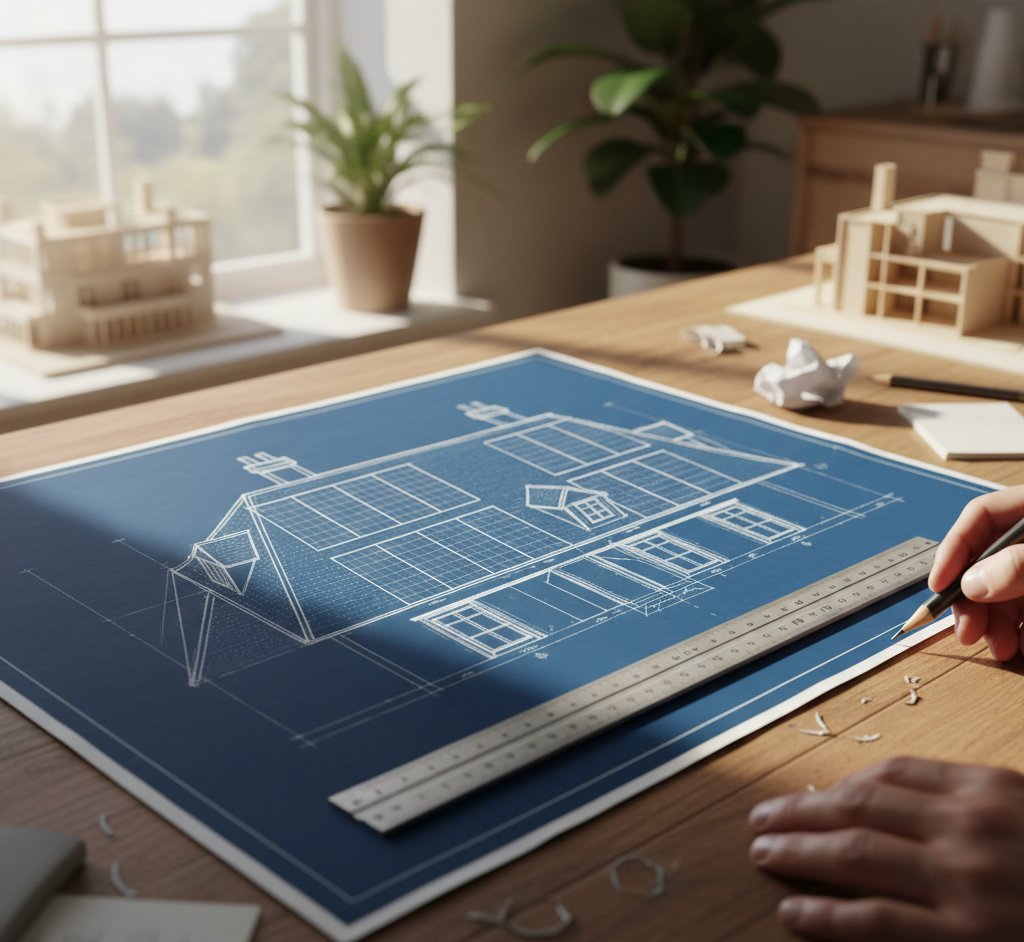
How to Size a Solar Panel System for Your Home
How to size a solar panel system for your UK home. Factor in electricity usage, roof space, budget, and future plans like EVs and heat pumps.

Is My Roof Suitable for Solar Panels?
Find out if your roof can take solar panels — covering direction, angle, shading, structural condition, and options for tricky roofs.
How Much Do Solar Panels Cost in the UK in 2026?
UK solar panel costs 2026: realistic prices by system size, what is included, and what to push back on in your quote.


Switch to Octopus Energy
Get 50 credit when you switch. We get 50 too — win-win.
What does this mean for YOUR home?
Design your perfect solar setup in under 3 minutes. Free, no sign-up required.
Build Your Solar System