This page contains affiliate links. If you purchase through them we may earn a small commission at no extra cost to you. Learn more
Solar Panel Running Costs: What You Still Pay After Installation
Solar panels dramatically cut your electricity bills, but running costs don't drop to zero. Understanding what you still pay after installation helps you set realistic expectations — and plan properly over the system's 25-year life.
Standing Charges: The Biggest Ongoing Cost
The single most common surprise for new solar owners is the standing charge. This is a fixed daily fee your energy supplier charges simply for being connected to the grid — it covers network maintenance, metering, and infrastructure costs.
The standing charge applies every single day, regardless of:
- How much solar you generate
- Whether you import any electricity at all
- What time of year it is
At the current Ofgem Q2 2026 price cap, the standing charge is around 55p/day. That works out to roughly £201/year before you use a single unit of electricity. This figure will vary by tariff and region, so check your own bill for the exact rate.
This is why your electricity bill never reaches zero with solar alone. Even in peak summer, when a well-sized system might cover 100% of your daytime usage, you still pay the daily standing charge. The only way to avoid it entirely is to disconnect from the grid — which is not practical or cost-effective for the vast majority of UK homes.
Factor Standing Charges Into Payback Calculations
When calculating how long solar takes to pay back, make sure any solar savings estimate you use accounts for the fact that standing charges still apply. Your bill reduction comes from lower unit consumption — the standing charge line stays constant.
How Standing Charges Affect Net Savings
See how standing charges affect your net savings at different self-consumption levels.
Standing charges: the bill you cannot avoid
Solar reduces your usage charges but standing charges are fixed — you pay them even if you use zero grid electricity. Currently 55.0p/day (£201/yr).
Standing charges
£201/yr
19% of your bill
Solar saves
£353/yr
on usage charges
Cannot reduce
£201/yr
standing charges remain
Even with a large solar system and battery, you still pay the standing charge to remain connected to the grid. This is 19% of your current bill. Going fully off-grid would eliminate it but requires significantly more investment and is impractical for most UK homes.
Maintenance Costs
Solar PV systems are largely maintenance-free. Panels have no moving parts, and rain handles most of the cleaning. That said, there are some occasional costs worth budgeting for.
Panel Cleaning
In most parts of the UK, rainfall keeps panels sufficiently clean. Bird droppings are the main exception — a thick deposit on part of a panel can noticeably reduce output from that string. If you notice a sustained dip in generation compared to previous years and the panels look dirty, a professional clean may be worth considering.
Professional panel cleaning: £100–150 for a typical domestic system. Many owners do this once every 5–10 years, or not at all.
Bird Proofing
Pigeons are particularly fond of nesting under solar panels, attracted by the warmth and shelter. A pigeon colony under your panels can cause wiring damage and persistent mess that does affect performance.
Bird proofing (mesh skirting): £300–500 one-off cost. If you have a history of pigeon problems on your roof, it is worth arranging this at installation rather than dealing with a nest removal later.
Annual Inspection
There is no mandatory annual inspection requirement for domestic solar in the UK. However, if you have a battery system or a hybrid inverter, checking that connections remain secure and that no error codes have appeared is sensible. Most inverters will alert via app if something is wrong, making formal inspections largely redundant.
If your system is out of warranty and you want a professional health check, an inspection from a qualified electrician costs £100–200.
Don't Ignore Inverter Error Codes
Modern inverters display fault codes on the unit and often push notifications via app. If you see persistent error codes — especially anything relating to insulation resistance or earth fault — contact a qualified electrician. Ignoring fault codes can be both a safety risk and a reason for insurance complications.
Inverter Replacement
Your solar panels themselves are likely to last 25–30 years with minimal degradation. The inverter is a different matter — it is an active electronic device and has a shorter lifespan.
String Inverters
The most common type fitted in UK homes. Expected lifespan: 10–15 years. Budget for at least one replacement over a 25-year system life.
Replacement cost: £800–1,500 fitted, depending on system size and inverter brand. Labour typically accounts for £200–400 of that. The cost has been falling as the market matures.
Microinverters
Fitted under each individual panel. Expected lifespan: 20–25 years, which may mean no replacement is needed during a standard system life. They typically come with longer warranties (15–25 years) than string inverters.
Hybrid Inverters (Solar + Battery)
More complex than a standard string inverter, with similar lifespan expectations of 10–15 years. Replacement costs are slightly higher — £1,000–2,000 fitted — due to the additional complexity of integrating with the battery system.
Check Your Inverter Warranty
Most string inverters come with a 5–10 year warranty as standard. Many manufacturers offer extended warranties to 12 or 15 years for a one-off fee at the point of purchase. If your installer offered an extended warranty, check you have the paperwork — it may cover a replacement at no extra cost.
Insurance
You must notify your home insurer when you install solar panels. Failing to do so could invalidate your policy if you need to make a claim — even for something apparently unrelated to solar.
What most insurers do:
- Add solar cover to your existing buildings policy for under £50/year extra
- Some include it at no additional charge if the system value is below a threshold
- A few specialist solar insurers exist for larger or commercial systems
What you need to confirm with your insurer:
- That the panels and inverter are covered under buildings insurance (as fixed structures)
- Whether the battery system requires separate cover
- The single-item limit — some policies cap cover at £5,000 per item, which may be insufficient for a full system
Replacement value cover is preferable to indemnity cover (which deducts depreciation). Given how long solar systems last, indemnity cover could pay out significantly less than the actual replacement cost.
The 25-Year Cost Picture
Running costs over a solar system's lifetime are real but modest compared to the savings a well-sized system generates. The table below uses illustrative figures — your actual results will depend on system size, tariff, and self-consumption.
Savings are illustrative at current rates and typical generation figures. Your results will vary based on tariff, consumption, and export rate. Standing charge figures assume current rates persist — in practice they will change over time.
The key takeaway: even accounting for all running costs, a correctly sized solar system in the UK will typically return several times its running cost expenditure over its lifetime. The running costs are not a reason to avoid solar — they are simply worth understanding upfront so nothing comes as a surprise.
For a full breakdown of whether solar makes financial sense for your specific situation, see the solar panels worth it guide and the solar panel costs guide.
Share this article
Order your Energy Performance Certificate online — see how solar improves your home's energy rating. Required before selling or renting. All assessors are fully accredited.
Affiliate link — we may earn a small commission at no extra cost to you
Stay informed
Get free solar updates direct to your inbox
Related reading
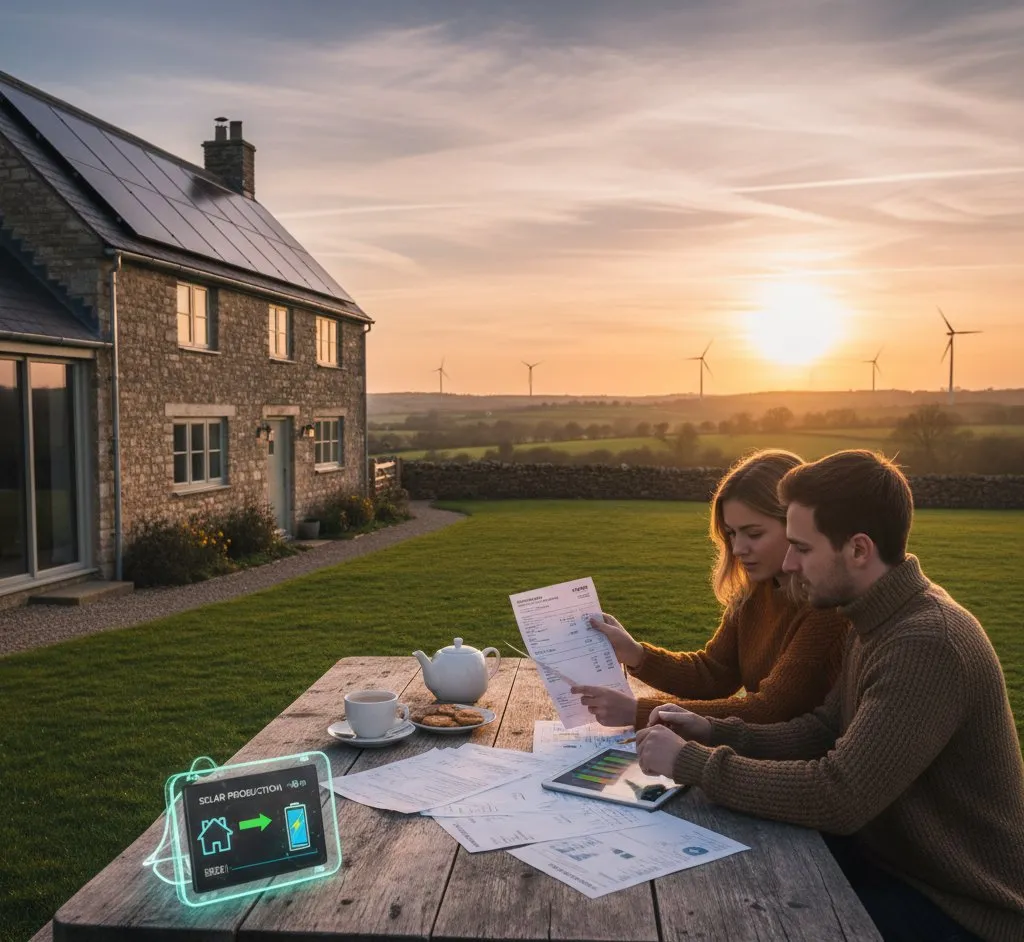
Understanding Your Electricity Bill with Solar
How to read your electricity bill with solar panels. Import, export, generation, self-consumption, and why your bill may not be as low as expected.
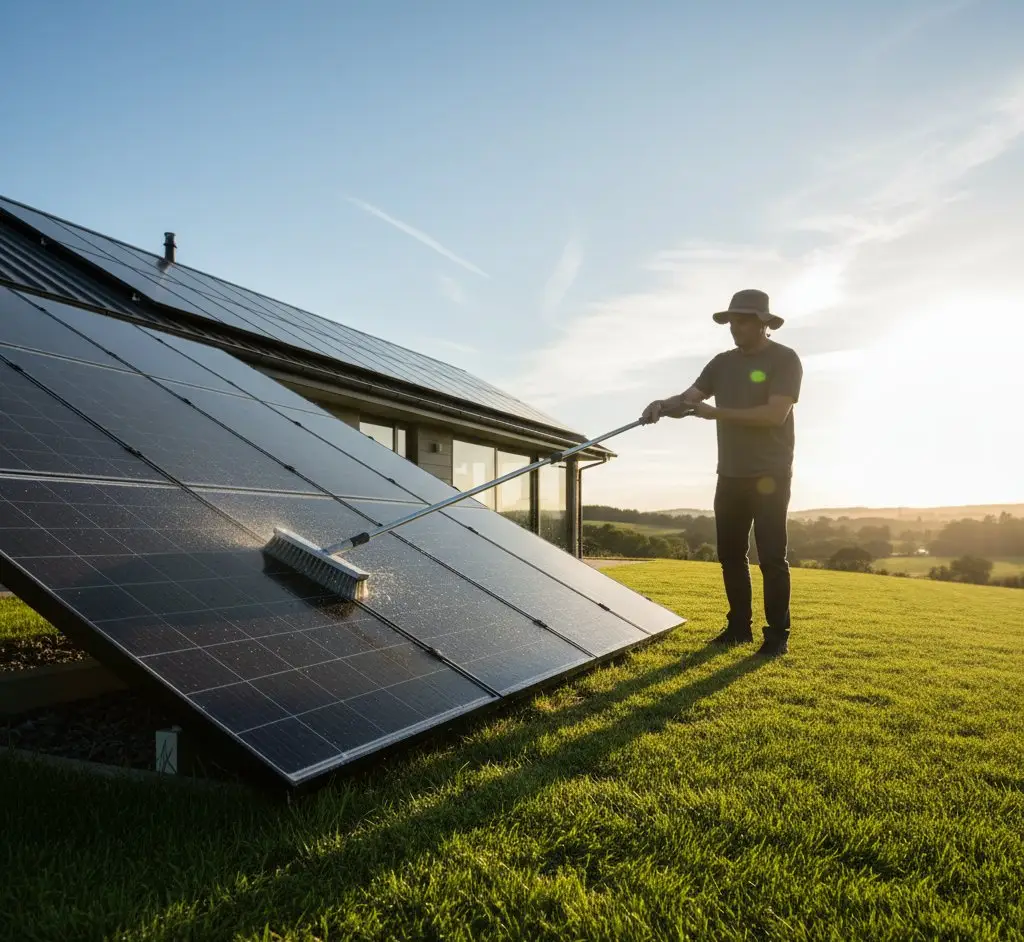
Annual Solar Panel Maintenance Checklist
A simple annual maintenance checklist for UK solar panel owners. What to check, when to check it, and when to call a professional.

How Much Do Solar Panels Cost in the UK in 2026?
UK solar panel costs 2026: realistic prices by system size, what is included, and what to push back on in your quote.


Switch to Octopus Energy
Get 50 credit when you switch. We get 50 too — win-win.
What does this mean for YOUR home?
Design your perfect solar setup in under 3 minutes. Free, no sign-up required.
Build Your Solar System