This page contains affiliate links. If you purchase through them we may earn a small commission at no extra cost to you. Learn more
Understanding Your Electricity Bill with Solar
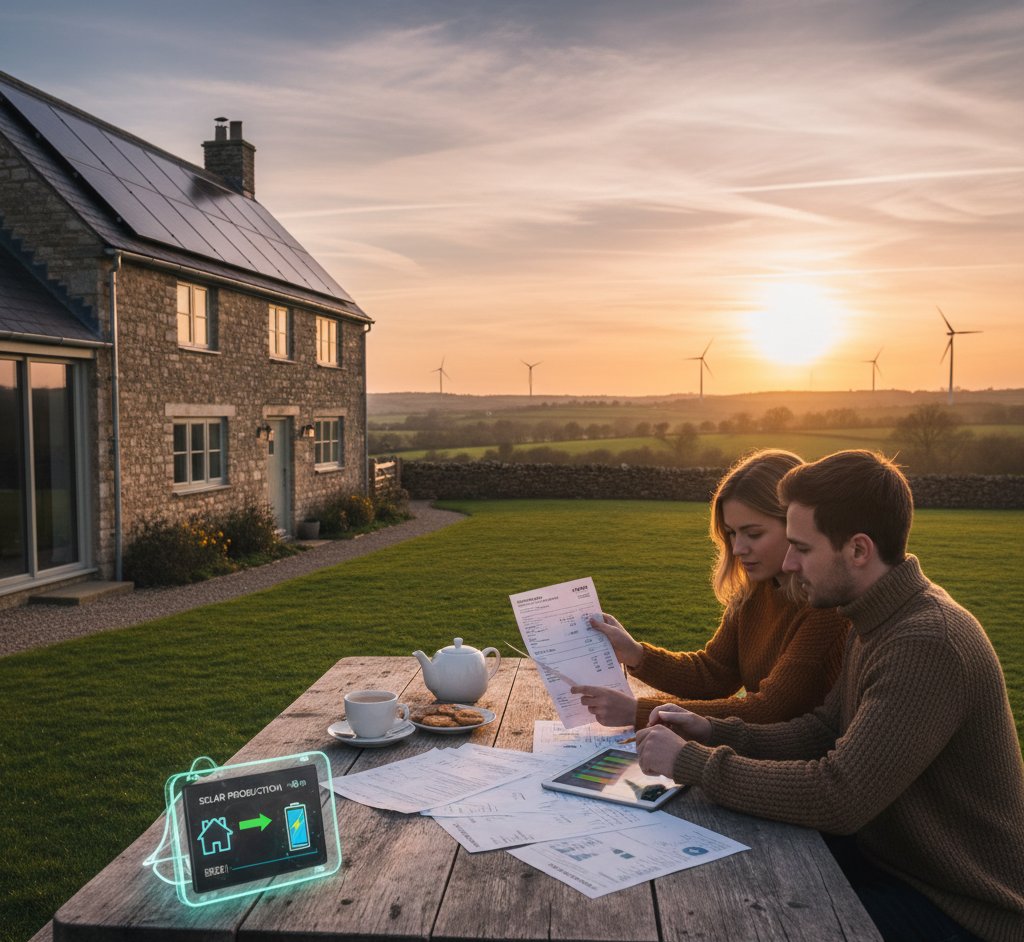
Getting your first electricity bill after installing solar can be confusing. The bill looks different, the numbers don't always match what you expected, and new terms appear. Here's how to make sense of it.
The Four Key Numbers
To understand your electricity with solar, you need four numbers:
1. Generation
The total electricity your panels produce. Read from your generation meter or inverter app. This is NOT on your electricity bill.
2. Self-Consumption
The electricity you generate and use yourself. This is the electricity that never hits the grid and never appears on any bill — it's invisible savings. Self-consumption = generation minus export.
3. Import
The electricity you buy from the grid. This IS on your electricity bill. Every kWh of import costs you your tariff rate (e.g., 26p/kWh).
4. Export
The electricity you generate but don't use, which flows back to the grid. You get paid for this via SEG — usually as a separate credit.
The relationship: Generation = Self-consumption + Export
Your bill covers: Import only
Your SEG payment covers: Export only
Invisible but real: Self-consumption — this is where most of your savings come from
Reading Your Bill
What Changed After Solar
Before solar: Your bill showed total household consumption × tariff rate = total cost.
After solar: Your bill shows only grid import (total consumption minus what solar provided) × tariff rate = lower cost.
Your self-consumed solar electricity disappears from the bill entirely — it's as if those kWh never existed. This is the main saving.
Example Bill Breakdown
Before solar (quarterly):
- Consumption: 1,000 kWh
- Rate: 26p/kWh
- Standing charge: 90 days × 50p = £45
- Total: £305
After solar (same quarter, summer):
- Import from grid: 400 kWh (you self-consumed 600 kWh from solar)
- Rate: 26p/kWh = £104
- Standing charge: 90 days × 50p = £45
- Total: £149 (saving: £156)
Plus SEG income: 500 kWh exported × 12p = £60 (paid separately)
Total quarterly saving: £216
Your Standing Charge Doesn't Change
The daily standing charge (typically 45–55p/day in 2026) applies regardless of solar panels. Even if your usage drops to zero, you still pay the standing charge. This means your bill never reaches zero unless you go completely off-grid — which is impractical for UK homes.
Why Your Bill Might Be Higher Than Expected
Several common reasons solar owners are surprised by their bills:
1. Seasonal Variation
Summer bills will be dramatically lower (high generation, high self-consumption). Winter bills may barely improve (low generation, high heating demand). Don't judge solar performance by a winter bill.
2. Low Self-Consumption
If you're out during the day and no one uses electricity while the sun shines, most generation gets exported at 12p/kWh instead of saving you 26p/kWh. Your bill drops less than expected because the expensive evening imports remain.
3. Smart Meter Timing
Some smart meters record import and export in the same half-hour slot. If your generation and consumption happen to be poorly aligned within each half-hour, the recorded import can be higher than you'd expect.
4. New Appliances
Did you add an EV charger, heat pump, or other major appliance around the same time as solar? The new load may offset the solar savings on your bill.
5. Tariff Changes
If your tariff rate increased at the same time as the solar installation, the bill may look similar despite lower kWh usage. Check the unit rate and consumption separately.
SEG Export Payments
Export income typically appears:
- As a separate credit from your energy supplier (Octopus, EDF, etc.)
- Quarterly or annually depending on the supplier
- Based on smart meter export data or generation meter readings
If you haven't registered for SEG, you're exporting electricity for free. See our claiming SEG guide to set this up.
Understanding Import and Export on Smart Meters
If you have a smart meter (SMETS2), it records:
- Import register: Grid electricity you consumed
- Export register: Electricity you sent back to the grid
Your in-home display may show these separately or as a net figure. The Octopus app and most supplier dashboards show half-hourly import and export data.
The In-Home Display
Smart meter in-home displays can be confusing with solar:
- They may show negative usage when you're exporting (some displays don't handle this well)
- The "electricity used today" figure is import only — it doesn't account for self-consumption
- The "cost today" figure also only reflects import costs
For accurate monitoring, use your inverter app or Home Assistant rather than the in-home display.
Check Your Meter Is Recording Export
Some older SMETS1 meters don't record export properly. If your smart meter isn't recording export, your SEG provider can't calculate payments, and you may be exporting for free. Check with your energy supplier that your export meter register is active and being read.
Calculating Your True Solar Savings
Your true saving isn't just the bill reduction — it includes export income:
Monthly solar value = Self-consumption savings + Export income
Where:
- Self-consumption savings = Self-consumed kWh × import tariff rate
- Export income = Exported kWh × SEG export rate
Example (typical summer month, 4kW system):
- Generated: 400 kWh
- Self-consumed: 180 kWh × 26p = £46.80
- Exported: 220 kWh × 12p = £26.40
- Total value: £73.20
Of this, £46.80 appears as a lower bill and £26.40 appears as SEG income. If you only look at your bill, you're only seeing part of the benefit.
Year-Round Bill Expectations
For a typical 4kW system on an average UK home:
| Quarter | Bill Reduction | SEG Income | Total Saving |
|---|---|---|---|
| Jan–Mar | £30–£60 | £20–£40 | £50–£100 |
| Apr–Jun | £120–£180 | £60–£100 | £180–£280 |
| Jul–Sep | £130–£200 | £70–£110 | £200–£310 |
| Oct–Dec | £40–£80 | £25–£45 | £65–£125 |
| Annual | £320–£520 | £175–£295 | £495–£815 |
These figures assume 40–50% self-consumption with no battery. Adding a battery increases self-consumption (and bill reduction) while reducing exports (and SEG income), but the total value increases.
Making Sense of It All
The best approach to tracking solar finances:
- Check your inverter app for generation data (daily/monthly)
- Check your electricity bill for import costs (quarterly)
- Check your SEG payments for export income (quarterly/annually)
- Calculate self-consumption as generation minus export
- Track annually — monthly variations are large; annual totals are more meaningful
With these five steps, you'll always know exactly how much your solar system is saving you.
Bill breakdown
See exactly where your electricity bill goes with solar. Adjust the sliders to match your situation.
3,500 kWh
4 kW (9 x 450W)
None
Share this article

EcoFlow makes portable power stations and solar panels for home backup, off-grid, and solar storage without installation. The Delta Pro is the UK community favourite.
Affiliate link — we may earn a small commission at no extra cost to you
Stay informed
Get free solar updates direct to your inbox
Related reading
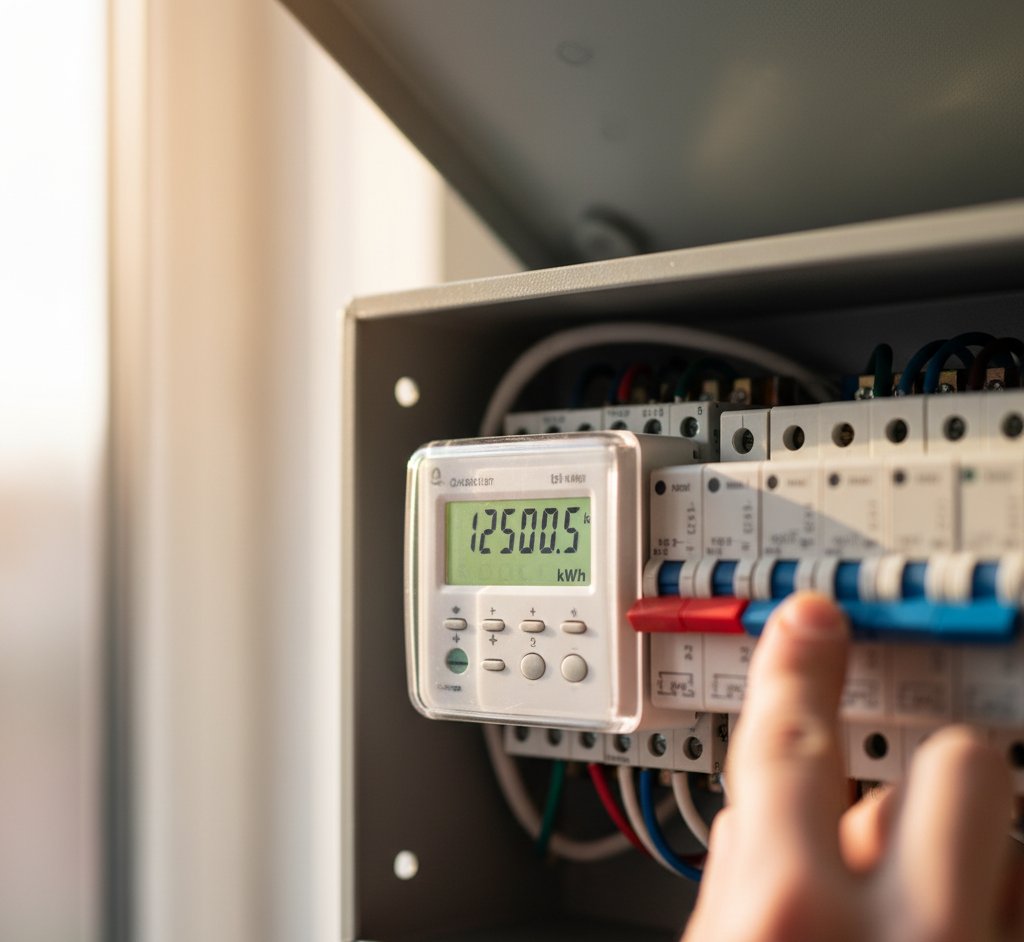
How to Read Your Solar Generation Meter
How to read your solar generation meter in the UK. Understand what the numbers mean, where to find your meter, and how to track your system's performance.
How to Claim Smart Export Guarantee (SEG) Payments
Step-by-step guide to claiming SEG payments for your solar panels in the UK. Which suppliers pay the most, how to register, and common mistakes to avoid.

Solar Panel Payback Calculator UK
Calculate your solar panel payback period in the UK. Understand the real factors that determine how quickly solar pays for itself — with worked examples.


Switch to Octopus Energy
Get 50 credit when you switch. We get 50 too — win-win.
What does this mean for YOUR home?
Design your perfect solar setup in under 3 minutes. Free, no sign-up required.
Build Your Solar System