This page contains affiliate links. If you purchase through them we may earn a small commission at no extra cost to you. Learn more
Solar Subscription vs Loan vs Cash: The True 25-Year Cost Comparison
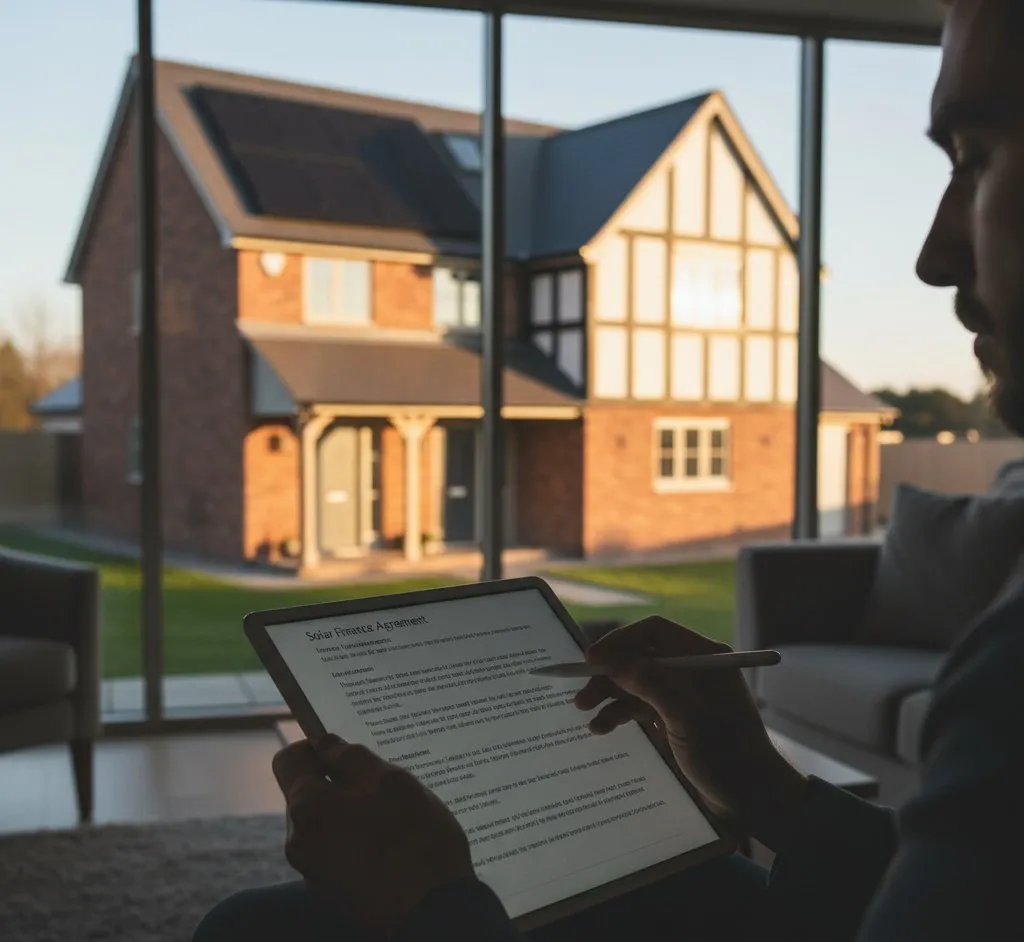
When you decide to go solar, three payment routes dominate the market: pay for the system upfront in cash, spread the cost with a loan, or pay a monthly subscription with no upfront investment. Each route gets you panels on your roof. The difference is how much that electricity will actually cost you over 25 years — and the gap between the best and worst option runs into the tens of thousands of pounds.
This guide sets out worked examples for all three routes using the same 4kW system so you can compare like for like.
Three ways to go solar
Cash purchase means paying the full installation cost yourself, typically £5,000–£7,000 for a standard 4kW system in 2026. You own the panels from day one, you keep all electricity savings, and you are eligible for Smart Export Guarantee (SEG) payments on any surplus you export to the grid.
A green loan means borrowing the purchase price from a bank or building society and repaying it monthly over a fixed term — typically five to ten years. You still own the system from day one. Interest adds to your total cost, but the monthly electricity savings often offset a large portion of your repayment from the start.
A subscription (sometimes called a solar lease or solar service agreement) means a company installs panels on your roof at no upfront cost. You pay a fixed monthly fee — often for 20 to 25 years. The company owns the panels throughout that period; maintenance is usually included. At the end of the contract, the panels may transfer to you, or you may have the option to buy them.
All three routes give you electricity from solar panels. What differs substantially is the total cost, who owns the asset, and what your long-term financial position looks like.
Cash purchase: the best value over time
A typical 4kW system installed professionally in 2026 costs around £6,000 (midpoint of the £5,000–£7,000 range). You pay this once, upfront, and the system then runs for 25 or more years with minimal ongoing cost.
Worked example
System: 4kW, £6,000 installed
Annual generation: approximately 4,000kWh in a typical UK location
Self-consumption: 50% used directly in your home (2,000kWh/yr)
Export: 50% sent to the grid (2,000kWh/yr)
Import rate avoided: 24p/kWh (standard flat tariff, Q2 2026)
SEG export rate assumed: 5p/kWh (conservative; rates range from 3.3p to 15p depending on tariff)
Annual savings calculation:
- Electricity avoided: 2,000kWh x 24p = £480/year
- SEG export income: 2,000kWh x 5p = £100/year
- Total annual benefit: £580/year
Over 25 years (accounting for approximately 0.5% annual panel degradation and modest electricity price increases that broadly offset each other), total electricity savings and export income come to roughly £14,000–£18,000.
Subtract the £6,000 upfront cost, and the 25-year net benefit is approximately £8,000–£12,000.
Your payback period — the point at which cumulative savings equal the purchase price — is typically 7–9 years on this basis. For the remaining 16–18 years, the system generates financial value at no additional cost to you.
You also remain eligible for the SEG throughout, and the system adds value to your property as an owned asset.
Boosting your self-consumption increases your return
The 50% self-consumption figure above is a starting point. If you shift energy-intensive tasks — dishwasher, washing machine, immersion heater — to run during daylight hours, you can increase self-consumption to 60–70%. Each additional percentage point of self-consumption replaces grid electricity at 24p rather than exporting it at 5p, so the improvement in annual savings is significant.
Green loan: spread the cost
If you do not have £6,000 available as cash savings, a loan lets you access the same system and the same electricity savings — with the addition of interest costs. Crucially, you still own the system from the moment it is installed.
Worked example
System: same 4kW system, £6,000 cost
Loan: £6,000 at 3.9% APR over 10 years
Monthly repayment: approximately £60/month
Total repaid over 10 years: approximately £7,200
Interest cost: approximately £1,200
Monthly savings from solar: approximately £48/month (£580/year ÷ 12)
In months 1–120 (the loan period), your net monthly position is roughly -£12/month — the £60 repayment minus £48 in solar savings. So you are out of pocket by a modest amount while the loan runs.
From month 121 onwards, the loan is fully repaid and you receive the full £48/month saving with no offsetting repayment.
Over 25 years, total electricity savings and export income remain the same £14,000–£18,000 as in the cash scenario. Subtract the total amount repaid (£7,200), and the 25-year net benefit is approximately £6,800–£10,800 — around £1,200 less than a cash purchase, reflecting the interest paid.
That is still a very strong financial outcome, and the monthly cash flow impact during the loan period is small enough that most households with average bills will feel no real difference.
Green loan products worth exploring
Several UK lenders offer preferential rates for energy efficiency improvements:
- NatWest Green Loan — available to existing customers, often 1–2 percentage points below their standard personal loan rate
- Barclays Green Home Improvement Loan — similar preferential rate product
- Nationwide Greener Homes Loan — available to members with competitive rates
- Ecology Building Society — specialist ethical lender focused on sustainable homes
Checking green loan products before defaulting to a standard personal loan is worth doing. The rate difference on £6,000 over 10 years can reduce interest costs by £300–£500.
Subscription: zero upfront
A subscription lets you get solar panels installed without spending anything on the day. The trade-off is a monthly fee that runs for the life of the contract — typically 20 to 25 years — and a total cost that substantially exceeds the price of the system itself.
Worked example
Provider example: Sunsave Plus (one of the larger UK subscription providers as of 2026)
Typical monthly fee: £69/month
Contract term: 25 years
Total fees paid over 25 years: £69 x 300 months = £20,700
What does that £69/month include?
- Panels installed on your roof at no upfront cost
- Professional maintenance throughout the contract period
- System monitoring
- Panels transfer to you at the end of the 25-year contract
The electricity savings are largely the same as in the cash scenario — you still self-consume solar electricity that would otherwise cost you 24p/kWh, and you avoid paying for that imported electricity. The difference is that with most subscription arrangements, the SEG export income goes to the provider, not to you. The 50% of generation you export to the grid delivers no direct financial benefit.
Annual savings (subscription): electricity avoided only — approximately £480/year (the SEG export income goes to the provider)
Over 25 years, savings from avoided grid electricity total approximately £12,000 (applying similar degradation assumptions). Subtract the £20,700 in subscription fees, and the 25-year net position is approximately -£8,700 to -£5,700 — a net cost, not a net saving.
That said, providers commonly quote higher self-consumption rates or electricity price inflation scenarios that produce more favourable figures. The honest answer is that the outcome depends heavily on:
- How much electricity you self-consume (subscriptions are less penalising if your household uses most of what the panels generate)
- Future electricity price movements
- Whether you stay in the same property for the full 25 years
Subscription contracts are long-term commitments with exit implications
Subscription contracts typically run for 20–25 years. If you sell your house, the contract transfers to the buyer — which can complicate property sales in the same way as leased panels. Some buyers are reluctant to take on a long-term commitment they did not choose, and some mortgage lenders have raised concerns about panel lease/subscription arrangements. Check the contract terms before signing, including what the exit fee is and how the transfer process works if you move.
25-year cost comparison table
The table below uses the same 4kW system and the same generation assumptions throughout. All figures are approximate and rounded for clarity.
The key figure to focus on is the 25-year net benefit column. Cash and loan routes both deliver thousands of pounds of real financial gain. The subscription route, under realistic assumptions, delivers little financial gain and may result in a net cost — despite the panels generating electricity on your roof throughout.
Which route suits which situation?
Cash purchase makes the most sense if:
- You have savings available that are not earning a return substantially above 4–5%
- You plan to stay in the property for at least 7–9 years (to reach payback)
- Maximising long-term financial return is your priority
A green loan makes sense if:
- You want to own the system but do not have the upfront capital
- Your household cash flow can absorb a modest monthly net cost during the loan period
- You want to avoid the complexity and long-term commitment of a subscription
A subscription may be worth exploring if:
- You have specifically ruled out ownership routes and want panels with zero upfront cost and zero maintenance responsibility
- You accept that the financial return will be substantially lower than buying
- You have read and understood the contract terms, particularly around house sale and exit fees
- Your household uses a very high proportion of the solar generation directly (which improves the subscription maths somewhat)
For most households who can access any form of borrowing, a loan will deliver a better long-term outcome than a subscription. The subscription model is fundamentally a convenience product — you pay a premium for the simplicity of not owning or maintaining the system.
What about the Warm Homes Plan 0% loans?
The government's Warm Homes Plan includes provision for 0% interest loans for energy efficiency improvements including solar. Where this funding is available to you — through your local authority, your energy supplier, or a national scheme — it changes the loan comparison considerably.
0% finance makes loans highly competitive with cash
If you can access a 0% green loan through the Warm Homes Plan or a green mortgage product, the total cost of financing approaches the cash purchase value. You pay back exactly what you borrowed — no interest — while benefiting from full ownership and SEG eligibility from day one. This makes a loan the strongest option for most households who cannot pay upfront.
Eligibility for the Warm Homes Plan varies. It is targeted at lower-income households and properties with lower EPC ratings, but the scheme is expanding. It is worth checking your eligibility before committing to any other finance route. Your local authority website or the government's energy efficiency scheme portal will have current eligibility criteria.
Even outside the Warm Homes Plan, green loan rates from high-street lenders in 2026 have come down significantly. A 3.9% APR product on a £6,000 loan adds only £1,200 to your total cost over 10 years — a small price for spreading the payment while retaining full ownership.
Things to watch out for
Subscription exit fees. Most subscription contracts include early termination fees, often several thousand pounds. Some contracts also include annual price escalation clauses — the monthly fee rises with inflation, typically by 2–3% per year. A £69/month fee with a 2.5% annual escalation clause reaches over £120/month by year 25. Always model the total cost using the escalation formula in the contract, not the headline monthly figure.
Loan early repayment charges. Many personal loans include early repayment charges (ERCs) if you pay off the balance ahead of schedule. If you expect to receive a lump sum (an inheritance, a bonus, the proceeds of a house sale) that you might use to clear the loan early, check the ERC terms before agreeing to the loan.
Insurance requirements. Whether you own the system outright or are buying it through a loan, your home insurance policy should cover the panels. Most standard home insurance policies cover solar panels as a fixed fixture, but it is worth confirming this with your insurer when the system is installed. Subscription providers typically carry their own insurance on the panels, as they remain the owner.
Scaffolding and maintenance costs on owned systems. Owning your system means owning the maintenance responsibility. Panels themselves are largely maintenance-free, but inverters typically need replacing once in a 25-year system life (cost: roughly £600–£1,200). Factor this into your long-term calculation.
SEG tariff rates. The export rates used in the worked examples above (5p/kWh) are conservative. Some SEG tariffs pay considerably more — Octopus Flux's peak export rate reaches 24p/kWh during evening peak periods. If you are a cash or loan purchaser actively managing your battery and export behaviour, your actual export income could be substantially higher than modelled.
The bottom line
The financial hierarchy across the three routes is clear.
Cash purchase delivers the strongest 25-year return. You pay the most on day one, but you eliminate all ongoing costs, retain full SEG income, and own a valuable asset that adds to your property.
A loan is a strong middle ground. The interest cost is modest relative to the savings generated, and you retain full ownership and SEG eligibility from the start. If you can access a 0% product through the Warm Homes Plan, the gap between loan and cash purchase narrows to near zero.
A subscription is the most expensive route in total cost terms. It solves the problem of upfront capital and removes maintenance responsibility, but the premium for that convenience is large — potentially £14,000 or more compared with a cash purchase over 25 years. It is a product for people who have specifically ruled out ownership, not a financially equivalent alternative to it.
If you are unsure which route is right for your household, the best starting point is getting quotes for an owned system first, then comparing the loan repayment against your likely monthly electricity savings. In many cases, the net monthly cash impact of a loan is small enough that ownership makes clear financial sense even without a large upfront payment.
Share this article
Order your Energy Performance Certificate online — see how solar improves your home's energy rating. Required before selling or renting. All assessors are fully accredited.
Affiliate link — we may earn a small commission at no extra cost to you
Stay informed
Get free solar updates direct to your inbox
Related reading
Solar Panel Finance Options UK
Every way to finance solar panels in the UK — personal loans, green loans, 0% finance, green mortgages, and whether paying outright is always better.

How to Pay for Solar in the UK: Finance Options Compared
Every way to finance solar in the UK compared — cash, loans, green finance, leases, rent-a-roof, and what to avoid. Includes grants-first checklist.
Solar Subscriptions and Leasing: Are They Worth It in 2026?
Solar panel subscriptions, leases, and rent-to-own in the UK. How they work, costs vs buying, and whether they are worth it.

Switch to Octopus Energy
Get 50 credit when you switch. We get 50 too — win-win.
What does this mean for YOUR home?
Design your perfect solar setup in under 3 minutes. Free, no sign-up required.
Build Your Solar System