This page contains affiliate links. If you purchase through them we may earn a small commission at no extra cost to you. Learn more
3kW Solar Panel System UK: Cost, Output, and Who It Suits

A 3kW solar system is the smallest size that most households seriously consider for a full rooftop installation. It is a practical choice for smaller properties where roof space genuinely constrains system size, and for one- or two-person households whose electricity consumption is modest.
This article sets out what a 3kW system looks like in practice, what it costs, what it generates, and whether it is the right size for your home.
What does a 3kW system look like?
A 3kW (or 3 kilowatt-peak, written as 3 kWp) solar system typically consists of:
- 7 panels at around 430–450W each (7 × 450W = 3,150W, often rounded to a 3 kWp system)
- Roof space: approximately 14 m² of usable, unshaded south-facing roof
- Inverter: a 3 kW string inverter, or a hybrid inverter if battery storage is included
The panels themselves measure approximately 1.72 m × 1.13 m each (for a standard 450W residential panel). Mounted in a row of 7, they occupy a roof area of roughly 2 m × 7 m in a single row, or a 2-row arrangement of 3+4.
Typical property fit
A 3 kWp system suits:
- 2-bed Victorian or Edwardian terraced houses with a moderate south-facing rear roof
- Ground-floor or maisonette flats with direct roof access
- Back-to-back terraces where only one roof slope is accessible and south-facing
- Smaller bungalows with limited south-facing roof area
If your south-facing roof can accommodate 9 or more panels, a 4 kWp system is usually more cost-effective per panel (installation costs are partially fixed regardless of system size). Consider 3 kWp only if your roof genuinely cannot fit more.
How much does a 3kW system cost?
| Route | Estimated cost |
|---|---|
| Professionally installed (MCS-certified, 0% VAT) | £4,500–5,500 |
| With battery storage added | £8,000–10,000 |
The 0% VAT on supply-and-install applies until 31 March 2027. After that date, VAT reverts to 5%.
Cost per kWp for a 3 kWp system is typically slightly higher than for a 4–5 kWp system, because scaffolding, the inverter, and labour costs are broadly similar regardless of system size. If you are choosing between 3 kWp and 4 kWp and your roof can accommodate either, the 4 kWp system usually offers better value per kWp installed.
How much electricity will a 3kW system generate?
Using the UK average yield of approximately 850 kWh per kWp per year (for a south-facing, unshaded roof):
- Annual output: approximately 2,550 kWh
- Summer peak (May): approximately 357 kWh
- Winter trough (December): approximately 87 kWh
Generation varies by location. A 3 kWp system in Cornwall or Brighton generates closer to 2,850–3,000 kWh per year; the same system in Edinburgh or Manchester generates 2,100–2,400 kWh per year.
How much will I save?
Savings depend on your self-consumption rate (how much of the solar electricity you use directly) and your export tariff (what you receive for electricity sent to the grid).
Using April 2026 rate benchmarks:
| Scenario | Approx annual saving |
|---|---|
| 30% self-consumption (typical without battery) | ~£310–360 |
| 50% self-consumption | ~£400–480 |
| 70% self-consumption (with battery, or home all day) | ~£480–560 |
Self-consumption avoids paying for imported electricity at the standard rate. Export income from the Smart Export Guarantee (SEG) adds additional income for surplus electricity sent to the grid. Basic SEG tariffs typically run from 3.3–5.2p/kWh, with higher rates on specialist tariffs.
Using a battery with a 3 kWp system significantly raises self-consumption, but the battery adds cost (£3,000–4,500 for a 5 kWh system installed). Whether a battery makes financial sense at 3 kWp depends on your household's electricity use pattern.
Is 3kW enough for my home?
Compare annual system output to your household consumption:
| Household type | Typical annual consumption | 3kW system covers |
|---|---|---|
| Single person / 1-bed flat | ~1,800 kWh | ~140% |
| 2-person / 2-bed house | ~2,000–2,400 kWh | ~106–127% |
| Average UK household (2,700 kWh) | 2,700 kWh | ~94% |
| 3-bed family (3,000+ kWh) | 3,000+ kWh | ~85% or less |
The important distinction: The 2,550 kWh annual figure is total generation, not how much you actually use from it. If your household uses 2,700 kWh per year but only 50% of solar generation is self-consumed, you are saving roughly 1,275 kWh of imports. A 3 kWp system is not "not enough" — but it may not cover as much of your bill as you hope without either a battery or being home during the day.
If you own an electric vehicle or a heat pump, a 3 kWp system is unlikely to cover the additional electricity demand. Consider 5 kWp or larger in those circumstances.
Can I add a battery?
Yes. A 3 kWp system pairs naturally with a 5–7 kWh battery. A 5 kWh battery stores roughly two days' worth of typical evening electricity demand, which significantly improves self-consumption on a 3 kWp system.
If you are buying panels and a battery together, a hybrid inverter (which handles both solar and battery in a single unit) is generally more efficient than adding an AC-coupled battery later.
Can I add more panels later?
Possibly. Adding panels to an existing system (system expansion) depends on whether your inverter has spare capacity and your roof has space. A standard 3 kW string inverter typically cannot accommodate more than 3.6–3.8 kWp of panels without replacement. If you anticipate wanting more panels in future, consider buying a 5 kW hybrid inverter from the start, even if you only install 7 panels initially.
See our guide to adding panels to an existing system for the full detail.
Next steps
- How to size your solar system — the full sizing methodology
- How much do solar panels cost in the UK? — UK-wide cost guide
- How many solar panels do I need? — practical sizing tool
- Solar panels on a terraced house — if your property is a terrace
Share this article
Stay informed
Get free solar updates direct to your inbox
Related reading
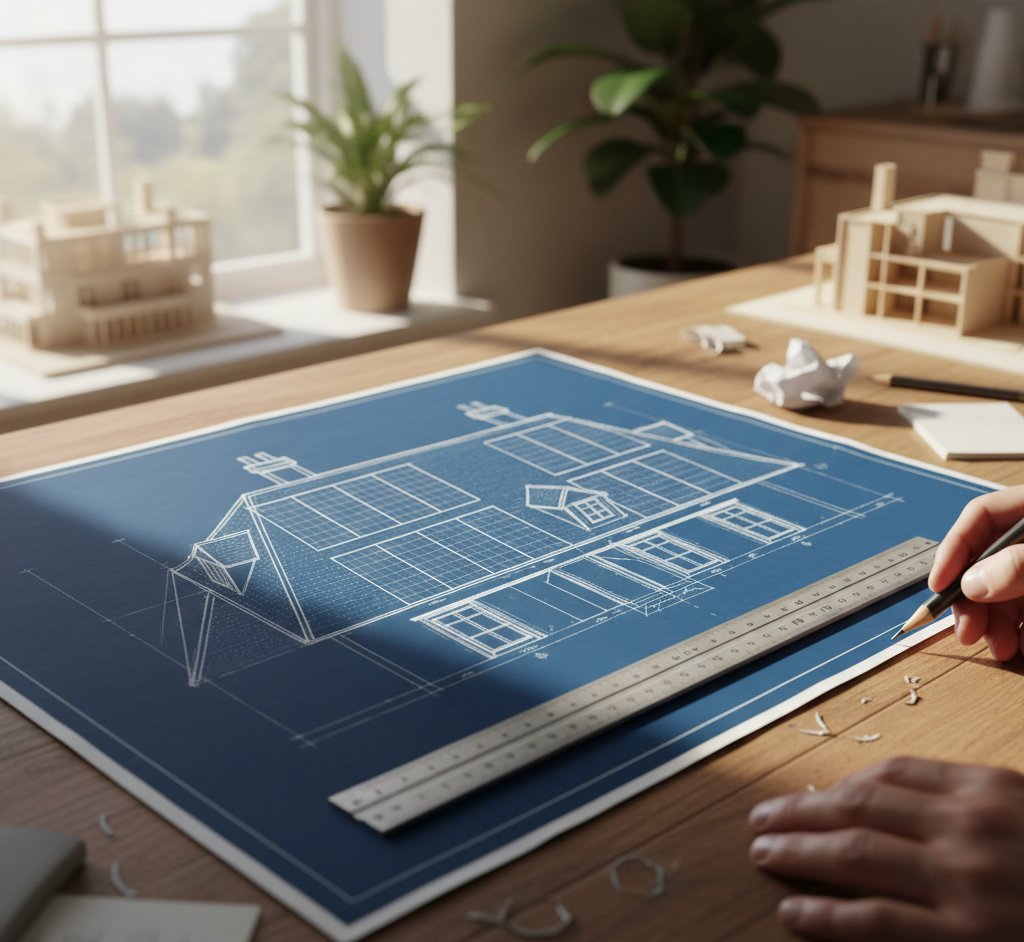
How to Size a Solar Panel System for Your Home
How to size a solar panel system for your UK home. Factor in electricity usage, roof space, budget, and future plans like EVs and heat pumps.
How Much Do Solar Panels Cost in the UK in 2026?
UK solar panel costs 2026: realistic prices by system size, what is included, and what to push back on in your quote.

How Many Solar Panels Do I Need? UK Guide
Work out how many solar panels your UK home needs. Simple formula based on your electricity usage, roof space, and budget.


Switch to Octopus Energy
Get 50 credit when you switch. We get 50 too — win-win.
What does this mean for YOUR home?
Design your perfect solar setup in under 3 minutes. Free, no sign-up required.
Build Your Solar System