This page contains affiliate links. If you purchase through them we may earn a small commission at no extra cost to you. Learn more
Battery Capacity Testing: Equipment and Methods
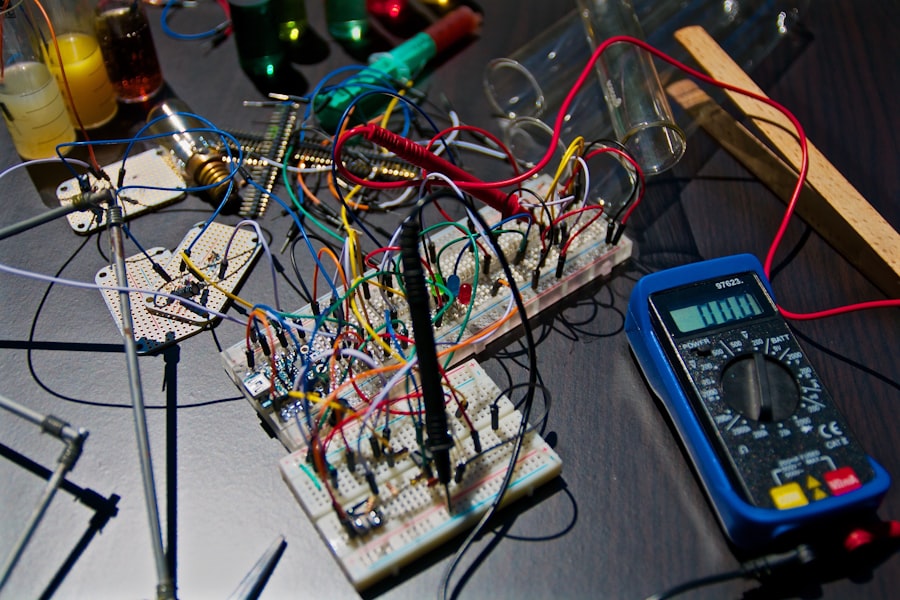
Why test battery capacity?
When building a DIY battery pack from second-life EV cells or purchasing unbranded cells, you can't trust the stated capacity. A cell labelled 50Ah might actually deliver 45Ah, 40Ah, or less depending on its age and usage history.
Testing serves two critical purposes:
- Verification — confirming cells meet minimum capacity for your project
- Grading — sorting cells by actual capacity so you can group similar cells together in your pack
Why grading matters: in a series string, the cell with the lowest capacity determines the usable capacity of the entire string. If you mix a 48Ah cell with a 38Ah cell, your string's usable capacity is limited to 38Ah. The 48Ah cell's extra capacity is wasted, and the 38Ah cell gets stressed by deeper cycling.
Equipment
For individual 18650/21700/32650 cells
| Equipment | Cost | Use case |
|---|---|---|
| ZB2L3 capacity tester | £10–£20 | Basic single-cell testing |
| Opus BT-C3100 or XTAR VC4SL | £30–£60 | Multi-cell tester with logging |
| YR1035+ internal resistance meter | £30–£50 | Quick health screening |
| iCharger 306B or equivalent | £100–£200 | Programmable charge/discharge with logging |
For larger cells and EV modules (50Ah+)
| Equipment | Cost | Use case |
|---|---|---|
| Programmable electronic load (e.g., Kunkin KP184) | £100–£300 | Controlled constant-current discharge |
| Bench power supply (30V, 20A+) | £100–£200 | Controlled charging |
| Current shunt + multimeter | £30–£50 | Accurate current measurement |
| Data logger or PC logging software | £0–£50 | Recording voltage/current over time |
| Temperature sensors | £5–£10 | Monitoring cell temp during test |
Professional-grade
For serious DIY battery builders or small businesses:
- EBC-A20 or equivalent — combined charger, discharger, and logger (£200–£400)
- Neware or Arbin test stations — lab-grade, extremely accurate, very expensive (£2,000+)
Internal resistance testing is a quick screening method
Before doing a full capacity test (which takes hours per cell), measure internal resistance (IR) with a milliohm meter. Cells with unusually high IR (more than double the typical value for that cell type) are likely degraded and can be rejected without full testing. This saves enormous time when screening large batches.
The testing method
Step 1: Safety preparation
- Work in a ventilated area
- Have a fire extinguisher nearby (CO2 or Class D)
- Never leave charging or discharging batteries unattended
- Use appropriate fusing on all test circuits
- Monitor temperature — stop testing if cells exceed 45°C
Step 2: Initial charge
Fully charge the cell or module to its maximum voltage using a suitable charger:
- LFP (LiFePO4) cells: charge to 3.65V per cell
- NMC cells: charge to 4.2V per cell (or 4.1V for conservative longevity)
- NCA cells: charge to 4.2V per cell
Use constant-current/constant-voltage (CC/CV) charging. The charge is complete when the current drops below C/20 (e.g., below 2.5A for a 50Ah cell) at the target voltage.
Step 3: Rest period
Let the cell rest for 1–2 hours after charging. This allows the cell voltage to stabilise and gives a more accurate starting point for the discharge test.
Step 4: Controlled discharge
Discharge at a known constant current to the minimum safe voltage:
- LFP cells: discharge to 2.5V per cell
- NMC cells: discharge to 2.8–3.0V per cell
- NCA cells: discharge to 2.5–3.0V per cell
Common discharge rates:
- C/5 (50Ah cell discharged at 10A) — takes 5 hours, standard for capacity rating
- C/10 (50Ah cell at 5A) — takes 10 hours, gentler, gives slightly higher capacity reading
- C/2 (50Ah cell at 25A) — takes 2 hours, shows how the cell performs under load
Step 5: Record the results
Record the total Ah or Wh delivered during the discharge. This is the cell's actual capacity at the tested discharge rate.
Wh = average voltage during discharge x Ah delivered
For a 50Ah LFP cell discharged at C/5:
- If it delivers 46Ah at an average voltage of 3.2V
- Capacity = 46Ah x 3.2V = 147.2Wh
Temperature affects results
Battery capacity varies with temperature. Test at room temperature (20–25°C) for consistent, comparable results. Cold cells deliver less capacity; hot cells deliver slightly more but at the cost of accuracy and potential damage. Record the ambient temperature alongside your test results.
Grading cells
After testing, sort cells into capacity bins:
| Grade | Capacity range (example for 50Ah rated cells) | Use |
|---|---|---|
| A | 47–50Ah | Best cells — use in series strings |
| B | 44–47Ah | Good cells — use in separate matched strings |
| C | 40–44Ah | Acceptable — use for less demanding applications |
| Reject | Below 40Ah | Below 80% rated — likely degraded, don't use |
Within each series string, all cells should be from the same grade — ideally within 2Ah of each other. The closer the match, the better the pack performs and the longer it lasts.
Cycle testing
A single capacity test gives a snapshot. For a more thorough assessment, cycle the cell 3–5 times (charge-discharge-charge). This:
- Reveals any cells with rapidly declining capacity (they might pass one test but fail by the third)
- Helps the BMS calibrate its SOC estimation
- Identifies cells with poor charge retention (self-discharge issues)
Practical tips
- Label everything — mark each cell with a unique ID and record test results in a spreadsheet
- Test in batches — if you have multiple cells to test, invest in a multi-channel tester or electronic load to run parallel tests
- Don't rush — a proper C/5 capacity test takes 5+ hours per cell. Budget accordingly for large batches
- Keep records — your test data is valuable. It establishes baseline performance for future SOH monitoring
- Safety first — lithium cells can vent or catch fire if abused. Follow all safety precautions
Share this article
Stay informed
Get free solar updates direct to your inbox
Related reading

Repurposing EV Batteries for Home Storage
Using second-life EV batteries for home solar storage in the UK. Sourcing, testing, safety considerations, and whether DIY repurposing is worth the effort.
Battery State of Health (SOH): Monitoring Degradation
How to monitor your home battery's State of Health, what causes degradation, normal SOH decline rates, and when to worry about your solar battery in the UK.
Series vs Parallel Battery Configurations
Understanding series and parallel battery configurations for DIY solar storage. Voltage, capacity, and how to build safe battery packs for home use in the UK.


Switch to Octopus Energy
Get 50 credit when you switch. We get 50 too — win-win.
What does this mean for YOUR home?
Design your perfect solar setup in under 3 minutes. Free, no sign-up required.
Build Your Solar System