This page contains affiliate links. If you purchase through them we may earn a small commission at no extra cost to you. Learn more
Best Solar Panels for UK Homes 2026
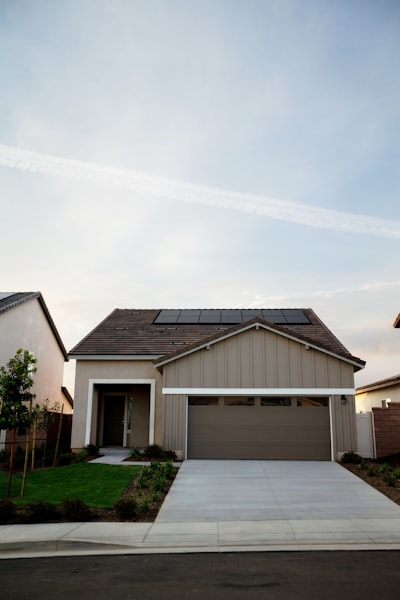
The solar panel market has matured considerably. The days of widely variable quality are mostly behind us — all mainstream Tier 1 panels are reliable, and choosing between them is more about matching specs to your needs than avoiding lemons. That said, there are real differences in efficiency, warranty terms, and long-term degradation rates that affect the value you get.
What to Look For in a Solar Panel
Before diving into specific panels, here's what actually matters when comparing options:
Efficiency
Efficiency tells you how much of the available sunlight gets converted to electricity. Higher efficiency panels generate more power from the same roof area. This matters most when space is limited. In 2026, good monocrystalline panels range from around 20% to 23% efficiency.
Don't be misled by efficiency into thinking it's the only metric that matters — a slightly less efficient panel with a better degradation rate might outperform over 25 years.
Warranty
There are two warranty types to check:
- Product (materials) warranty: Covers manufacturing defects. 12 years is the minimum acceptable; 15–25 years is better. Some premium manufacturers now offer 25-year product warranties.
- Performance warranty: Guarantees minimum output over time, typically 25–30 years. The key figure is the annual degradation rate — lower is better.
Degradation Rate
All solar panels lose a small amount of output each year. A panel that starts at 100% output might be guaranteed to produce at least 80% at year 25. The rate at which it degrades matters more than most people realise over a 25-year investment.
- PERC (P-type) panels typically degrade at 0.45–0.55% per year
- TOPCon (N-type) panels typically degrade at 0.35–0.40% per year
Over 25 years, that difference compounds. An N-type panel might produce 5–8% more cumulative energy than a comparable PERC panel of the same initial wattage.
Temperature Coefficient
UK summers can get warm, and panels generate less electricity as they heat up. The temperature coefficient of Pmax tells you how much output drops per degree above 25°C. A lower (more negative) number is better — -0.29%/°C beats -0.35%/°C.
Manufacturer Bankability
You want to know your panel manufacturer will still be around in 15 years when you have a warranty claim. All four panels reviewed here are from established Tier 1 manufacturers with strong balance sheets and global manufacturing scale.
The Panels: Head-to-Head
Individual Panel Reviews
LONGi Hi-MO 6 420W — Our Top Pick
LONGi is the world's largest solar panel manufacturer and has invested heavily in N-type TOPCon technology. The Hi-MO 6 at 420W offers 22.8% efficiency — the highest of the four panels here — and a temperature coefficient of -0.29%/°C, which is genuinely excellent.
The 15-year product warranty and 30-year performance warranty are competitive, and LONGi's scale and financial stability give confidence that warranty claims would actually be honoured. For UK homes where roof space is limited and you want to maximise output per panel, this is the one to specify.
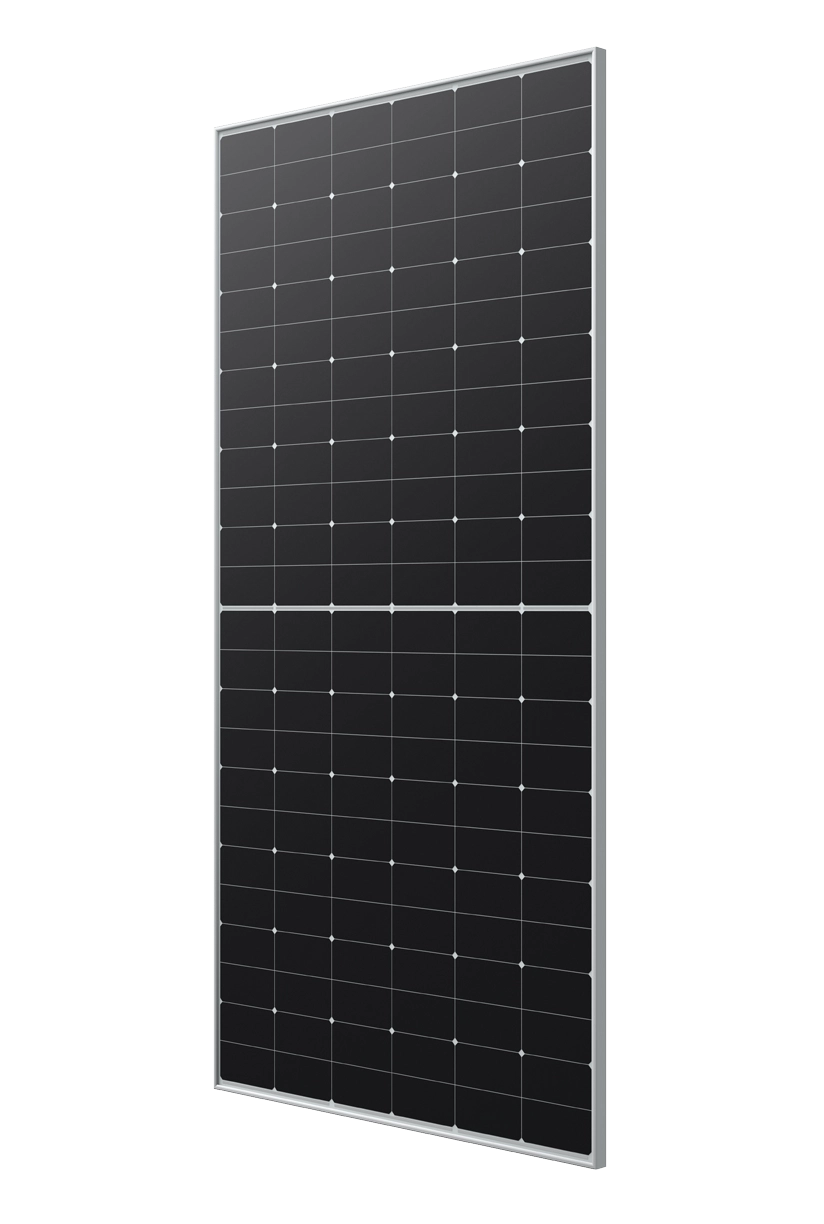
LONGi Hi-MO X6 450W
£85450
23
1722 x 1134 x 30
21.3
Affiliate link — we may earn a small commission at no extra cost to you
Trina Solar Vertex S+ 415W
Trina's Vertex S+ is another N-type TOPCon panel and a strong contender. At 22.5% efficiency and a -0.30%/°C temperature coefficient, it's just behind the LONGi on raw specs but delivers comparable real-world performance. The 15-year product warranty matches the LONGi.
Trina has historically had excellent quality control and installer relationships in the UK. If your installer has a preference for Trina (many do, due to their supply chain relationships), it's a very safe choice with no compromise on quality.
JA Solar JAM54S30 405W
JA Solar is a reliable PERC (P-type) panel at a slightly lower price point. At 20.9% efficiency, it won't squeeze quite as many watts from a given roof area as the N-type panels, and the -0.35%/°C temperature coefficient is standard for PERC technology.
The product warranty is 12 years rather than 15, which is the trade-off for a lower price. For larger roofs where space isn't a constraint, JA Solar panels offer very solid value — they're one of the most commonly installed panels in the UK for good reason.
Canadian Solar HiKu6 410W
Canadian Solar occupies a similar position to JA Solar — a trusted Tier 1 PERC panel with proven reliability, available at a competitive price. The HiKu6 at 410W and 21.4% efficiency sits just between JA Solar and the N-type panels on performance metrics.
Canadian Solar has a strong presence in UK installations and excellent MCS certification track record. Like JA Solar, it's a sensible choice for larger installations where maximum panel efficiency matters less than overall system cost.
Which Panel Should You Choose?
If you have limited roof space: Go for an N-type panel — LONGi Hi-MO 6 or Trina Vertex S+. The higher efficiency means more watts from fewer panels.
If you want the best long-term value: Again, N-type wins due to lower degradation. Over 25 years, the output differential is meaningful.
If upfront cost is the priority: JA Solar or Canadian Solar offer excellent reliability at a lower panel price. Combine with a quality inverter and you'll have a solid system.
If your installer has a strong preference: Trust a good installer's judgement. Their experience with a specific panel's performance and ease of claiming warranty replacements is real-world knowledge that specs don't capture.
What About Panels You've Never Heard Of?
The solar market has plenty of lesser-known brands, often sold at lower prices. Some are genuinely decent; many are not. The risk with obscure manufacturers isn't necessarily immediate failure — it's that they may not exist in 10 years when you have a warranty claim. Stick with Tier 1 manufacturers for a system you'll live with for 25 years.
Here's our top recommendation for UK rooftops where space is at a premium:
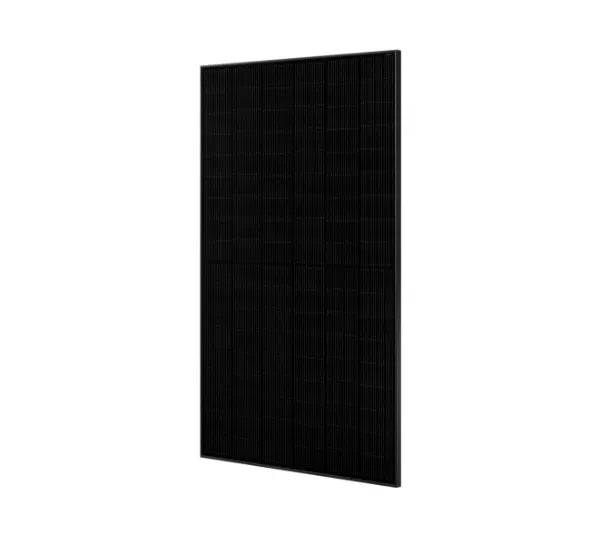
JA Solar JAM54D41 450W N-type TOPCon
£82450
22.8
1722 x 1134 x 30
21.5
Affiliate link — we may earn a small commission at no extra cost to you
Check out how much a full system will cost once you've decided on your panel preference.
Share this article

EcoFlow makes portable power stations and solar panels for home backup, off-grid, and solar storage without installation. The Delta Pro is the UK community favourite.
Affiliate link — we may earn a small commission at no extra cost to you
Stay informed
Get free solar updates direct to your inbox
Related reading

How Much Do Solar Panels Cost in the UK in 2026?
Realistic UK solar panel costs broken down by system size, installation, and what actually affects the price you'll be quoted.
Solar Inverters Explained: Types, Sizing, and Real-World Limits
String, micro, and hybrid inverters explained clearly — plus the critical G98/G99 threshold at 3.68kW and what it means for what you can run simultaneously.
Solar Panel Efficiency: What It Means and Why It's Not Everything
Panel efficiency explained plainly — what the percentage actually means, why the gap between 20% and 22% barely matters for most UK homes, and what you should actually be comparing.


Switch to Octopus Energy
Get 50 credit when you switch. We get 50 too — win-win.
What does this mean for YOUR home?
Design your perfect solar setup in under 3 minutes. Free, no sign-up required.
Build Your Solar System