This page contains affiliate links. If you purchase through them we may earn a small commission at no extra cost to you. Learn more
Solar Panel Efficiency: What It Means and Why It's Not Everything
What efficiency percentage actually means
A solar panel's efficiency rating tells you what proportion of the solar energy hitting its surface is converted into electrical energy.
A 450W panel with 21% efficiency converts 21% of incoming sunlight into electricity. The remaining 79% is mostly reflected or dissipated as heat. This might sound wasteful, but it's not an engineering failure — it's the fundamental physics of the photovoltaic process with silicon-based cells. Even the best commercial silicon panels available today top out around 24–25%.
Here's the concrete version: imagine 1,000W of sunlight falling on every square metre of your roof. A panel with 20% efficiency produces 200W per square metre. A panel with 22% efficiency produces 220W per square metre. That difference — 20W — is what you're paying a premium for when you choose a high-efficiency panel over a standard one.
A specific worked example:
A 450W panel with 21% efficiency has an area of approximately 2.14 m² (450W ÷ 210W/m²).
A 460W N-type panel with 22.5% efficiency has an area of approximately 2.04 m² (460W ÷ 225W/m²).
The higher-efficiency panel delivers slightly more power in a slightly smaller footprint. That's the entire practical difference.
The maths of "barely matters"
Let's look at the difference for a real UK installation.
Say you want to install 12 panels. With standard 450W/21% panels, you get 5,400W of capacity. With premium 460W/22.5% panels, you get 5,520W. The difference is 120W, or 2.2%.
Over a year in southern England (around 900 peak sun hours in useful generation terms), that 120W difference produces approximately:
120W × 900 hours × 0.80 performance ratio = 86 kWh per year
At 25p/kWh, that's £21.50 per year in extra value. If the premium panels cost £200 more than standard panels, the payback on that premium alone is about 9 years.
That doesn't mean premium panels are never worth it. It means efficiency alone doesn't justify a large price premium for most rooftop installations.
Don't overpay for marginal efficiency gains
The marketing around "high-efficiency" panels is pervasive, and it matters much more in commercial solar where thousands of square metres are at stake. For a domestic roof with 10–14 panels, the efficiency difference between a good standard panel and a premium N-type panel translates to roughly 3–5% more annual output. That's real, but it rarely justifies paying 30–50% more per panel. Compare price per watt and warranty terms first.
When higher efficiency genuinely matters
There are real situations where choosing a higher-efficiency panel is the right call:
1. Limited roof space
If your roof can only physically accommodate 8 panels, squeezing maximum watts out of each panel matters. A 415W panel vs a 380W panel on the same roof is a meaningful difference in system capacity — 3,320W vs 3,040W. Here, efficiency directly translates to more kilowatt-hours from a fixed footprint.
2. Shading and temperature performance
Some higher-efficiency cell technologies (particularly N-type TOPCon and HJT) have better low-light performance and lower temperature coefficients. In the UK climate — which has plenty of diffuse light and cooler temperatures — this can provide a small but real practical advantage beyond the headline efficiency figure.
3. Aesthetic considerations
All-black premium panels (typically high-efficiency models) are more visually appealing on certain roofs. If aesthetics matter to you and the efficiency is a bonus, that's a legitimate reason to pay a modest premium.
What you should actually be comparing
Efficiency is a single, easily-marketed number. It doesn't capture the full picture of panel quality. Here's what to look at instead:
1. Total annual output in kWh

This is the only number that directly translates to money. Ask your installer for the annual generation estimate (kWh) for the specific system they're proposing, based on your roof's orientation and your location. Two systems with different panel efficiencies but the same roof space will produce similar annual output.
2. Price per watt peak (£/Wp)
Compare panels on this basis, not on headline efficiency. A 450W panel at £75 (£0.17/Wp) may be better value than a 450W premium panel at £90 (£0.20/Wp) if the warranty and reliability are comparable.
3. Performance warranty terms
Does the panel maintain at least 85% output at 25 years, or 80%? What's the year-1 degradation cap? N-type TOPCon panels typically carry better degradation guarantees (0.4% per year vs 0.55% for PERC). Over 25 years, this compounds to a meaningful difference in lifetime output.
4. Product warranty length
12 years is the minimum acceptable; 15 years is the current standard for quality panels. Some manufacturers now offer 20-year product warranties — a genuine sign of confidence in their manufacturing quality.
5. Manufacturer reputation and track record
A panel from a manufacturer with a 30-year track record and an established UK distribution network is worth something that isn't captured in the efficiency spec. If you need to make a warranty claim in year 10, you want the manufacturer to still be around and accessible.
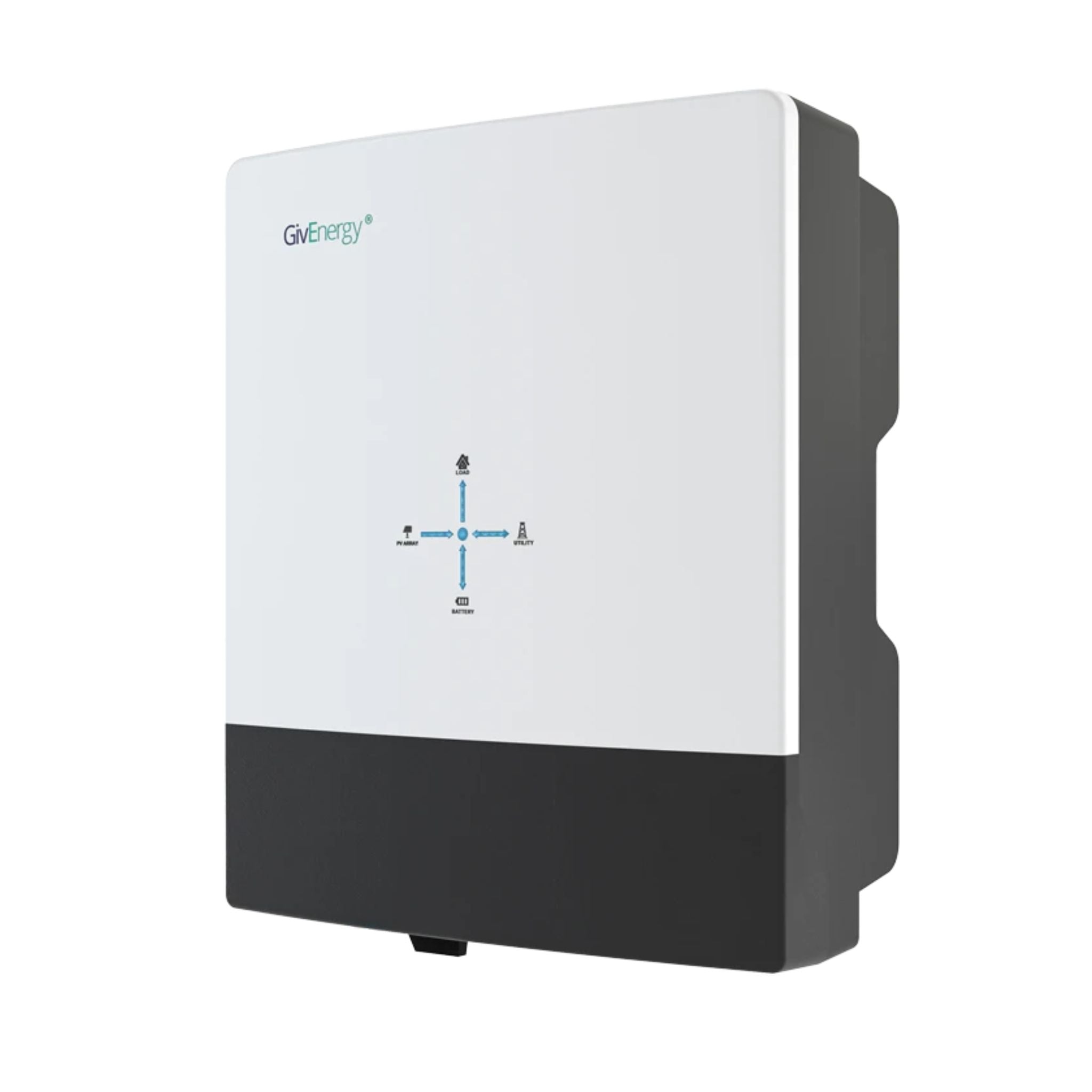
GivEnergy All-in-One 5kW Hybrid Inverter
£1,2005
7.5
2
48V
Affiliate link — we may earn a small commission at no extra cost to you
Panel types and typical efficiency ranges (2026)
| Technology | Typical efficiency range | Key characteristics |
|---|---|---|
| Monocrystalline PERC | 19.5–21.5% | Mainstream workhorse; proven reliability |
| N-type TOPCon | 21.5–23.5% | Lower degradation; better low-light; premium pricing |
| HJT (Heterojunction) | 22–24.5% | Best temperature coefficient; highest efficiency; premium |
| Bifacial | +5–10% rear gain | Useful for flat roofs or ground-mounted; marginal on tiled roofs |
| Budget polycrystalline | 15–17% | Outdated technology; avoid for residential installs |
For the vast majority of UK residential installations, monocrystalline PERC remains the rational choice — proven, well-priced, reliable. N-type TOPCon is worth considering if the price gap has narrowed (it's closing rapidly) or if roof space is constrained.
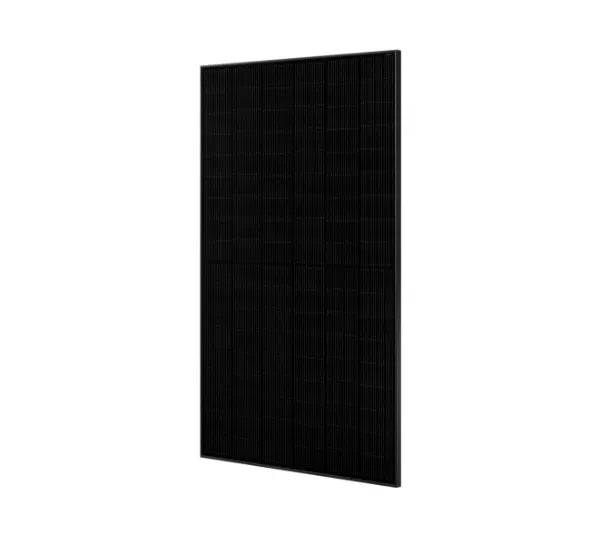
JA Solar JAM54D41 450W N-type TOPCon
£82450
22.8
1722 x 1134 x 30
21.5
Affiliate link — we may earn a small commission at no extra cost to you
Comparing popular panel options
The summary
Solar panel efficiency is a useful spec to understand, but it's marketing-inflated in the residential context. The difference between a 20% and 22% panel rarely justifies a significant price premium for a typical UK roof.
Focus on: kWh/year generation estimates, price per watt, warranty terms, and manufacturer credibility. A 450W panel from a reputable manufacturer with a 30-year performance warranty at a competitive price will serve you better than chasing efficiency percentages.
The best panel for your home isn't the most efficient one — it's the one that produces the most energy from your available roof space, at the best price, with the best warranty, from a company that will honour that warranty.
Panel degradation over time
Solar panels lose output gradually each year. The shaded band shows the typical range for your panel type. Drag the slider to explore best and worst cases.
10 panels
4.5 kW system
2% first-year loss
After year 1
3,969
98% (2% LID loss)
Year 25
3,519
87% of original
Year 50
3,105
77% of original
50yr total
180k
kWh generated
Mono-PERC panels lose ~2% in year one from Light-Induced Degradation (LID), then degrade linearly. The 25-year warranty guarantees at least 80% output. Field data beyond 30 years is limited — projections past that point are modelled, not measured.
Share this article

OVO has carefully selected trusted teams across the UK to install solar panels and heat pumps. Enjoy the personal touch of a local expert with the peace of mind of a household name.
Affiliate link — we may earn a small commission at no extra cost to you
Stay informed
Get free solar updates direct to your inbox
Related reading
Best Solar Panels for UK Homes 2026
An honest look at the best solar panels available for UK homes in 2026 — covering JA Solar, Trina, Canadian Solar, and LONGi, with real specs and what to look for.
How Much Electricity Do Solar Panels Generate in the UK?
Real kWh figures for UK solar systems by size, region, and orientation — including seasonal variation, the effect of roof angle, and why real-world output differs from the spec sheet.
How Long Do Solar Panels Last? The Honest Answer
Solar panels are rated for 25–30 years, but what does that actually mean? Degradation rates, warranty types, what happens after 25 years, and why inverters are the weak link.


Switch to Octopus Energy
Get 50 credit when you switch. We get 50 too — win-win.
What does this mean for YOUR home?
Design your perfect solar setup in under 3 minutes. Free, no sign-up required.
Build Your Solar System