This page contains affiliate links. If you purchase through them we may earn a small commission at no extra cost to you. Learn more
DNO Issues with Solar: G98, G99, and Export Limits
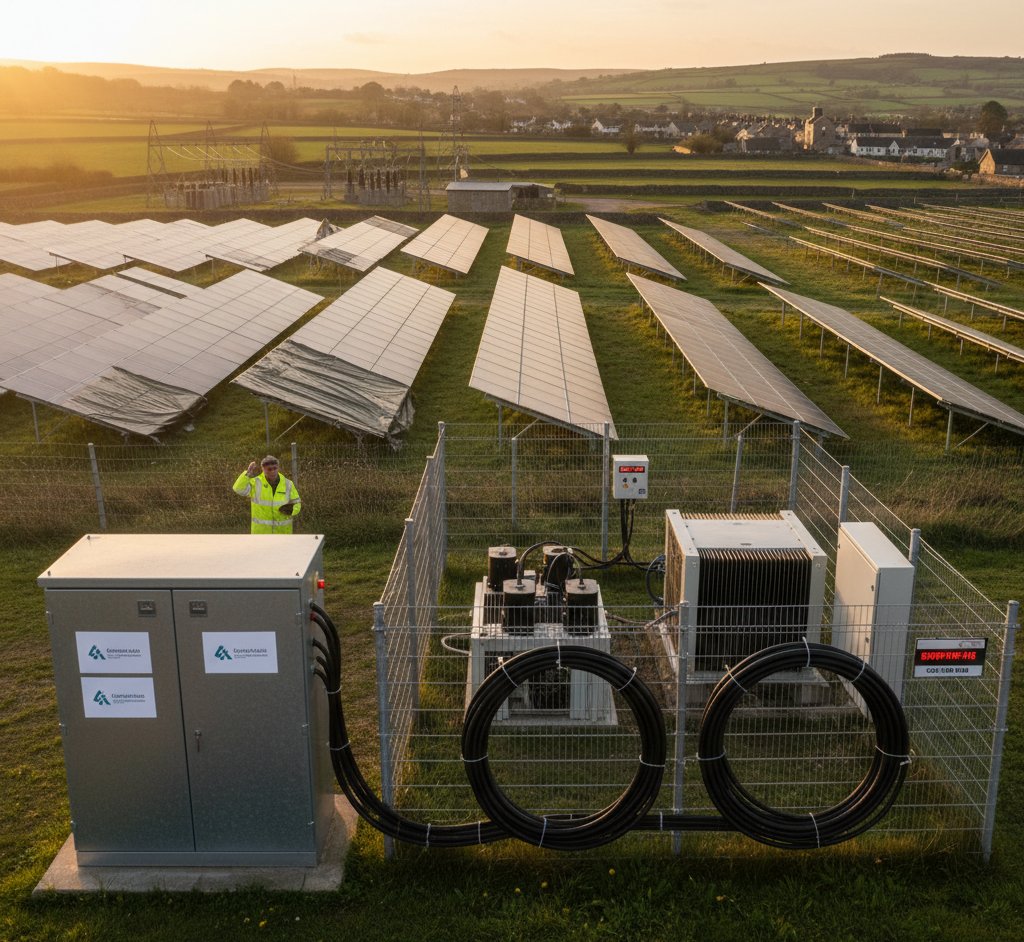
Your Distribution Network Operator (DNO) manages the local electricity grid. When you install solar panels, you become a generator as well as a consumer, and the DNO needs to know about it. For most domestic installations, this is a simple notification. For larger systems or constrained areas, it can become more complex.
Who Is Your DNO?
The UK has six main DNOs covering different regions:
- UK Power Networks (UKPN): South East, East, London
- Western Power Distribution (now National Grid ED): South West, Midlands, South Wales
- Northern Powergrid: North East, Yorkshire
- Scottish Power Energy Networks: Central and Southern Scotland, North Wales, Merseyside
- Scottish and Southern Electricity Networks (SSEN): North of Scotland, Southern England
- Electricity North West: North West England
Your installer will know your DNO based on your postcode. You can also check your electricity bill or enter your postcode on the Energy Networks Association website.
G98: Simple Notification (Under 3.68kW)
For solar systems with an inverter capacity of 3.68kW or less per phase (which covers most standard domestic installations on a single-phase supply), the process is straightforward:
- Your installer completes a G98 notification form (formerly the G83 form)
- They submit it to the DNO within 28 days of commissioning
- The DNO acknowledges receipt
- No approval is needed — notification is sufficient
The G98 process is essentially telling the DNO "we've installed a small generator at this address." The DNO doesn't need to assess it or give permission. Your system can operate immediately.
What 3.68kW Per Phase Means
- Single-phase supply (most UK homes): Up to 3.68kW inverter capacity
- Three-phase supply (some larger homes): Up to 3.68kW per phase = 11.04kW total
If your system has a 3.6kW inverter, it's within the G98 threshold on a single-phase supply. If you have a 5kW inverter on a single-phase supply, you need G99.
System Size vs Inverter Size
The G98/G99 threshold is based on inverter capacity, not panel capacity. You can have 5kW of panels connected to a 3.6kW inverter and remain within G98. The inverter limits the maximum output regardless of how many panels are connected. This is called "oversizing" the panel array and is common practice.
G99: Application Required (3.68kW–16kW)
For systems with inverter capacity above 3.68kW per phase (up to 16kW per phase), a G99 application is required. This is more involved:
- Your installer submits a G99 application to the DNO before installation
- The DNO has 45 working days (approximately 9 weeks) to respond
- The DNO assesses whether the local grid can handle the additional generation
- Response options:
- Approval without conditions — proceed as planned
- Approval with conditions — typically an export limit (see G100 below)
- Request for further information — may extend the timeline
- Rejection — rare, but possible in severely constrained areas
Why G99 Takes Longer
The DNO needs to check whether the local transformer and cables can handle additional power flowing back into the grid. In some areas, especially rural locations with long cable runs or small transformers, the grid may already be at or near capacity from existing solar installations.
Grid Constraints: The Real-World Issue
As solar installations have proliferated, some parts of the grid are becoming congested. This is particularly common in:
- Rural areas — Long cable runs to small transformers with limited capacity
- Streets with many solar installations — Multiple homes exporting simultaneously can overload local infrastructure
- Areas near solar farms — Grid infrastructure is already carrying large renewable generation
When a constraint exists, the DNO may:
- Approve your installation with a G100 export limitation (capping how much you can export)
- Require you to pay for a grid reinforcement (upgrading the local transformer or cables)
- In rare cases, refuse the connection
G99 Delays Can Affect Your Timeline
If your system needs G99 approval, your installer should submit the application well before the planned installation date. The 45-day response window is a legal maximum, but many DNOs respond faster. However, if additional assessment is needed (particularly for constrained areas), the process can extend to 3–4 months. Don't book scaffolding until you have G99 approval.
What Your Installer Handles
A competent installer manages all DNO interactions:
- Determines whether G98 or G99 applies to your system
- Completes and submits the appropriate forms
- Chases the DNO for responses if needed
- Advises on any conditions or limitations imposed
- Ensures the installation complies with DNO requirements
You shouldn't need to contact the DNO yourself. If your installer asks you to handle DNO paperwork, that's unusual — most include this as a standard part of their service.
The Engineering Recommendation Standards
G98 and G99 are formally known as Engineering Recommendations, published by the Energy Networks Association:
- G98: Requirements for the connection of fully type-tested micro-generating plant (up to 16A per phase)
- G99: Requirements for the connection of generation equipment
- G100: Technical requirements for customer export limiting schemes
All grid-connected solar inverters sold in the UK must comply with these standards. They include requirements for:
- Anti-islanding — The inverter must shut down if the grid goes down, to protect line workers
- Voltage and frequency limits — The inverter must disconnect if grid voltage or frequency goes outside safe bounds
- Power quality — The inverter must not introduce excessive harmonics or flicker into the grid
Impact on System Design
DNO requirements can influence your system design:
Export Limitation
If the DNO imposes an export limit, your inverter must be configured to curtail export above a set threshold (often 3.68kW or even 0kW). This doesn't reduce your self-consumption benefit, but it limits how much you earn from export and wastes potential generation during peak hours.
Three-Phase Considerations
If you have a three-phase supply, you can install a larger system within G98 limits (up to 11.04kW total). Some homeowners choose a three-phase inverter or three single-phase inverters to maximise capacity without triggering G99.
Battery Storage
Adding a battery changes the DNO calculation because it can store electricity that would otherwise be exported. Some DNO export limits can be managed by configuring the battery to absorb excess generation rather than exporting it.
For a system that fits neatly within the G98 notification threshold, this inverter is the most popular choice:
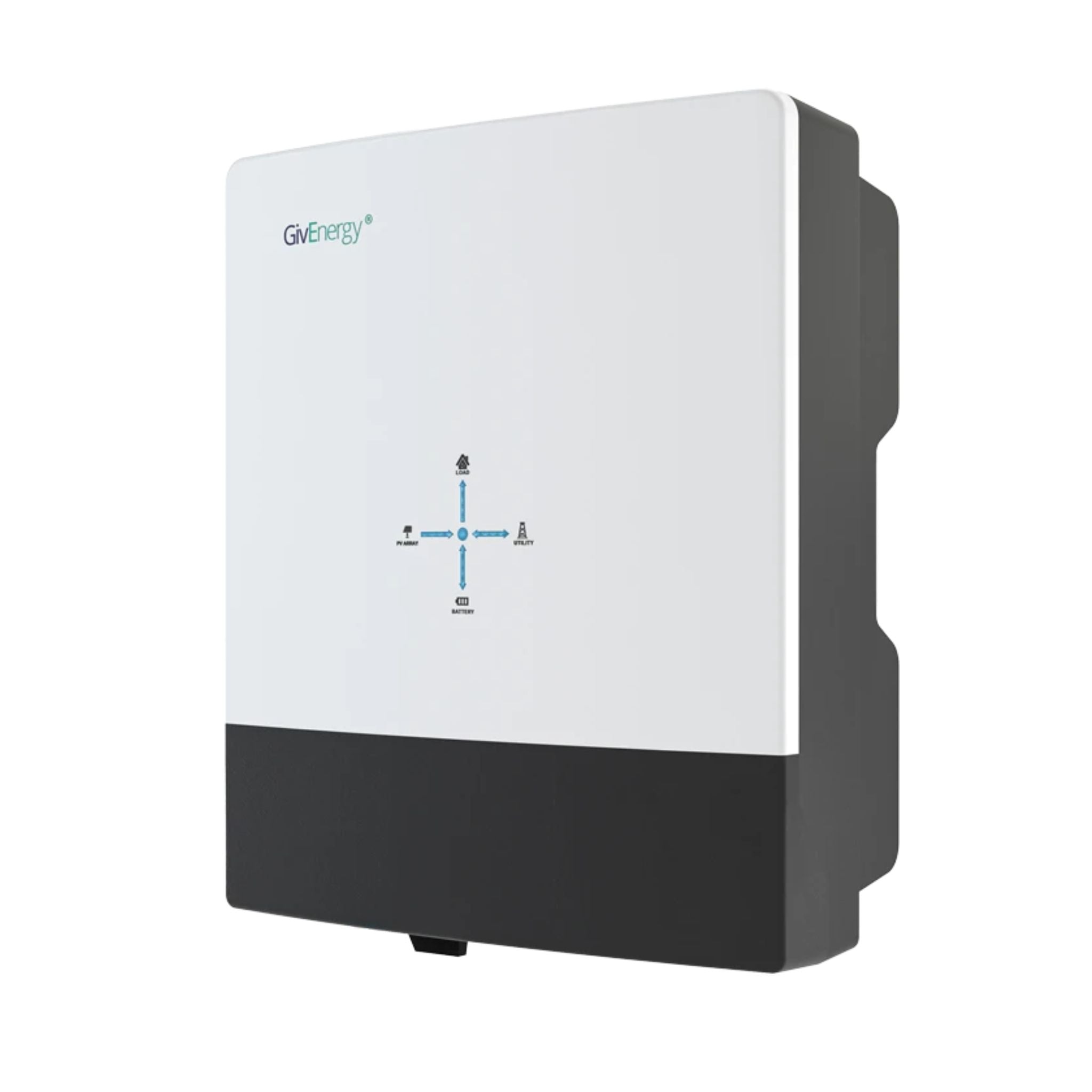
GivEnergy All-in-One 5kW Hybrid Inverter
£1,2005
7.5
2
48V
Affiliate link — we may earn a small commission at no extra cost to you
If DNO constraints limit your export, a battery absorbs surplus instead. Here's what we'd recommend:
GivEnergy All-in-One 5kW Hybrid Inverter
£1,2005
7.5
2
48V
Affiliate link — we may earn a small commission at no extra cost to you
Share this article

OVO has carefully selected trusted teams across the UK to install solar panels and heat pumps. Enjoy the personal touch of a local expert with the peace of mind of a household name.
Affiliate link — we may earn a small commission at no extra cost to you
Stay informed
Get free solar updates direct to your inbox
Related reading
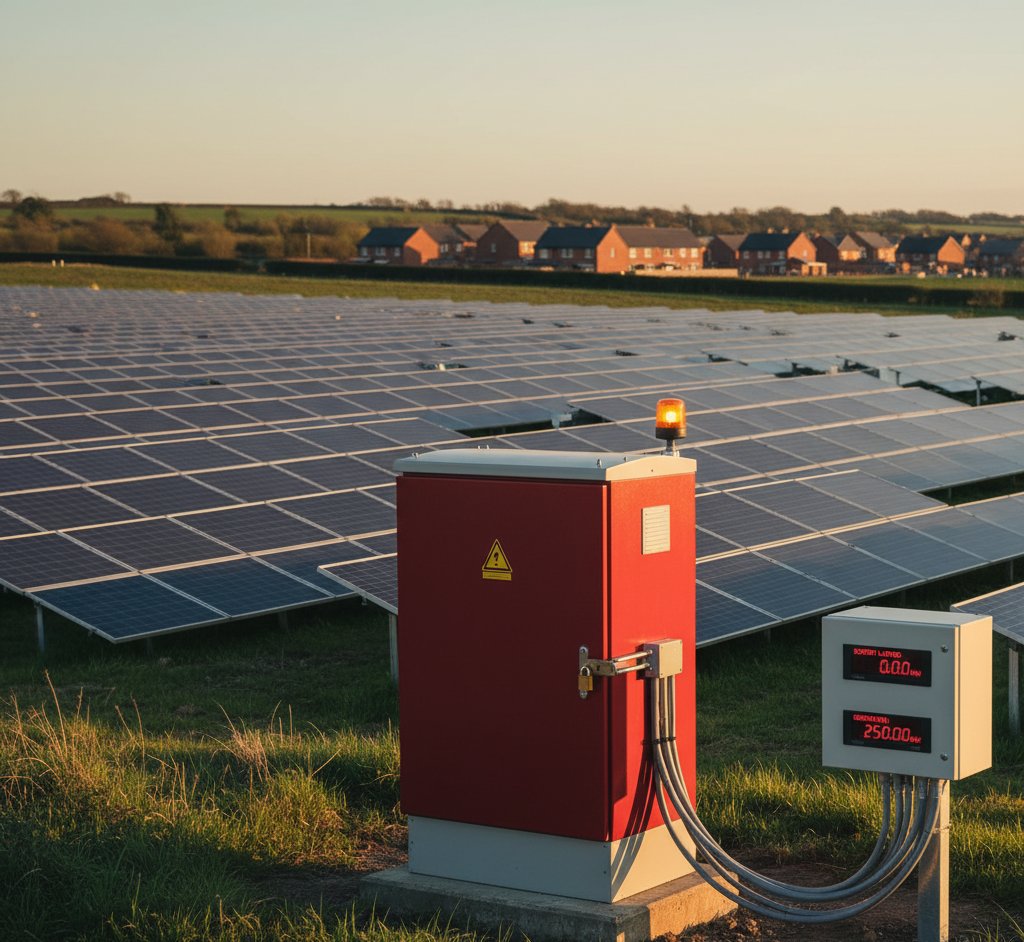
G100 Export Limitation: What It Is and How It Affects You
G100 export limitation caps how much solar electricity you can send to the grid. What it means, when it applies, and strategies to minimise the impact.
The Solar Panel Installation Process: Step by Step
What happens during a solar panel installation from first quote to switch-on. A step-by-step guide to the UK solar installation process for homeowners.
Solar Inverters Explained: Types, Sizing, and Real-World Limits
String, micro, and hybrid inverters explained clearly — plus the critical G98/G99 threshold at 3.68kW and what it means for what you can run simultaneously.


Switch to Octopus Energy
Get 50 credit when you switch. We get 50 too — win-win.
What does this mean for YOUR home?
Design your perfect solar setup in under 3 minutes. Free, no sign-up required.
Build Your Solar System