This page contains affiliate links. If you purchase through them we may earn a small commission at no extra cost to you. Learn more
Do Solar Panels Make Noise? Honest Answers

Solar panels have no moving parts. The panels themselves sit silently on your roof, generating electricity without any mechanism that could rattle, spin, or vibrate. But a solar system is more than just panels — and some parts of the system do produce sound. Here is an honest guide to what you will actually hear, and what is worth worrying about.
The Panels Themselves: Silent
A solar panel is a sheet of silicon cells laminated behind glass. There is nothing inside that moves. In calm conditions, with no weather acting on them, solar panels produce no sound whatsoever.
This is different from some other renewable technologies. Wind turbines have rotating blades and bearings that generate noise. Solar panels do not. Silence is the default.
Rain: Same as Any Hard Surface
The UK being the UK, the first thing many people ask is whether rain is noisy on solar panels. The answer is: no more so than rain on your existing roof tiles, or on any glass surface.
Solar panels are glazed with toughened glass, and rain drumming on glass is a familiar sound. Whether you notice it depends on your roof construction — a well-insulated, boarded loft converts the sound less than an open rafter space. But the panels themselves do not amplify rain any more than the tiles they replace.
One exception worth noting: the gap between the underside of the panels and the roof surface can sometimes create a subtle echo effect in heavy rain, particularly on flat or low-pitch roofs where the air gap is larger. Most people with panels on a standard pitched roof do not notice this.
Thermal Expansion: Normal Clicking
As panels heat up during the day and cool down in the evening, the aluminium mounting frames and panel frames expand and contract. This produces occasional quiet clicks — exactly the same physics that causes floorboards, radiators, and metal window frames to click when temperatures change.
These clicks are random, infrequent, and quiet. They are completely normal and not a sign of any problem. If you hear them, particularly on sunny mornings as the panels warm up, you can safely ignore them.
The Inverter: A Hum You Will Notice
The inverter is the part of a solar system that converts the DC electricity from the panels into the AC electricity used by your home. Unlike the panels, inverters do make noise — a low, continuous electrical hum produced by the electronics and, in some models, a cooling fan.
How loud is an inverter?
Typical string inverters (a single box, usually mounted in a garage, utility room, or loft) produce 25–45 dB of noise — roughly equivalent to a quiet fridge hum or a running dishwasher heard from another room. At the lower end, most people do not notice it at all. At the higher end (usually peak generation on a sunny day), it is noticeable if you are in the same room.
Microinverters — small units fitted to each individual panel on the roof — produce less concentrated noise, since the electronics are distributed across the roof rather than gathered in one box. If noise is a concern, discussing microinverters with your installer is worth doing.
When does the inverter hum?
Inverters only operate when the system is generating — broadly speaking, during daylight hours. They typically power down at dusk and are silent at night. If you can hear a hum from your inverter after dark, that is unusual and worth investigating.
Inverter fans
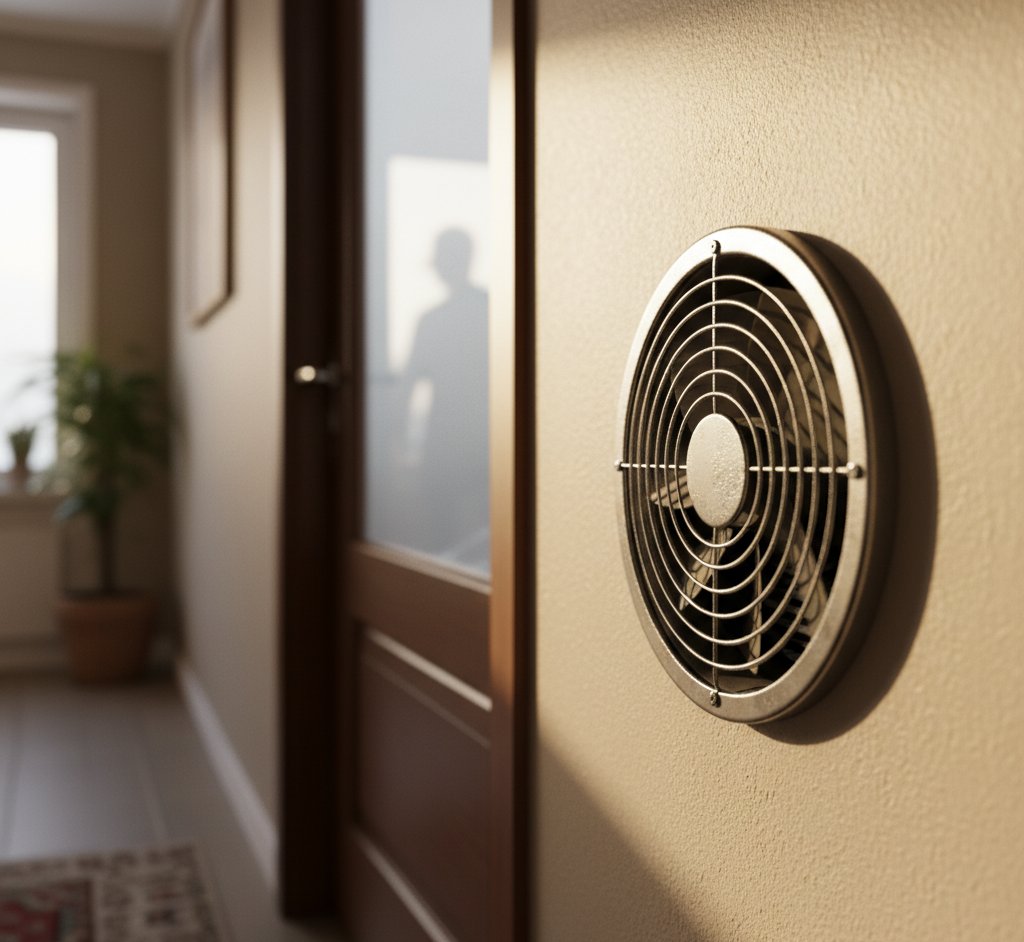
Many inverters include a small cooling fan that activates at peak generation. This is similar in sound to a desktop computer fan — quiet but audible if you are near the inverter. Fans typically only run during high-output periods on sunny days.
Anti-vibration mounts can reduce transmitted inverter hum
If your inverter is mounted on a wall and the hum transmits through the wall into adjacent rooms, anti-vibration rubber mounts between the inverter and the wall can make a noticeable difference. These are inexpensive (typically around £5–15 for a set) and easy to fit. Ask your installer about this, or fit them yourself if you are comfortable doing so — the inverter simply bolts through the mounts rather than directly to the wall.
Under-Panel Noise: Birds
One source of noise that surprises solar owners is not electrical at all. The gap between the panels and the roof is an attractive nesting spot for pigeons and starlings — sheltered, elevated, and warm. If you hear scratching, rustling, or cooing from your roof after installation, birds under the panels are the most likely cause.
Bird proofing — mesh skirts fitted around the panel perimeter — prevents access and resolves the problem. It is worth asking your installer to fit this at installation time, since retrofitting it requires scaffolding. See the article on bird proofing solar panels for more detail.
What Is Not Normal
The sounds above are all expected. These are not:
Loud buzzing or crackling — can indicate an electrical fault, damaged wiring, or a failing inverter. Switch the system off at the isolator and contact your installer or an electrician.
Rattling or banging in wind — suggests a panel or mounting rail has come loose. This is a safety issue: a loose panel can fall. Do not go on the roof yourself; contact your installer immediately.
Grinding or scraping — unusual for a solar system with no moving parts. Usually indicates something has become lodged under a panel (often a bird or nesting material near the edge of a panel).
Humming that continues or increases at night — an inverter that is active after dark may have a fault, or the noise may be coming from elsewhere (mains transformers, neighbours' equipment). Worth investigating.
Sudden change in sound pattern — if your system has been silent for two years and you suddenly notice a new noise, that is worth reporting to your installer even if it seems minor.
Unusual electrical sounds warrant investigation — do not ignore them
Buzzing, crackling, or unusual electrical sounds from a solar system can indicate wiring faults, arc faults, or component failure. These are not just nuisances — electrical faults in DC systems can be a fire risk. If you hear anything out of the ordinary from your panels, cabling, or inverter, contact your installer or an MCS-certified electrician rather than waiting to see if it goes away.
Summary
For the vast majority of solar owners, a properly installed system adds no noticeable noise to their home. The panels are silent; the inverter produces a fridge-like hum during the day; thermal clicks are occasional and quiet. Most people forget the inverter is running within a week or two of installation.
If you are sensitive to low-frequency hum, discuss inverter placement and microinverter options with your installer before committing. And if you install panels without bird proofing, budget to add it soon — pigeons are faster at finding the gap than most people expect.
Share this article

Energy-saving LED lighting — make the most of your solar electricity with efficient bulbs and fixtures
Affiliate link — we may earn a small commission at no extra cost to you
Stay informed
Get free solar updates direct to your inbox
Related reading
Noisy Solar Inverters: Causes and Solutions
Why your solar inverter makes noise, when it is normal, when it is a fault, and how to reduce inverter noise. Buzzing, humming, and fan noise explained.

Bird Proofing Solar Panels: Preventing Pigeon Problems
How to prevent pigeons nesting under solar panels in the UK. Bird proofing options, costs, and why it matters for your system's performance and longevity.

Is My Roof Suitable for Solar Panels?
Find out if your roof can take solar panels — covering direction, angle, shading, structural condition, and options for tricky roofs.


Switch to Octopus Energy
Get 50 credit when you switch. We get 50 too — win-win.
What does this mean for YOUR home?
Design your perfect solar setup in under 3 minutes. Free, no sign-up required.
Build Your Solar System