This page contains affiliate links. If you purchase through them we may earn a small commission at no extra cost to you. Learn more
East-West Solar Panels: Better Than You Think

The conventional wisdom is simple: face your solar panels south. For decades, this has been the default advice from installers, energy consultants, and government guidance alike. But that advice is increasingly outdated — and for many UK households, an east-west split can actually deliver better results in practice, even if it generates slightly less electricity on paper.
Why 'South Only' Is Outdated Advice
The south-facing rule made more sense when the economics of solar were different. In the 2010s, feed-in tariffs paid generous rates for every unit of electricity generated — whether you used it or not. Maximising total generation meant maximising income. South-facing at 35° was the right answer for that regime.
The Smart Export Guarantee (SEG) that replaced it tells a different story. Basic SEG rates in April 2026 are 3.3–5.2p/kWh for export. Standard electricity costs 24p/kWh to buy. That means every unit of solar electricity you actually use in your home is worth five to seven times more than every unit you export.
This changes the calculation completely. Generating electricity when you aren't home to use it — the classic south-facing midday peak — and exporting it at 4p is far less valuable than generating it in the morning when you're making breakfast, or in the early evening when you're cooking dinner. East-west panels do exactly this.
What East-West Actually Means
An east-west solar setup splits your roof space — or in some cases your flat roof's frame positions — between panels facing east and panels facing west.
- East-facing panels generate most of their power in the morning, peaking roughly 9–11am
- West-facing panels generate most of their power in the afternoon, peaking roughly 2–5pm
- Together, they produce a broader, flatter generation curve than a pure south-facing array
The generation profile looks quite different from south-facing:
| Time of Day | South-Facing (4kW) | East-West (4kW) |
|---|---|---|
| 7–9am | Low | Moderate (east) |
| 9–11am | Building | Good (east) |
| 11am–1pm | Peak | Moderate |
| 1–3pm | High | Moderate |
| 3–5pm | Declining | Good (west) |
| 5–7pm | Low/none | Moderate (west) |
The south-facing array peaks higher at midday but drops off sharply either side. East-west delivers a longer, flatter curve — more like a plateau than a spike.
The Output Numbers: What You Actually Lose
East-west panels do generate less electricity overall. The figures depend on the split and the tilt angle:
- Pure south-facing at 35° = baseline (100%)
- East-west at 35° = approximately 80–85% of south output annually
- East-west at 20° (common on flat roofs) = approximately 85–90% of south output
So for a household that would generate 3,400 kWh/year from a south-facing 4kW system, an east-west equivalent generates roughly 2,800–3,000 kWh/year.
That sounds like a clear win for south-facing — until you account for self-consumption.
Self-Consumption: Where East-West Wins
The average UK household is not home at peak solar time. Most people are out between 9am and 5pm. A south-facing system generates its maximum output between 11am and 2pm — typically the time of lowest household electricity demand.
This mismatch means much of that south-facing midday peak gets exported at 3.3–5.2p rather than used at 24p value.
An east-west system aligns better with typical household usage patterns:
- Morning peak (east): coincides with breakfast, showers, morning routines
- Evening peak (west): coincides with cooking, TV, device charging, appliance use
For a household that is mostly out during the day, east-west can deliver higher actual bill savings despite generating fewer total kWh — because a higher proportion of generation is self-consumed.
Calculate Your Self-Consumption Rate
Before deciding between south and east-west, think about when you use electricity. If most of your usage is during the day — you work from home, have young children at home, or run appliances on timers — south-facing maximises your generation and most of it gets used. If you are out all day, east-west aligns better with when you actually draw power.
When East-West Beats South
East-west configurations make the most sense when:
Your house faces east or west. If your ridge runs north-south, one side faces east and one faces west. Installing south-facing panels on either slope means losing half the roof space and getting a sub-optimal east or west pitch. Fitting panels on both slopes in an east-west configuration is the sensible solution — and gets you more total panels.
You have a flat roof with space constraints. East-west panels on a flat roof can be mounted at very low angles (10–15°), dramatically reducing inter-row shading. You can fit many more panels in the same area than with a south-facing arrangement at 30°, which may more than offset the per-panel efficiency difference.
You use electricity morning and evening. Working adults, families with school-age children, and households with evening electric vehicle charging all fit this profile. See our east-west output vs self-consumption calculation in the roof orientation guide.
You are adding battery storage. With a battery, the case for south-facing gets stronger again — you can store midday surplus for evening use. But east-west still has advantages: more usable morning power, less battery cycling needed, and a longer window of direct self-consumption.
Your roof has multiple aspects. If you have an L-shaped roof or a complex multi-pitch, you may have surfaces facing east, south, and west. Fitting panels across multiple aspects is generally better than cramming everything onto one slope.
When South-Facing Is Still Better
South-facing remains the right choice in several situations:
You work from home or are home during the day. If your household draws a lot of power between 10am and 3pm — heating, cooking, computing, running appliances — south-facing generation will be consumed directly rather than exported.
You are on Octopus Go or another cheap overnight tariff. Octopus Go charges around 5.5p/kWh overnight. If you charge batteries overnight at 5.5p and use them during the day, you are less reliant on morning/evening self-consumption. South-facing maximises total generation, which helps fill a battery faster.
You have a small roof with limited space. If you can only fit 6–8 panels and most of your roof faces south, put them all south-facing at optimal tilt. The 15–20% east-west penalty matters more when total system size is constrained.
You have significant shading in the morning or evening. East-facing or west-facing slopes are more exposed to morning and evening shade from trees, buildings, and chimneys — when the sun is lower. If shading is significant on one side, south-facing may avoid the problem.
Don't Accept a Layout Without a Shading Analysis
Any good installer will run a shading analysis for your specific property before recommending a configuration. East-west setups can look attractive on paper but perform poorly if morning shade from a neighbour's trees hits the east panels, or an evening chimney shadow clips the west array. Ask to see the simulation output.
Real Output Comparison
Here is how different configurations compare for a typical UK home (3-bed semi, south Midlands):
| Configuration | System Size | Annual Generation | Self-Consumed (est.) | Annual Saving (est.) |
|---|---|---|---|---|
| South-facing 35° | 4kW | 3,400 kWh | ~50% (1,700 kWh) | ~£510 |
| East-west 30° | 4kW | 2,900 kWh | ~65% (1,885 kWh) | ~£565 |
| East-west + battery | 4kW | 2,900 kWh | ~80% (2,320 kWh) | ~£670 |
| South + battery | 4kW | 3,400 kWh | ~80% (2,720 kWh) | ~£790 |
Assumptions: 24p/kWh consumption rate, 4p/kWh export, household away during peak solar hours. Self-consumption percentages vary significantly by household.
The east-west system without battery actually delivers higher savings than south-facing without battery in this scenario — despite generating 15% fewer kWh — because more of the generation is used directly.
Add a battery and south-facing wins on raw numbers, because it generates more total electricity to store.
East-West on Flat Roofs
East-west mounting is particularly popular on flat roofs and commercial buildings. At 10–15° tilt, inter-row shading is minimal — panels can be mounted much closer together. A flat roof that might fit 12 south-facing panels at 30° could fit 20–24 east-west panels at 10°.
Even at lower efficiency per panel, 22 panels generating 85% of their south-facing equivalent can significantly outperform 12 south-facing panels. This is why east-west mounting dominates on commercial flat roof installations.
Talking to Your Installer
When getting quotes, don't just accept whatever layout the installer proposes. Ask them:
- What configuration are they recommending and why?
- Have they modelled both south-facing and east-west options for your property?
- What is the estimated self-consumption rate for each option?
- What is the payback period for each layout?
A good installer will model multiple configurations and show you the numbers. If they only offer one option without explanation, that is a flag worth raising.
For more on the factors that affect solar siting, see our roof orientation guide.
Share this article

OVO has carefully selected trusted teams across the UK to install solar panels and heat pumps. Enjoy the personal touch of a local expert with the peace of mind of a household name.
Affiliate link — we may earn a small commission at no extra cost to you
Stay informed
Get free solar updates direct to your inbox
Related reading
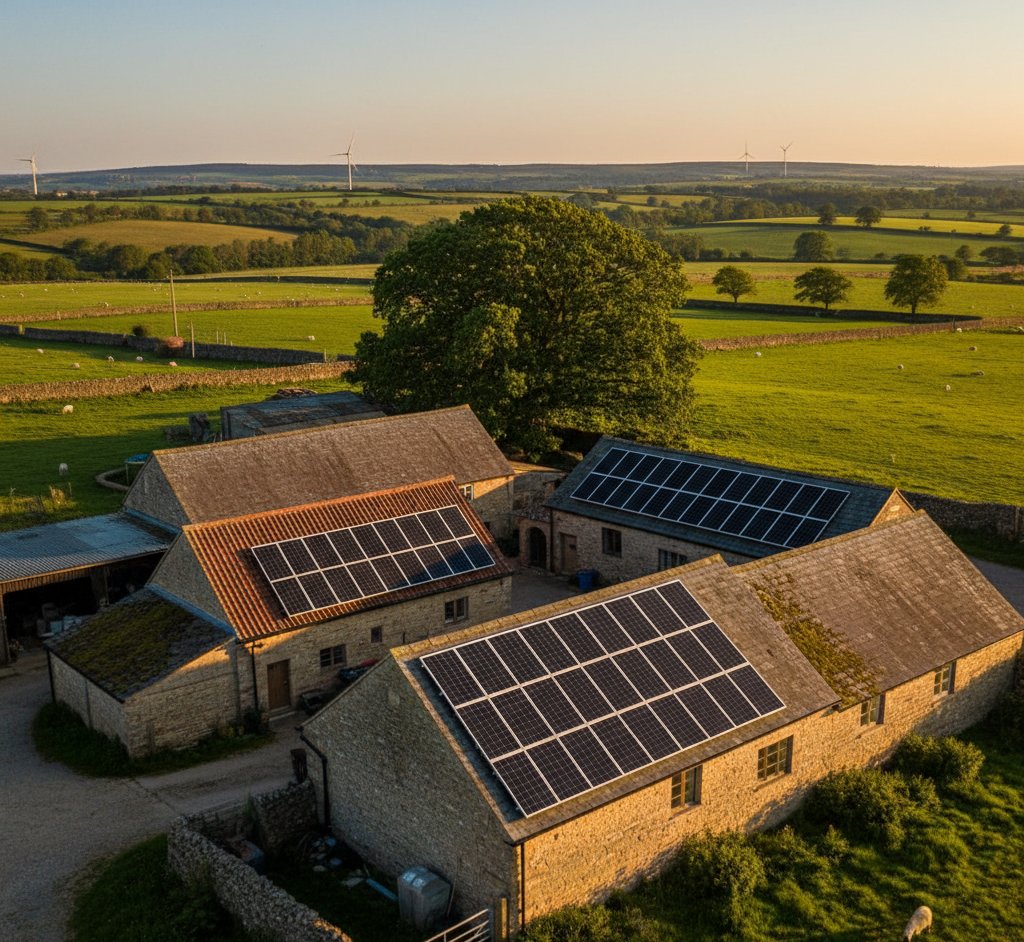
Roof Orientation and Solar: Direction Trade-Offs
How roof orientation affects solar panel performance in the UK. South, east, west, and north-facing roof output compared, plus split-orientation strategies.
How Much Do Solar Panels Cost in the UK in 2026?
Realistic UK solar panel costs broken down by system size, installation, and what actually affects the price you'll be quoted.
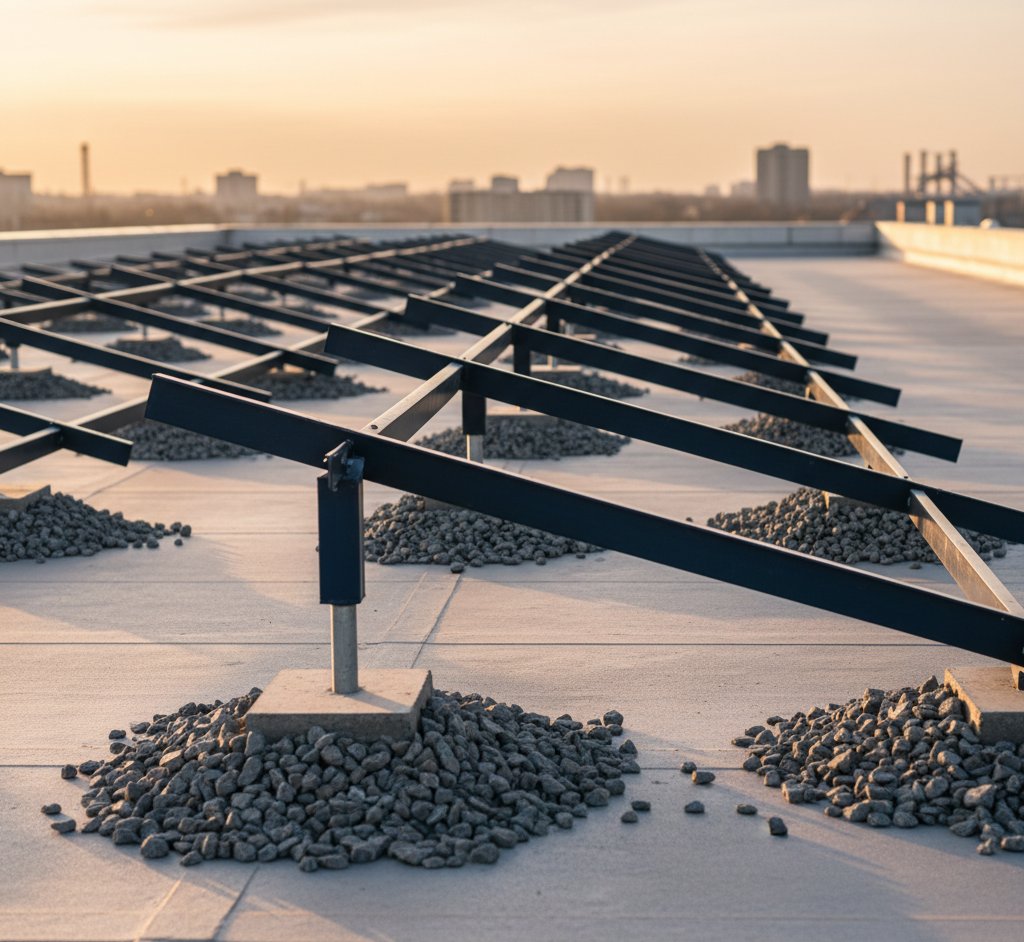
Solar Panels on a Flat Roof: Mounting, Costs and Planning
Flat roof solar in the UK — ballasted vs frame-mounted systems, optimal tilt angle, planning permission, costs vs pitched roof, and pros and cons.


Switch to Octopus Energy
Get 50 credit when you switch. We get 50 too — win-win.
What does this mean for YOUR home?
Design your perfect solar setup in under 3 minutes. Free, no sign-up required.
Build Your Solar System