This page contains affiliate links. If you purchase through them we may earn a small commission at no extra cost to you. Learn more
Solar Panels on a Flat Roof: Mounting, Costs and Planning
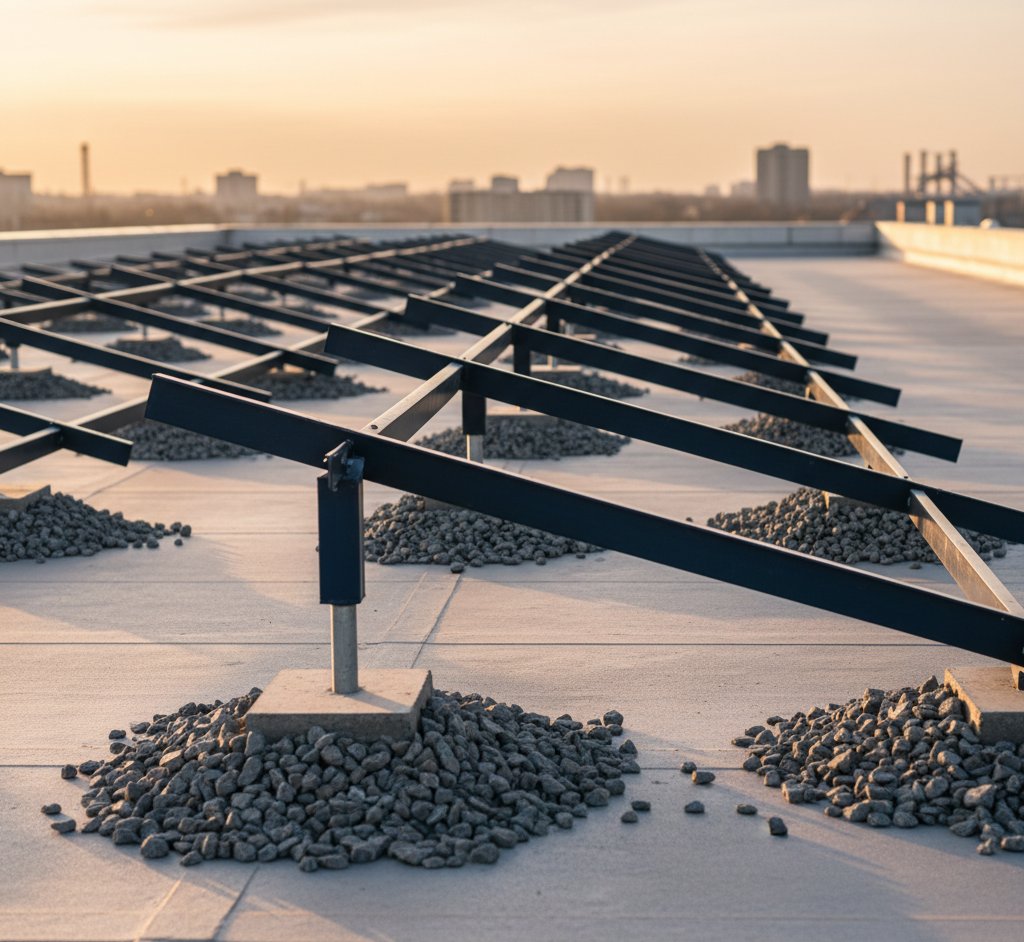
Flat roofs are more common in the UK than many people realise — from garage roofs and extensions to 1960s housing and modern new builds. Solar panels work perfectly well on flat roofs with the right mounting system. In some ways, flat roofs offer advantages that pitched roofs don't.
Why Flat Roofs Work Well for Solar
There is a persistent myth that flat roofs are poor for solar. In reality they have some genuine advantages:
You choose the angle. On a pitched roof, panels are locked to whatever angle the roof is built at. Tilt frames on a flat roof let you set the optimal angle and face any direction — so you can achieve near-ideal generation regardless of which way your building faces.
No shading from the roof itself. Chimneys, dormers, and roof ridges on pitched roofs can cast shadows across panels. Flat roofs typically have fewer obstructions.
Easier maintenance access. Panels on a flat roof are more accessible for cleaning and inspection without scaffolding.
Less visible from the street. Panels sit below the roofline and are often invisible from ground level. This matters in conservation areas and for households who care about kerb appeal.
Mounting Systems
Ballasted (Weighted) Systems
The most popular choice for flat roofs. Panels are mounted on angled frames held in place by concrete blocks or ballast trays — no penetrations through the roof membrane.
Pros:
- No holes drilled through the roof — waterproofing stays intact
- Relatively fast to install
- Reversible if you need to re-roof
Cons:
- Adds significant weight — 15–25 kg per square metre including ballast
- Structural assessment usually required
- Steeper angles need more ballast, which limits how high you can tilt
Typical extra cost vs pitched roof: £400–£1,000 for a 4kW system.
Frame-Mounted (Penetrating) Systems
Frames are bolted through the roof membrane into the structural deck beneath. Lighter than ballasted systems, more wind-resistant, and can support steeper angles.
Pros:
- Lower weight per panel
- More resistant to wind uplift
- Supports steeper tilt angles (up to 35°)
Cons:
- Penetrations through the waterproof membrane — must be sealed properly
- Any poor workmanship risks water ingress
Typical extra cost vs pitched roof: £600–£1,200 for a 4kW system.
Hybrid Systems
Some systems combine modest ballast with a small number of fixings — enough anchor points to handle extreme wind, with weight reducing the load on each fixing. A good middle ground for exposed locations.
Check Your Roof Membrane Before Installing
If your flat roof membrane is nearing the end of its life (felt roofs typically last 15–20 years), replace it before or during the solar installation. Removing a solar array to re-roof later is expensive and disruptive. Ask your installer to comment on roof condition as part of their survey.
Optimal Tilt Angle for UK Flat Roofs
The optimal tilt for maximum annual yield in the UK is 30–35°. At this angle, panels collect the most sunlight averaged across the year.
In practice, flat roof installs often use shallower angles:
- 20–25° is common with ballasted systems — lower wind profile means less ballast needed
- 30–35° is achievable with frame-mounted or heavy ballasted systems
How much does it cost you? A 20° tilt loses roughly 3–5% of annual output versus 35°. On a 4kW system generating ~3,400 kWh at optimal angle, that is about 100–170 kWh/year less — worth around £24–£41 at current rates of 24p/kWh. A reasonable trade-off for structural or practical reasons.
| Tilt Angle | Annual Output (4kW, south-facing, UK average) | Relative to Optimal |
|---|---|---|
| 10° | ~3,100 kWh | ~91% |
| 20° | ~3,250 kWh | ~96% |
| 30° | ~3,380 kWh | ~99% |
| 35° | ~3,400 kWh | 100% |
Row Spacing and Self-Shading
When panels are arranged in multiple rows on a flat roof, each tilted row casts a shadow on the row behind it — particularly in winter when the sun is low. Avoiding this is one of the more technical parts of flat roof design.
In the UK, the general rule is to leave a gap of 1.5–2 times the height of each panel at its back edge. For a panel tilted at 25° on a frame (roughly 55cm high at the back), that means 80–110cm between rows.
This spacing requirement means a flat roof fits fewer kW per square metre than a pitched roof. Where a pitched roof might fit 10 panels in 17m², a flat roof may need 22–25m² for the same 10 panels.

East-West Mounting: A Popular Alternative
An increasingly common option for flat roofs is east-west mounting — panels arranged in pairs facing east and west at a low angle (10–15°) rather than all south at 30°.
Why it makes sense on flat roofs:
- Fits significantly more panels in the same area (minimal inter-row spacing needed)
- More consistent generation across the day — morning peak eastward, afternoon peak westward
- Lower profile reduces wind loading and ballast requirements
- Better self-consumption if your household uses power morning and evening
The trade-off: Each panel generates around 5–10% less annually than a south-facing panel at optimal tilt. But fitting more panels can compensate, and the flatter profile often means less ballast and lower structural impact.
For a more detailed look at east-west systems, see our east-west solar panels guide.
Planning Permission for Flat Roof Solar
Flat roof solar has more planning complexity than pitched roof installations.
Under permitted development in England, panels on a flat roof must not protrude more than 1 metre above the highest part of the roof. In most cases, a 20–30° tilt stays within this limit. But steep angles on low-parapet roofs can breach it, requiring a planning application.
If your property is in a conservation area or is a listed building, additional restrictions apply regardless of roof type. Always confirm with your local planning authority if there is any doubt — planning enforcement after installation is expensive to resolve.
Rules differ in Scotland, Wales, and Northern Ireland — check with your local authority if outside England.
Do Not Assume Permitted Development Applies
Some flat roof installs do require planning permission — particularly if the panels are visible from the street, if the roof is on a commercial or mixed-use building, or if the building has any listed or conservation area status. A good installer will check this with you before proceeding.
Costs vs Pitched Roof
| System Size | Pitched Roof (installed) | Flat Roof Ballasted | Flat Roof Frame-Mounted |
|---|---|---|---|
| 3kW | £4,500–£6,500 | £5,000–£7,000 | £5,500–£8,000 |
| 4kW | £6,000–£8,000 | £6,700–£9,000 | £7,200–£10,000 |
| 5kW | £7,500–£10,000 | £8,200–£11,000 | £8,500–£12,000 |
All prices are installed costs with 0% VAT. Flat roof costs vary depending on mounting system, structural requirements, and whether a specialist engineer is needed.
Pros and Cons Summary
Advantages of flat roof solar:
- Full control over panel orientation — always face south regardless of building direction
- Often invisible from street level
- Easier maintenance access than steep pitched roofs
- No penetrations needed with ballasted systems
Disadvantages:
- Higher upfront cost than pitched roof solar (£500–£1,500 extra)
- Row spacing reduces capacity per square metre
- Structural assessment required — not all roofs can take ballast weight
- Planning permission more likely to be needed than for pitched roofs
- Roof condition must be good before installation
What to Look for in an Installer
Not all solar installers have experience with flat roofs. Ask specifically:
- Have they installed on flat roofs before, and can they provide references?
- Do they carry out structural load calculations?
- What mounting system do they use and why is it right for your roof?
- What happens if the roof leaks after installation — what does their workmanship guarantee cover?
All MCS-certified installers must follow the MCS 012 installation standard. Flat roof installations have specific requirements within this standard — a reputable installer will know them.
See our guide on choosing a solar installer for a full checklist of questions to ask before signing anything.
These high-efficiency panels work well on flat roof mounting systems:
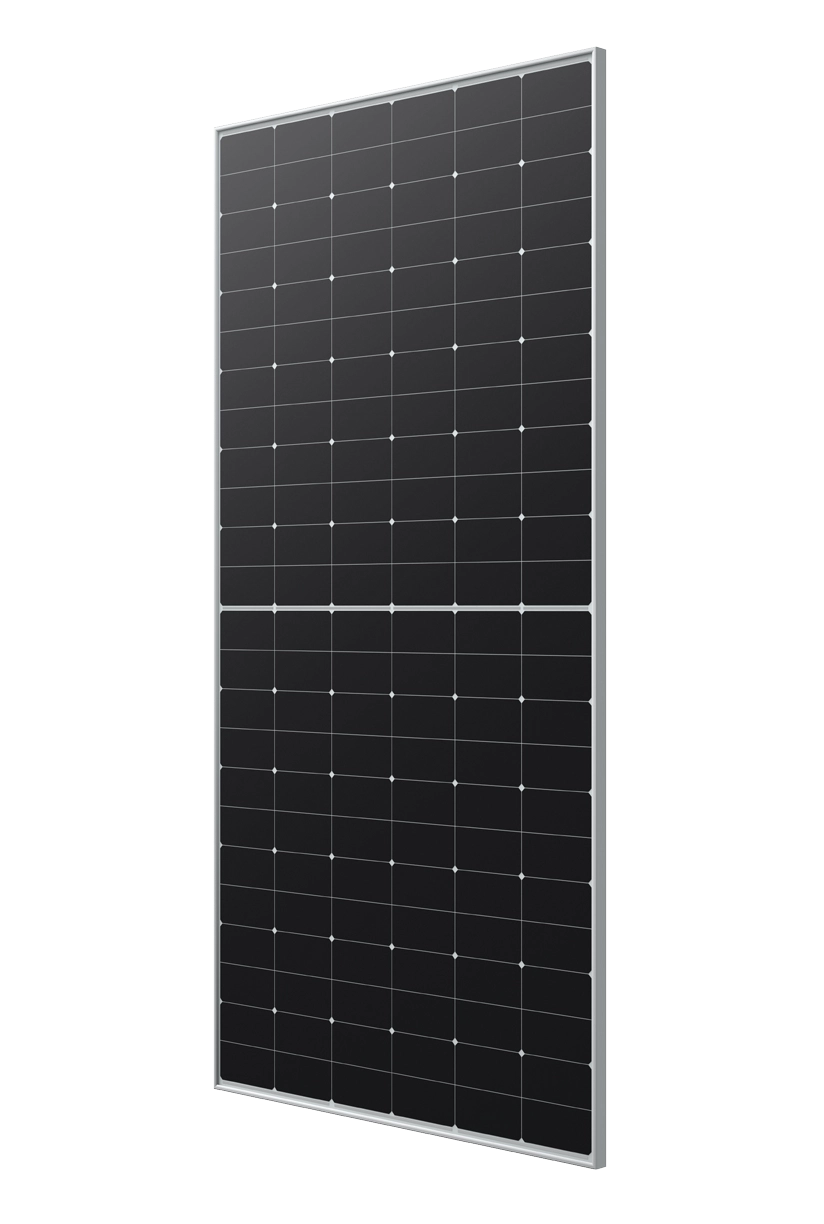
LONGi Hi-MO X6 450W
£85450
23
1722 x 1134 x 30
21.3
Affiliate link — we may earn a small commission at no extra cost to you
Share this article

OVO has carefully selected trusted teams across the UK to install solar panels and heat pumps. Enjoy the personal touch of a local expert with the peace of mind of a household name.
Affiliate link — we may earn a small commission at no extra cost to you
Stay informed
Get free solar updates direct to your inbox
Related reading
How Much Do Solar Panels Cost in the UK in 2026?
Realistic UK solar panel costs broken down by system size, installation, and what actually affects the price you'll be quoted.
Getting Solar Panel Quotes: What to Expect
How many quotes to get, what a good solar quote looks like, the right questions to ask, and how to compare quotes properly.
How to Choose a Solar Installer: Red Flags and Green Flags
How to choose a reliable solar panel installer in the UK. What to look for, what to avoid, essential questions to ask, and how to compare quotes properly.


Switch to Octopus Energy
Get 50 credit when you switch. We get 50 too — win-win.
What does this mean for YOUR home?
Design your perfect solar setup in under 3 minutes. Free, no sign-up required.
Build Your Solar System