This page contains affiliate links. If you purchase through them we may earn a small commission at no extra cost to you. Learn more
ECO4 and Solar Panels: Eligibility, What Changed, and What Replaced It
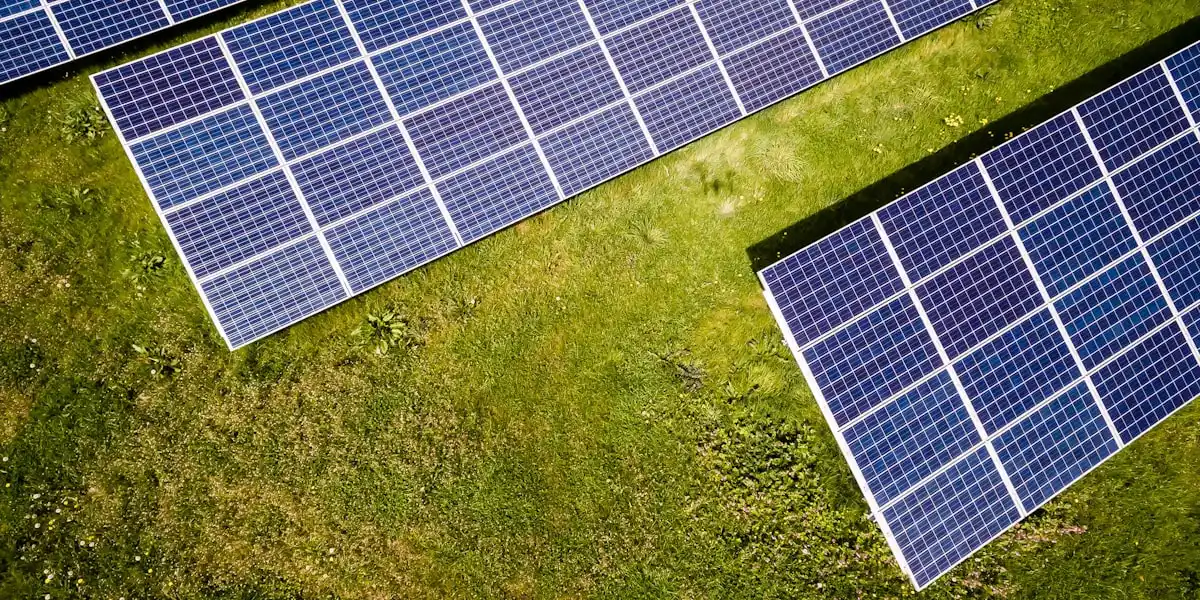
ECO4 was the UK's main scheme for funding energy efficiency improvements in lower-income homes. It ended in March 2026. If you've been researching free solar panels and keep seeing ECO4 mentioned, this article explains what the scheme actually covered, whether solar was included, and — most importantly — what has replaced it now that ECO4 is closed.
What ECO4 Was
The Energy Company Obligation (ECO) scheme is a government policy that legally obliges large energy suppliers to help fund energy efficiency improvements in eligible homes. The fourth phase — ECO4 — ran from January 2022 to March 2026. Energy companies were required to meet targets, and they did this by funding works in qualifying homes at no direct cost to the householder.
ECO4 primarily targeted insulation (cavity wall, loft, solid wall) and heating upgrades. Solar panels were included as an eligible measure, but with a significant catch.
Did ECO4 Cover Solar Panels?
Yes — but only as a secondary measure. Solar PV was eligible under ECO4 provided that a primary insulation measure was also being installed at the same property. You could not apply for solar panels alone under ECO4.
In practice this meant:
- If your home had uninsulated cavity walls, you might receive both cavity wall insulation and solar panels in a single visit
- If your home was already well insulated, the installer may not have been able to include solar in the package
- The decision about which measures to include was largely driven by the installer's assessment of what would achieve the required energy savings score
This secondary-measure restriction frustrated many homeowners who wanted solar but whose properties didn't need insulation work. That restriction has since changed under the replacement scheme — more on that below.
Already Have ECO4 Insulation?
If your home received insulation under ECO4 or an earlier ECO phase, you may now be able to apply for solar separately under Warm Homes: Local Grant (in England), since WHLG does not require a primary insulation measure to have been done first.
ECO4 Eligibility
ECO4 used two eligibility routes:
Benefits-Based Eligibility
Households receiving any of these qualifying benefits were automatically eligible:
- Universal Credit
- Pension Credit (Guarantee Credit or Savings Credit)
- Child Tax Credit or Working Tax Credit
- Income Support
- Income-based Jobseeker's Allowance (JSA)
- Income-related Employment and Support Allowance (ESA)
- Housing Benefit
Your property also needed to have a low EPC rating — typically EPC band D, E, F, or G.
LA Flex (Local Authority Flexible Eligibility)
Local authorities could refer households that were low income but not receiving qualifying benefits. This route was used for people who were in fuel poverty or on low incomes without being on the standard benefits list — for example, older households on modest pensions not quite reaching Pension Credit levels, or households with high energy costs relative to income.
LA Flex referrals were at the local authority's discretion. Not every council was equally active in using this route.
What Changed in April 2026
ECO4 closed at the end of March 2026. The government had previously indicated there would be no ECO5 — the supplier obligation model ends with ECO4.
In England, ECO4 has been replaced by Warm Homes: Local Grant (WHLG), which launched in April 2026. The key differences are:
'Free Solar Panels Under ECO4' Headlines Are Outdated
If you're reading articles or seeing adverts that say you can get free solar under ECO4, be cautious. ECO4 closed in March 2026. Any company still marketing "ECO4 solar" after that date is either using outdated materials or misrepresenting what scheme is actually being used. Always ask which specific scheme is funding the work and verify directly with your local council.
Warm Homes: Local Grant (England, from April 2026)
The Warm Homes: Local Grant is the main route to funded solar in England for lower-income households. Here is what you need to know:
Eligibility criteria:
- Household income under £36,000 per year (combined household income)
- Home has an EPC rating of D, E, F, or G
- You own the property or are a private tenant with landlord consent (see note below)
What is covered: Solar PV is an eligible measure. Unlike ECO4, you do not need a primary insulation measure to be installed alongside it — though local authorities may still prioritise insulation-first where your home has significant heat loss. The grant covers the full cost of installation, MCS certification is included, and you own the system.
How to apply in England:
- Check your EPC rating at find-energy-certificate.service.gov.uk (free to view)
- Contact your local council's energy efficiency team — search "[your council name] Warm Homes Local Grant"
- Alternatively, use the government's referral route at gov.uk/apply-warm-homes-local-grant or call 0800 098 7950
- A surveyor will assess your home and confirm which measures qualify
- If approved, an MCS-registered installer will carry out the work at no cost to you
Insulation May Still Come First
Even though WHLG allows solar as a standalone measure, local authorities are often instructed to prioritise insulation where a property has poor fabric efficiency. If your assessor says insulation needs to come first, this is not necessarily a refusal — it may mean both measures are installed as part of a single programme.
For private tenants: The grant can apply to rented properties, but your landlord must give consent and in some cases may need to make a contribution depending on the property's EPC rating. See the solar for renters article for more detail on your rights as a tenant.
Wales: Warm Homes Nest Programme
Wales has its own scheme — the Warm Homes Nest programme — which continues to operate independently of the England replacement. Nest is delivered on behalf of Welsh Government.
Who can apply:
- Households receiving income-related benefits, OR
- Households with a low income and a property with a poor EPC rating
Nest covers a range of measures including insulation, heating, and potentially solar. Eligibility rules and the specific measures available under Nest change periodically.
How to apply in Wales: Contact Nest directly on 0808 808 2244 or at nestwales.org.uk. They will carry out a free assessment of your home and benefits situation.
Scotland: Warmer Homes Scotland
Scotland has Warmer Homes Scotland, managed by Home Energy Scotland on behalf of the Scottish Government. This is Scotland's equivalent of ECO4 and continues in its own right.
Who can apply:
- Households in or at risk of fuel poverty
- Generally targeted at lower-income households, those on qualifying benefits, or those living in less energy-efficient homes
Solar PV can be included as a measure under Warmer Homes Scotland, though the programme mix is assessed case by case.
How to apply in Scotland: Contact Home Energy Scotland on 0808 808 2282 or at homeenergyscotland.org. They will assess your eligibility and which measures are appropriate for your property.
Scottish loan option: Home Energy Scotland also offers interest-free loans of up to £6,000 for solar PV for households who do not qualify for the grant scheme. You repay only what you borrow — no interest — which can be a useful option if your income is just above the grant threshold.
What You Get If Your Application Succeeds
Whether through WHLG (England), Nest (Wales), or Warmer Homes Scotland:
- The installation is funded in full — you pay nothing upfront and nothing after
- An MCS-certified installer carries out the work
- You own the system outright — no rent-a-roof, no lease, no strings
- You can register for the Smart Export Guarantee after installation, earning payment for electricity you export to the grid
- The system adds value to your property and reduces your electricity bills from day one
Common Misconceptions
"Free solar panels are widely available for everyone." Grant-funded solar is means-tested. If your household income is above the threshold, or your EPC is C or above, you are unlikely to qualify. Most homeowners fall outside the eligibility criteria.
"ECO4 gave you solar without any strings." Under ECO4, solar was only available alongside an insulation measure. Many applicants expected solar and were offered insulation instead.
"Rent-a-roof schemes are the same as a government grant." They are not. Rent-a-roof or solar lease deals involve a company installing panels and retaining ownership — they use your roof in exchange for a share of the generation benefit. Grant-funded solar means you own the system from day one. Always clarify ownership before agreeing to any installation under any scheme.
"If I was turned down for ECO4, I won't qualify for WHLG." This is not necessarily true. The new scheme has a straightforward income threshold (under £36,000) rather than a benefits-based test. Some households who narrowly missed ECO4 eligibility — particularly those not on qualifying benefits but with lower incomes — may now qualify under WHLG.
If You Already Had ECO4 Insulation Installed
If your home received cavity wall, loft, or solid wall insulation under ECO4 (or an earlier ECO phase), and your household income is under £36,000 with an EPC of D–G, you may be able to apply for solar under Warm Homes: Local Grant separately. The previous ECO work does not disqualify you — if anything, a better-insulated home may be a stronger candidate for solar since more of the energy you generate is retained in the building.
Contact your local council's energy team to check whether this applies in your area.
Summary: Which Scheme Applies to You?
If you are exploring whether your household qualifies, the fastest route is to contact your local council (England) or the relevant national helpline (Wales/Scotland). They can tell you which schemes are active in your area, whether your income and EPC meet the criteria, and what the current waiting times are.
For a broader overview of every grant and funding route available in 2026, see the UK solar grants guide. For an idea of what a system costs if you are paying privately, see the solar panel costs guide.
Share this article

OVO has carefully selected trusted teams across the UK to install solar panels and heat pumps. Enjoy the personal touch of a local expert with the peace of mind of a household name.
Affiliate link — we may earn a small commission at no extra cost to you
Stay informed
Get free solar updates direct to your inbox
Related reading
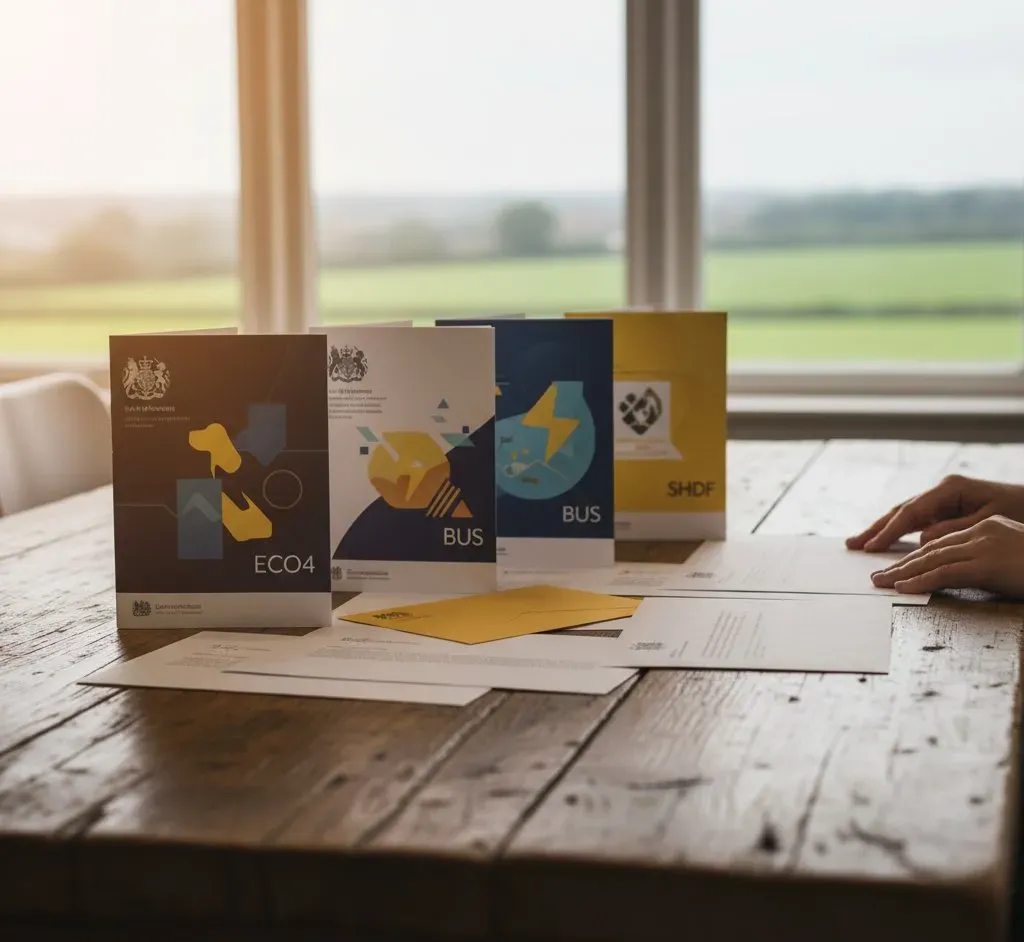
Solar Panel Grants and Funding UK 2026
A plain-English guide to every solar grant, scheme, and funding route available in the UK in 2026 — including ECO4, GBIS, HUG2, BUS, and devolved schemes.
How Much Do Solar Panels Cost in the UK in 2026?
UK solar panel costs 2026: realistic prices by system size, what is included, and what to push back on in your quote.

EPC Rating Improvement with Solar Panels
How solar panels improve your EPC rating in the UK, how many SAP points they add, and why your EPC band matters for mortgages and property value.

Switch to Octopus Energy
Get 50 credit when you switch. We get 50 too — win-win.
What does this mean for YOUR home?
Design your perfect solar setup in under 3 minutes. Free, no sign-up required.
Build Your Solar System