This page contains affiliate links. If you purchase through them we may earn a small commission at no extra cost to you. Learn more
Heatable Mini Heat Pump Tanks: Worth It with Solar?
Heatable and similar mini heat pump hot water tanks are a relatively new product category that's generating interest among UK solar owners. They heat water using a small built-in heat pump — far more efficiently than an immersion heater. Combined with solar, they could be a smart way to maximise your renewable hot water.
What Is a Mini Heat Pump Tank?
A mini heat pump hot water tank is an all-in-one unit that combines:
- A hot water cylinder (150–200 litres)
- A small air-source heat pump (typically 500–700W electrical input)
- Built-in controls and temperature management
The heat pump extracts warmth from the surrounding air (typically from the room it's installed in — utility room, garage, or kitchen) and uses it to heat the water. It works like a full-size air-source heat pump but dedicated solely to hot water.
The key advantage: a COP (Coefficient of Performance) of 2.5–3.0 means it generates 2.5–3 kWh of heat for every 1 kWh of electricity consumed. An immersion heater has a COP of 1.0 — it uses 1 kWh of electricity to generate 1 kWh of heat.
How It Works with Solar
This is where it gets interesting. If you have solar panels and surplus generation:
With an Immersion Heater + Diverter
- Surplus: 3 kWh of solar electricity
- Hot water heated: 3 kWh (COP 1.0)
- That heats roughly 60 litres from cold to 55°C
With a Mini Heat Pump Tank
- Surplus: 3 kWh of solar electricity
- Hot water heated: 7.5–9 kWh (COP 2.5–3.0)
- That heats roughly 150–180 litres from cold to 55°C
The same solar surplus heats 2.5–3 times more water. For a household that uses lots of hot water, or on days with less solar surplus, this efficiency advantage is significant.
Cost and Products
| Product | Capacity | Typical Cost (Installed) | COP | Electrical Input |
|---|---|---|---|---|
| Heatable Mini Heat Pump | 180L | £1,800–£2,500 | 2.8 | 550W |
| Thermor Aeromax | 200L | £2,000–£3,000 | 2.5 | 600W |
| Ariston Nuos | 150L | £1,500–£2,200 | 2.7 | 500W |
| Daikin domestic DHW | 200L | £2,500–£3,500 | 3.0 | 700W |
Prices include installation but vary significantly by installer and location.
The Financial Case
Scenario: Replacing a Gas Boiler for Hot Water
If you currently use a gas combi boiler for hot water and switch to a mini heat pump tank:
- Gas cost for hot water: ~£250/year (180L/day at 7p/kWh gas, 85% boiler efficiency)
- Mini heat pump electricity cost: ~£150/year (same hot water, COP 2.8, 26p/kWh)
- Annual saving: £100
At a cost of £2,000 installed, that's a 20-year payback. Not compelling on its own.
Scenario: Replacing an Immersion Heater (With Solar PV)
If you currently use an immersion heater (no gas) and have solar panels with a diverter:
- Current: Diverter sends surplus to immersion (COP 1.0), grid tops up the rest
- With mini heat pump: Same surplus heats 2.5–3x more water, less grid top-up needed
The saving depends on how much grid electricity you currently use for hot water top-up. A household buying 1,500 kWh/year of grid electricity for immersion heating could reduce this to 500–600 kWh with a mini heat pump — saving roughly £230–£260/year.
Payback: 7–10 years — more reasonable.
Best Combined with Solar PV
A mini heat pump tank makes the most financial sense when paired with solar PV. The heat pump's low electrical input (500–700W) is easily covered by solar generation for many hours per day, even in spring and autumn. This means most of your hot water is heated by solar, with the heat pump multiplying the available energy.
Installation Considerations
Space
These units are larger than a standard hot water cylinder — typically 600mm × 600mm × 1,600mm. They need adequate clearance for air circulation around the heat pump intake and exhaust.
Ventilation
The heat pump extracts heat from ambient air, cooling the room it's in by 2–5°C. In a utility room or garage, this is fine (and provides free cooling in summer). In a small kitchen or airing cupboard, it could be problematic.
Noise
Mini heat pump tanks produce 40–50 dB when running — similar to a fridge. They're not silent, so placement matters. A garage or utility room is ideal; a bedroom cupboard is not.
Plumbing
Installation requires connecting to your hot and cold water supply and (if replacing a gas system) potentially decommissioning the boiler's hot water circuit. A qualified plumber should handle this.
Electrical
The unit needs a dedicated electrical supply (typically a 13A fused spur). If connecting to a solar PV system for surplus diversion, additional wiring or integration may be needed.
Doesn't Replace Heating
A mini heat pump tank only heats water — it doesn't heat your home. You still need a separate heating system (gas boiler, full heat pump, electric heating). Don't confuse these with full air-source heat pumps that do both space heating and hot water.
When a Mini Heat Pump Tank Makes Sense
Good candidates:
- Homes with solar PV looking to maximise hot water from surplus
- Homes replacing an ageing hot water cylinder
- Homes moving away from gas (future-proofing)
- Off-gas homes currently using expensive immersion heating
- Properties where a full heat pump isn't practical but efficient hot water is wanted
Less suitable:
- Homes with a working gas combi boiler and no hot water cylinder (expensive to retrofit)
- Homes without solar PV (the financial case weakens significantly)
- Small flats with no suitable installation space
- Homes already using a PV diverter effectively (the upgrade from COP 1 to COP 2.8 may not justify the cost)
If you're considering a PV diverter as the more cost-effective first step:
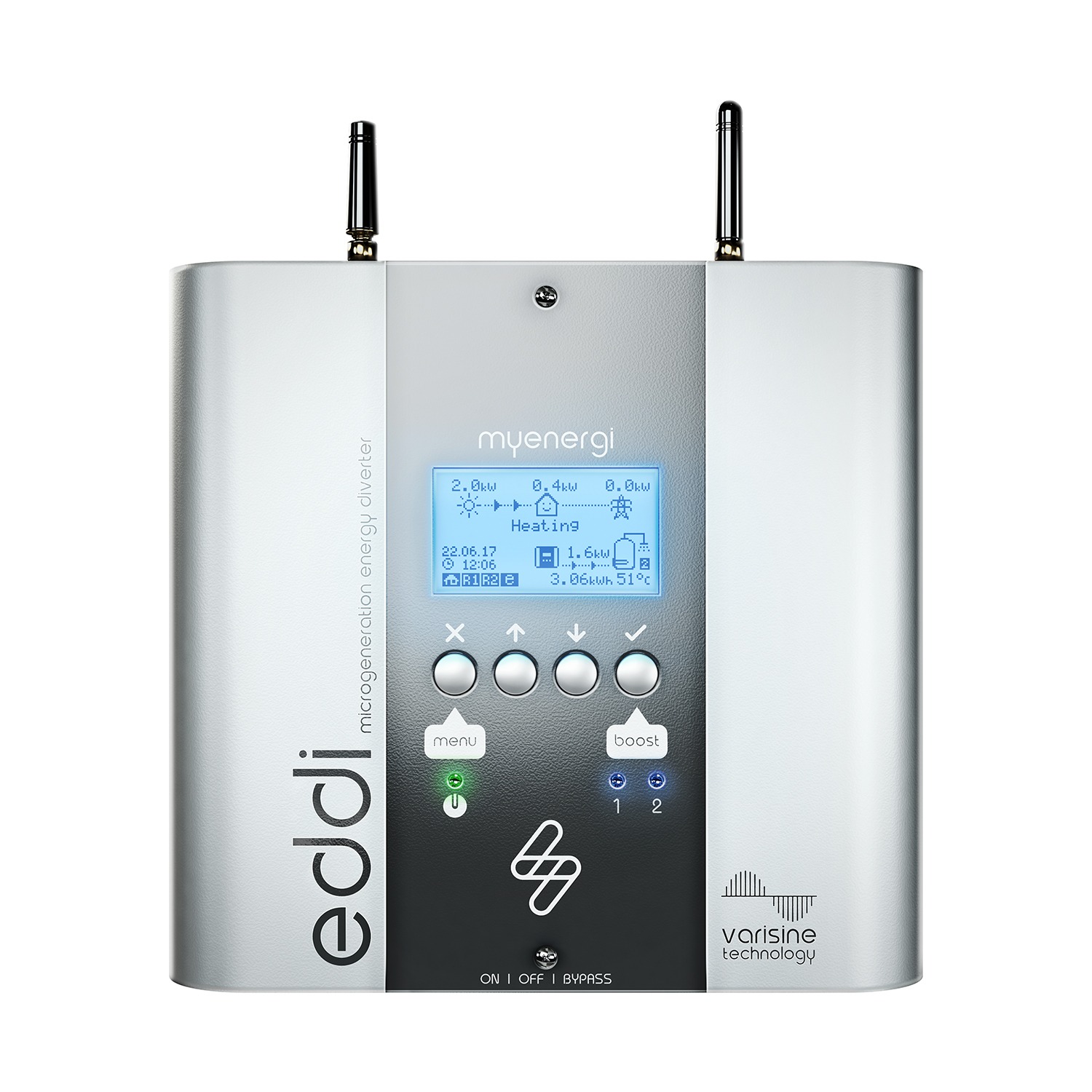
myenergi Eddi Solar Diverter
£1853000
power_divert,timed_boost
2
configurable
Affiliate link — we may earn a small commission at no extra cost to you
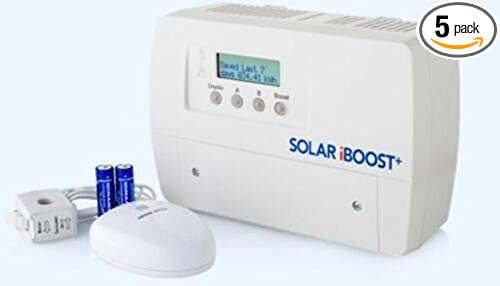
Solar iBoost+ Immersion Heater Controller
£1503000
auto_divert,manual_boost
1
true
Affiliate link — we may earn a small commission at no extra cost to you
Mini Heat Pump Tank vs PV Diverter
| Factor | PV Diverter (Eddi/iBoost+) | Mini Heat Pump Tank |
|---|---|---|
| Cost | £300–£500 | £1,500–£3,000 |
| Efficiency | COP 1.0 | COP 2.5–3.0 |
| Hot water from 3 kWh surplus | 3 kWh heat | 7.5–9 kWh heat |
| Installation complexity | Simple | Moderate (plumbing + electrical) |
| Space needed | None (uses existing cylinder) | Replaces cylinder |
| Noise | None | 40–50 dB |
| Payback | 1.5–3 years | 7–10 years |
For most homes in 2026, a PV diverter is the better first step — far cheaper, faster payback, simpler installation. A mini heat pump tank is the upgrade path for homes that want maximum hot water efficiency from their solar investment.
For more on hot water cylinder integration with solar, see our hot water tank guide.
Share this article

OVO has carefully selected trusted teams across the UK to install solar panels and heat pumps. Enjoy the personal touch of a local expert with the peace of mind of a household name.
Affiliate link — we may earn a small commission at no extra cost to you
Stay informed
Get free solar updates direct to your inbox
Related reading

Solar Hot Water: Thermal Panels vs PV Diverters
How to heat your hot water with solar energy in the UK. Compare solar thermal panels, PV diverters like the Eddi and iBoost+, and which approach makes sense in 2026.

Solar Panels + Heat Pump: The Ultimate Combo?
Solar panels and heat pumps together: how the combination works, what it costs, real savings, and how to size the system for a UK home. The ultimate low-carbon setup.
Hot Water Tank Integration with Solar
How to integrate your hot water cylinder with solar panels. Cylinder types, sizing, immersion heaters, diverters, and what to ask your installer.


Switch to Octopus Energy
Get 50 credit when you switch. We get 50 too — win-win.
What does this mean for YOUR home?
Design your perfect solar setup in under 3 minutes. Free, no sign-up required.
Build Your Solar System