This page contains affiliate links. If you purchase through them we may earn a small commission at no extra cost to you. Learn more
Solar Panels + Heat Pump: The Ultimate Combo?

Solar panels and heat pumps are individually good investments. Together, they're genuinely transformative — potentially cutting your combined heating and electricity bills by 60–80%. But the combination needs careful planning to work properly.
Why They Work Together
A heat pump uses electricity to generate heat — typically 1 kWh of electricity produces 2.5–4 kWh of heat (COP of 2.5–4.0). Solar panels generate free electricity. Put them together and you're heating your home with free, renewable energy.
The synergy works in both directions:
Solar reduces heat pump running costs. Without solar, a heat pump running on ~24p/kWh grid electricity produces heat at roughly 6–8p/kWh. With solar, the electricity is free — the effective heat cost drops to zero for every kWh the panels provide.
The heat pump increases solar self-consumption. Without a heat pump, daytime solar surplus gets exported at 12p/kWh. The heat pump absorbs this surplus for heating or hot water, saving the full ~24p/kWh import cost instead.
What the Numbers Look Like
Typical 3-bed semi-detached (100 m²), well-insulated
Without solar or heat pump (gas boiler):
- Gas heating: £900/year
- Electricity: £800/year
- Total: £1,700/year
With heat pump only (no solar):
- Heat pump electricity (COP 3.0): £550/year
- Other electricity: £800/year
- Total: £1,350/year (saving £350)
With solar only (4kW, no heat pump):
- Gas heating: £900/year
- Electricity (after solar offset): £200/year
- SEG income: -£200/year
- Total: £900/year (saving £800)
With solar (4kW) + heat pump:
- Heat pump electricity (partially solar-powered): £250/year
- Other electricity (partially solar-powered): £150/year
- SEG income: -£100/year
- Total: £300/year (saving £1,400)
The combination saves more than the sum of its parts because solar offsets the most expensive electricity (heat pump consumption during the day) and the heat pump absorbs surplus that would otherwise be exported cheaply.
System Sizing
Heat Pump Size
For UK homes:
- Well-insulated 2-bed flat: 4–5 kW
- Well-insulated 3-bed semi: 6–8 kW
- Well-insulated 4-bed detached: 8–12 kW
- Poorly insulated homes: 30–50% larger
Insulation Before Heat Pump
A heat pump in a poorly insulated home is like pouring water into a leaking bucket. It'll work, but it'll run at lower efficiency and higher cost. Insulate your home first — loft, walls, draught-proofing — before sizing a heat pump. The better insulated your home, the smaller (and cheaper) the heat pump needs to be.
Solar Panel Size
Match solar generation to total electricity demand (including the heat pump):
| Heat Pump Size | Annual Electricity for Heating | Solar PV to Offset 50% | Total Recommended PV |
|---|---|---|---|
| 5 kW | ~3,000 kWh | 1.5 kW | 4–5 kW total |
| 8 kW | ~4,500 kWh | 2.5 kW | 5–6 kW total |
| 12 kW | ~6,500 kWh | 3.5 kW | 6–8 kW total |
You can't size solar to offset 100% of heat pump consumption because the heat pump runs most in winter when solar generates least. Aiming for 40–60% annual offset is realistic.
Battery Storage
A battery (5–10 kWh) adds another layer of optimisation:
- Store daytime solar for evening heat pump operation
- Charge overnight on cheap tariffs, run the heat pump during peak pricing
- Increase overall self-consumption from 40–50% to 70–85%
See our battery payback analysis for the financial case.
The Seasonal Mismatch
This is the biggest challenge with the solar + heat pump combination. Solar generates most in summer when heating demand is lowest. Heating demand peaks in winter when solar generates least.
Monthly profile for a 4kW system + 8kW heat pump in the Midlands:
| Month | Solar Generation | Heat Pump Consumption | Solar Covers |
|---|---|---|---|
| January | 130 kWh | 650 kWh | 20% |
| April | 380 kWh | 300 kWh | 100%+ |
| July | 480 kWh | 80 kWh (hot water only) | 100%+ |
| October | 210 kWh | 400 kWh | 53% |
In summer, solar comfortably covers the heat pump and more. In winter, solar covers only 15–25% of the heat pump's demand. A battery and smart tariff help close this gap but can't eliminate it entirely.
Managing the Combination

Smart Controls
Modern heat pumps and solar inverters can communicate to optimise performance:
- Weather compensation: Heat pump adjusts output based on outdoor temperature
- Solar diversion: Surplus solar feeds the heat pump's buffer tank or hot water cylinder
- Time-of-use optimisation: Pre-heat the home during cheap rate periods, coast through expensive ones
Brands like GivEnergy, Solis, and Fox ESS offer hybrid inverters that integrate with heat pump controls.
Buffer Tanks and Hot Water Cylinders
A buffer tank (50–200 litres) stores heated water, allowing the heat pump to run during solar generation peaks and the stored heat to be used later. A well-insulated 200L buffer tank loses only 1–2°C per hour.
The hot water cylinder should ideally have a heat pump coil AND an immersion heater element — the coil for the heat pump and the immersion for direct solar surplus diversion via an Eddi or iBoost+.
Two Ways to Use Solar for Hot Water
With this combo, you have two routes to solar hot water: (1) solar electricity powers the heat pump which heats the water via its coil (COP 2.5–3.0), or (2) a diverter sends surplus solar to the immersion heater (COP 1.0). Route 1 is more efficient, but route 2 is simpler and works when the heat pump isn't running. Many owners use both, with the heat pump taking priority and the immersion as backup.

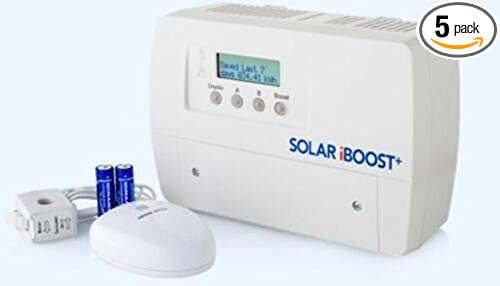
Solar iBoost+ Immersion Heater Controller
£1503000
auto_divert,manual_boost
1
true
Affiliate link — we may earn a small commission at no extra cost to you
Total Cost and Payback
| Component | Cost | After BUS Grant |
|---|---|---|
| Solar PV (5kW) | £7,500 | £7,500 |
| Air source heat pump (8kW) | £10,000 | £2,500 |
| Battery (5 kWh) | £3,000 | £3,000 |
| Hot water cylinder upgrade | £1,000 | £1,000 |
| Total | £21,500 | £14,000 |
Annual saving compared to gas boiler + grid electricity: £1,200–£1,500/year
Payback: 9–12 years (after BUS grant)
After payback, the annual saving of £1,200–£1,500 continues for the remaining 15+ years of the system's life. Total lifetime benefit: £15,000–£25,000 after all costs.
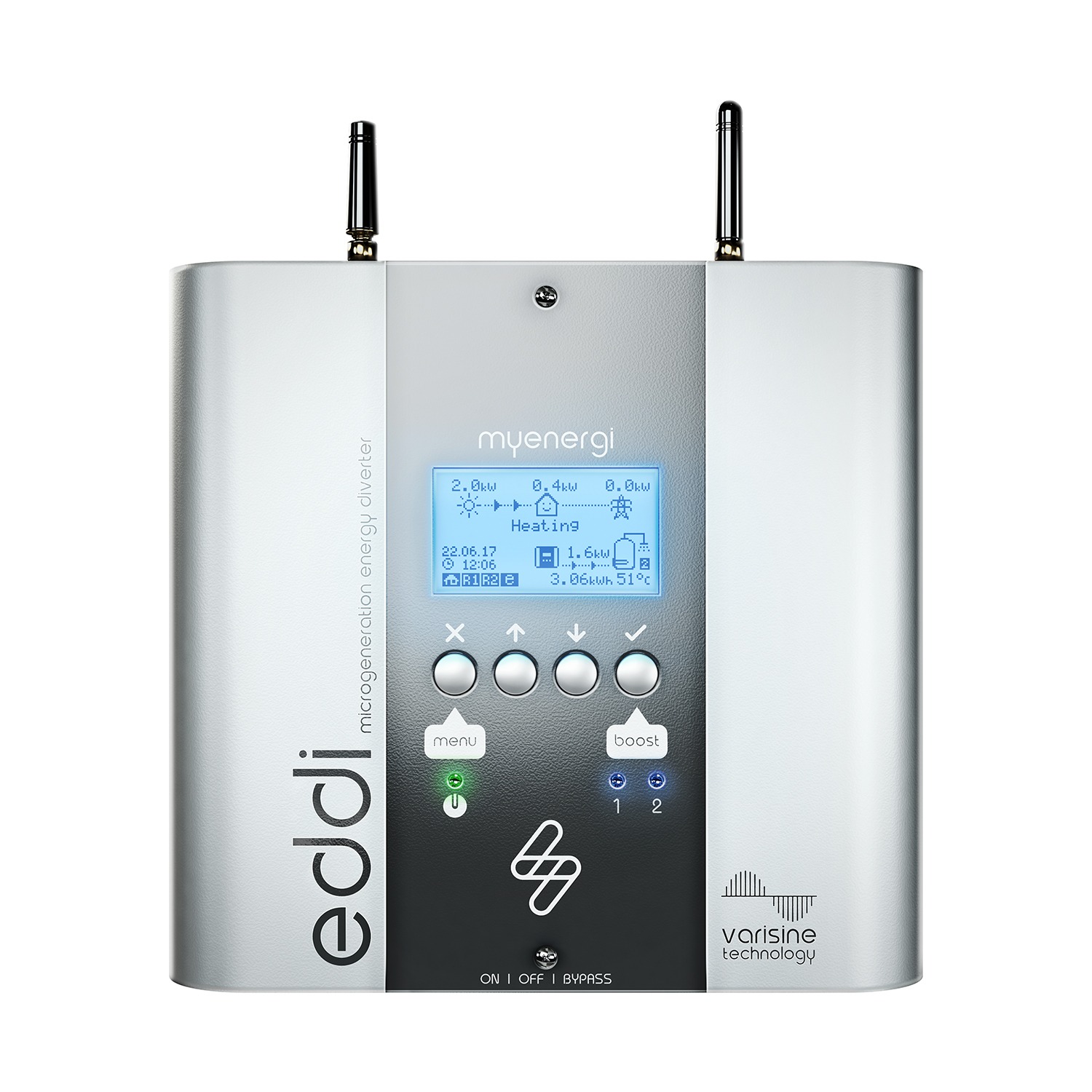
myenergi Eddi Solar Diverter
£1853000
power_divert,timed_boost
2
configurable
Affiliate link — we may earn a small commission at no extra cost to you
Installation Sequence
If doing everything at once: Install solar and heat pump simultaneously. The installer can optimise the systems to work together, and you get the BUS grant for the heat pump.
If phasing the investment:
- Insulate (immediate, cheap)
- Solar PV (next available budget)
- Heat pump (when your boiler needs replacing or budget allows)
- Battery (when prices drop or you switch to a ToU tariff)
Each phase improves the economics of the next.
Is It the "Ultimate Combo"?
For most UK homes, yes — solar + heat pump is the most effective combination for reducing energy bills and carbon emissions. It's not the cheapest single intervention (insulation beats it on cost-per-saving), but as a system it delivers the most dramatic long-term results.
The investment is significant, but with the BUS grant, falling technology costs, and rising energy prices, the financial case improves every year.
For a comparison of whether to prioritise solar or a heat pump, see our solar vs heat pump guide.
Share this article

OVO has carefully selected trusted teams across the UK to install solar panels and heat pumps. Enjoy the personal touch of a local expert with the peace of mind of a household name.
Affiliate link — we may earn a small commission at no extra cost to you
Stay informed
Get free solar updates direct to your inbox
Related reading
Solar Panels vs Heat Pump: Which Should You Get First?
Solar panels or a heat pump first? Compare costs, savings, and practicalities for UK homes. The answer depends on your heating system and electricity usage.

Solar Hot Water: Thermal Panels vs PV Diverters
How to heat your hot water with solar energy in the UK. Compare solar thermal panels, PV diverters like the Eddi and iBoost+, and which approach makes sense in 2026.

Battery Storage Payback: Is It Worth the Extra Cost?
Honest analysis of battery storage payback in the UK. When batteries pay for themselves, when they don't, and the hidden factors that change the calculation.


Switch to Octopus Energy
Get 50 credit when you switch. We get 50 too — win-win.
What does this mean for YOUR home?
Design your perfect solar setup in under 3 minutes. Free, no sign-up required.
Build Your Solar System