This page contains affiliate links. If you purchase through them we may earn a small commission at no extra cost to you. Learn more
Solar Hot Water: Thermal Panels vs PV Diverters
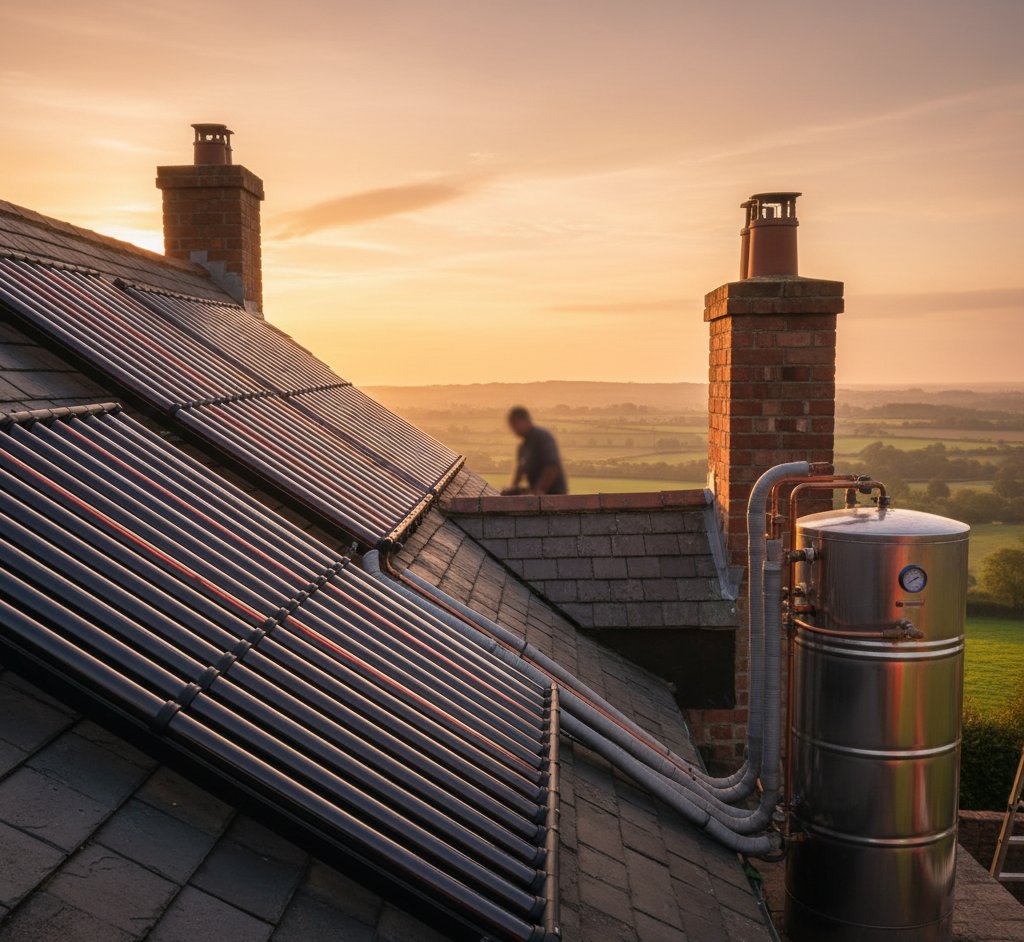
Heating water accounts for a significant chunk of UK household energy bills — roughly 15–20% for a typical home. Solar can slash this cost, but there are two very different approaches. Here's how to choose.
The Two Approaches
Approach 1: Solar PV + Diverter
You have (or install) solar PV panels that generate electricity. A diverter device monitors your generation and consumption in real time. When surplus electricity is being generated (more than you're using), the diverter sends it to your immersion heater instead of exporting it.
How it works:
- Solar panels generate electricity
- Your home's appliances use what they need
- Surplus electricity is detected by the diverter
- Diverter ramps up the immersion heater to match the surplus exactly
- Your hot water cylinder heats up using free solar electricity
- Only genuine surplus after hot water goes to grid export
Approach 2: Solar Thermal
Dedicated solar thermal panels on the roof contain fluid that absorbs heat from the sun. This hot fluid circulates through a coil in your hot water cylinder, directly heating the water.
How it works:
- Sun heats the fluid in the thermal panels
- A pump circulates the fluid to the cylinder
- A heat exchanger transfers heat to the stored water
- The fluid returns to the panels to be reheated
Head-to-Head Comparison
| Factor | PV + Diverter | Solar Thermal |
|---|---|---|
| Cost (add to existing PV) | £300–£500 | N/A (needs full installation) |
| Cost (complete new system) | £6,500–£8,500 | £3,000–£5,000 |
| Hot water contribution | 60–80% (summer), 10–20% (winter) | 60–70% (summer), 15–25% (winter) |
| Also generates electricity? | Yes | No |
| SEG export eligible? | Yes (for non-diverted surplus) | No |
| Maintenance | Minimal | Annual fluid check, pump service |
| Lifespan | 25+ years (PV) + 10–15 years (diverter) | 15–20 years |
| Needs hot water cylinder? | Yes | Yes |
PV Diverters in Detail
The two main products:
myenergi Eddi
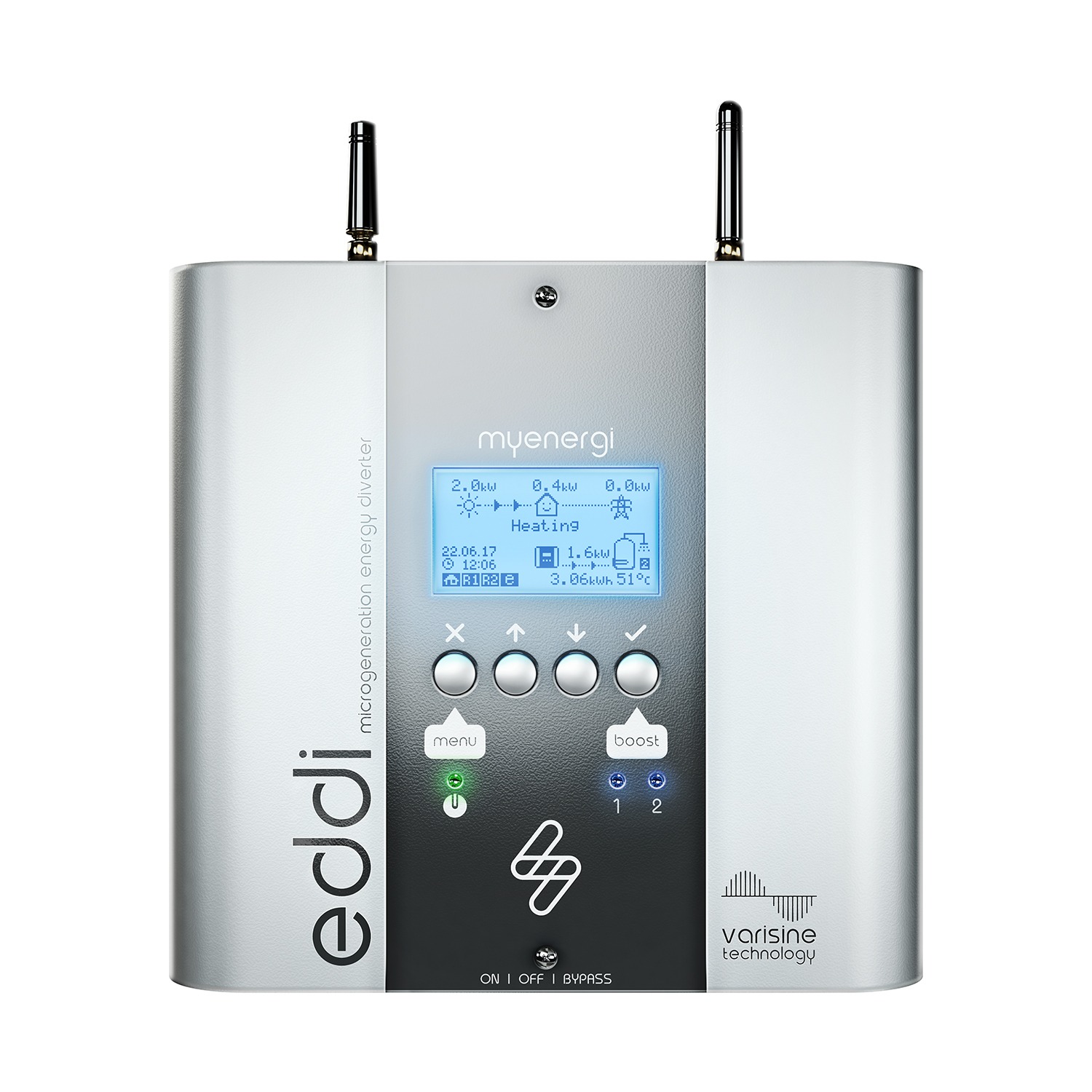
myenergi Eddi Solar Diverter
£1853000
power_divert,timed_boost
2
configurable
Affiliate link — we may earn a small commission at no extra cost to you
- Monitors solar generation and home consumption via a CT clamp
- Diverts surplus to one or two immersion heaters (primary and secondary priority)
- Can also divert to other resistive loads (towel rails, storage heaters)
- Works with any solar PV system
- Installed cost: £400–£550
- Integrates with myenergi ecosystem (Zappi EV charger, Hub)
Solar iBoost+
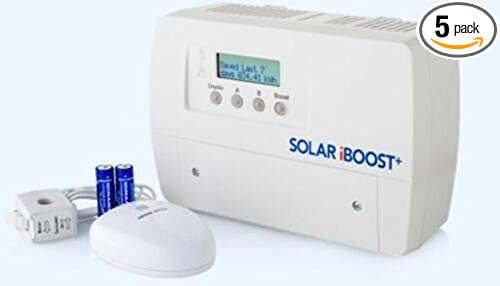
Solar iBoost+ Immersion Heater Controller
£1503000
auto_divert,manual_boost
1
true
Affiliate link — we may earn a small commission at no extra cost to you
- Similar functionality to the Eddi at a lower price
- Wireless sender clamp makes installation simpler
- Diverts to a single immersion heater
- Built-in timer for boost function
- Installed cost: £280–£400
- Simpler setup, fewer features
Which Diverter?
The Eddi is the more capable product — dual output priority, better integration, more control options. The iBoost+ is simpler and cheaper. For most homes with a single immersion heater and no other divert targets, the iBoost+ is perfectly adequate and saves £100–£200.
If you also have a Zappi EV charger or want to divert to multiple loads, the Eddi's ecosystem benefits are worth the premium.
How Much Hot Water Can Solar Provide?
A typical UK household uses 120–180 litres of hot water per day, requiring roughly 4–6 kWh to heat.
With a PV Diverter
| Season | Typical Daily Surplus Available | Hot Water Heated | % of Daily Need |
|---|---|---|---|
| Summer (May–Aug) | 5–10 kWh | 4–6 kWh | 80–100% |
| Spring/Autumn | 2–5 kWh | 2–4 kWh | 40–70% |
| Winter (Nov–Feb) | 0.5–2 kWh | 0.5–2 kWh | 10–30% |
In summer, a 4kW PV system with a diverter can heat all your hot water most days. In winter, it provides a useful pre-heat but you'll still need your boiler or immersion heater to bring the water up to temperature.
With Solar Thermal

| Season | Typical Daily Heat Contribution | Hot Water Heated | % of Daily Need |
|---|---|---|---|
| Summer | 3–5 kWh | 3–5 kWh | 60–80% |
| Spring/Autumn | 1.5–3 kWh | 1.5–3 kWh | 30–50% |
| Winter | 0.5–1.5 kWh | 0.5–1.5 kWh | 10–25% |
Solar thermal is more consistent because it captures heat even on overcast days (diffuse radiation warms the fluid), but it can't exceed the hot water demand — any surplus heat is wasted.
Cylinder Temperature Matters
Your immersion diverter heats water throughout the day as surplus is available. By mid-afternoon in summer, the cylinder may reach 60°C+. This is fine — and means you won't need to boost in the evening. But if the cylinder reaches maximum temperature early, subsequent surplus is exported rather than heating water. A larger cylinder (200+ litres) stores more heat and absorbs more solar energy.

Do You Need a Hot Water Cylinder?
Yes — both approaches require one.
If you currently have a combi boiler (no cylinder), you'll need to install one. This typically costs £500–£1,500 including the cylinder, pipework, and any modifications. The cylinder needs an immersion heater element (for the diverter approach) or a solar coil (for solar thermal).
Many homes built in the last 20 years have combi boilers and no cylinder. Adding one is a significant plumbing job but opens up solar hot water, heat pump compatibility, and general hot water resilience.
See our hot water tank integration guide for details.
The Financial Case
PV Diverter (Added to Existing PV System)
Cost: £350 (iBoost+) or £500 (Eddi)
Annual saving: Each diverted kWh saves the spread between export rate and import rate. If you'd have exported at 12p/kWh but instead use it for hot water (saving 26p/kWh import), you save 14p per kWh diverted.
Typical annual diversion: 1,200–1,800 kWh Annual saving: £168–£252
Payback: 1.5–3 years — excellent.
Solar Thermal (New Installation)
Cost: £3,500–£5,000 installed
Annual saving: Offsets gas or electricity for water heating. On gas: saves roughly £80–£150/year. On electricity: saves £200–£400/year.
Payback: 10–25+ years (gas) or 9–15 years (electric heating).
The PV diverter route is dramatically better value if you already have PV panels.
Diverter Only Works If You Have Surplus
A PV diverter diverts surplus generation. If your home already uses most of what the panels generate (high self-consumption), there's little surplus to divert. The diverter works best with larger PV systems (4kW+) and households with lower daytime electricity use. If your self-consumption is already 80%+, a diverter adds minimal benefit.
Our Recommendation
For most UK homes in 2026:
- If you have PV panels and a hot water cylinder: Add a diverter (iBoost+ or Eddi). It's the cheapest, fastest-payback solar hot water option.
- If you have PV but no cylinder: Consider adding a cylinder + diverter. The combined cost is higher but you get solar hot water and future-proof for heat pumps.
- If you're installing solar from scratch: Get PV panels + diverter rather than solar thermal. You get electricity AND hot water.
- Solar thermal: Only if you have limited roof space, high hot water demand, and no interest in PV.
For more on the thermal vs PV comparison, see our detailed comparison.
Share this article

OVO has carefully selected trusted teams across the UK to install solar panels and heat pumps. Enjoy the personal touch of a local expert with the peace of mind of a household name.
Affiliate link — we may earn a small commission at no extra cost to you
Stay informed
Get free solar updates direct to your inbox
Related reading
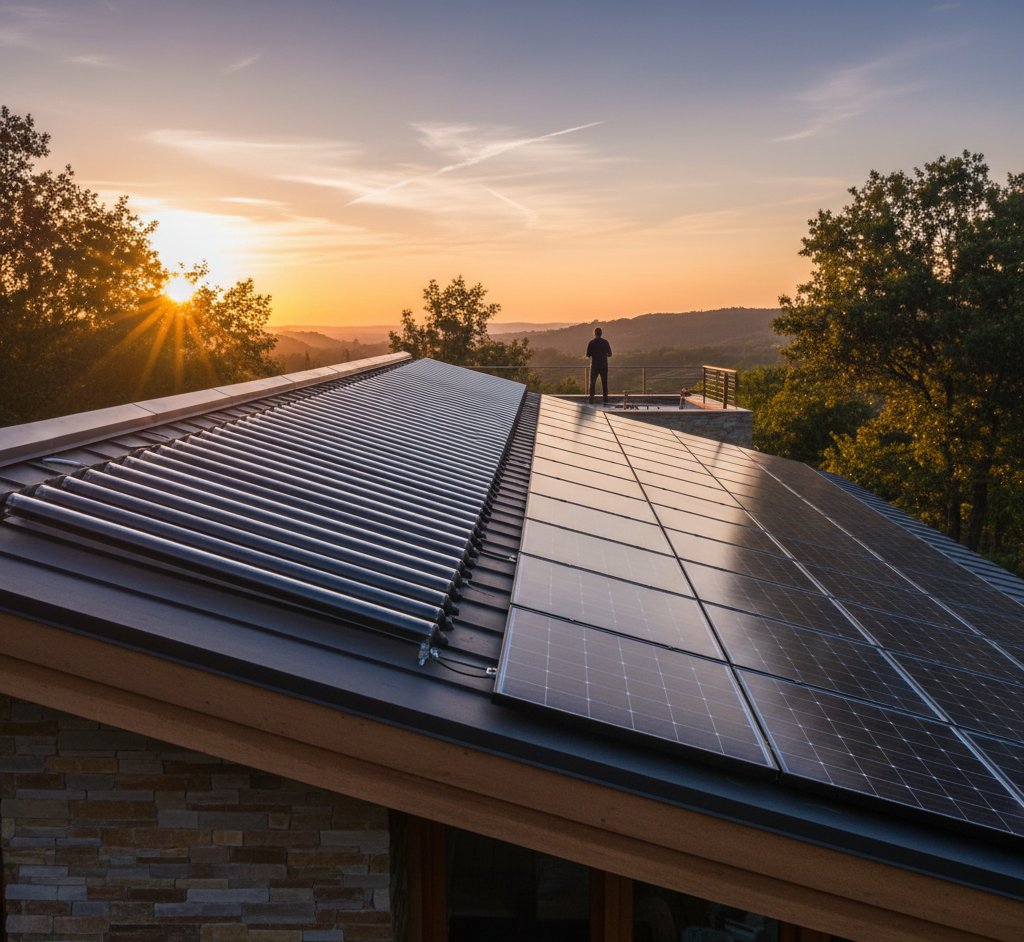
Solar Thermal vs Solar PV: Which Is Better?
Solar thermal panels vs solar PV: compare costs, efficiency, and practicality for UK homes. Why PV has largely won the argument — and when thermal still makes sense.

Solar Panels + Heat Pump: The Ultimate Combo?
Solar panels and heat pumps together: how the combination works, what it costs, real savings, and how to size the system for a UK home. The ultimate low-carbon setup.
Hot Water Tank Integration with Solar
How to integrate your hot water cylinder with solar panels. Cylinder types, sizing, immersion heaters, diverters, and what to ask your installer.


Switch to Octopus Energy
Get 50 credit when you switch. We get 50 too — win-win.
What does this mean for YOUR home?
Design your perfect solar setup in under 3 minutes. Free, no sign-up required.
Build Your Solar System