This page contains affiliate links. If you purchase through them we may earn a small commission at no extra cost to you. Learn more
My Solar Inverter Keeps Tripping: Causes and Fixes

Your solar inverter has just gone dark, or you have noticed your generation figures are lower than expected and spotted an error code on the display. Before you panic, most inverter trips are self-resolving and entirely normal — but some do need attention. Here is how to work through it.
Step 1: Check the LED and display
Your inverter's front panel is the first place to look. Most residential inverters use a three-colour LED system:
- Green — operating normally. If the LED is green but you expected more generation, the issue may be elsewhere (shading, a dirty panel, a cloud).
- Orange or amber — a warning. The inverter is still working but something is outside its normal range. Common causes include grid voltage fluctuations or a communication error with your monitoring app.
- Red — a fault. The inverter has shut down to protect itself or the grid. Note down any error code shown on the display or in your manufacturer's app.
If there is no display at all, check whether the inverter has power — look at the DC isolator switch (usually mounted near the inverter) and the AC isolator on your consumer unit (fusebox).
Step 2: Look up the error code
Inverter manufacturers use different error code systems. Common ones you might see:
- Iso fault / isolation fault — the inverter has detected a problem with electrical isolation, often caused by moisture in a cable, junction box, or connector. This one needs a professional.
- Grid fault / grid over-voltage — the grid voltage in your street has risen above the permitted threshold. Very common on sunny afternoons (explained below).
- Over-temperature — the inverter has overheated and shut itself down to cool.
- PV string fault — a problem on the solar panel side, possibly a failed panel or damaged cable.
Your inverter manual will have a full list. Most manufacturers also have lookup tools in their apps (SolarEdge, Fronius, Solis, GivEnergy) — search for your model name plus "error codes" if you have mislaid the manual.
Step 3: The most common causes
Grid over-voltage (G98 protection)
This is the single most common cause of inverter trips in the UK, and it tends to catch people off guard because it happens on the sunniest days — exactly when you expect your system to be performing best.
Here is what happens: when lots of households in your street are generating solar power simultaneously, the local grid voltage rises. UK regulations (known as G98 and G99 — the grid connection standards) require inverters to automatically disconnect if the grid voltage exceeds 253 volts. This is a safety feature that protects the grid, not a fault with your system.
The inverter will typically reconnect automatically once the grid voltage drops back into range, usually within a few minutes. If this happens repeatedly on sunny afternoons, it is worth logging a call with your DNO (Distribution Network Operator — the company that owns the cables and substations in your area, not your energy supplier) to report persistent over-voltage. They have a legal obligation to maintain voltage within limits.
RCD tripping
An RCD (Residual Current Device) is a safety switch in your consumer unit that detects earth leakage — electricity flowing somewhere it should not. If your solar system is causing the RCD to trip, it could indicate:
- Damp getting into a cable junction box or MC4 connector (the weatherproof connectors used to join solar panel cables)
- Physical damage to a cable, perhaps from a bird or a nail during a roofing job
- A fault developing in an older inverter
RCD trips on a solar circuit need professional investigation. Do not simply reset and ignore them.
MCB tripping
An MCB (Miniature Circuit Breaker) is the individual fuse-like switch for a specific circuit. If the MCB for your solar feed is tripping, it suggests the circuit is drawing or passing more current than it was designed for. This can indicate a wiring fault or, in rare cases, a fault within the inverter itself.
Overheating
Inverters generate heat during operation and need adequate ventilation. If yours is mounted in a poorly ventilated cupboard, south-facing in direct sunlight, or has dust accumulated over its vents, it may overheat and shut down during peak generation periods.
Step 4: What you can try yourself
The restart. Power off the inverter completely using both the AC isolator (on your consumer unit) and the DC isolator (on the wall near the inverter). Wait five minutes — this gives capacitors inside the unit time to fully discharge and the grid voltage time to stabilise. Then restore power in reverse order: DC first, then AC. This resolves a significant proportion of transient faults.
Check ventilation. Make sure nothing is blocking the airflow around your inverter — no boxes stacked in front of it, no accumulated dust on the vents. The manufacturer's manual will specify a minimum clearance distance (typically 200–300mm around the unit).
Check for visible moisture. If you can see condensation on the inverter casing or on the cable entry points, do not restart. Call a professional.
Log the pattern. Note the time, date, and weather conditions when each trip occurs. Sunny afternoons + grid fault = likely over-voltage. Rainy days + isolation fault = likely moisture ingress. Patterns are enormously helpful for diagnosis.
Never open the inverter casing
The interior of a solar inverter contains DC voltage from the panels — which cannot be switched off simply by throwing a breaker. Even with the AC and DC isolators off, significant charge can remain stored inside. DC electricity at these voltages is lethal. Inverter casings should only be opened by a qualified electrician or inverter engineer. Attempting to open one yourself will also void your warranty.
Step 5: When to call a professional
Call a qualified solar installer or inverter engineer if:
- The inverter trips repeatedly after a restart, especially with the same error code
- You can smell burning or notice any scorch marks around the unit or cables
- You can see signs of water ingress — rust, staining, or condensation inside any electrical enclosure
- The RCD on your solar circuit keeps tripping
- The inverter is completely dead and you have confirmed the isolators are on
For warranty claims, contact your installer first — most inverters carry a 10-year manufacturer warranty and faults within this period should be repaired at no cost to you.
Keep a generation log
Most inverter apps show daily generation figures. If you check yours once a week and note the reading, you will quickly spot when output drops unexpectedly — often before a trip becomes obvious. A sudden drop in a settled sunny period is usually the first sign of a developing fault.
Summary
Most inverter trips are not cause for alarm. Grid over-voltage on sunny afternoons is especially common and self-resolving. The restart procedure (off, wait, back on) is a legitimate first step for any fault that does not involve burning smells or visible damage. What matters is the pattern — a one-off trip in six months is very different from three trips in a week.
If in doubt, contact your original installer. They know your system's history and can often diagnose the fault from the error code and a description of when it happened.
Share this article

OVO has carefully selected trusted teams across the UK to install solar panels and heat pumps. Enjoy the personal touch of a local expert with the peace of mind of a household name.
Affiliate link — we may earn a small commission at no extra cost to you
Stay informed
Get free solar updates direct to your inbox
Related reading
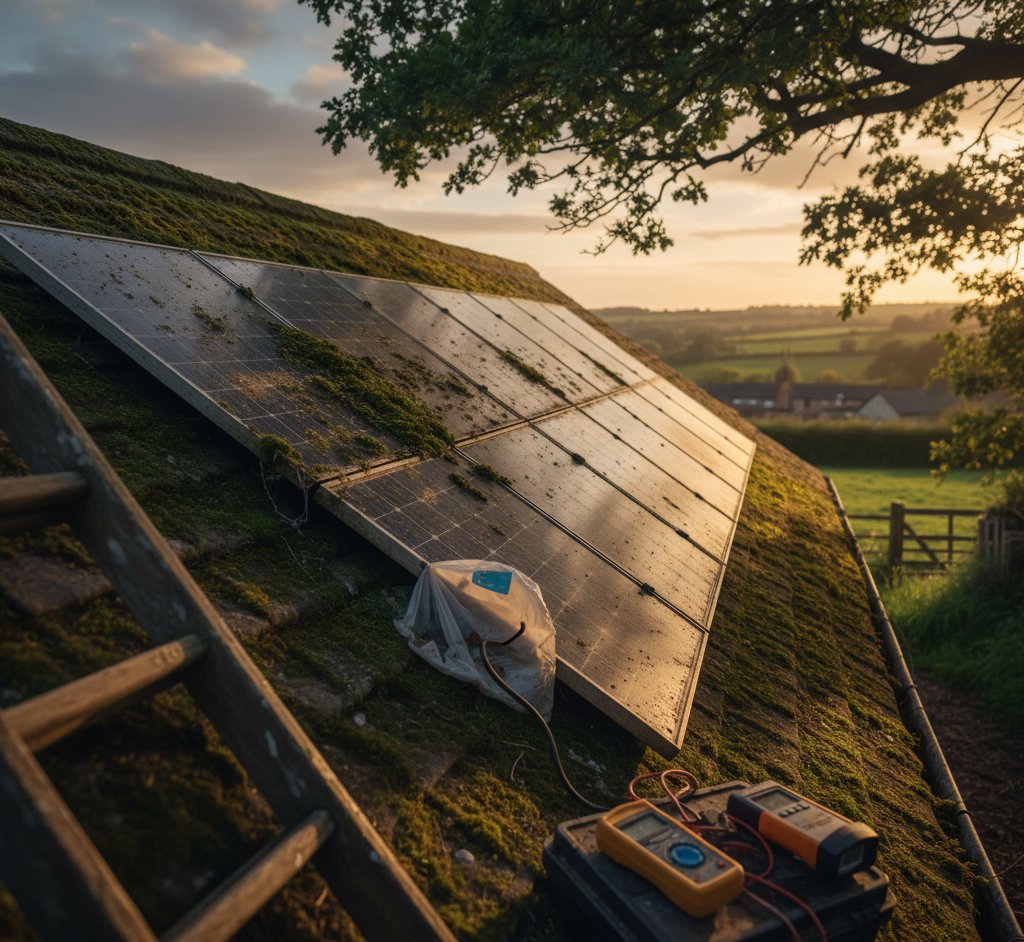
My Solar Panels Are Underperforming: A Diagnostic Checklist
Solar not generating what you expected? Work through this checklist before calling your installer. Most underperformance has a simple explanation.
Noisy Solar Inverters: Causes and Solutions
Why your solar inverter makes noise, when it is normal, when it is a fault, and how to reduce inverter noise. Buzzing, humming, and fan noise explained.
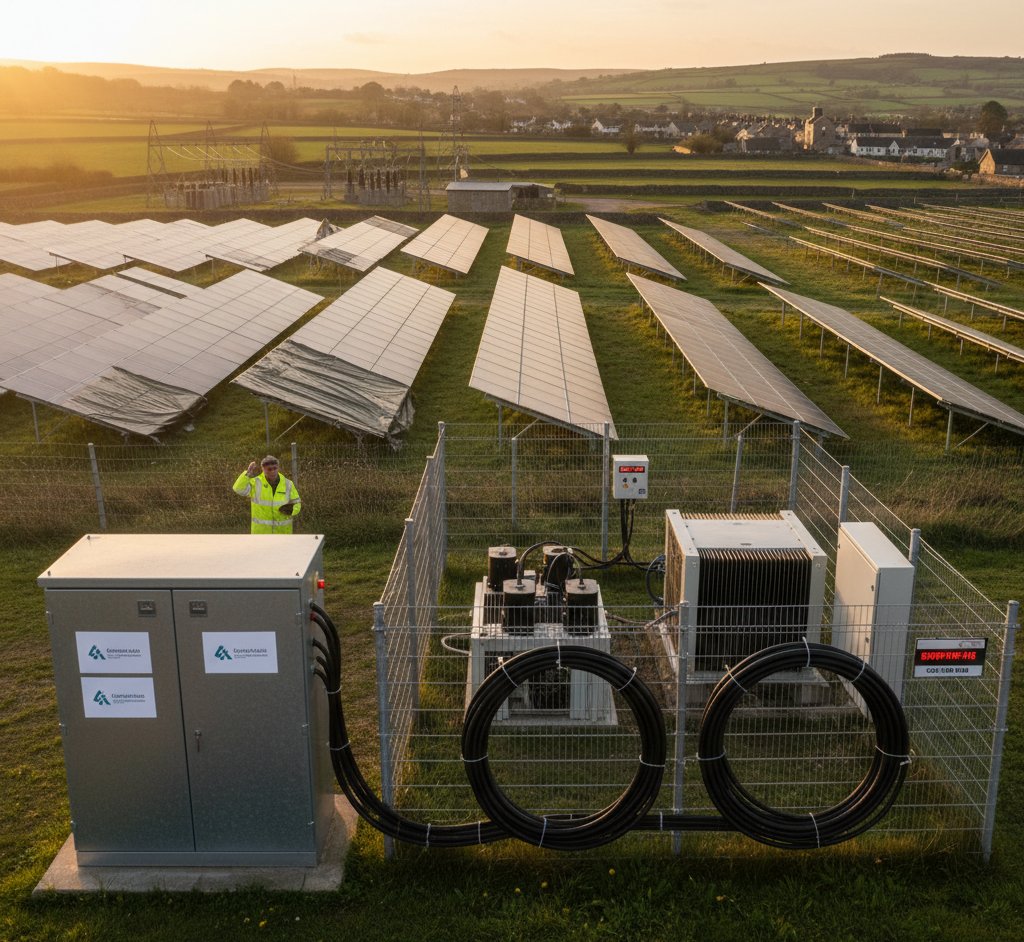
DNO Issues with Solar: G98, G99, and Export Limits
DNO requirements for solar panels in the UK. G98 notification, G99 applications, export limits, and what happens if the grid can't accept your power.


Switch to Octopus Energy
Get 50 credit when you switch. We get 50 too — win-win.
What does this mean for YOUR home?
Design your perfect solar setup in under 3 minutes. Free, no sign-up required.
Build Your Solar System