This page contains affiliate links. If you purchase through them we may earn a small commission at no extra cost to you. Learn more
Can My Neighbour Object to My Solar Panels?

Few home improvement projects seem to trigger neighbourly anxiety quite like solar panels. If you are wondering whether your neighbour can actually stop you, the answer in most cases is no — but understanding exactly why, and what the exceptions are, will help you handle any friction with confidence.
The short answer: under permitted development, no
Permitted development (PD) is a set of pre-approved planning permissions granted by the government that allow certain home improvements without requiring a planning application. Solar panels on most UK homes fall under permitted development.
The crucial implication of this: because no planning application is submitted, there is no consultation period, no statutory notice to neighbours, and no formal mechanism for neighbours to object. The process simply does not involve them.
You inform your DNO (Distribution Network Operator — the company that owns the cables and substations in your area) via a G98 notification, you arrange your installation, and that is that. Your neighbour's opinion has no formal standing in this process.
When neighbours CAN formally object
There are situations where you do need to submit a planning application, and in those cases neighbours can object through the standard planning process:
- Listed buildings of any grade — solar panels on a listed building require listed building consent. Neighbours and other parties can comment during the consultation period.
- Conservation areas, front elevation — panels on the front of a house (the side facing a highway) in a conservation area are not covered by permitted development. You need full planning permission, and neighbours can object.
- Ground-mounted arrays exceeding 9m² — these also require a planning application.
- Non-standard installations — anything that falls outside the PD criteria (protrusion, height limit) needs a planning application.
In planning applications, objections from neighbours are considered — but only on relevant planning grounds. Not every complaint carries weight. More on that below.
Common complaints and whether they have any legal standing
"The glare will be terrible"
Solar panels are designed to absorb light, not reflect it. Modern photovoltaic panels have anti-reflective coatings and typically have a reflectance of 2–4% — considerably less than a standard glass window. In practice, glare from domestic solar panels is rare.
In the very unusual scenario where glare from a solar installation demonstrably creates a hazard to road users — for example, blinding drivers at a specific junction — this could potentially be a material planning consideration. Annoyance to a neighbour sitting in their garden is not a legal matter.
"It'll devalue my property"
There is no legal protection against a neighbour doing something legal to their own property that you believe will affect your property value. This is not a planning consideration. Local planning authorities are not required to refuse permissions on the basis that one neighbour thinks it will lower their house price (and the evidence suggests solar panels have a neutral or slightly positive effect on property values in any case).
"I think it looks ugly"
Aesthetics are considered in planning decisions, but only in relation to the character of the area. For permitted development installations, there is no planning decision to be made at all. Under full planning, objections about appearance carry weight in conservation areas or areas of distinctive character — but "my neighbour thinks solar panels look industrial" is not, on its own, a basis for refusal.
"It blocks my light"
Panels sit on your roof. They do not project outward into your neighbour's airspace or cast a new shadow across their property — in fact, a roof with panels looks almost identical to a roof without them from the ground next door. Panels do not "block light" in any meaningful sense.
The separate legal concept of "right to light" applies to windows — if a new structure blocks natural light to an established window. Solar panels on a nearby roof surface do not trigger this.
The one area where your neighbour genuinely has leverage
Scaffolding access. If your property is a terraced or semi-detached house and the scaffold tower or putlog scaffold needs to be erected on or over your neighbour's side of the boundary to reach part of your roof, you need their permission. Scaffolders cannot step onto or over a neighbour's land without consent.
This is not a planning matter — it is civil law (trespass). In practice, most neighbours are perfectly reasonable when asked courteously in advance. If a neighbour refuses access, your installer may need to work from a different scaffold configuration, which can add cost. This is genuinely rare.
Party wall — terraced and semi-detached homes
If you share a party wall with a neighbour and any element of the installation involves work on or near that wall — for example, drilling through it for cable routing — the Party Wall Act 1996 may apply. This requires you to give written notice to your neighbour before work starts. Your installer should advise you on this. In most solar installations it does not arise, but it is worth confirming.
How to handle a concerned neighbour
Even when you have every legal right to proceed, a difficult neighbour can make installation day unpleasant — and you have to live next door to them long after the scaffolders have left. A small amount of communication goes a long way.
Let them know before the scaffolding arrives
A quick conversation or note through the door a week before installation — "we are getting solar panels installed on [date], there will be scaffolding and some noise for a day or two" — is a common courtesy that almost always defuses concern before it starts. Most neighbours are curious rather than hostile, and a brief explanation often turns a wary sceptic into an interested onlooker.
If your neighbour remains hostile despite your best efforts, the practical approach is to document that you have followed all correct procedures — DNO notification, permitted development criteria met — and proceed. You are within your rights to do so.
Summary
Under permitted development, neighbours have no formal mechanism to block your solar installation. The process does not involve them. The situations where they gain formal objection rights — planning applications for listed buildings, conservation area front elevations, and large ground-mount systems — are the minority of residential solar installations.
Common complaints about glare, appearance, and property values carry no legal weight under permitted development. The one practical area to handle carefully is scaffolding access, which requires goodwill and sometimes negotiation. A brief, friendly conversation before installation day resolves most issues before they start.
Share this article

Energy-saving LED lighting — make the most of your solar electricity with efficient bulbs and fixtures
Affiliate link — we may earn a small commission at no extra cost to you
Stay informed
Get free solar updates direct to your inbox
Related reading
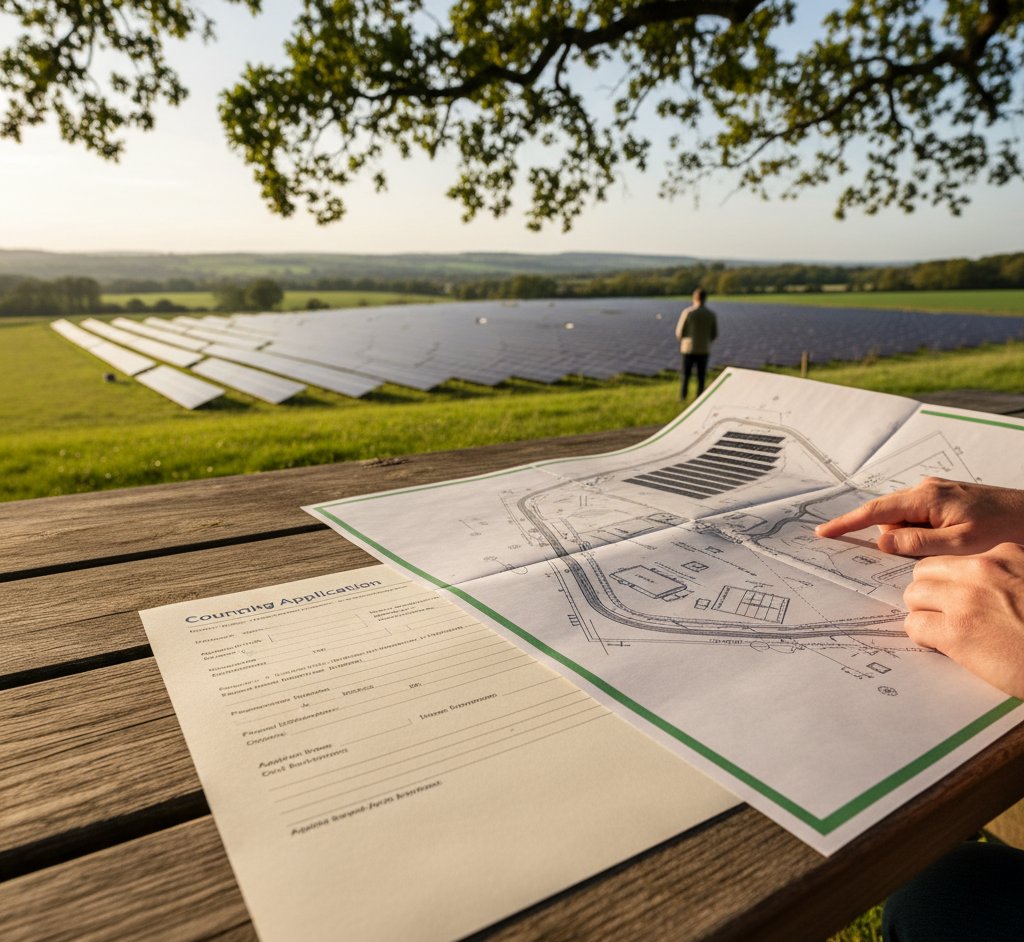
Solar Panel Planning Permission UK: What You Need to Know
Do you need planning permission for solar panels in the UK? Permitted development rules, when you need to apply, and what happens in special areas.
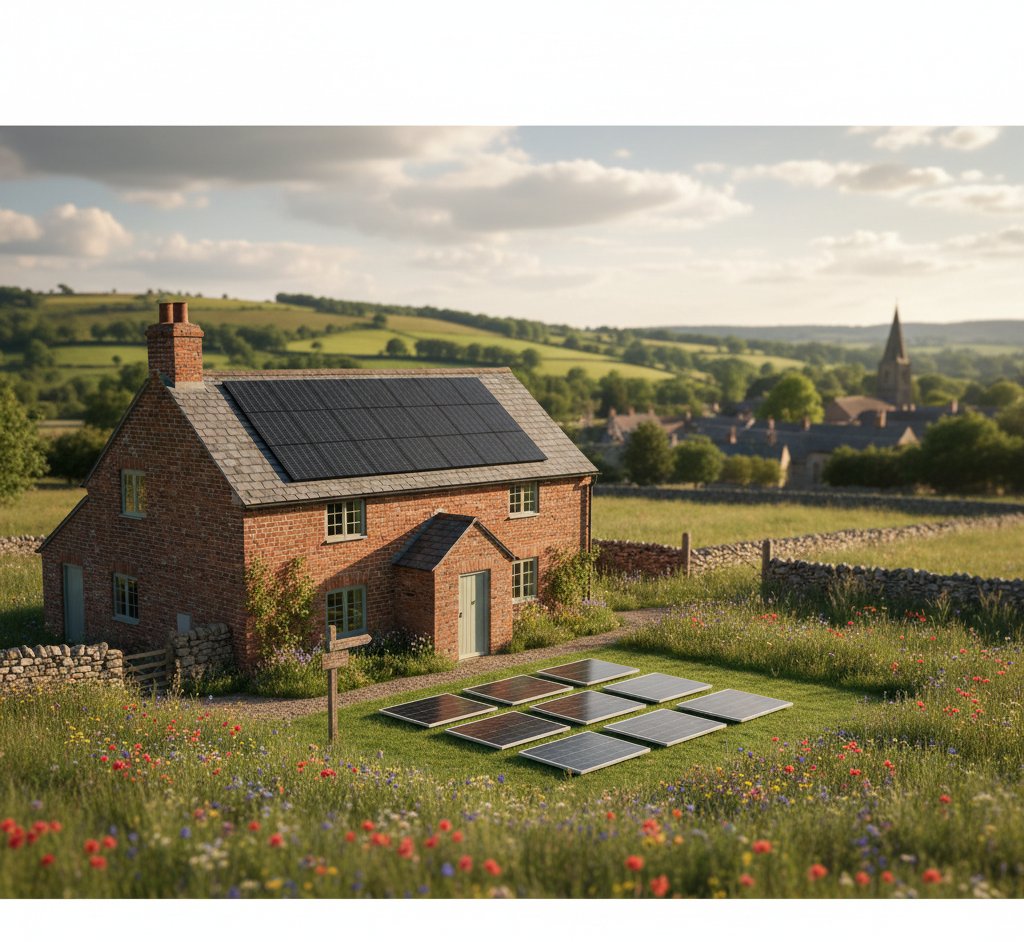
Permitted Development: The 9m² Rule for Solar
Permitted development rights for solar panels in the UK — the 9m² limit for ground-mounted systems and what you can install without planning permission.
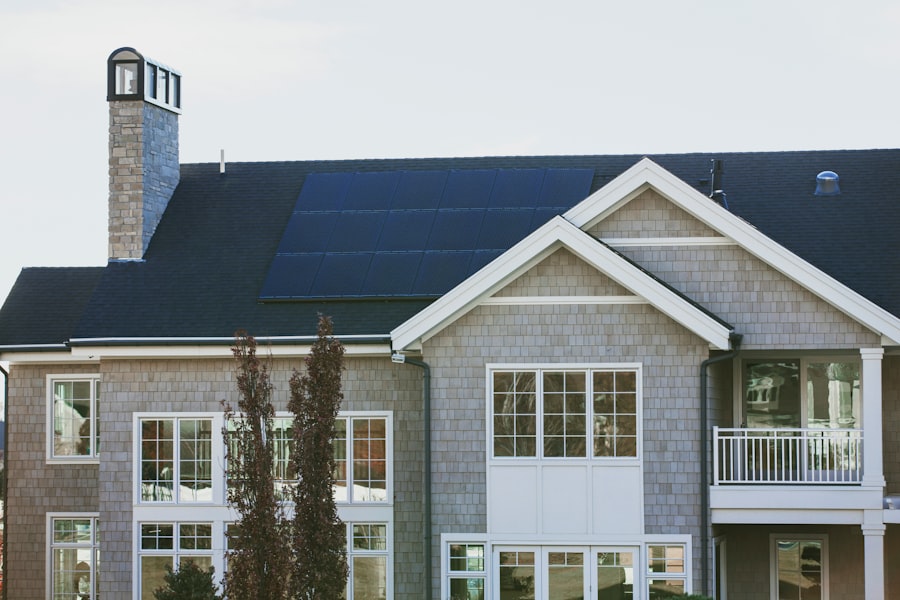
Solar Panels in Conservation Areas
Can you install solar panels in a conservation area? The rules for permitted development, what needs planning permission, and how to get approval.


Switch to Octopus Energy
Get 50 credit when you switch. We get 50 too — win-win.
What does this mean for YOUR home?
Design your perfect solar setup in under 3 minutes. Free, no sign-up required.
Build Your Solar System