This page contains affiliate links. If you purchase through them we may earn a small commission at no extra cost to you. Learn more
Octopus Go vs Flux: Which Tariff for Your Solar Setup?

Octopus Energy has built a reputation for tariffs that reward flexible energy use. Two of their most discussed products are Octopus Go and Octopus Flux -- both time-of-use tariffs, but designed for quite different households. Understanding the difference matters because choosing the wrong one can mean leaving money on the table.
What is a time-of-use tariff?
A time-of-use (ToU) tariff charges different rates for electricity at different times of day, unlike a flat-rate tariff that charges the same price per kWh regardless of when you use it. The logic is that grid electricity is cheaper to produce at night (when demand is low) and more expensive during peak hours (typically early evening). ToU tariffs pass that cost signal through to consumers, rewarding those who can shift their usage.
For solar and battery households, ToU tariffs can be a powerful tool: charge your battery from the grid when rates are lowest, use solar during the day, and export or hold battery charge for the peak window.
Octopus Go: the EV tariff
Octopus Go was originally designed for electric vehicle owners. It has a simple two-rate structure:
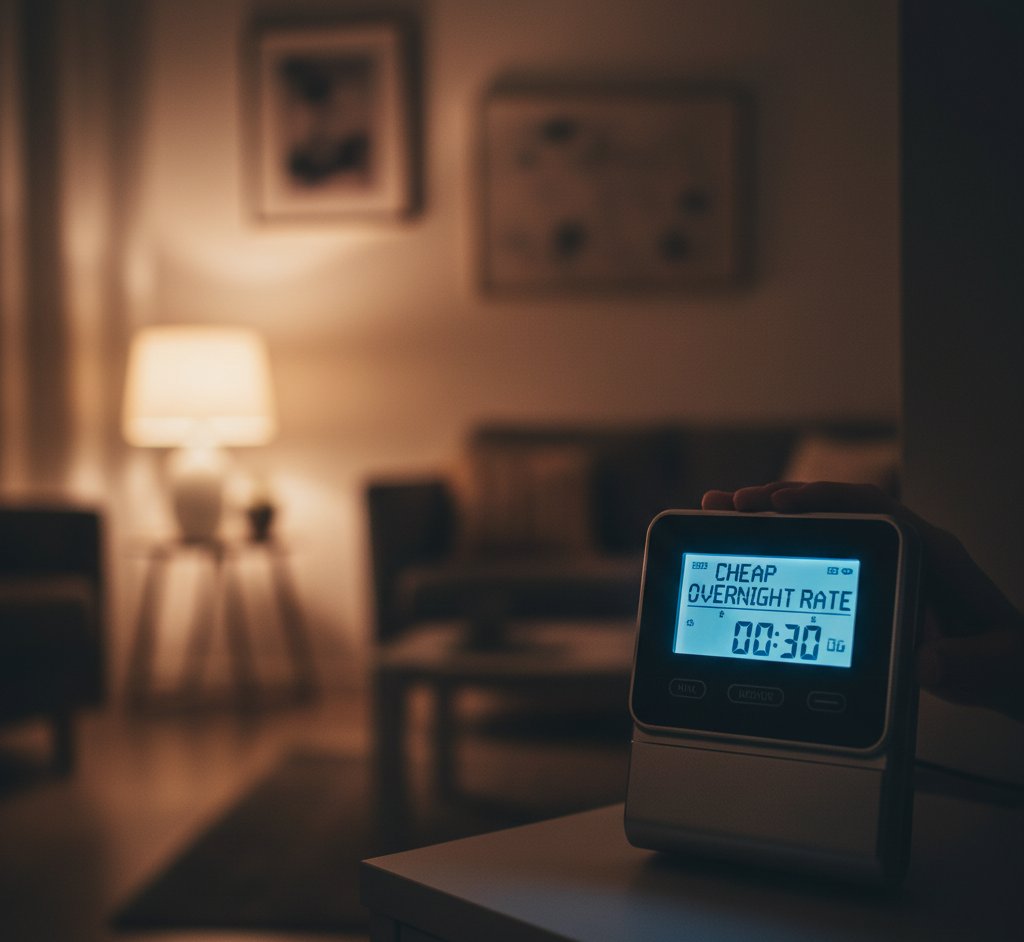
- A cheap overnight rate for a defined window, typically the early hours of the morning
- A standard day rate for the remaining hours
The overnight window is designed to let EV owners charge their car cheaply, but there is nothing to stop you using the window to charge a home battery too. Households with solar often use Go to fill their battery from the grid overnight, then self-consume solar during the day and draw down the battery in the evening, minimising what they buy at the day rate.
Go does not offer a premium export rate. You would export under a separate SEG (Smart Export Guarantee) contract at whatever rate your chosen supplier offers.
For current Octopus Go rates, check the Octopus Energy website directly -- rates vary by region and are updated periodically.
Intelligent Octopus Go vs standard Go
Octopus also offers Intelligent Octopus Go, which requires a compatible smart EV charger or vehicle. It offers the same overnight rate but with a longer cheap window, and the charger can be dispatched flexibly within that window based on grid conditions. If you have a compatible EV and charger, Intelligent Go is worth exploring over standard Go.
Octopus Flux: the solar-and-battery tariff
Flux is structurally more complex and more powerful for homes with both solar and battery storage. It has a three-rate structure:
- A low overnight import rate for a defined early-morning window -- for battery charging from the grid
- A mid day rate -- broadly in line with the standard flat tariff
- A high peak rate for a window in the late afternoon and early evening -- this applies both to imports and to exports
That peak window is the key feature. During peak hours, Flux pays a premium export rate for electricity you send to the grid, significantly above what basic SEG tariffs offer. If your battery is charged (from overnight grid import or from solar during the day) and you discharge it during the peak window, you earn the premium rate on every kWh sent out.
For current Flux rates, always check the Octopus website directly -- rates are subject to change with the price cap and Octopus's quarterly reviews.
Head-to-head comparison
| Feature | Octopus Go | Octopus Flux |
|---|---|---|
| Rate structure | 2-rate: cheap overnight + standard day | 3-rate: cheap overnight, mid day, high peak |
| Export payments | Separate SEG contract at basic rate | Built-in premium peak export rate |
| Eligibility | EV or home battery | Solar panels + battery (both required) |
| Best for | EV charging; solar-only homes | Solar + battery homes optimising export |
| Complexity | Low -- easy to model | Higher -- requires scheduling and planning |
| Availability (April 2026) | Open to eligible customers | Closed to new sign-ups |
Flux is closed to new sign-ups as of April 2026
Octopus Flux was not accepting new customers as of April 2026. This situation may change -- Octopus has a track record of reopening tariffs when capacity allows. If Flux is your target, monitor the Octopus website and sign up for their waitlist if available. Do not make hardware purchasing decisions assuming Flux will be accessible -- model your financials on what you can actually sign up for today.
Which suits your setup?
Choose Octopus Go if:
- You have an EV and want cheap overnight charging
- You have solar but no battery, and want a simple cheap overnight rate for running appliances
- You have a battery but no solar, and want to charge cheaply overnight to reduce your day-rate bills
- You want a simple tariff that is easy to model and manage
Flux may be worth waiting for if:
- You have both solar panels and a battery
- You are comfortable scheduling charge and discharge, either manually or via your inverter's automation
- The premium peak export rate represents meaningful income given your battery size
- You can verify with your own numbers that the three-rate structure beats simpler alternatives
Does Flux always beat Go for solar and battery homes?
Not automatically. Flux's advantage comes from the premium peak export rate. If you cannot reliably discharge your battery during the peak window -- because you use that charge for evening consumption, or your battery is small -- the export premium does not materialise and Flux's higher peak import rate becomes a liability.
The key variables are:
- Your battery capacity and typical state of charge going into the peak window
- Your household's evening electricity consumption, which competes with peak-window export
- The size of the spread between the off-peak import rate and the peak export rate
For homes with a well-sized battery, light evening consumption, and automated scheduling, Flux tends to be more rewarding than Go. For homes where the battery is mostly consumed before the peak window, Go's simplicity is often better value.
The arbitrage logic
With Flux, the basic arbitrage works like this: charge your battery cheaply overnight, let solar top it up during the day, then export during the peak window at the premium rate.
Battery round-trip efficiency is typically 90--95%, so a 10kWh battery might effectively trade 9--9.5kWh. The profit depends on the spread between what you pay to import overnight and what you earn exporting at peak. With a meaningful spread and a well-sized battery, the annual income from tariff arbitrage can be substantial -- but run the numbers for your specific situation before switching.
For a worked example using current verified rates, see the battery arbitrage trading article.
Summary
Octopus Go is a straightforward, accessible tariff that suits EV owners and households wanting cheap overnight electricity. Flux is a more sophisticated proposition designed specifically for solar-and-battery homes that can exploit the premium export window. If you are well-positioned to use Flux -- solar, battery, and ability to schedule -- it can be significantly more rewarding. But check availability before making any plans, and model your specific numbers before committing.
Share this article

OVO has carefully selected trusted teams across the UK to install solar panels and heat pumps. Enjoy the personal touch of a local expert with the peace of mind of a household name.
Affiliate link — we may earn a small commission at no extra cost to you
Stay informed
Get free solar updates direct to your inbox
Related reading
Octopus Go and Intelligent Go Explained
How Octopus Go and Intelligent Octopus Go work for UK households with EVs and solar panels — rates, eligibility, and real-world savings in 2026.

Octopus Flux Tariff: The Best Tariff for Solar + Battery?
How Octopus Flux works for UK solar and battery owners — import/export rates, daily schedule, real savings calculations, and whether it beats Agile.

Battery Arbitrage: Buy Low, Sell High with Solar
How battery arbitrage works with time-of-use tariffs in the UK. Charge cheap, discharge expensive, and boost your solar savings with smart battery trading.


Switch to Octopus Energy
Get 50 credit when you switch. We get 50 too — win-win.
What does this mean for YOUR home?
Design your perfect solar setup in under 3 minutes. Free, no sign-up required.
Build Your Solar System