This page contains affiliate links. If you purchase through them we may earn a small commission at no extra cost to you. Learn more
Solar Panel Wattage vs Physical Size: Does Higher Wattage Actually Matter?
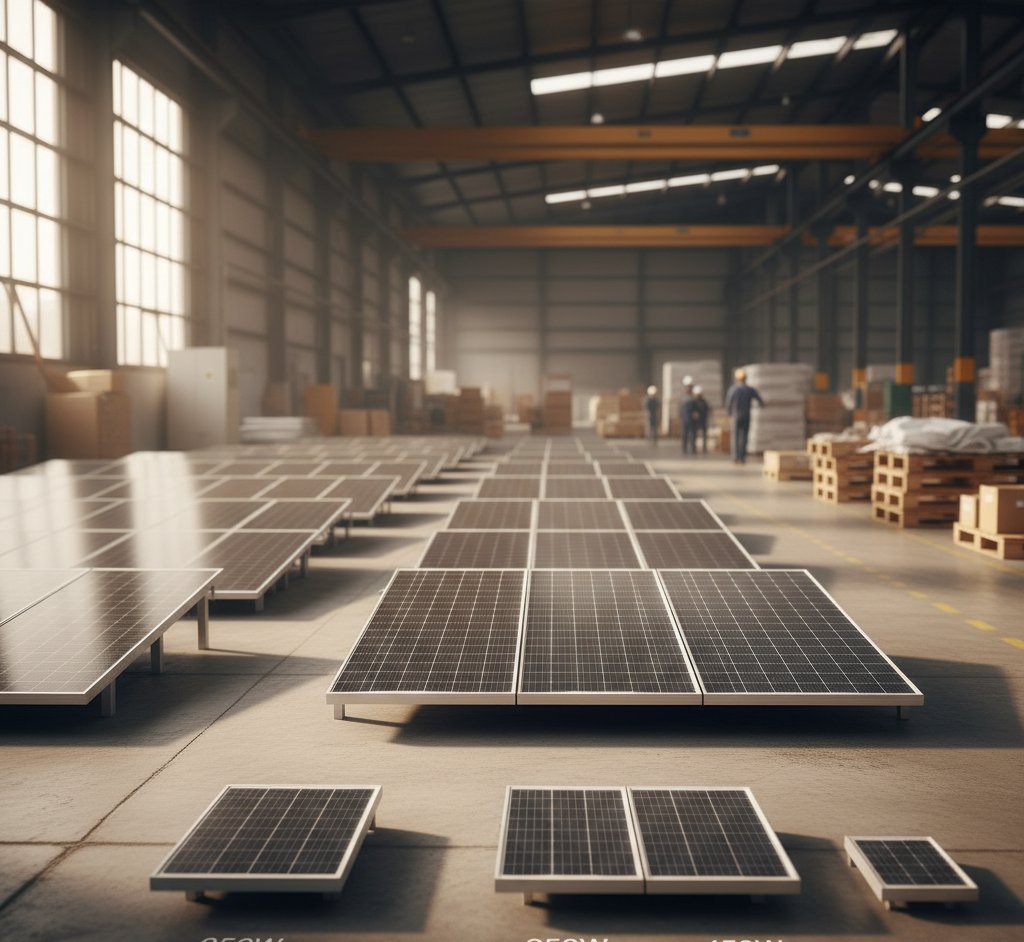
Walk into any solar panel discussion and someone will tell you that higher wattage panels are always better. That's not quite right. The relationship between wattage, physical size, and real-world value is more nuanced than the numbers suggest — and understanding it can save you money or help you squeeze more generation from a limited roof.
Physical Size: The Key Thing Most People Miss
Here is the single most important fact in this article: most residential solar panels between 400W and 455W use the same physical frame. The standard size is approximately 1722 x 1134 mm (roughly 1.95 m²). A 450W panel is not bigger than a 400W panel — it just has more efficient cells inside the same housing.
This changes once you go above roughly 455W. Panels rated at 500W and above typically use a larger frame — around 2094 x 1134 mm (2.37 m²). That is about 22% more roof area per panel. Before specifying 500W+ panels, measure your roof carefully and confirm they physically fit, accounting for edge margins, obstacles, and any planning constraints.
Cell Technology: Where the Extra Watts Come From
The wattage difference between panels of the same physical size comes down to cell technology. Here is where the market stands in 2026:
PERC (P-type) — Being Phased Out
PERC cells dominated the market from roughly 2018 to 2024. They typically deliver 400–420W in a standard frame at 20–21% efficiency. You can still buy them, and they work perfectly well, but manufacturers are winding down PERC production lines. Degradation rates are slightly higher than newer technologies (0.45–0.55% per year), which compounds over 25 years.
N-type TOPCon — The Current Standard
This is what most UK installers are fitting in 2026. TOPCon cells deliver 430–460W from the same frame size at 22–23% efficiency. The key advantage beyond raw efficiency is a lower degradation rate (0.35–0.40% per year) and a better temperature coefficient, meaning they lose less output on warm summer days.
HJT (Heterojunction) — The Premium Option
HJT panels achieve 440–470W at 22–24% efficiency. Their standout feature is an excellent temperature coefficient — typically around -0.26%/°C compared to -0.30%/°C for TOPCon. In practice, this means slightly better performance on hot days. They cost more and availability in the UK is limited.
Back-Contact (IBC/HBC) — Maximum Efficiency
IBC and HBC panels move all the electrical contacts to the rear of the cell, eliminating shading losses from busbars on the front. They achieve 440–480W at the highest efficiencies available, but at a significant price premium. SunPower (now Maxeon) is the best-known manufacturer. For most UK homes, the premium is hard to justify on payback alone.
N-type TOPCon is the sweet spot in 2026
Unless you have a specific reason to choose otherwise, N-type TOPCon panels from a Tier 1 manufacturer (Trina, JA Solar, LONGi, Canadian Solar) are the default recommendation. They offer the best combination of efficiency, degradation rate, availability, and value.
Real-World Maths: 450W vs 380W
Let's make this concrete. Say you need a 4.5kW system. You have two options:
Option A: 10 panels at 450W each = 4.5kW. Using JA Solar 450W N-type at £82 per panel = £820 for panels. Roof area needed: 10 x 1.95 m² = 19.5 m².
Option B: 12 panels at 380W each = 4.56kW. Using older 380W PERC panels at £55 per panel = £660 for panels. Roof area needed: 12 x 1.95 m² = 23.4 m².
Option B saves you £160 on panels, but needs 3.9 m² more roof space — that is roughly 2 extra panels' worth of area. On a large roof with plenty of space, the saving is real. On a smaller roof where every square metre counts, you might not have the space for 12 panels at all.
There is also a hidden cost with more panels: additional mounting rails, more wiring, and slightly more installation time. Your installer's quote will typically reflect this.
When Does Wattage Actually Matter?
Small Roofs: Higher Wattage Wins
If your usable roof area is limited — say 16–18 m² after accounting for skylights, vents, and edge margins — you can fit 8–9 standard panels. At 450W each, that is 3.6–4.05kW. At 380W each, it is only 3.04–3.42kW. The higher wattage panel gives you 15–18% more generation from the same roof. That difference compounds every year for 25+ years.
Large Roofs: Buy on Price Per Watt
If you have 30+ m² of clear roof space, you can fit more panels regardless of wattage. In this case, the headline wattage matters less — what matters is the cost per watt, which determines your total system cost for a given capacity.
Shaded Roofs: Optimisers Matter More Than Wattage
If part of your roof is shaded for portions of the day, investing in power optimisers or microinverters will make a bigger difference to your annual generation than choosing a higher wattage panel. A 450W panel operating at 60% due to shading produces less than a 400W panel with an optimiser operating at 90%.
Don't overpay for wattage you can't use
If your inverter is rated at 3.6kW, installing 10 x 500W panels (5kW total) means you are clipping output on sunny days. The extra wattage is wasted at peak times. Match your panel array to your inverter capacity — or plan to upgrade the inverter too.
Cost Per Watt: The Only Fair Comparison
Comparing a £58 panel to an £82 panel tells you nothing useful unless you factor in the wattage. Cost per watt is what matters:
| Panel | Wattage | Price (inc VAT) | Cost per Watt |
|---|---|---|---|
| Trina Vertex S+ (Plug In Solar) | 450W | £58.32 | 12.9p/W |
| LONGi Hi-MO (City Plumbing) | 410W | £56.74 | 13.8p/W |
| JA Solar N-type (Energian) | 450W | £82.43 | 18.3p/W |
| Eurener (Sunstore) | 475W | £188.49 | 39.6p/W |
The Trina 450W at 12.9p per watt is substantially better value than the JA Solar 450W at 18.3p per watt — even though the JA Solar is a perfectly good panel. The Eurener at 39.6p per watt reflects specialist retail pricing rather than wholesale, so it is not a like-for-like comparison, but it illustrates how much prices vary across suppliers.
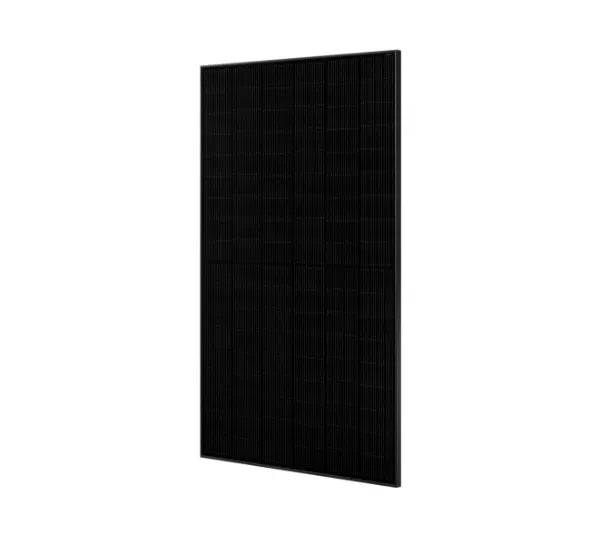
JA Solar JAM54D41 450W N-type TOPCon
£82450
22.8
1722 x 1134 x 30
21.5
Affiliate link — we may earn a small commission at no extra cost to you
For a deeper breakdown of supplier pricing and where to find the best deals, see our cost per watt guide.
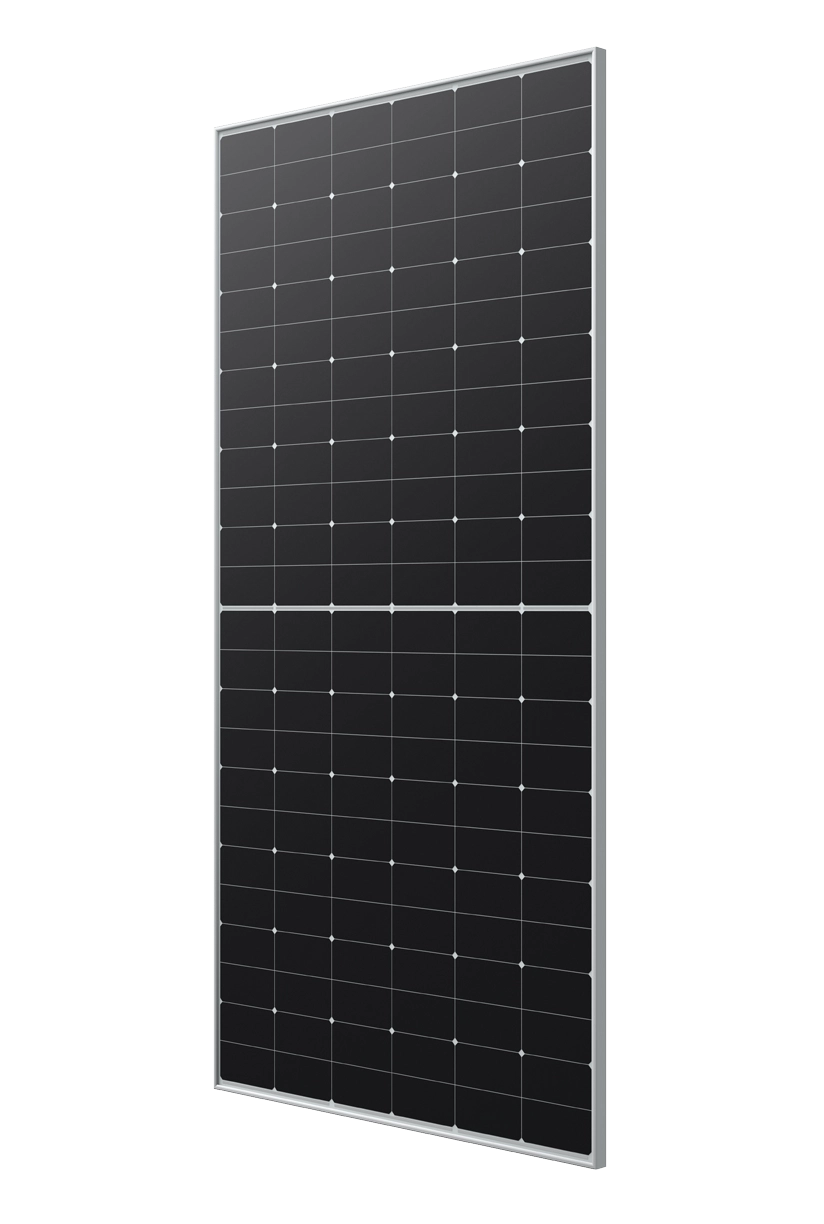
LONGi Hi-MO X6 450W
£85450
23
1722 x 1134 x 30
21.3
Affiliate link — we may earn a small commission at no extra cost to you
The Bottom Line
For most UK homes in 2026, a 450W N-type TOPCon panel from a Tier 1 manufacturer is the right choice. You get high efficiency from a standard-size frame, a good degradation rate, wide availability, and competitive pricing.
Don't pay a premium for 500W+ panels unless you genuinely need maximum output from a small roof — and check that the larger frame actually fits. Don't buy cheap leftover PERC panels unless price per watt is dramatically better and you have plenty of roof space.
And above all, compare on cost per watt, not headline wattage or sticker price. A 450W panel at 13p per watt beats a 475W panel at 40p per watt, every time.
Panel degradation over time
Solar panels lose output gradually each year. The shaded band shows the typical range for your panel type. Drag the slider to explore best and worst cases.
10 panels
4.5 kW system
2% first-year loss
After year 1
3,969
98% (2% LID loss)
Year 25
3,519
87% of original
Year 50
3,105
77% of original
50yr total
180k
kWh generated
Mono-PERC panels lose ~2% in year one from Light-Induced Degradation (LID), then degrade linearly. The 25-year warranty guarantees at least 80% output. Field data beyond 30 years is limited — projections past that point are modelled, not measured.
Share this article

OVO has carefully selected trusted teams across the UK to install solar panels and heat pumps. Enjoy the personal touch of a local expert with the peace of mind of a household name.
Affiliate link — we may earn a small commission at no extra cost to you
Stay informed
Get free solar updates direct to your inbox
Related reading
Best Solar Panels for UK Homes 2026
An honest look at the best solar panels available for UK homes in 2026 — covering JA Solar, Trina, Canadian Solar, and LONGi, with real specs and what to look for.
Solar Panel Efficiency: What It Means and Why It's Not Everything
Panel efficiency explained plainly — what the percentage actually means, why the gap between 20% and 22% barely matters for most UK homes, and what you should actually be comparing.

How to Size a Solar Panel System for Your Home
How to work out what size solar panel system you need for your UK home. Factor in electricity usage, roof space, budget, and future plans for an optimal system.


Switch to Octopus Energy
Get 50 credit when you switch. We get 50 too — win-win.
What does this mean for YOUR home?
Design your perfect solar setup in under 3 minutes. Free, no sign-up required.
Build Your Solar System