This page contains affiliate links. If you purchase through them we may earn a small commission at no extra cost to you. Learn more
Solar Panels for Park Homes and Static Caravans

Park homes and static caravans are well suited to solar — but there are specific rules around planning permission, roof mounting, and site operator consent that don't apply to brick-built houses. This guide covers what park home owners need to know before going ahead.
Do Park Homes Qualify for 0% VAT?
Yes. Park homes and static caravans qualify for the zero rate of VAT on solar panel installations. HMRC's VAT Notice 708/6 explicitly lists caravans and houseboats as residential accommodation for the purposes of the energy-saving materials relief. This means the installation of solar panels, batteries, and associated equipment is zero-rated — the same treatment as for a conventional house.
This is a useful clarification, because park homes exist in a grey area for many other regulations. On VAT, the position is clear.
Get It in Writing on Your Quote
Ask your installer to confirm the zero VAT rating in their quote. If a quote includes 20% VAT on a park home installation, query it — the installer may not be familiar with the HMRC position on caravans and park homes as residential accommodation.
Planning Permission: It Is Not Standard Planning
This is the most important distinction for park home solar. Park homes are not governed by standard planning law in the same way as houses.
Under the Mobile Homes Act 1983 (and its subsequent amendments), park homes sit on a site with a licence issued by the local authority to the site operator. The licence sets out what residents can and cannot do. Planning permission under the Town and Country Planning Act is largely not relevant to individual homes within a licensed site — what matters instead is:
- Your site licence conditions — the local authority licence may restrict alterations to homes, including solar installations. Ask your site operator to show you the relevant conditions.
- Your park operator's consent — your pitch agreement almost certainly requires you to obtain written consent from the site owner before making any external alterations to your home.
- Park rules — many parks have their own rules about aesthetics and alterations. These are separate from the site licence but equally binding.
In practice, this means your first step is always to contact your site operator and get written permission before approaching any installer. Some operators are supportive of solar — it can increase the attractiveness of the site and reduce resident energy costs. Others are more cautious.
Always Get Written Permission First
Installing solar without written permission from your site operator could put you in breach of your pitch agreement, potentially leading to removal of the installation at your cost. Do not commission an installation until you have permission confirmed in writing.
Roof Structure and Mounting Options
Park home roofs are typically lighter in construction than brick-built homes. Many use a timber frame with a lightweight pitched or flat roof covering — not the tile or slate roofs that conventional solar installers work with every day.
This affects your mounting options:
Lightweight Framed Panels
Standard glass-framed solar panels weigh roughly 10–12 kg per panel. A small 6-panel system adds 60–70 kg to the roof. Before installation, the roof structure should be assessed to confirm it can carry this load. Ask the installer to document the structural check.
Lightweight flexible panels (typically thin-film technology) weigh considerably less — some as little as 3–5 kg per panel — and can be adhered directly to a flat or low-pitch roof. They are less efficient than conventional crystalline panels but reduce the roof loading significantly.
Non-Penetrating Mounting
Many park home owners and site operators prefer non-penetrating mounting systems — solutions that do not require drilling through the roof membrane or covering. Options include:
- Adhesive mounting — specialist adhesive bonds a mounting rail directly to a flat roof covering. Suitable for flat or low-pitch EPDM or felt roofs.
- Ballasted systems — weighted frames sit on a flat roof without fixing. Requires sufficient roof area and confirmed load capacity.
- In-roof tiles — some park homes use conventional roof tiles on a pitched section, which can accept in-roof mounting frames.
For pitched roofs with conventional tiles or shingles, standard hook-and-rail mounting may be appropriate, but always confirm with the installer that the roof structure is assessed first.
Ground-Mounted Panels
If your pitch includes a garden area, ground mounting is worth considering. Ground-mounted panels avoid any roof structural question, are easier to clean, and can often be positioned for better solar access. Check your pitch agreement and site operator consent — ground structures may need separate approval.
System Sizing for Park Homes
Park homes vary considerably in size, but many share a characteristic that makes solar particularly valuable: all-electric heating. Many park home sites are not connected to the gas grid, so residents rely on electric storage heaters, heat pumps, or electric panel heaters for warmth. This results in higher electricity consumption than a comparable gas-heated home — and more to gain from solar generation.
A typical all-electric park home might consume 5,000–8,000 kWh/year. A 2–4 kWp solar system generating 1,800–3,500 kWh/year (depending on location and orientation) can offset a meaningful proportion of that.
Pairing a 3 kWp solar system with a 5 kWh battery allows you to:
- Use solar generation directly during the day
- Store surplus for evening use
- Reduce reliance on grid electricity at the standard rate
At the current flat tariff rate (see our verified rates for up-to-date figures), the savings on a system like this can be substantial relative to the cost of electricity on a park home site.
All-Electric Homes Benefit More
If your park home uses electric heating rather than gas, you benefit more from solar than a gas-heated house of the same size. Every unit of solar generation displaces electricity that would otherwise cost you at the grid rate — rather than displacing cheaper gas. This improves the financial case considerably.
Grid Connection on Park Home Sites
Park home sites are typically connected to the distribution grid via a single site supply, with sub-metering to individual pitches. This arrangement has implications for solar:
- Your grid connection is via the site operator's supply — the DNO's customer is the site operator, not individual residents. This means notification of a generating installation (G98 for small systems) may need to go through the site operator rather than directly to the DNO.
- Limited site capacity — some older park sites have limited incoming supply capacity. If the site is already near its capacity limit, the site operator may need to upgrade the site supply before solar can export. This is a site-operator cost, not yours, but it may affect willingness to grant permission.
- Export metering — to receive Smart Export Guarantee (SEG) payments, you need a compatible smart meter registered in your name. On a sub-metered park site, this may not be straightforward. Check with your energy supplier whether SEG payments are available on your type of meter.
Off-Grid Solar: A Genuine Option for Some Sites
If your park site has limited or unreliable grid supply, or if you are on a remote park where grid connection is expensive, off-grid solar with battery storage is worth considering.
An off-grid system for a park home typically includes:
- 2–4 kWp of panels
- A large battery bank (10–20 kWh) to cover cloudy days and night-time use
- A battery-based inverter/charger that can manage charging from a backup generator if needed
- A backup generator for winter periods with low solar generation
Off-grid is not suitable for all park home residents — high electricity demand, north-facing pitches, or densely shaded sites make it harder to size a viable system. But for the right situation, off-grid removes the complications of site supply capacity and SEG registration entirely.
Off-Grid Needs Careful Sizing
An undersized off-grid system in winter will leave you without power. Any off-grid design should be modelled against your monthly consumption and local solar irradiance data, with a backup generation strategy for January and February. Do not go off-grid without a specialist system design.
Finding an Installer
Not all domestic solar installers have experience with park homes. When getting quotes, confirm:
- The installer is familiar with the Mobile Homes Act and site licence context
- They will conduct a structural assessment of the roof before quoting
- They can advise on non-penetrating or low-load mounting options
- They are MCS-certified (required for SEG eligibility and most battery warranties)
It is worth contacting the British Holiday & Home Parks Association (BH&HPA) or the National Caravan Council (NCC) for any guidance specific to your park home type.
Summary
Park home solar is entirely viable and shares the same 0% VAT benefit as domestic installations. The key differences are the need for site operator consent, attention to roof structure, and the sub-metered grid supply. For all-electric park homes, the savings can be particularly strong — and off-grid is a genuine option for the right sites.
Share this article

OVO has carefully selected trusted teams across the UK to install solar panels and heat pumps. Enjoy the personal touch of a local expert with the peace of mind of a household name.
Affiliate link — we may earn a small commission at no extra cost to you
Stay informed
Get free solar updates direct to your inbox
Related reading
0% VAT on Solar Panels: What Qualifies?
Zero-rate VAT on solar panels saves UK homeowners 20% on installation costs. What qualifies, what doesn't, and how to make sure your quote is correct.
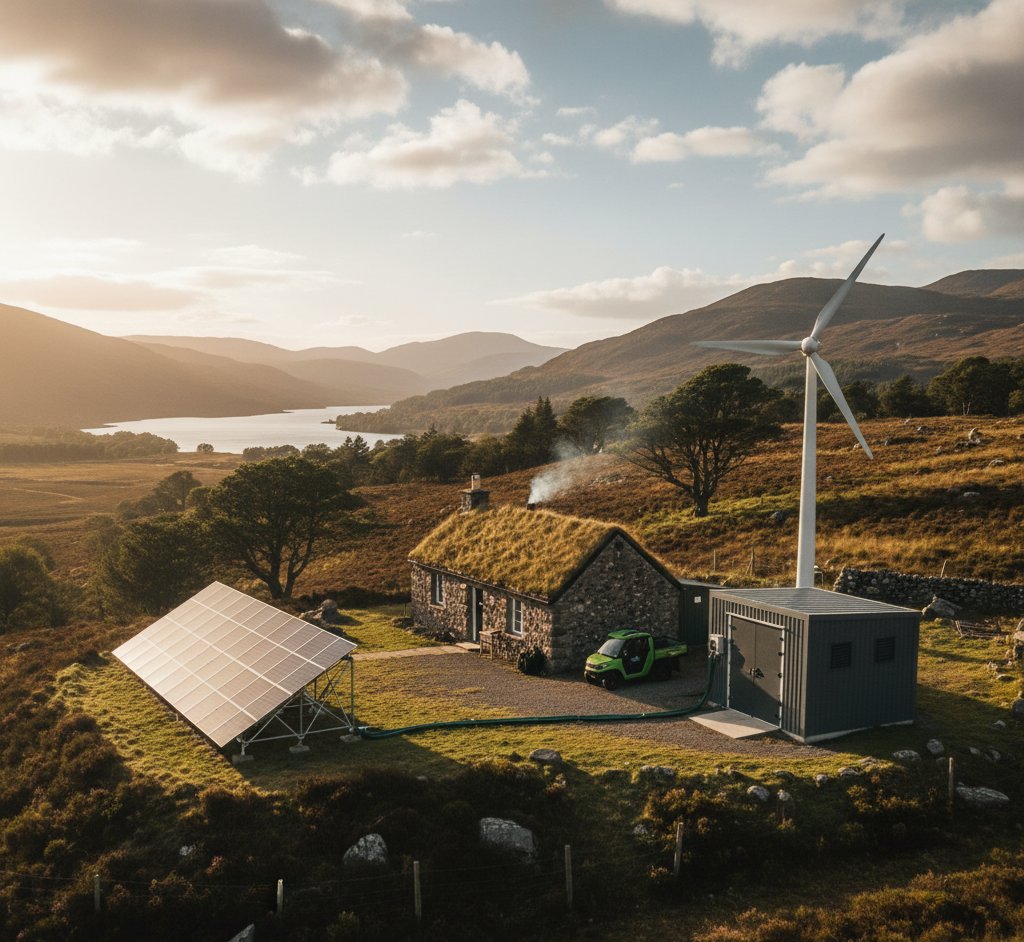
Off-Grid Solar UK: Is It Actually Feasible?
Can you go completely off-grid with solar in the UK? Honest analysis of costs, battery requirements, winter challenges, and why hybrid is usually better.
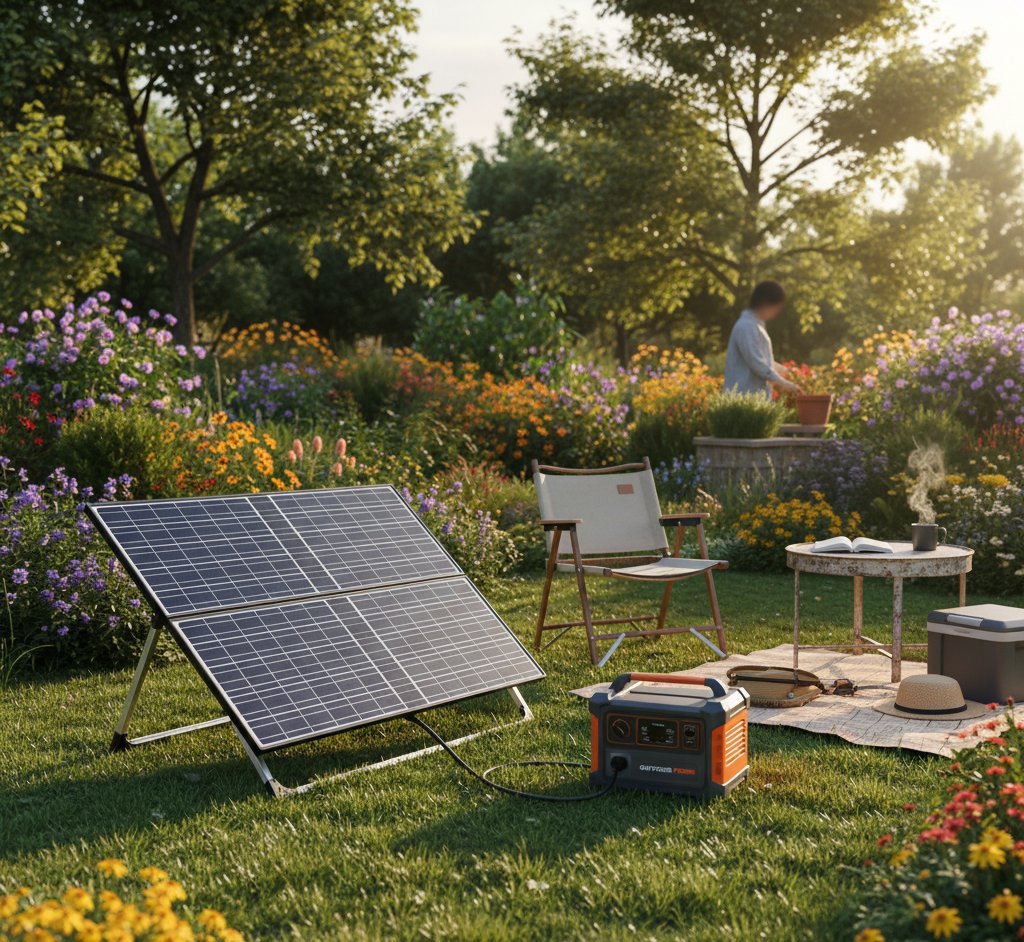
Portable Solar Panels: Camping, Caravans, and Off-Grid
Portable solar panels for camping, caravans, motorhomes, and off-grid use in the UK. What to buy, how much power you'll get, and realistic expectations.


Switch to Octopus Energy
Get 50 credit when you switch. We get 50 too — win-win.
What does this mean for YOUR home?
Design your perfect solar setup in under 3 minutes. Free, no sign-up required.
Build Your Solar System