This page contains affiliate links. If you purchase through them we may earn a small commission at no extra cost to you. Learn more
Best Smart Tariffs for Battery Storage in 2026: Head-to-Head Comparison
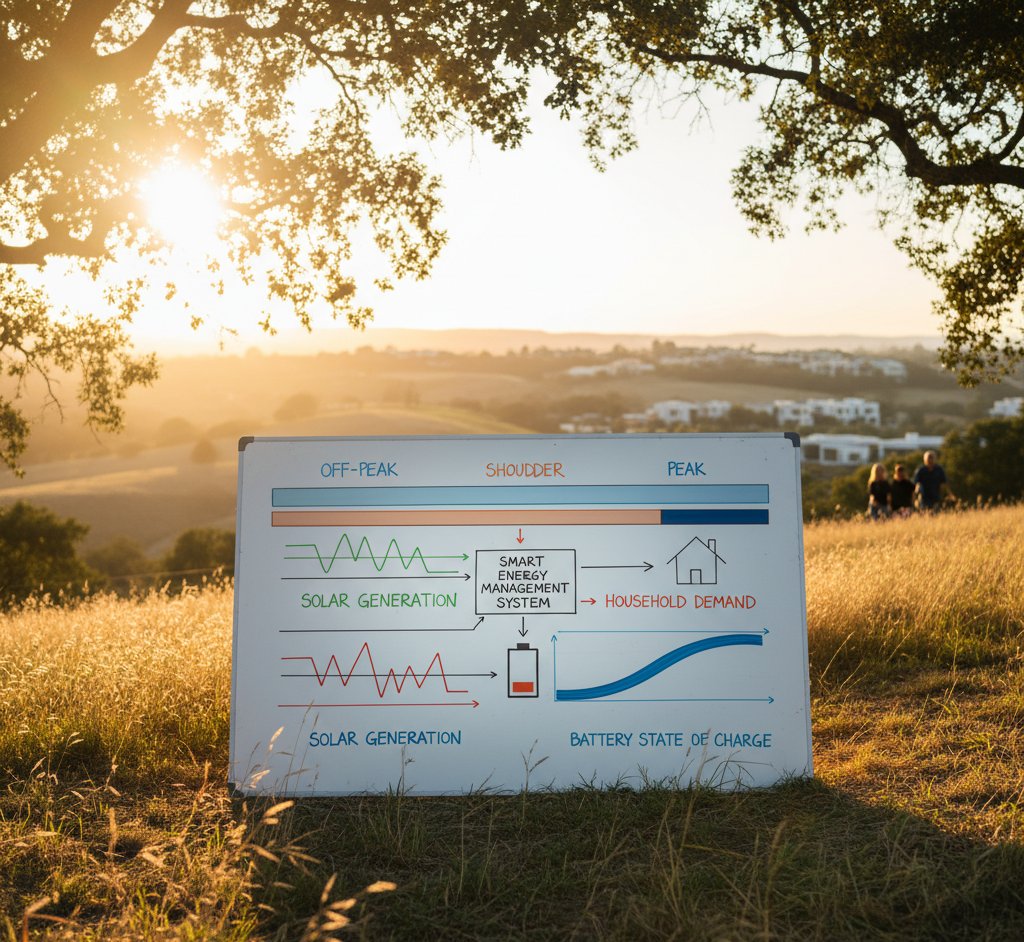
The tariff you're on matters as much as the battery you buy
A home battery system is only as effective as the electricity rates it works with. Buy on cheap overnight power, sell (or avoid buying) during the expensive evening peak, and your battery pays for itself years sooner. Choose the wrong tariff and you could be charging at 24p and discharging at 24p — barely breaking even.
This is a head-to-head comparison of every major smart tariff in the UK specifically for battery storage owners. Whether you have solar or not, whether you want to set it and forget it or squeeze every penny through automation — there's a right answer here.
At a glance: all tariffs compared
| Tariff | Off-Peak Rate | Off-Peak Hours | Peak Rate | Best For | Complexity |
|---|---|---|---|---|---|
| Octopus Go | ~5.5p/kWh | 00:30–04:30 (5 hrs) | ~24p/kWh | Simple battery charging | Low |
| Intelligent Octopus Go | ~5.5p/kWh | 23:30–05:30 (6 hrs) | ~24p/kWh | Battery + EV owners | Low |
| Octopus Agile | Varies (can go negative) | Varies by day | Varies (can spike 35p+) | Tech-savvy, automation | High |
| Octopus Flux | ~10p/kWh | 02:00–05:00 (3 hrs) | ~34p import / ~22p export | Solar + battery (export focus) | Medium |
| Octopus Cosy | ~10p/kWh | Off-peak windows | ~28p/kWh | Heat pump + battery | Medium |
| E.ON Next Drive | ~7p/kWh | Overnight | ~25p/kWh | E.ON customers with EV | Low |
| Tesla Energy Plan | Import/export optimised | Dynamic | Dynamic | Tesla Powerwall owners only | Low (automated) |
Rates as of early 2026 — always check the provider's website for current figures before switching.
Octopus Go — the safe choice for most people
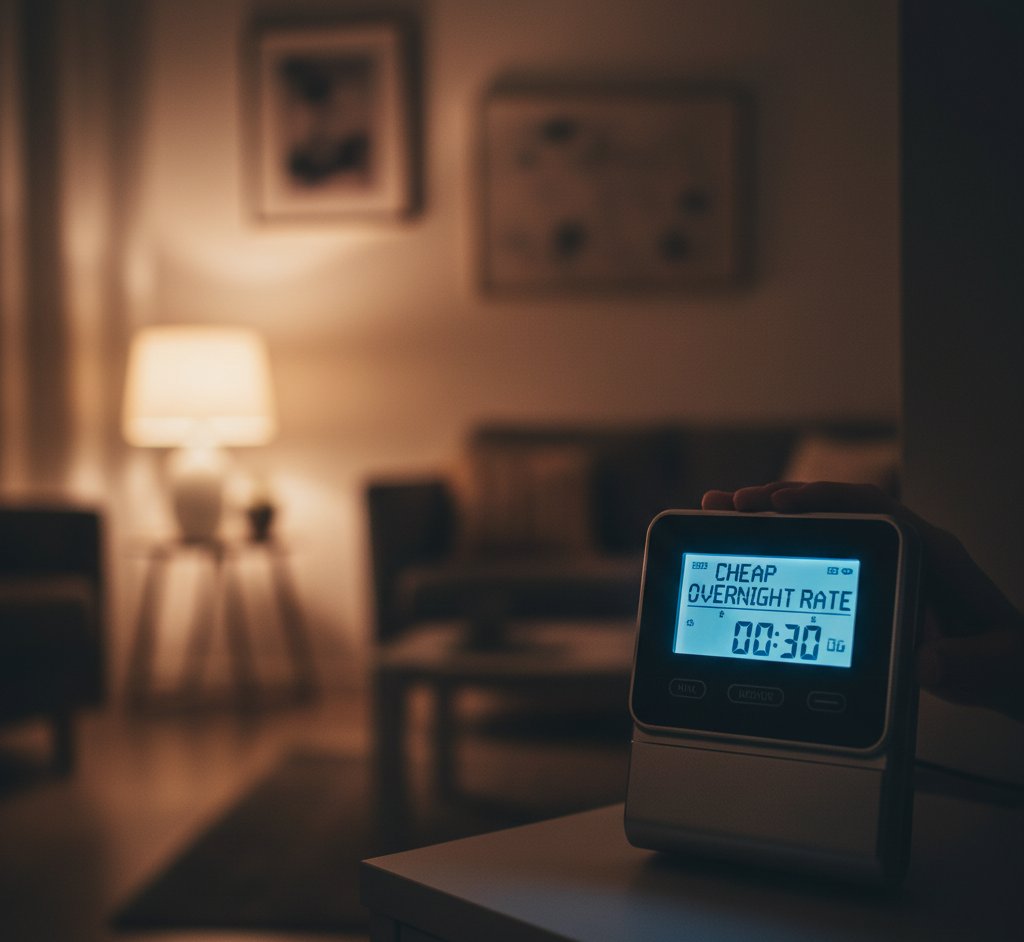
If you want one tariff that just works, Octopus Go is it. You get a fixed five-hour cheap window every night (00:30–05:30) at around 5.5p/kWh, then a standard day rate of roughly 24p/kWh the rest of the time. From April 2026, Octopus slashed Go rates significantly — some regions are seeing overnight rates as low as 3.49p/kWh.
Five hours is more than enough to charge a 5–10kWh battery fully from the grid overnight. Set your battery management system to charge during that window and you're done. No apps to check, no price forecasts to interpret, no automation scripts.
The maths are straightforward: charging a 10kWh battery at 5.5p costs 55p. If that charge displaces 10kWh of 24p imports during the evening, you save £2.40 and earn £1.85 per cycle. Over 300 charging days a year, that's £555 in avoided import costs — before solar even enters the picture.
Go is available to anyone with a SMETS2 smart meter. You don't need an EV, and you don't need solar. It's the cleanest entry point into time-of-use tariffs.
If you're considering a plug-in battery like the EcoFlow Delta Pro, Octopus Go is the simplest pairing — the cheap window is consistent and easy to schedule without any smart home integration.
For a full breakdown, see our Octopus Go tariff guide.
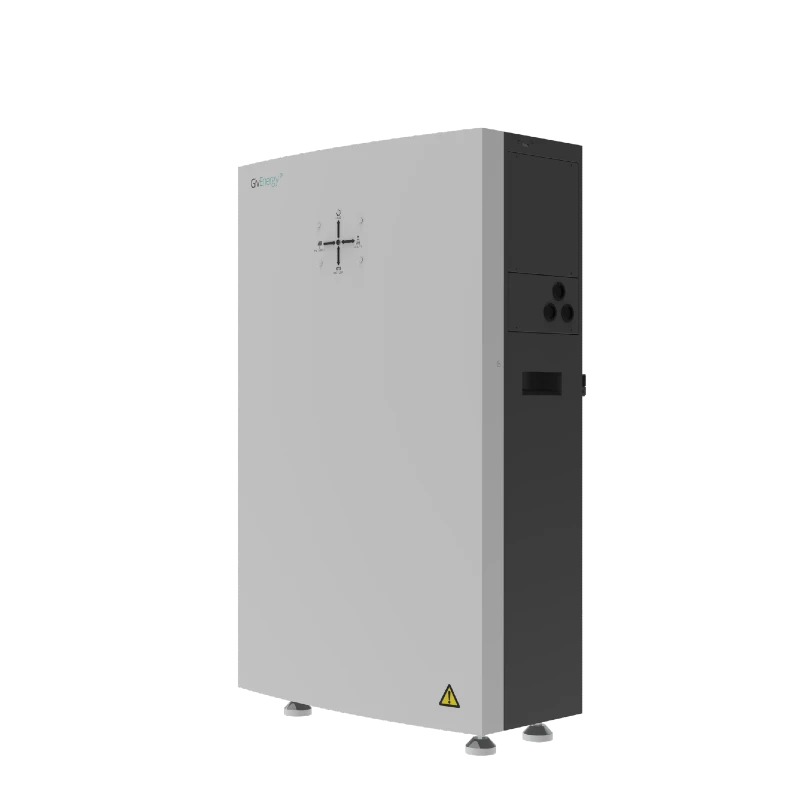
GivEnergy All-in-One 9.5kWh Battery
£5,5009.5
8.6
LFP
6000
Affiliate link — we may earn a small commission at no extra cost to you
Intelligent Octopus Go — Go with an extra two hours
Intelligent Octopus Go is the same tariff as Go but with a longer guaranteed cheap window: 23:30–05:30 (six hours) rather than four. You also get bonus cheap slots throughout the day when the grid has a surplus of renewable energy.
The catch is eligibility. You need a compatible smart EV charger (Ohme, Zappi, Wallbox Pulsar, Indra) or a compatible EV with built-in smart charging. The system is primarily designed to optimise EV charging — Octopus controls when your car charges within the cheap window based on your target departure time and charge level.
For battery owners, the extra two hours of cheap overnight power is genuinely useful, especially in winter when you want to fill a 15–20kWh battery. If your battery inverter can be scheduled via Home Assistant or the GivEnergy app, you can take full advantage of the extended window.
If you have both a battery and an EV, Intelligent Go is almost certainly the better choice over standard Go. See our dedicated Intelligent Go guide.
Octopus Agile — maximum savings, maximum effort
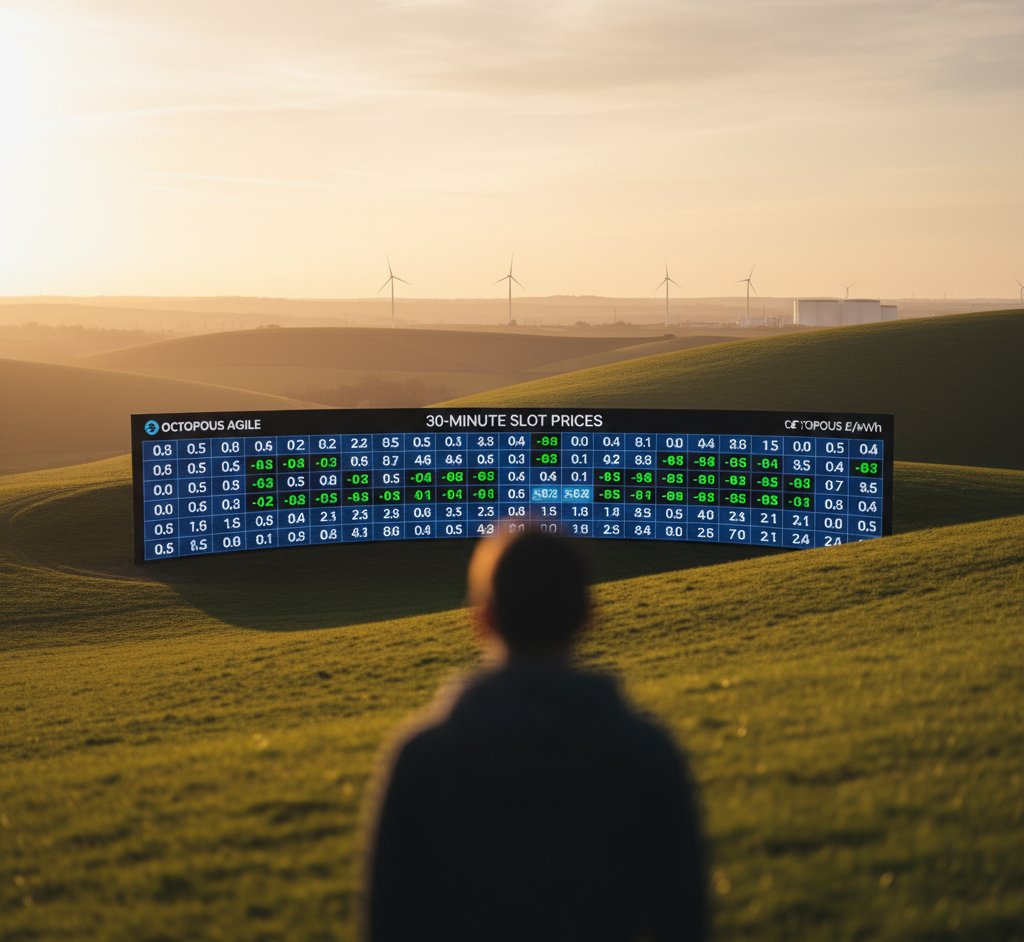
Agile is not a tariff for everyone. Pricing changes every 30 minutes based on wholesale electricity costs, published by Octopus the evening before. Rates can spike above 35p/kWh during cold winter evenings, or drop to zero — or even go negative, meaning Octopus pays you to consume electricity.
For a well-automated battery setup, this is the highest-ceiling tariff available. The strategy is simple in concept: buy electricity at its cheapest (negative or sub-5p periods), avoid buying at all during expensive periods, and export at peak if you're on Agile Outgoing. Tools like Predbat running on Home Assistant do all of this automatically, pulling the next day's prices and scheduling your battery accordingly.
Realistic Agile savings for a 10kWh battery with automation:
- Average import cost can drop to 8–12p/kWh through smart scheduling
- Occasional negative price events add 5–10p credit per kWh consumed
- Annual saving vs a flat 24p tariff: £700–900/year for an active battery user
The downside is complexity. Agile without automation is worse than Go — you'd need to manually adjust schedules every evening. With automation it's exceptional, but you're taking on a hobby as much as a tariff. If you're comfortable with Home Assistant and enjoy tinkering, Agile rewards you handsomely.
If you want to explore this route, read our Octopus Agile guide and our Predbat setup guide before committing.
Octopus Flux — the solar + battery combo tariff
Flux is purpose-built for households with both solar panels and a battery. It has three fixed daily periods:
- Off-peak (02:00–05:00): ~10p/kWh import, ~5p/kWh export
- Day (05:00–16:00 and 19:00–02:00): ~24p/kWh import, ~12p/kWh export
- Peak (16:00–19:00): ~34p/kWh import, ~22p/kWh export
The export rate structure is what makes Flux special. Standard SEG tariffs pay 3–6p/kWh regardless of timing. Flux pays 22p/kWh for exports during the 4–7pm peak — four to five times more. A battery full of solar-generated electricity, discharged to the grid during the peak window, earns real money.
The off-peak charging window is only three hours (02:00–05:00), which is shorter than Go's four hours and Intelligent Go's six. For battery-only users without solar, this matters: you have less time to fill a large battery at the cheap rate. For solar households, it's less of an issue because the battery charges from panels during the day.
Flux requires a compatible battery system (GivEnergy, Tesla Powerwall 3, Solis, Fox ESS) and a SMETS2 smart meter. Octopus has direct integration with GivEnergy and Powerwall 3, pushing charge and discharge schedules automatically.
If you have solar and want to maximise what you earn from your battery, Flux is compelling. If you don't have solar, Go's cheaper overnight rate and longer window usually wins. Full details in our Octopus Flux guide.
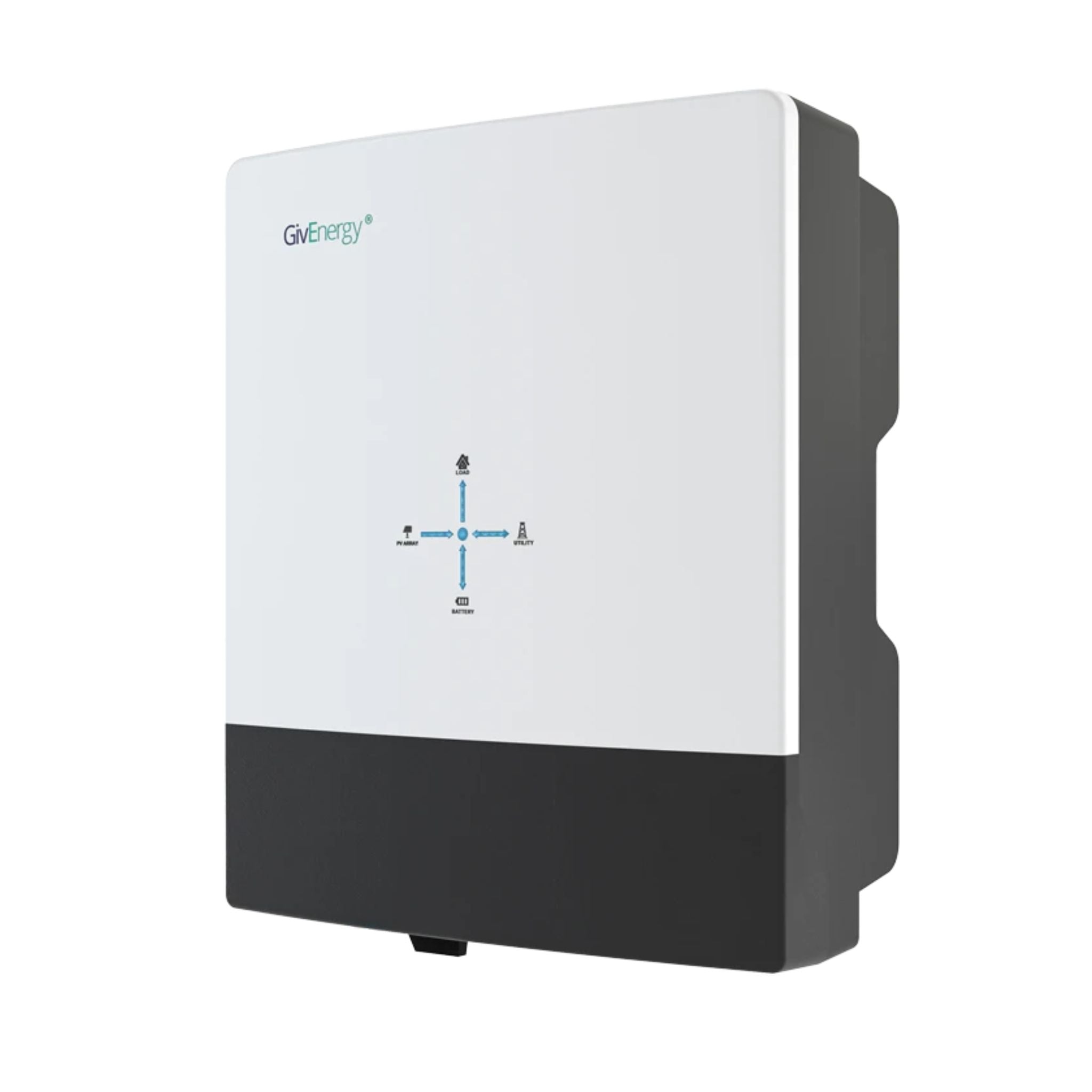
GivEnergy All-in-One 5kW Hybrid Inverter
£1,2005
7.5
2
48V
Affiliate link — we may earn a small commission at no extra cost to you
Octopus Cosy — the heat pump pairing
Cosy is designed for heat pump households, but it also has off-peak electricity windows that benefit battery owners. You get lower rates during set off-peak periods (typically 04:00–07:00 and 13:00–16:00) at around 10p/kWh, and a higher peak rate in the evenings.
The split window is where Cosy differs from Go. Two separate cheap windows (morning and early afternoon) mean you can partially charge a battery in the early hours, let solar top it up midday, and have a full battery ready for the expensive evening peak.
Cosy's off-peak rate (~10p) is higher than Go's 5.5p, so it's not the cheapest overnight option. Its value comes from the dual windows and the fact that it's optimised for high-consumption heat pump households. If you run a heat pump and a battery together, Cosy coordinates both well.
For battery-only households without a heat pump, Go is almost always the better economic choice. See our Octopus Cosy tariff guide.
E.ON Next Drive — the underdog worth checking
E.ON Next Drive offers competitive overnight rates — typically around 7p/kWh — for EV and battery owners. It's less widely discussed than Octopus's range, partly because E.ON's smart home integrations are more limited, but the core economics are solid.
If you're already an E.ON customer and switching supplier feels like a hassle, Next Drive deserves a look before you commit to Octopus. The overnight rates are comparable to Go, and E.ON has improved its smart meter rollout considerably.
The main limitation is ecosystem: Octopus has deeper integrations with GivEnergy, Home Assistant, and third-party optimisers like Predbat. If you want sophisticated battery automation, staying in the Octopus ecosystem makes more technical sense. See our E.ON Next Drive guide for a full breakdown.
Tesla Energy Plan — hands-off Powerwall management

Tesla's Energy Plan is only available to Tesla Powerwall owners, and that restriction is both its strength and its weakness. If you have a Powerwall, Tesla's system automatically manages your battery using its own dynamic import and export pricing — you don't need to think about scheduling at all.
Tesla's algorithm charges your Powerwall from the grid when prices are low, discharges it during expensive periods, and exports when export rates make it worthwhile. It uses weather forecasts and solar generation predictions to optimise the schedule day by day. For people who want to be completely hands-off, it's genuinely excellent.
The downsides: you're locked into the Tesla ecosystem, you have less visibility into what decisions the system is making, and you lose the ability to override or fine-tune behaviour easily. If you want to understand your energy in detail or run your own automation, the Tesla Energy Plan can feel like a black box.
It also means you're dependent on Tesla maintaining competitive import/export rates. As the EV and home energy market matures, that's worth watching.
Which tariff should you choose?
Run through this decision tree:
-
Just a battery, no solar, want simplicity → Octopus Go. Cheap, reliable, four-hour window, works with any battery system. This is the right answer for most people.
-
Battery + EV → Intelligent Octopus Go. The extended six-hour window charges both your battery and car. Requires a compatible charger or EV.
-
Battery + solar, want to maximise export earnings → Octopus Flux. The 22p peak export rate makes a real difference if your solar generates surplus. Requires a compatible battery and smart meter.
-
Tech-savvy, want absolute maximum savings → Octopus Agile + Predbat. The highest ceiling of any tariff, but you need Home Assistant, a compatible battery, and willingness to maintain automation. Potential savings of £700–900/year.
-
Battery + heat pump → Octopus Cosy. The dual off-peak windows suit heat pump scheduling. Not the cheapest overnight rate, but the best fit for heat pump + battery households.
-
Tesla Powerwall owner, want zero involvement → Tesla Energy Plan. Automated, seamless, but locked to Powerwall.
If you're building a DIY battery system using LFP cells and a hybrid inverter, Fogstar sells quality UK-sourced LFP cells and assembled batteries. Pair a Fogstar Drift system with Octopus Go or Agile for a cost-effective entry into battery arbitrage.
You can always switch
None of the Octopus tariffs have exit fees. If you start on Go and later want to move to Agile or Flux, you can switch through your Octopus dashboard at any time. Start simple and upgrade your setup as your confidence grows.
How to switch
For Octopus tariffs, switching is straightforward:
- Sign up to Octopus Energy if you're not already a customer (use a referral link to get £50 credit for you and a friend)
- Once your account is active, apply for the specific tariff (Go, Flux, Agile) through your Octopus dashboard
- For Flux and Intelligent Go, you'll need to provide details about your battery or EV setup
- Octopus will configure your smart meter for the new time-of-use rates — usually within a few days
If you want to compare all available tariffs in your area first, use a comparison site like Uswitch or Energy Helpline, then come back to Octopus once you've confirmed it's competitive for your usage profile.
Day rates matter too
Most time-of-use tariffs have a higher-than-average day rate. On Go, for example, the day rate is ~24p which is similar to a typical flat tariff. If your battery is small and you import a lot during peak hours, the premium day rate can eat into your overnight savings. Model your own usage before switching.
Rates quoted reflect April 2026 figures following the Ofgem price cap reduction. Energy prices change regularly — always verify current rates directly with the supplier before switching. This article contains affiliate links; our affiliate disclosure explains how these work.
Share this article

OVO has carefully selected trusted teams across the UK to install solar panels and heat pumps. Enjoy the personal touch of a local expert with the peace of mind of a household name.
Affiliate link — we may earn a small commission at no extra cost to you
Stay informed
Get free solar updates direct to your inbox
Related reading
Octopus Go and Intelligent Go Explained
How Octopus Go and Intelligent Octopus Go work for UK households with EVs and solar panels — rates, eligibility, and real-world savings in 2026.
Octopus Agile Tariff: Is It Worth It with Solar?
A detailed look at the Octopus Agile tariff for UK solar households — how half-hourly pricing works, real savings potential, and who should avoid it.

Octopus Flux Tariff: The Best Tariff for Solar + Battery?
How Octopus Flux works for UK solar and battery owners — import/export rates, daily schedule, real savings calculations, and whether it beats Agile.


Switch to Octopus Energy
Get 50 credit when you switch. We get 50 too — win-win.
What does this mean for YOUR home?
Design your perfect solar setup in under 3 minutes. Free, no sign-up required.
Build Your Solar System