This page contains affiliate links. If you purchase through them we may earn a small commission at no extra cost to you. Learn more
Perovskite Solar Panels: The Next Generation?

What are perovskites?
Perovskite isn't a single material — it's a crystal structure. Specifically, it refers to materials with the formula ABX₃, where the atoms arrange themselves in a particular lattice pattern. The perovskites used in solar cells are typically lead halide compounds like methylammonium lead iodide.
What makes perovskites exciting for solar is their optical properties. They absorb sunlight extremely efficiently and can be tuned to capture different wavelengths of light by adjusting their chemical composition. They can also be manufactured cheaply — deposited from solution onto substrates at low temperatures, rather than requiring the expensive, energy-intensive processes used for silicon wafers.
Why the solar industry is excited
Efficiency
Silicon solar panels have dominated the market for decades, currently achieving 22–24% efficiency in commercial panels (the theoretical maximum for single-junction silicon is about 29.4%).
Perovskite solar cells in laboratory settings have reached 26%+ efficiency on their own. But the real breakthrough is tandem cells — a perovskite layer stacked on top of a silicon cell. The perovskite captures high-energy light (blue/green wavelengths) and lets lower-energy light (red/infrared) pass through to the silicon cell beneath.
This tandem approach has achieved 33.9% in the lab (as of early 2026), smashing the single-junction silicon limit. In theory, tandem cells could reach 40%+ with further development.
Manufacturing cost
Silicon solar cell manufacturing requires:
- Mining and purifying quartz into polysilicon (energy-intensive)
- Growing silicon ingots at 1,400°C
- Slicing wafers with diamond wire saws (material waste)
- Multiple high-temperature processing steps
Perovskite cells could potentially be manufactured by:
- Printing or coating solutions onto glass or flexible substrates
- Processing at temperatures below 150°C
- Using roll-to-roll manufacturing similar to newspaper printing
The potential for dramatically cheaper manufacturing is real, though it hasn't been realised at commercial scale yet.
Flexibility
Perovskite films can be deposited on flexible substrates, opening possibilities for curved surfaces, building-integrated photovoltaics (BIPV), and lightweight applications where rigid silicon panels won't work.
Why they're not on your roof yet
Durability
This is the critical challenge. Silicon panels routinely last 25–30+ years in outdoor conditions. Perovskite cells, in their current form, degrade significantly faster when exposed to:
- Moisture — perovskites are highly sensitive to water. Even humidity can cause degradation.
- Heat — elevated temperatures accelerate decomposition of the crystal structure.
- UV light — ironically, the light they're designed to capture can also damage them over time.
- Oxygen — exposure to air causes chemical changes that reduce performance.
Encapsulation (sealing the perovskite layer from the environment) has improved dramatically, but achieving 25-year outdoor lifetimes comparable to silicon remains the biggest engineering challenge. Some manufacturers claim 20-year stability in accelerated testing, but real-world long-term data is still limited.
Lead content
Most high-efficiency perovskite cells contain lead. While the amounts are small (a few grams per panel), this raises environmental and regulatory concerns, particularly around manufacturing waste and end-of-life disposal. Lead-free perovskite formulations exist but currently achieve lower efficiencies.
Scaling up manufacturing
Lab records don't automatically translate to production lines. Making a 1cm² cell with 33% efficiency is very different from manufacturing 2m² panels with consistent performance at high throughput. Several companies are working on this, but large-scale perovskite manufacturing is still in the pilot/early commercial phase.
Watch the tandem space
Pure perovskite panels may be years away from matching silicon's durability. But perovskite-silicon tandem panels are closer to market because the silicon base layer provides structural stability and proven longevity, while the thin perovskite top layer boosts efficiency. Oxford PV, a UK company, has been at the forefront of this technology and began limited commercial shipments in 2024/25.
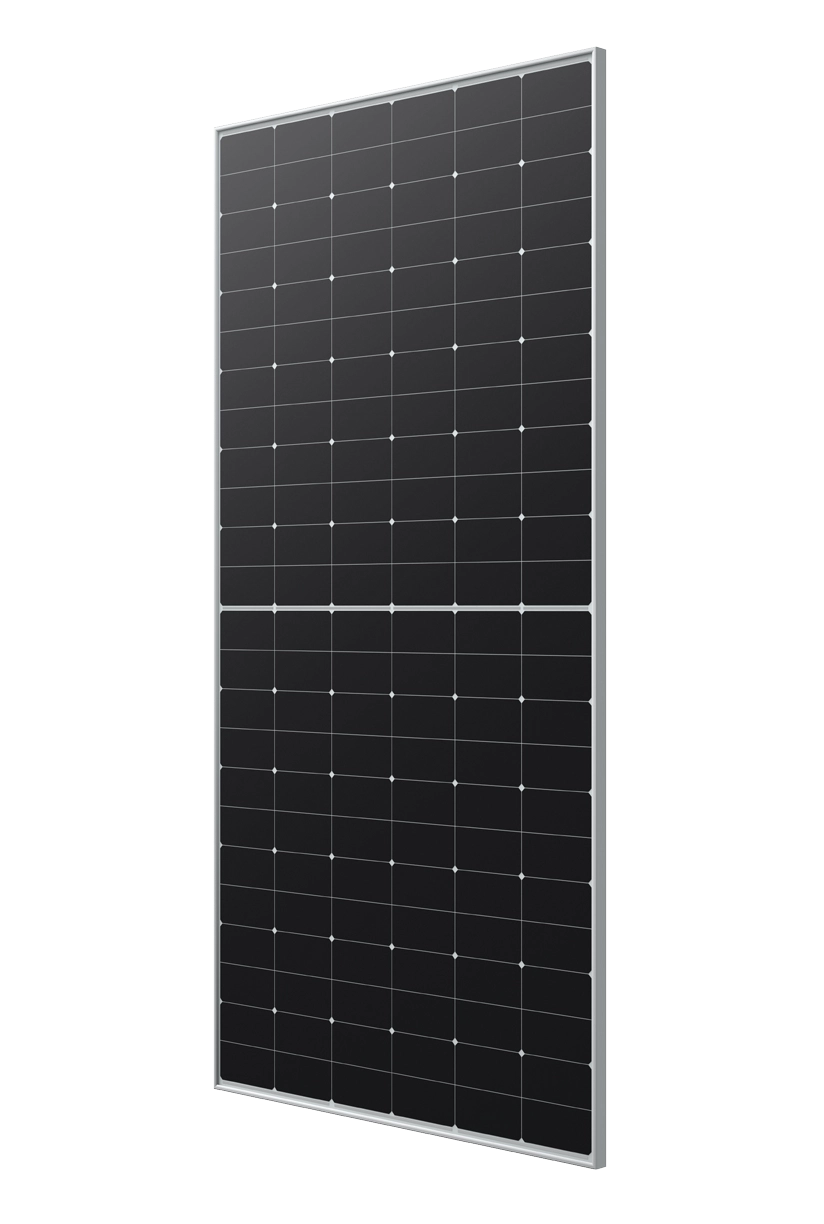
LONGi Hi-MO X6 450W
£85450
23
1722 x 1134 x 30
21.3
Affiliate link — we may earn a small commission at no extra cost to you
Key companies to watch
Oxford PV (UK)
Based in Oxford, this company has been a pioneer in perovskite-silicon tandem technology. They hold world records for tandem cell efficiency and have a pilot manufacturing facility in Germany. Their tandem panels target 26–28% commercial efficiency — a significant step up from current silicon panels.
Swift Solar (US)
Focused on lightweight, flexible perovskite panels for applications where conventional panels are impractical.
Qcells (South Korea/Germany)
One of the world's largest panel manufacturers, Qcells has invested heavily in perovskite-silicon tandem technology for mass production.
CubicPV / Caelux (US)
Working on tandem approaches using different manufacturing methods, aiming for cost-effective mass production.

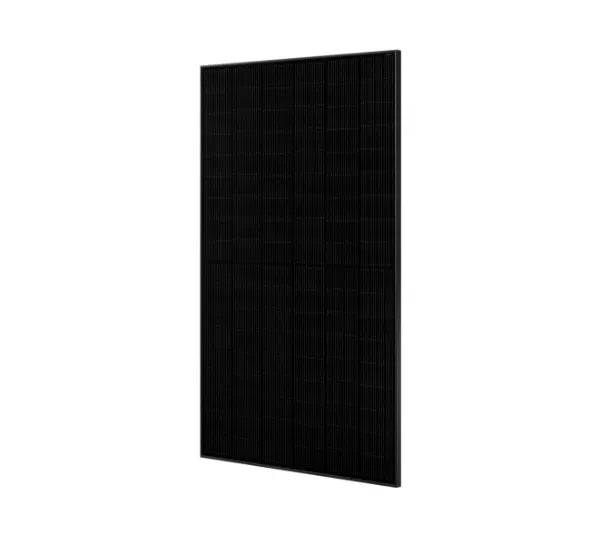
JA Solar JAM54D41 450W N-type TOPCon
£82450
22.8
1722 x 1134 x 30
21.5
Affiliate link — we may earn a small commission at no extra cost to you
What this means for UK homeowners
If you're buying panels now (2026)
Buy conventional silicon panels. The best silicon panels available today (22–24% efficiency, 25-year warranties) are proven, affordable, and excellent. Waiting for perovskites would mean years without generating any solar electricity — the opportunity cost of waiting far outweighs any efficiency gain from future technology.
A 4kW system installed in 2026 will generate roughly 80,000–100,000 kWh over its 25-year lifetime. No future technology makes that output worthless.
If you're planning for 2028–2030
Perovskite-silicon tandem panels may be commercially available by then, offering 26–30% efficiency at competitive prices. If you're in no rush, it's worth monitoring the market. But don't delay a decision solely on the promise of future technology — the solar industry always has something "better" on the horizon.
If you're planning for 2030+
By this point, tandem technology should be mainstream. Panel efficiencies of 28–32% would mean the same roof area produces 20–40% more electricity than today's panels. This could make solar viable on smaller or less ideally oriented roofs.
The perpetual waiting trap
Every year, a new technology promises to make current panels obsolete. Perovskites have been "5 years away" for over a decade. While progress is real this time, the history of solar technology suggests a longer timeline than optimists predict. If solar makes financial sense for you today, install today. The panels on your roof generating electricity are always better than hypothetical future panels.
The bottom line
Perovskite technology is genuinely exciting and represents the most significant potential leap in solar efficiency since silicon cells became dominant. Tandem cells breaking the 30% efficiency barrier in mass production would be transformative.
But for UK homeowners in 2026, this is future technology to watch rather than wait for. Today's silicon panels are mature, efficient, affordable, and will generate clean electricity for decades. When perovskite tandems eventually hit the mainstream market, they'll be an upgrade option — not a reason to regret installing solar today.
Share this article

Leading UK provider of electric car charging cables and EV accessories. Cables for all UK and EU models, with fast delivery and expert support.
Affiliate link — we may earn a small commission at no extra cost to you
Stay informed
Get free solar updates direct to your inbox
Related reading
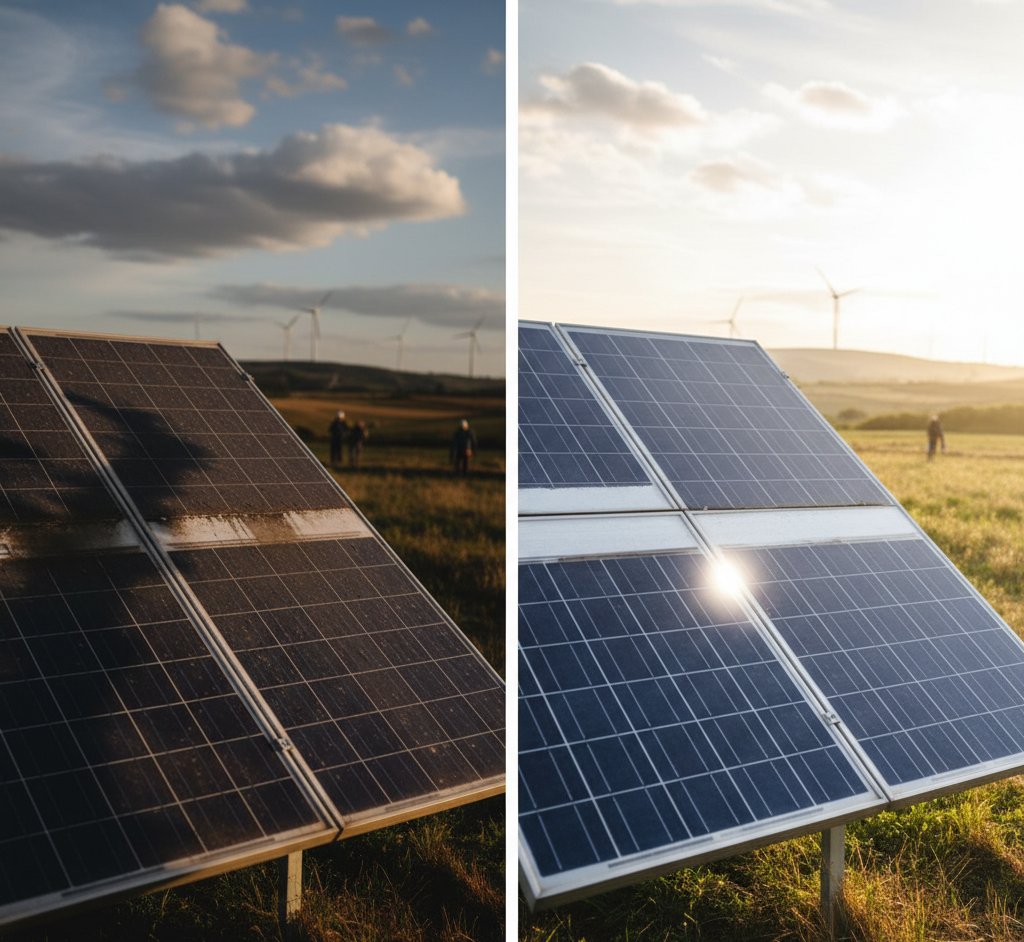
Solar Panel Efficiency: What It Means and Why It's Not Everything
Panel efficiency explained plainly — what the percentage actually means, why the gap between 20% and 22% barely matters for most UK homes, and what you should actually be comparing.

Best Solar Panels for UK Homes 2026
An honest look at the best solar panels available for UK homes in 2026 — covering JA Solar, Trina, Canadian Solar, and LONGi, with real specs and what to look for.

Transparent Solar Windows: Science Fiction or Near Future?
Transparent solar panels and solar windows explained — how they work, current efficiency limits, cost, and whether they'll ever replace rooftop panels in the UK.


Switch to Octopus Energy
Get 50 credit when you switch. We get 50 too — win-win.
What does this mean for YOUR home?
Design your perfect solar setup in under 3 minutes. Free, no sign-up required.
Build Your Solar System