This page contains affiliate links. If you purchase through them we may earn a small commission at no extra cost to you. Learn more
Solar Panels on a Conservatory Roof: Can You Do It?

Conservatories are often the most exposed, south-facing part of a UK home — which sounds ideal for solar. But whether you can actually mount panels there depends entirely on what type of roof your conservatory has. The honest answer is: usually not, but there are good alternatives.
Why the Roof Type Is Everything
A standard conservatory roof is made from polycarbonate sheets or toughened glass panels sitting in an aluminium frame. These materials are designed to keep rain out and let light in — not to bear point loads from solar panel mounting hardware, clamping brackets, and the weight of the panels themselves.
A typical 400W solar panel weighs around 20–22 kg. Add mounting rails, fixings, and wind uplift forces, and the structural demand on the roof is significant. Polycarbonate and glass simply cannot cope with this. Attempting to mount panels would risk cracking or shattering the roof, voiding any existing warranty, and potentially causing injury.
Never mount solar panels on a polycarbonate or glass conservatory roof
This applies regardless of panel size, weight, or what any salesperson may tell you. Polycarbonate and glass roofing systems are not structurally rated for solar mounting loads. There is no workaround — fitting panels here creates a serious safety risk.
What About Solid-Roof Conservatories?
Over the past decade, many homeowners have had their polycarbonate conservatory roofs replaced with solid roofs — typically lightweight tiled systems using thin tiles or artificial slate bonded to a rigid insulated board. These conversions are popular because they dramatically improve heat retention and reduce glare.
A solid-roof conservatory is a different matter structurally. The roof is closer to a conventional tiled roof than to a glass panel system, and in principle it can support solar panels — but with important caveats.
Key questions to ask before proceeding:
- Was the original conservatory frame designed to support a solid roof? Many conversion companies work to minimum specification, meaning the underlying structure may not have much spare capacity.
- Has the structural loading been calculated? A structural engineer's report is worth having before commissioning any solar work on a solid-roof conservatory.
- What tiles or surface material were used? Standard concrete or clay tiles can take standard solar mounting hardware. Some lightweight composite systems require specialist fixings.
- Is the pitch sufficient? Conservatory roofs are often shallower than main house roofs, which can affect panel performance and water runoff under the panels.
If a structural assessment gives the green light, a solid-roof conservatory can accept a small number of panels — typically two to four panels, depending on the size of the roof. Use an MCS-certified (Microgeneration Certification Scheme) installer who will assess load capacity as part of their survey.
Practical Alternatives Worth Exploring
If your conservatory has a glass or polycarbonate roof — or a solid roof that isn't structurally suitable — there are several alternatives that may work better.
Ground-Mount Panels in the Garden
If you have outdoor space adjacent to or behind the conservatory, a ground-mount solar frame (a freestanding metal structure anchored to the ground) can be positioned to catch south-facing sun without touching the conservatory at all. Ground-mount systems are particularly worth exploring if your main roof has shading issues or faces the wrong direction.
Wall-Mounted Panels on the Conservatory's South-Facing Wall
Most conservatories have solid brick or rendered walls below the glazed roof section. A south-facing conservatory wall can support a wall-mounted panel array using specialist brackets. Output is lower than a roof-mounted system at optimal pitch, but it is a real option where roof mounting is not feasible.
Panels on the Main House Roof
In many cases, the best approach is simply to use the main house roof — even if it means the solar panels are slightly further from the conservatory. Modern solar systems work across the whole property, not just the room below. If the main roof has reasonable south-facing capacity and good solar access, that is typically the most effective solution.
If You Are Planning a Roof Conversion
If your conservatory still has a polycarbonate or glass roof and you are considering converting it to a solid roof, this is an excellent opportunity to plan for solar from the outset.
Tell your roofing contractor you want the structure designed to support solar panels. This means:
- Specifying an appropriate structural loading capacity in the roof conversion design
- Choosing a tile or surface system compatible with standard solar mounting rails
- Ideally orienting the main glazed or panel area to maximise south-facing exposure
When a solid-roof conversion and solar installation are carried out together as a single project, the solar element may qualify for 0% VAT (as of April 2026, this relief runs until March 2027). It is worth confirming this with your installer and contractor at the planning stage.
Combining roof conversion and solar can save on VAT
If you are converting your conservatory roof from polycarbonate to solid and adding solar panels in the same project, the solar installation element may qualify for 0% VAT. Discuss this with a qualified installer before work begins — the relief applies to the supply and installation of solar panels on residential properties in England, Scotland, and Wales until at least March 2027.
What to Do Next
Start by identifying what type of roof your conservatory has. If it is polycarbonate or glass, explore the ground-mount, wall-mount, or main-roof alternatives above. If it is a solid roof, commission a structural assessment before getting solar quotes — a good MCS-certified installer will often arrange this as part of their survey process.
For any solar installation near or on a conservatory, use an installer registered with the Microgeneration Certification Scheme (MCS). You can search the register at mcscertified.com.
Share this article
Energy-saving LED lighting — make the most of your solar electricity with efficient bulbs and fixtures
Affiliate link — we may earn a small commission at no extra cost to you
Stay informed
Get free solar updates direct to your inbox
Related reading
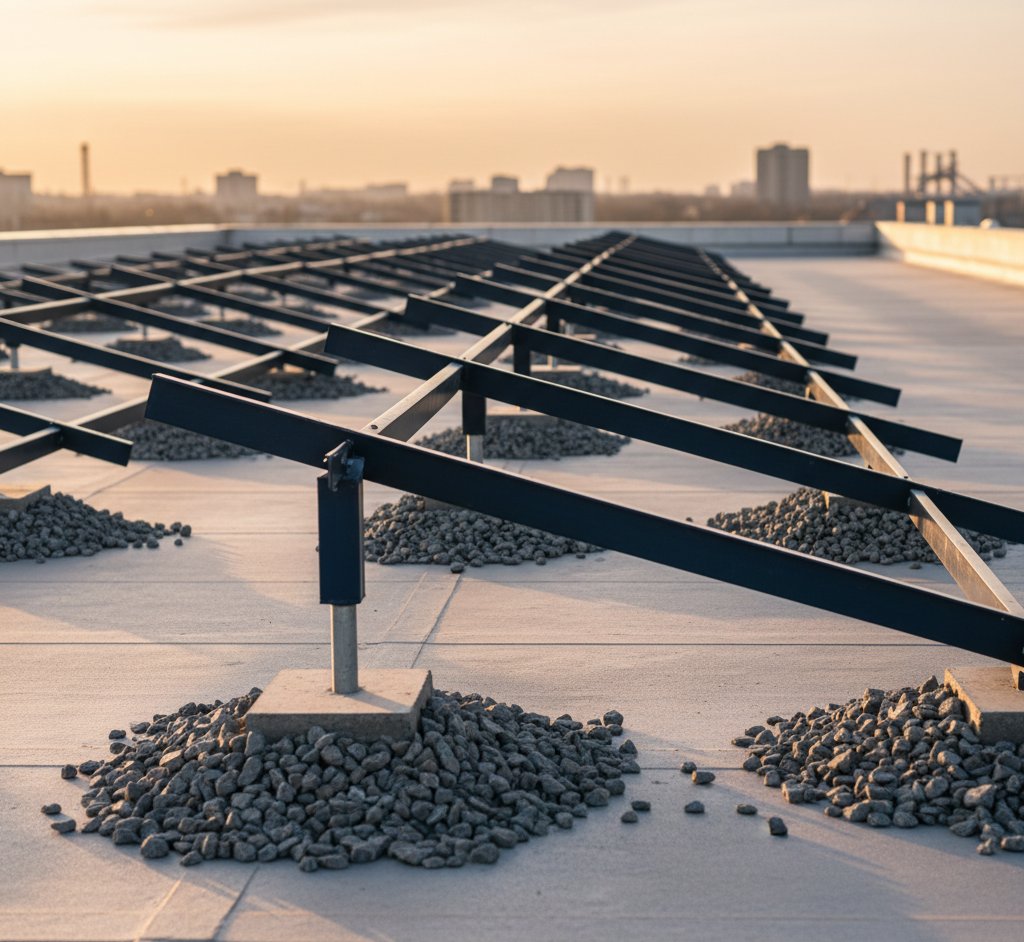
Solar Panels on a Flat Roof: Mounting, Costs and Planning
Flat roof solar in the UK — ballasted vs frame-mounted systems, optimal tilt angle, planning permission, costs vs pitched roof, and pros and cons.

Is My Roof Suitable for Solar Panels?
Find out if your roof can take solar panels — covering direction, angle, shading, structural condition, and options for tricky roofs.

Are Solar Panels Worth It in the UK? The Honest Answer
Are solar panels worth it in the UK in 2026? Honest assessment of costs, savings, payback, and who benefits most.


Switch to Octopus Energy
Get 50 credit when you switch. We get 50 too — win-win.
What does this mean for YOUR home?
Design your perfect solar setup in under 3 minutes. Free, no sign-up required.
Build Your Solar System