This page contains affiliate links. If you purchase through them we may earn a small commission at no extra cost to you. Learn more
Solar Panels in London: Costs, Grants, and What to Expect

London sits firmly at the better end of the UK solar yield spectrum. The city receives around 1,000 kWh of usable solar energy per kWp installed each year — more than Manchester, Leeds, or Edinburgh, and comparable to the broader South East. If you have a south-facing roof, London solar can be a strong long-term investment.
That said, London properties come with some specific considerations that you will not encounter elsewhere: leaseholders needing freeholder permission, conservation areas covering large swathes of certain boroughs, and a significant proportion of flats. This guide covers what London homeowners and leaseholders need to know.
Does solar work in London?
Yes, and it works well. London's annual solar irradiance is approximately 1,100 kWh/m², which translates to roughly 1,000 kWh of electricity generated per kWp of installed panels per year on a south-facing roof at a typical pitch.
To put that in practical terms:
- A 4 kWp system generates approximately 3,400–4,000 kWh per year
- A 3 kWp system generates approximately 2,550–3,000 kWh per year
- The UK average household uses around 2,700 kWh per year
In summer months (May–August), a London system can generate 90–120 kWh per kWp — enough to cover most of a typical household's electricity during those months. Even in winter, generation continues: December and January still produce around 30–35 kWh per kWp.
~1,000
kWh per kWp per year — London's solar yield is one of the strongest in the UK — significantly better than Manchester or Edi
Learn moreHow much does solar cost in London?
London installation costs run slightly above the England average due to higher labour costs and scaffolding charges. Expect to pay:
| System size | Typical installed cost (London) | Typical annual generation |
|---|---|---|
| 3 kWp (7 panels) | £4,800–6,000 | ~2,700–3,000 kWh |
| 4 kWp (9 panels) | £6,500–7,500 | ~3,400–4,000 kWh |
| 5 kWp (11 panels) | £7,500–9,000 | ~4,250–5,000 kWh |
These prices include 0% VAT on supply-and-install, which applies until 31 March 2027. After that date, VAT reverts to 5%.
Why London costs slightly more: Scaffolding in London typically costs 10–15% more than the national average. Labour rates are also higher. For a standard 4 kWp installation, you might pay £500–800 more than an equivalent installation in the Midlands.
Despite higher upfront costs, London's higher property values mean that solar panels may add more in absolute terms to your property's value. Research suggests solar systems add around 4–8% to property values — in London, where the average home is worth significantly more, that translates to a larger absolute uplift.
Housing stock sizing notes
London's housing stock is dominated by Victorian and Edwardian terraced properties, many of which have relatively small south-facing roofs. Realistic system sizes for common London property types:
- Victorian terraced (2–3 bed): typically 2.5–4 kWp (6–9 panels)
- Edwardian semi-detached: typically 4–5 kWp (9–11 panels)
- Flat-roofed extension: may allow ballasted mounting — check with your installer
- Purpose-built flat: usually requires leaseholder process (see below)
Local grants and schemes
ECO4
The Energy Company Obligation (ECO4) scheme provides funding for energy efficiency measures including solar panels for eligible households. Eligibility is conditional — ECO4 is not a general solar grant. You typically need to be installing qualifying heating measures alongside solar, and your household must meet income or EPC criteria. ECO4 is currently confirmed to run to December 2026.
Warm Homes Plan
The UK Government's Warm Homes Plan aims to help low- and middle-income households with energy efficiency upgrades including solar. As of April 2026, the scheme is still in its early rollout phase. London boroughs are among the areas being prioritised. Check gov.uk for the latest eligibility details as funding opens.
Warm Homes Local Grant
A separate grant stream, administered by local councils, specifically targeting owner-occupiers and private renters in properties with lower EPC ratings. London boroughs have received funding — contact your borough council to find out whether funding is currently available in your area.
Mayor's Home Energy programme
The Greater London Authority has periodically run group buying and subsidy schemes for energy efficiency. Check the London.gov.uk website for the latest offers.
Your DNO: UK Power Networks (UKPN)
UK Power Networks (UKPN) is the Distribution Network Operator for London, South East England, and East Anglia. Every solar installation needs to be registered with your DNO.
For systems up to 3.68 kW per phase (the G98 threshold): UKPN uses a Fit and Inform process. Your MCS-certified installer notifies UKPN after installation using the G98 form. You do not need pre-approval.
For larger systems (above the G98 threshold): G99 pre-approval is required, which must happen before installation begins. Your installer handles this.
UKPN Smart Connect portal: UKPN offers an online Smart Connect portal (smartconnect.ukpowernetworks.co.uk) where installers can submit G98 notifications and check connection requirements. This is one of the more streamlined DNO portals in the UK.
Finding your MPAN: The 21-digit Meter Point Administration Number appears on your electricity bill. You will need this for your installer to complete the G98 notification.
Typical London solar system
For a standard Victorian 3-bed terraced house in London with a south-facing rear roof:
- System size: 4 kWp
- Panel count: 9 × 450W panels
- Roof space required: approximately 18 m²
- Annual generation: approximately 3,400–4,000 kWh
- Estimated installed cost: £6,500–7,500
- Estimated annual savings: £500–700 (self-consumption + export income)
- Payback period: approximately 9–12 years
For a larger Edwardian semi or a 1930s detached with more south-facing roof, a 5–6 kWp system is achievable.
London-specific considerations
Leaseholders and flats
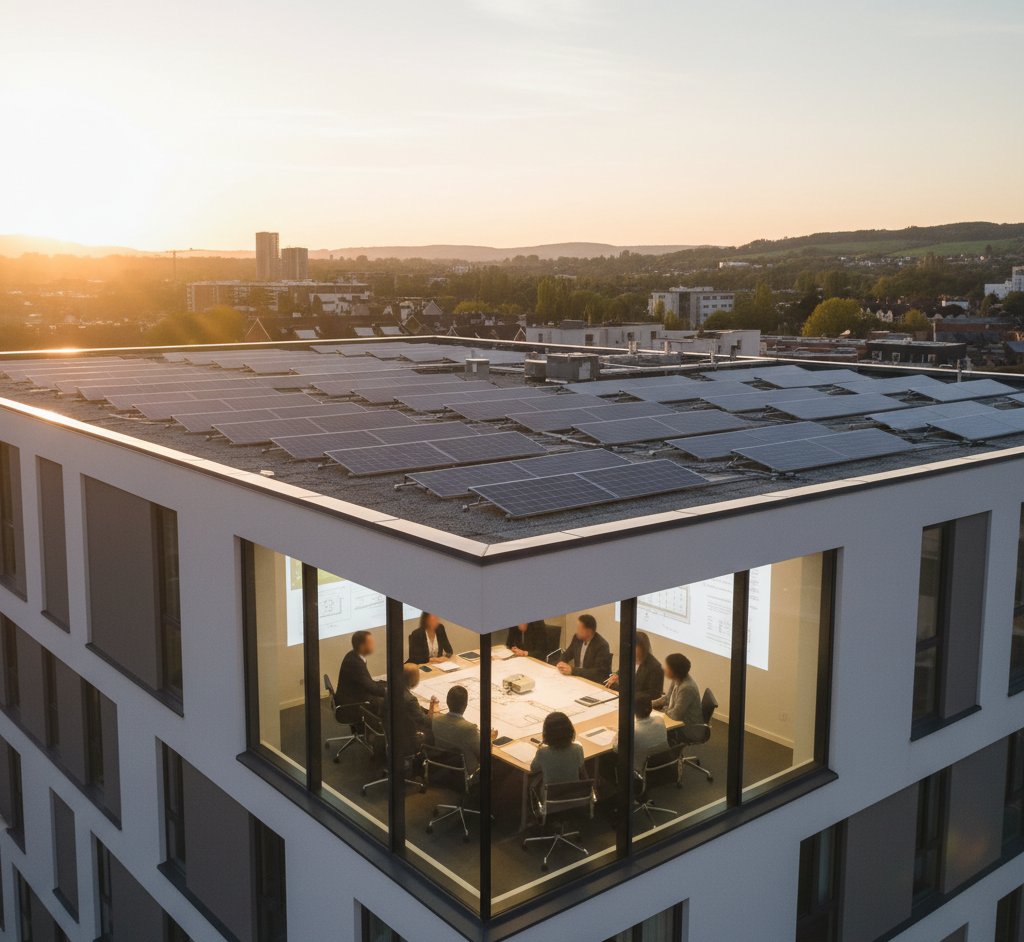
If you own a leasehold flat or live in a purpose-built block, you will need freeholder or managing agent permission before installing solar panels. The solar panels form part of the building structure, which is typically covered by the lease terms. Some freeholders are supportive; others require detailed proposals.
If you are a leaseholder, read our guide to solar for leaseholders before approaching your freeholder.
Conservation areas
London has a large number of conservation areas, covering significant portions of many inner boroughs. If your property is in a conservation area, you may lose permitted development rights for solar panels on a roof that faces a highway (a public road or footpath). Before installing, check with your local borough planning department or use the Planning Portal's interactive map.
If your property is in a conservation area: Solar panels on roof slopes that do not face the highway are usually still permitted development. Panels on rear roofs are typically fine even in conservation areas.
Listed buildings: If your property is listed, you will need listed building consent for any solar installation. This requires a planning application and is assessed on a case-by-case basis.
Check before you book
Use your local borough's planning portal or the national Planning Portal to confirm whether your property is in a conservation area or is listed. This takes five minutes and could save you significant expense later. Your installer should also check this, but it is worth verifying yourself.
Next steps
- How much do solar panels cost in the UK? — UK-wide cost guide
- Are solar panels worth it? — honest ROI analysis
- Solar for leaseholders — if you own a flat
- How many solar panels do I need? — sizing for your home
Share this article

Energy-saving LED lighting — make the most of your solar electricity with efficient bulbs and fixtures
Affiliate link — we may earn a small commission at no extra cost to you
Stay informed
Get free solar updates direct to your inbox
Related reading

How Much Do Solar Panels Cost in the UK in 2026?
UK solar panel costs 2026: realistic prices by system size, what is included, and what to push back on in your quote.

Are Solar Panels Worth It in the UK? The Honest Answer
Are solar panels worth it in the UK in 2026? Honest assessment of costs, savings, payback, and who benefits most.
Solar Panels as a Leaseholder: Permissions and Options
Can leaseholders install solar panels? UK leasehold permissions, freeholder consent, absolute vs fully qualified covenants, and practical alternatives for flat owners.


Switch to Octopus Energy
Get 50 credit when you switch. We get 50 too — win-win.
What does this mean for YOUR home?
Design your perfect solar setup in under 3 minutes. Free, no sign-up required.
Build Your Solar System