This page contains affiliate links. If you purchase through them we may earn a small commission at no extra cost to you. Learn more
SolarEdge Inverter Review UK: Optimisers, Monitoring, and Value Assessment
What is SolarEdge?
SolarEdge is an Israeli power electronics company founded in 2006 and now one of the largest inverter manufacturers in the world by installed capacity. They're listed on NASDAQ and ship products into more than 130 countries. In the UK, you'll find their equipment on tens of thousands of residential rooftops.
What sets SolarEdge apart from most competitors isn't the inverter itself — it's the system architecture. Rather than treating your solar array as a single string of panels, SolarEdge places a small electronic device called a power optimiser behind each individual panel. The inverter and the optimisers work together as a matched system.
How the optimiser system works
In a conventional string inverter setup, all your panels are wired in series. The inverter finds the best compromise operating point for the string as a whole. If one panel is partly shaded, dirty, or degraded, the entire string is pulled down to match it — the so-called "Christmas lights effect."
SolarEdge's approach:
- Each panel gets its own P-series power optimiser (typically P801 or P850 for residential UK installs)
- The optimiser handles maximum power point tracking (MPPT) at panel level — independently finding the best operating point for that one panel regardless of what its neighbours are doing
- The optimiser also steps up the DC voltage to a fixed level before sending power to the inverter
- The central inverter then handles DC-to-AC conversion for the whole array
This is a hybrid architecture — not a pure string system, but not full microinverters either. The optimisers maximise output from each panel; the inverter still does the heavy work of grid conversion. If the inverter fails, the whole system stops (unlike microinverters, where only the affected panel goes down).
Optimisers vs microinverters
Power optimisers and microinverters are often confused. Microinverters convert DC to AC at each panel — there's no central inverter at all. SolarEdge optimisers only handle MPPT; the inverter still converts to AC. Microinverters cost more and are more resilient to inverter failure, but SolarEdge offers better monitoring integration and a lower system cost than a full microinverter array. See our optimisers vs microinverters guide for a fuller comparison.
Current UK product range
SolarEdge's residential lineup in the UK currently includes:
HD-Wave is SolarEdge's inverter architecture — it uses a different switching topology to traditional inverters, producing a cleaner AC waveform with fewer components. When it works well, it's impressively compact and efficient. The smaller component count was also the source of early reliability concerns in some batches (more on that below).
The Energy Hub is their hybrid inverter, designed to integrate with the SolarEdge Energy Bank battery. It's available in single-phase versions from 3.68kW to 10kW.
Power optimisers
The P801 is the most common SolarEdge optimiser in UK residential installations. The P850 handles higher-wattage panels. Both do the same job — the number refers to the maximum panel wattage they can handle.
What optimisers give you:
- Panel-level MPPT — each panel works independently at its best output point
- Panel-level monitoring — the system tracks output from every individual panel
- Rapid shutdown — optimisers reduce DC voltage to a safe level when the inverter is switched off, a safety feature required by some installers and useful for emergency services access
- Module mismatch handling — panels of different ages, orientations, or partial shading conditions don't drag each other down
What optimisers don't give you:
- Independence from the central inverter — if the inverter fails, the whole system stops
- The full redundancy of a microinverter system
Monitoring: a genuine strong point
The mySolarEdge app and web portal are where SolarEdge genuinely stands out. The monitoring platform shows you:
- Generation and consumption in real time
- A visual layout of your roof with each panel shown individually
- Per-panel output data — you can see if panel 7 is generating 15% less than its neighbours
- Historical data by panel, day, month, or year
- Alerts if a panel or optimiser stops communicating
This level of visibility is practically unmatched among central inverter systems. If a bird drops something on a specific panel, a leaf lodges in a gap, or a panel starts to degrade early, you'll see it in the app. With a standard string inverter, you'd only notice if total output dropped enough to catch your attention.
For homeowners who want to understand their system, diagnose issues early, or just enjoy the data, the SolarEdge monitoring platform is a compelling reason to choose the brand.
Layout designer
During installation, your installer sets up the panel layout in the SolarEdge monitoring portal — a roof diagram showing where each panel sits. The app then maps real-time output onto that layout. It's a small detail that makes the monitoring genuinely intuitive to use.
SolarEdge and battery storage
SolarEdge offers their own battery: the SolarEdge Energy Bank, a 10kWh lithium iron phosphate (LFP) unit. Used with an Energy Hub inverter, it integrates neatly into the SolarEdge ecosystem.
However, the battery side of SolarEdge's UK offering has some limitations worth knowing:
- Fewer third-party battery options — SolarEdge's inverters are generally designed to work with SolarEdge's own battery. This is a more closed ecosystem than brands like GivEnergy or Solis, which work with a wide range of Pylontech, Dyness, and BYD batteries
- Less developed UK battery ecosystem — GivEnergy has a much larger UK install base for home battery storage, with wider installer support and more community knowledge
- Energy Hub pricing — the hybrid inverter + Energy Bank combination is competitive on specification but tends to sit at the higher end of the market price-wise
If battery storage is a primary goal for your system, it's worth exploring whether SolarEdge's battery ecosystem meets your needs, or whether a more open-platform hybrid inverter might suit you better.
SolarEdge is not battery-agnostic
Unlike Solis, GivEnergy, or SunSynk, standard SolarEdge inverters are not designed to work with arbitrary third-party batteries. If you're planning battery storage and want flexibility in battery brand or future upgrade options, check with your installer before committing to a SolarEdge system.
Cost premium
SolarEdge systems carry a noticeable cost premium over basic string inverter setups:
- Each P801 optimiser costs roughly £40–60 at trade prices (the P801 product guide lists ~£54)
- A 10-panel system therefore adds approximately £400–600 in optimiser hardware alone
- When combined with the slightly higher-cost SolarEdge inverter versus a comparable Solis or Growatt string inverter, the total premium is typically £400–800 on a standard residential install
- On larger or more complex installs the premium can rise further
That premium buys you the monitoring platform, the panel-level MPPT, and the rapid shutdown safety feature. Whether it's worthwhile depends on your roof and priorities.
The reliability question
This is the most important section in this review, and it would be dishonest to gloss over it.
SolarEdge had well-documented reliability problems with certain inverter batches, particularly HD-Wave units manufactured between approximately 2019 and 2021. UK solar installer forums, Reddit's r/solar community, and specialist communities like DIYnot and the Electrical Safety Forum accumulated hundreds of reports of:
- Premature inverter failures within 2–4 years
- Firmware-related faults causing units to stop exporting
- Communication failures between optimisers and inverter
- Slow warranty response times — some owners waiting months for replacement units
SolarEdge has released multiple firmware updates addressing known issues, and their newer production units appear to have improved. However, the reputation damage from that period is real, and if you speak to UK installers candidly, many will mention this chapter in SolarEdge's history.
What to ask your installer:
- What is the production vintage of the inverter being specified?
- Has the firmware been updated to the latest stable release?
- What is the installer's own experience with SolarEdge warranty claims?
The 12-year standard inverter warranty (extendable to 25 years) is genuinely good on paper. The warranty service experience, particularly during 2020–2023, was frequently criticised. More recent reports suggest improvement, but this is worth investigating before committing.
Ask about the unit vintage
If your installer is quoting SolarEdge, it's reasonable to ask when the specific inverter unit was manufactured. Units from 2022 onwards have a better reliability track record in user reports than those from the 2019–2021 period. A good installer will answer this question without hesitation.
Warranty
The 25-year optimiser warranty is exceptional — longer than most panels carry a performance guarantee. The inverter warranty at 12 years standard is solid, and the extension to 25 years gives long-term peace of mind if the hardware performs.
The caveat remains warranty service speed and responsiveness. SolarEdge is a large company, and for simple failures during the warranty period, replacement units are generally supplied. The frustration historically reported was the elapsed time and administrative burden, not an outright refusal to honour the warranty.
When SolarEdge makes sense
SolarEdge is worth considering when:
- Your roof has partial shading — trees, a chimney, a dormer window, or neighbouring structures that shade panels at different times of day
- You have panels on multiple roof orientations — an east-west split, or south-facing combined with a small rear section
- Panel-level monitoring matters to you — you want granular insight into individual panel performance
- Fire safety or rapid shutdown is a priority — optimisers provide safe-voltage shutdown automatically
- Your installer has extensive SolarEdge experience and a proven warranty support track record
When to look elsewhere
A standard string inverter is likely sufficient — and cheaper — if:
- Your roof is unobstructed and south-facing — no shading, one orientation, consistent panel performance. The optimiser premium delivers minimal additional yield in these conditions
- Budget is constrained — the £400–800 premium could fund an extra panel, a larger battery, or simply stay in your pocket
- You want maximum battery flexibility — a GivEnergy, Solis, or SunSynk hybrid opens up a wider range of battery brands and sizes
- You have lingering concerns about the reliability track record — other brands have less complicated histories
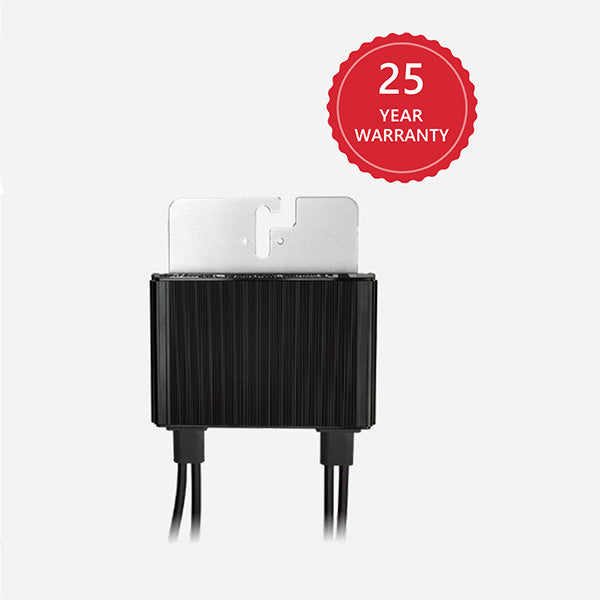
SolarEdge P801 Power Optimiser
£54DC optimiser
SolarEdge inverters only
Module-level
800
Affiliate link — we may earn a small commission at no extra cost to you
The verdict
SolarEdge is a technically capable system with a genuinely excellent monitoring platform. If your roof has shading complexity or multiple orientations, the panel-level MPPT and visibility the system provides are real advantages over a basic string setup.
The cost premium is real but not unreasonable for what it delivers. The reliability history is the significant caveat — not a reason to categorically avoid SolarEdge in 2026, but reason enough to ask your installer the right questions, check the unit vintage, and make sure you're comfortable with the warranty service experience before signing a contract.
For a simple, unshaded south-facing roof where you want reliable, affordable solar generation, a standard string inverter from Solis, Growatt, or SolarEdge's own SE-series without optimisers may well serve you better for less money. The choice is never one-size-fits-all — your roof's characteristics and your priorities should drive it.
Share this article
Stay informed
Get free solar updates direct to your inbox
Related reading
Solar Inverters Explained: Types, Sizing, and Real-World Limits
String, micro, and hybrid inverters explained — plus the critical G98/G99 threshold at 3.68kW and what it means for what you can run simultaneously.
Solar Inverter Brand Comparison UK 2026
Comparing GivEnergy, Sunsynk, Solis, Fox ESS, and Growatt hybrid inverters for UK solar. Features, prices, reliability, and which to choose in 2026.
Best Solar Monitoring Apps UK 2026: Every Brand Compared
Solar monitoring app comparison for UK homes. GivEnergy, SolarEdge, Enphase, Huawei, and Home Assistant compared side by side.

Switch to Octopus Energy
Get 50 credit when you switch. We get 50 too — win-win.
What does this mean for YOUR home?
Design your perfect solar setup in under 3 minutes. Free, no sign-up required.
Build Your Solar System