This page contains affiliate links. If you purchase through them we may earn a small commission at no extra cost to you. Learn more
String Inverter vs Microinverter: Which Is Better?
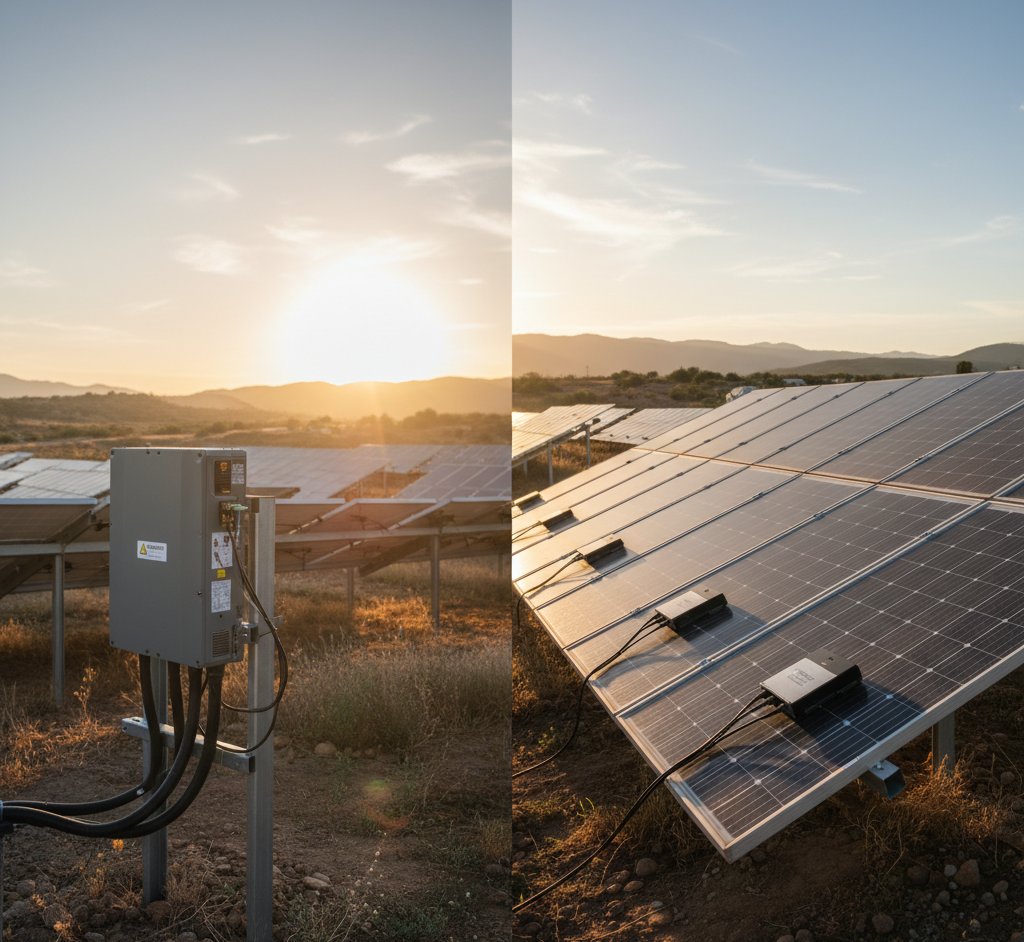
The inverter converts DC electricity from your panels into AC electricity your home can use. There are two main approaches: a single string inverter for the whole system, or individual microinverters on each panel. Both work well, but they suit different situations.
How They Work
String Inverter
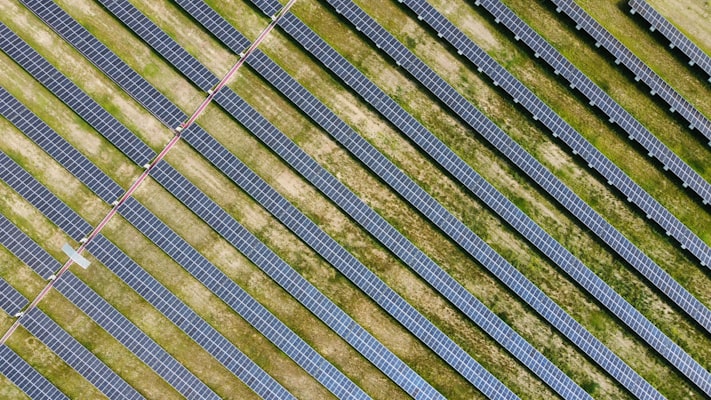
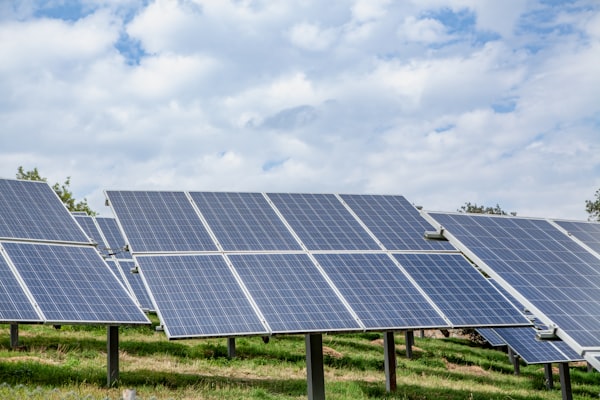
All panels are wired together in a "string" (series circuit) and feed into a single inverter, usually mounted in the garage or utility room. The inverter converts the combined DC output to AC.
Think of it like Christmas lights: the string's output is limited by the weakest panel. If one panel is shaded, it drags down the entire string.
Microinverters
Each panel has its own small inverter attached to its back. Each panel converts DC to AC independently. One shaded panel has no effect on the others.
Think of it like individual fairy lights: each one operates on its own.
Comparison Table
| Factor | String Inverter | Microinverter |
|---|---|---|
| Typical cost (4kW system) | £800–£1,200 | £1,200–£2,000 |
| Lifespan | 10–15 years | 20–25 years |
| Warranty | 5–12 years | 20–25 years |
| Shade handling | Poor (whole string affected) | Excellent (panel-level) |
| Monitoring | System-level | Panel-level |
| Maintenance | Easy access (wall-mounted) | Harder (on roof, behind panels) |
| Efficiency (no shade) | 96–98% | 96–98% |
| Efficiency (with shade) | Significantly reduced | Minimally reduced |
| Failure impact | Whole system stops | One panel stops |
When to Choose a String Inverter
A string inverter is the right choice for most UK installations:
Simple, Unshaded Roof
If your panels all face the same direction, at the same angle, with no shading from trees, chimneys, or neighbouring buildings, a string inverter performs identically to microinverters at a lower cost.
Budget-Conscious Installation
A string inverter saves £400–£800 on a typical 4kW system. Over the system's life, this saving can offset the slightly shorter inverter lifespan (you'll likely replace the string inverter once in 25 years).
Easy Maintenance Access
String inverters are mounted at ground level — easy to inspect, reset, or replace. Microinverters on the roof require scaffolding for any physical maintenance.
Recommended string inverters for UK installations:
When to Choose Microinverters
Microinverters are worth the premium in specific situations:
Partial Shading
If trees, chimneys, aerials, or neighbouring buildings shade some panels during parts of the day, microinverters prevent the shaded panels from reducing the output of the unshaded ones. The improvement can be 10–25% in annual generation compared to a string system on a partially shaded roof.
Multiple Roof Orientations
If you're splitting panels across east and west-facing roofs (or south and east, etc.), microinverters handle different orientations naturally. String inverters need multiple strings or a multi-MPPT inverter to handle different orientations, adding complexity.
Roof Obstructions
Panels arranged around skylights, vents, or an unusual roof shape benefit from microinverter independence. Non-uniform layouts cause problems for string configurations.
Long-Term Value
Microinverters last 20–25 years (matching panel lifespan), avoiding the £800–£1,200 inverter replacement that string systems need at year 10–15. Over 25 years, the total cost of ownership can be similar.
Panel-Level Monitoring
Microinverters show exactly how each panel is performing. This makes it easy to spot a failing panel, bird droppings, or debris. String inverters show whole-system output, making individual panel problems harder to diagnose.
Microinverters for Safety
Microinverters produce AC power at each panel, eliminating high-voltage DC on the roof. This is a safety advantage during fires (firefighters prefer systems without high DC voltage) and during maintenance. Some insurance companies view this favourably.
The Middle Ground: String Inverter + Power Optimisers
Power optimisers (like SolarEdge's offering) are small DC-DC converters attached to each panel. They connect to a central string inverter but allow each panel to operate independently.
This gives you:
- Panel-level optimisation (like microinverters)
- Panel-level monitoring (like microinverters)
- A central inverter for the DC-AC conversion (like a string system)
The cost is between a pure string system and microinverters. SolarEdge is the main player in this space and is popular in UK installations.
The downside: the central inverter still needs replacement at 10–15 years, and the optimisers add points of failure on the roof. Some installers report more warranty claims with SolarEdge optimisers than with either pure string or pure microinverter systems.
Cost Impact on Payback
For a 4kW system in the Midlands:
| Inverter Type | System Cost | Annual Generation | Payback |
|---|---|---|---|
| String inverter (no shade) | £6,500 | 3,600 kWh | 9.9 yrs |
| Microinverters (no shade) | £7,300 | 3,600 kWh | 11.1 yrs |
| String inverter (partial shade) | £6,500 | 2,900 kWh | 12.3 yrs |
| Microinverters (partial shade) | £7,300 | 3,400 kWh | 11.8 yrs |
On an unshaded roof, the string inverter wins on payback (lower cost, same output). On a shaded roof, microinverters win because the generation improvement more than compensates for the higher cost.
Reliability
String inverters have a well-understood failure mode: the inverter eventually fails and needs replacing. This is predictable and relatively cheap (£800–£1,200). When it fails, the whole system stops until it's replaced.
Microinverters individually are very reliable, but you have 10+ units on the roof instead of one in the garage. If one fails, only that panel is affected. But accessing a failed microinverter requires scaffolding and panel removal — potentially expensive for a single unit repair.
In practice, both approaches have excellent reliability. The failure rates for modern inverters (string or micro) are low.
What Most UK Installers Recommend
The majority of UK residential installations use string inverters, often with hybrid (battery-compatible) models. This is partly cost-driven and partly because many UK roofs are straightforward enough to not need microinverter technology.
Watch Out for Unnecessary Upselling
Some installers push microinverters or optimisers on every installation regardless of need. If your roof is simple (one orientation, no shading), you don't need microinverters — the installer may be upselling for margin. Ask specifically why they're recommending microinverters and whether a standard string inverter would work for your situation.
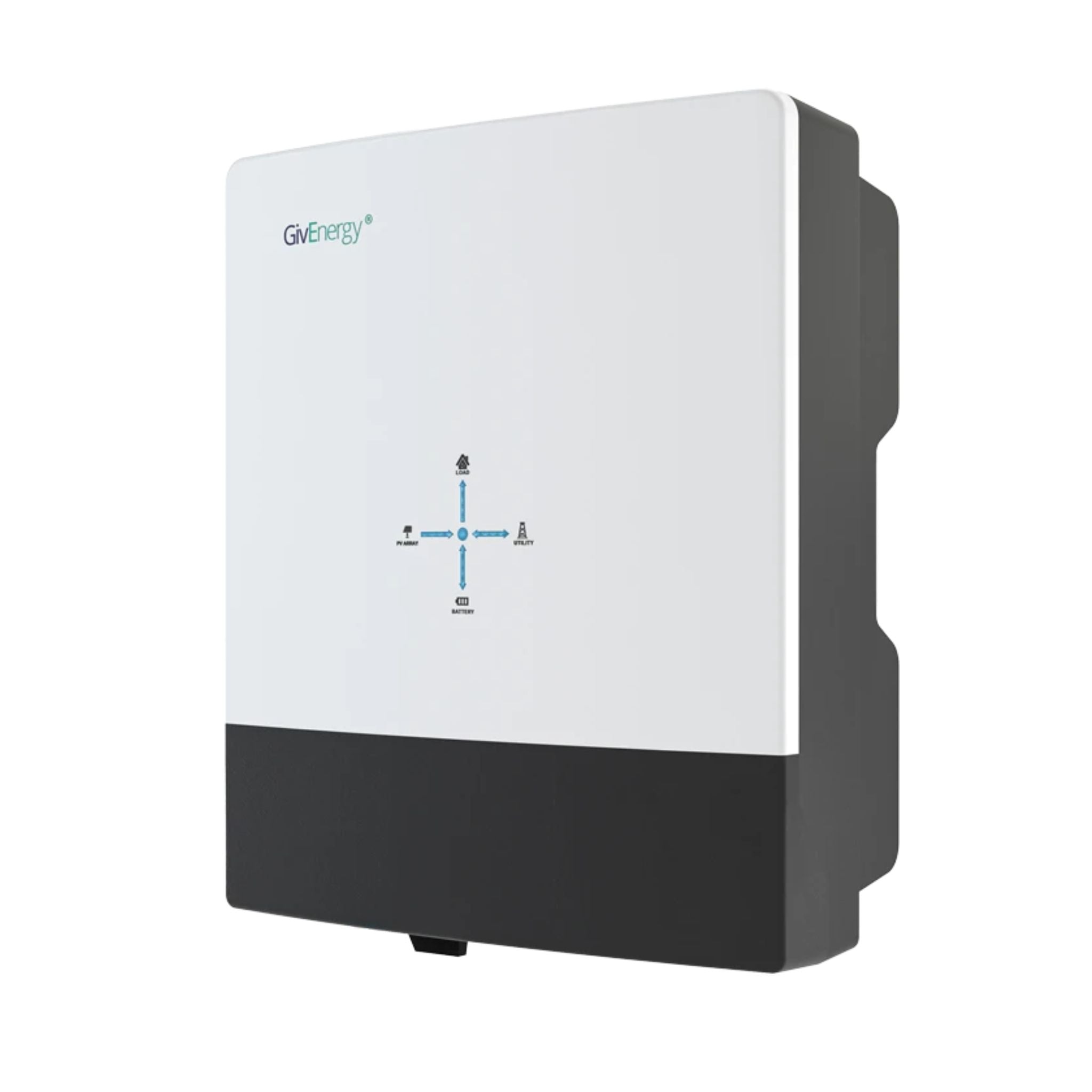
GivEnergy All-in-One 5kW Hybrid Inverter
£1,2005
7.5
2
48V
Affiliate link — we may earn a small commission at no extra cost to you
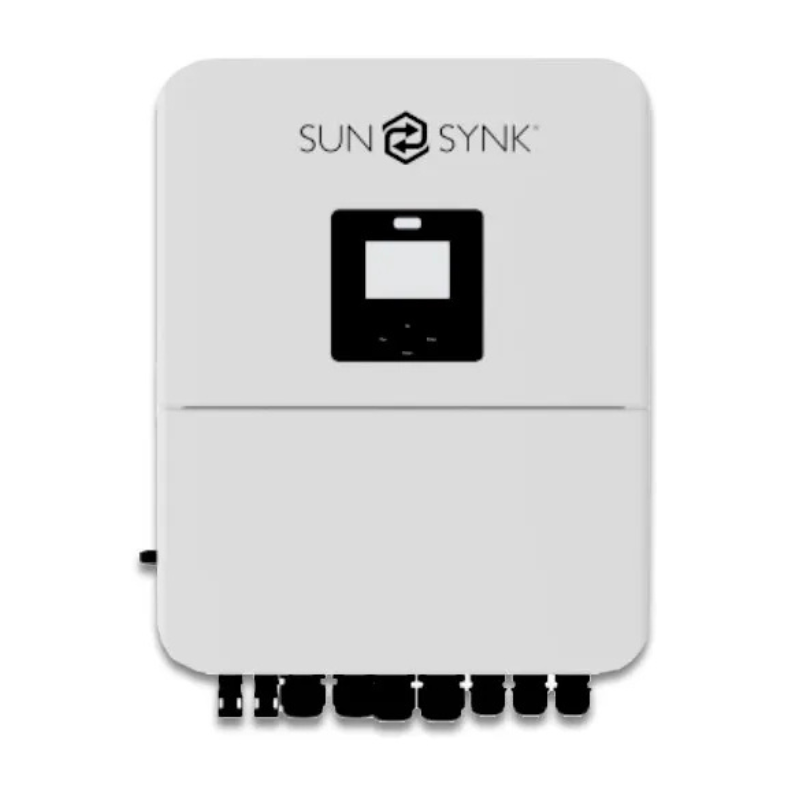
SunSynk 5kW Hybrid Inverter
£1,1505
7.5
2
48V
Affiliate link — we may earn a small commission at no extra cost to you
The Quick Decision Guide
| Your Roof | Best Choice |
|---|---|
| South-facing, no shading | String inverter |
| South-facing, some shading | Microinverters or optimisers |
| East-west split, no shading | Multi-MPPT string inverter |
| East-west split with shading | Microinverters |
| Complex layout (multiple planes) | Microinverters |
| Budget is tight | String inverter |
| Want maximum long-term value | Microinverters |
For a deeper dive into how inverters work and what to look for, see our inverters explained guide.
Share this article

OVO has carefully selected trusted teams across the UK to install solar panels and heat pumps. Enjoy the personal touch of a local expert with the peace of mind of a household name.
Affiliate link — we may earn a small commission at no extra cost to you
Stay informed
Get free solar updates direct to your inbox
Related reading
Solar Inverters Explained: Types, Sizing, and Real-World Limits
String, micro, and hybrid inverters explained clearly — plus the critical G98/G99 threshold at 3.68kW and what it means for what you can run simultaneously.
Best Solar Panels for UK Homes 2026
An honest look at the best solar panels available for UK homes in 2026 — covering JA Solar, Trina, Canadian Solar, and LONGi, with real specs and what to look for.
Solar Panel Efficiency: What It Means and Why It's Not Everything
Panel efficiency explained plainly — what the percentage actually means, why the gap between 20% and 22% barely matters for most UK homes, and what you should actually be comparing.


Switch to Octopus Energy
Get 50 credit when you switch. We get 50 too — win-win.
What does this mean for YOUR home?
Design your perfect solar setup in under 3 minutes. Free, no sign-up required.
Build Your Solar System