This page contains affiliate links. If you purchase through them we may earn a small commission at no extra cost to you. Learn more
Tethered vs Untethered EV Chargers
What's the difference?
The distinction is simple:
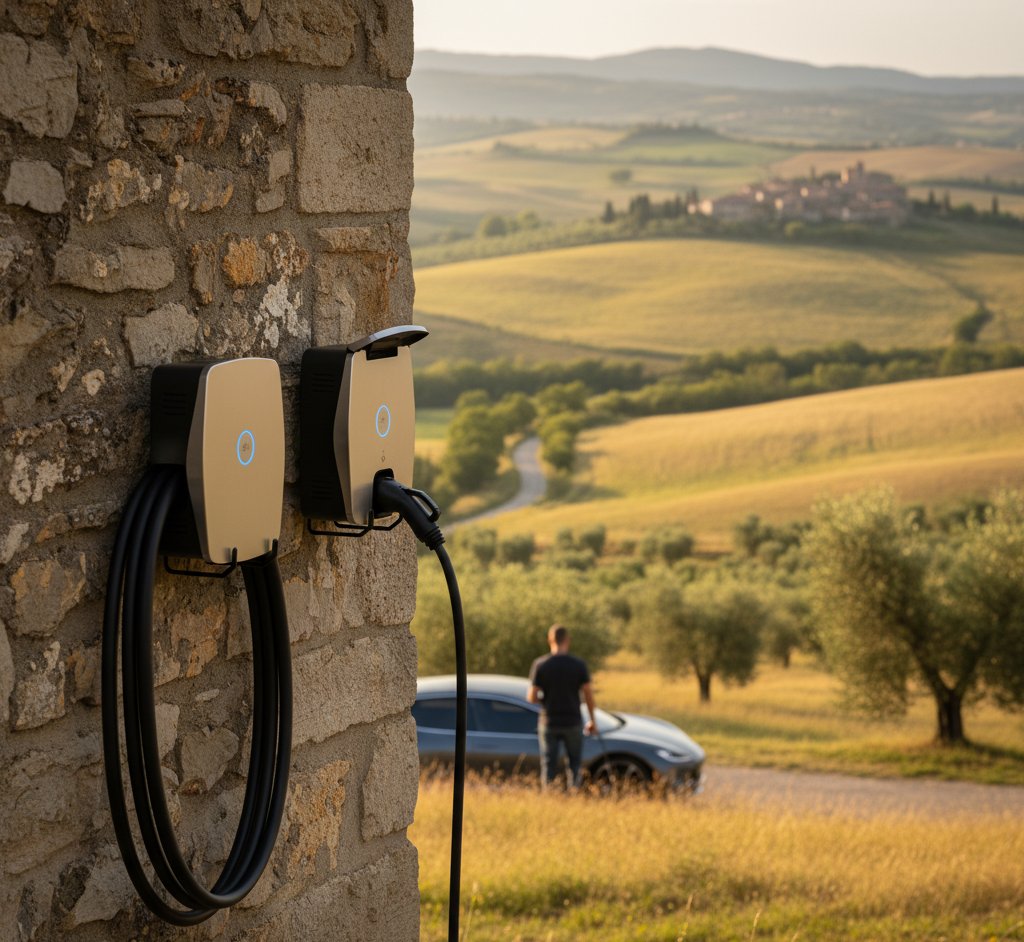
Tethered: The charging cable is permanently attached to the charger unit on your wall. You grab the connector end and plug it into your car. When done, you coil the cable back onto the unit.
Untethered: The charger has a Type 2 socket on the front. You use a separate cable (usually the one supplied with your car) to connect the charger to your vehicle. When done, you disconnect both ends and store the cable.
That's it. The charging speed, smart features, solar compatibility, and electrical installation are identical between tethered and untethered versions of the same charger.
Tethered charger pros and cons
Advantages:
- Convenience — the cable is always there, always ready. You don't need to find it, fetch it from the boot, or untangle it. In the rain, at night, in a hurry — just grab and plug.
- No forgetting — you can't accidentally leave the cable at a public charger or a friend's house because it's permanently attached to your wall.
- Dedicated connector — the attached cable has the right connector for your car (Type 2 for most modern EVs).
Disadvantages:
- Looks — a cable hanging on the wall or coiled on a holder isn't the neatest aesthetic. Some chargers have built-in cable management; others look messy.
- Cable length fixed — you get whatever length the manufacturer provides (typically 5–7m). If your parking position changes or you need extra reach, you can't swap for a longer cable.
- Connector type locked in — if you change to an EV with a different connector type (unlikely with modern Type 2 standardisation, but possible), you'd need a new cable or adapter.
- Cable wear — the cable is always exposed to weather. UV degradation, rain, and physical wear are more of a factor than a cable stored in your boot.
Untethered charger pros and cons
Advantages:
- Neater appearance — when not charging, the unit on the wall is compact and cable-free. Many homeowners prefer this cleaner look.
- Cable flexibility — you can use different cables for different vehicles or different lengths for different parking positions.
- Portability — you can use the same cable at home and at public destinations that have Type 2 sockets (increasingly common at workplaces and hotels).
- Less weathering — the cable spends most of its life in your boot, protected from UV and rain.
Disadvantages:
- Inconvenience — every charge requires fetching the cable, connecting both ends, then disconnecting and storing. In January rain, this gets old fast.
- Cable management — you need somewhere to store the cable when not in use. Car boots get cluttered.
- Risk of loss/theft — a cable left connected can be stolen (cable locks mitigate this but add another step).
- Cost of replacement cables — a good Type 2 to Type 2 cable costs £100–£250. If it gets damaged or lost, that's an additional expense.
The daily reality test
Imagine it's 10pm on a wet Tuesday night. You've just got home. With a tethered charger, you grab the connector from the wall, plug it into the car, done — 10 seconds. With an untethered charger, you open the boot, pull out the cable, connect one end to the wall socket, connect the other to the car, close the boot — 60 seconds, getting wet the whole time. Multiply this by 300 days a year.
Which chargers are available in each type?
Most major EV charger brands offer both options:
| Charger | Tethered | Untethered |
|---|---|---|
| Myenergi Zappi | Yes | Yes |
| Ohme Home Pro | Yes | Yes |
| Wallbox Pulsar Plus | Yes (only) | No |
| Easee Charge | No | Yes (only) |
| Hypervolt Home | Yes | Yes |
| Pod Point Solo | Yes | Yes |
Note that some chargers are only available in one format. The Wallbox Pulsar Plus is tethered only; the Easee Charge is untethered only (socket-based).

Wallbox Pulsar Plus 7.4kW EV Charger
£5507.4
smart,scheduled,manual
false
true
Affiliate link — we may earn a small commission at no extra cost to you
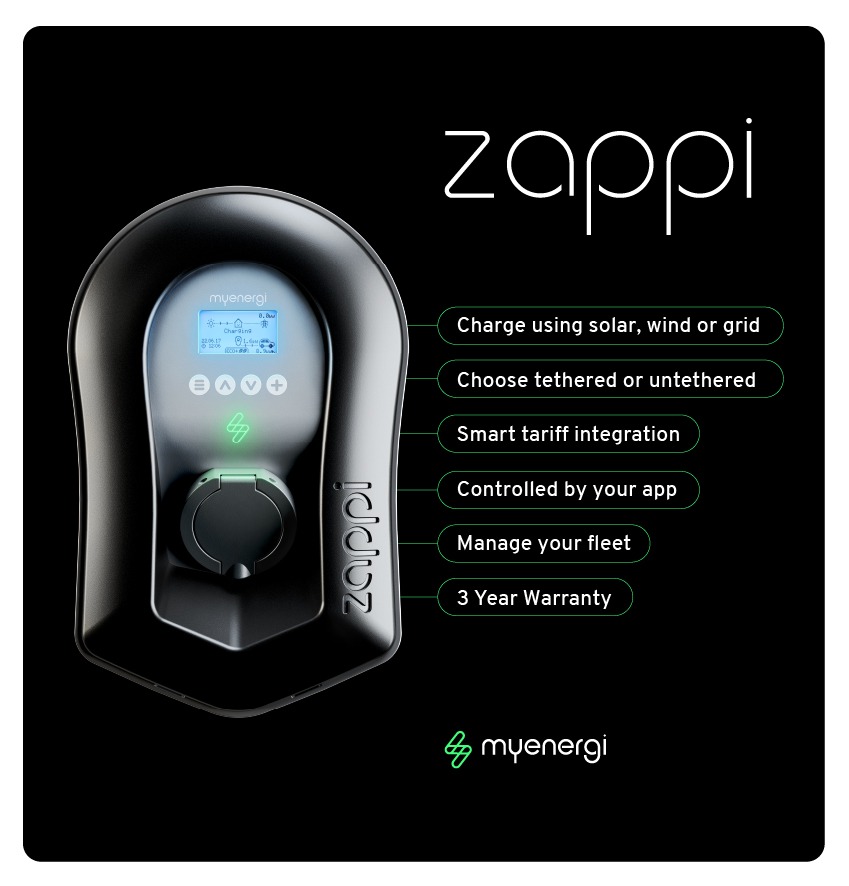
myenergi Zappi 22kW EV Charger
£78022
7.4
22
fast,eco,eco_plus
Affiliate link — we may earn a small commission at no extra cost to you

Which is better for solar households?
For solar-specific charging, there's no functional difference. A Myenergi Zappi in solar Eco+ mode works identically whether tethered or untethered. The CT clamp reads your surplus, the charger diverts it — the cable type is irrelevant to the solar integration.
However, if you're regularly plugging and unplugging to take advantage of solar charging windows (plugging in when you get home at midday, unplugging to go out, plugging in again for afternoon solar), the tethered version makes this significantly easier.
Cost difference
The price difference between tethered and untethered versions of the same charger is typically small:
- Tethered versions may cost £20–£50 more (you're paying for the attached cable)
- But you save £100–£250 on not needing to buy a separate Type 2 cable
Net result: Tethered is often cheaper overall because the bundled cable costs less than buying one separately.
Installation costs are identical regardless of cable type — the electrical work is the same.
Multi-vehicle households
If your household has two EVs (increasingly common), the charger choice matters more:
Both EVs use Type 2 (most modern EVs): Tethered works fine. Both cars use the same connector.
One Type 2 and one Type 1 (older EVs like early Nissan Leaf): Untethered is better. You can keep both a Type 2 and a Type 1 cable and use whichever you need.
Two EVs, one charger: Untethered can be slightly easier — you swap the cable between cars without reaching for a fixed cable that might not reach the second parking space. However, a long tethered cable (7m) usually reaches both spaces on a typical driveway.
Charging two EVs from one charger
You can only charge one vehicle at a time from a single charger (whether tethered or untethered). If both EVs need charging nightly, you'll either need to swap the cable partway through the night (inconvenient) or install a second charger. For solar households with two EVs, two chargers with load balancing is the practical solution.

Installation considerations
Both types require identical installation:
- A dedicated circuit from your consumer unit (typically 32A MCB)
- Cable run from consumer unit to charger location
- CT clamp installation (for solar-aware chargers like the Zappi)
- Compliance with BS 7671 wiring regulations
- Earth rod or PME earth confirmation
The charger should be mounted within cable-reach of your normal parking position. For tethered units, factor in the cable length (5–7m typically) when choosing the wall position. For untethered units, mounting position is less critical since you bring the cable.
The OZEV grant applies equally to both tethered and untethered chargers, contributing up to £350 toward installation costs.
The verdict
For most UK EV owners with solar, tethered is the better choice. The daily convenience of grabbing and plugging outweighs the aesthetic advantage of untethered. The cost difference is negligible or favours tethered. And with Type 2 being the universal UK standard for modern EVs, connector compatibility is a non-issue.
Choose untethered if: you have strong aesthetic preferences, multiple vehicles with different connectors, or specific practical reasons to use a separate cable.
Choose tethered if: you value convenience, charge daily, and want the simplest possible routine.
Whichever you choose, the charging experience, solar integration, and smart features are identical. Don't overthink it — the bigger decisions are which charger brand and whether to get solar-aware features like the Zappi's Eco modes.
Share this article

Leading UK provider of electric car charging cables and EV accessories. Cables for all UK and EU models, with fast delivery and expert support.
Affiliate link — we may earn a small commission at no extra cost to you
Stay informed
Get free solar updates direct to your inbox
Related reading
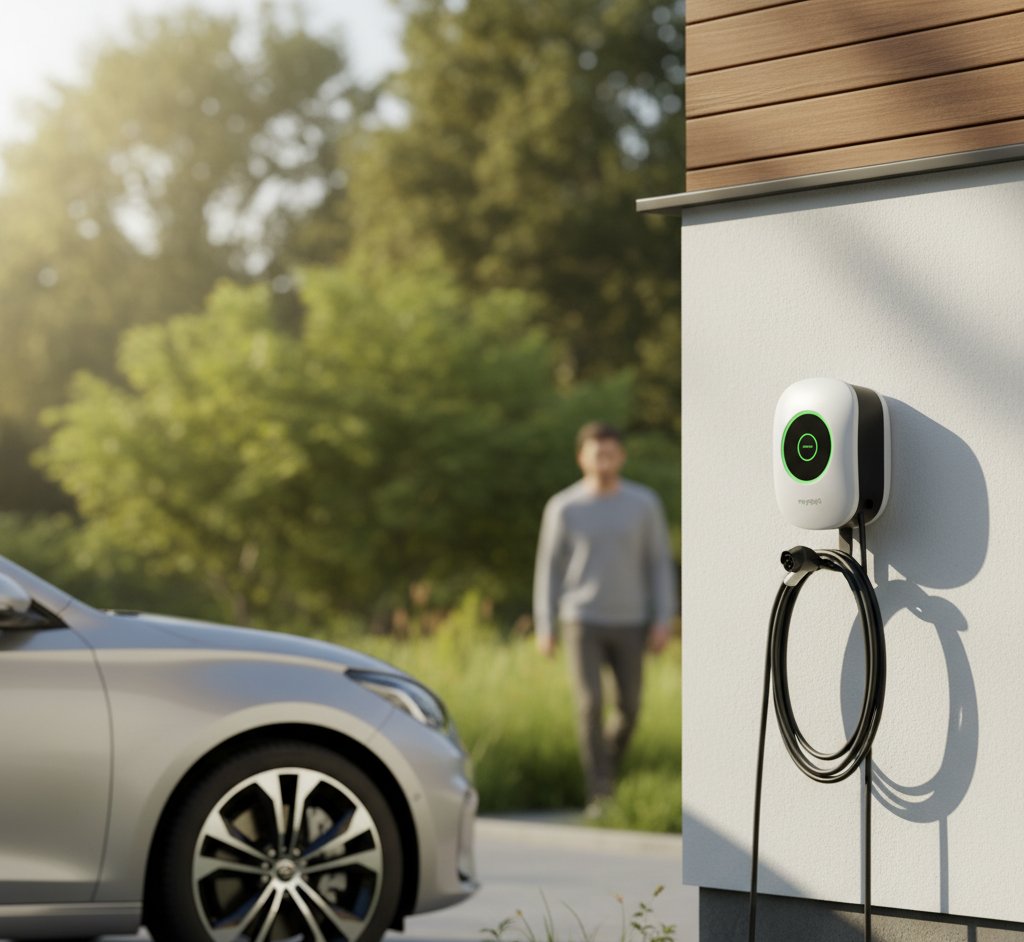
Myenergi Zappi: The Solar EV Charger
In-depth review of the Myenergi Zappi EV charger for UK solar homes — solar charging modes, installation, costs, and how it compares to standard chargers.

EV Charger Load Balancing with Solar
How EV charger load balancing works with UK solar systems — dynamic load management, avoiding blown fuses, and charging multiple EVs from one supply.

OZEV EV Charger Grant: How to Claim
How to claim the OZEV EV charger grant in the UK — eligibility criteria, how much you get, which chargers qualify, and the application process explained.


Switch to Octopus Energy
Get 50 credit when you switch. We get 50 too — win-win.
What does this mean for YOUR home?
Design your perfect solar setup in under 3 minutes. Free, no sign-up required.
Build Your Solar System