This page contains affiliate links. If you purchase through them we may earn a small commission at no extra cost to you. Learn more
EV Charger Load Balancing with Solar

What is load balancing?
Load balancing is the process of managing how much power your EV charger draws, based on what else your home is using at the same time. The goal: prevent your main fuse from blowing by keeping total demand within your supply's capacity.
Why it matters: A 7kW EV charger draws about 32A from a single-phase supply. If your home's main fuse is rated at 80A and your house is already using 50A (oven, shower, heat pump), adding 32A of EV charging pushes you to 82A — above your fuse rating. The fuse blows, the house goes dark, and you're resetting everything in the dark while your dinner goes cold.
Load balancing prevents this by automatically reducing the EV charger's draw when household demand is high.
Types of load balancing
Static load balancing
The simplest form. The charger is permanently limited to a fixed rate — say, 5kW instead of 7kW — to ensure total demand can never exceed the supply. It works, but it's wasteful. When the house is using very little (overnight), the charger could safely draw full power but is unnecessarily restricted.
Dynamic load balancing
The smart approach. A CT clamp monitors your main supply in real time. The charger adjusts its draw automatically:
- Home drawing 20A, supply rated 80A: Charger can draw up to 60A (but typically capped at 32A for a 7kW unit)
- Home drawing 60A (oven + shower + kettle): Charger reduces to 20A to stay within 80A total
- Home drawing 75A: Charger drops to minimum (6A/1.4kW) or pauses entirely
This happens continuously, second by second. You never notice — the EV just charges a bit slower when other things are running.
Solar-aware load balancing
The most sophisticated form, combining dynamic load balancing with solar monitoring. The Myenergi Zappi is the prime example:
- Monitors household consumption, solar generation, AND grid capacity simultaneously
- In Eco mode: uses solar surplus first, tops up from grid without exceeding supply limit
- In Eco+ mode: only charges from surplus solar, never exceeds supply limit
- Dynamically adjusts as clouds pass, appliances switch on/off, and solar output changes
The CT clamp is doing the heavy lifting
Every dynamic load balancing system relies on a CT clamp on your main supply cable. This small sensor is the brain's input — it tells the charger exactly how much current is flowing at any moment. If the CT clamp is incorrectly installed or fails, load balancing can't work. Ensure your installer positions it correctly during charger installation.
Why solar households especially need load balancing
Solar adds complexity to load management because power flows in both directions:
Without solar: Electricity only flows in (from grid). The maths is simple: household load + EV charger must stay below supply limit.
With solar: Electricity flows in (grid) AND out (export). When your panels generate 3kW and your house uses 2kW, the net grid draw is negative (-1kW = exporting). The EV charger has the full supply capacity available plus the solar surplus.
But when a cloud passes and solar drops from 3kW to 0.5kW, the household's 2kW demand suddenly shifts to the grid. The charger must instantly reduce its draw to compensate.
A solar-aware load balancer handles these rapid fluctuations. A basic charger doesn't — it continues drawing at full power regardless of solar output changes, potentially overloading your supply.
Load balancing with multiple EV chargers
Two-EV households are increasingly common, and load balancing becomes critical:
Two 7kW chargers without load balancing:
- Total draw: up to 64A (32A × 2)
- Plus household load: easily exceeds 80A supply
- Result: blown fuses, tripped breakers
Two chargers with load balancing:
- Available capacity shared dynamically between both chargers
- Example: 80A supply, 30A household load = 50A available
- Each charger gets 25A (about 5.7kW each), adjusting as household load changes
- Both cars charge, nobody trips anything
The Myenergi Zappi supports multi-charger load balancing when two Zappis are installed on the same system. They communicate wirelessly to coordinate their draw.
Other solutions include dedicated load management controllers (like the Myenergi Harvi or various DLM boxes) that sit between the chargers and the supply, distributing available capacity.
Don't install two chargers without load balancing
If your electrician proposes installing two EV chargers on a single-phase supply without any form of load balancing, get a second opinion. The combined draw of two 7kW chargers (64A) plus household loads will almost certainly exceed your supply's capacity. Dynamic load balancing isn't optional in this scenario — it's essential.
Load balancing and three-phase supplies
Three-phase supplies have more capacity (up to 100A per phase, roughly 69kW total), making overload less likely. But load balancing is still relevant:
Phase balancing: Loads should be distributed across phases. A 22kW charger on three-phase draws evenly from all three phases. But a 7kW single-phase charger on a three-phase supply only loads one phase — potentially overloading that phase while the others are underused.
Multiple chargers on three-phase: You can have one charger per phase, each drawing up to 32A, without them competing. Load balancing ensures no single phase is overloaded if additional household loads are on the same phase.
Practical load balancing scenarios
Scenario 1: Small solar system, one EV
- 3kWp solar, 80A single-phase supply, one Zappi
- Load balancing is helpful but not critical — a single 7kW charger plus normal household loads rarely exceeds 80A
- Solar-aware load balancing (Zappi Eco mode) maximises solar use without grid overload
Scenario 2: Larger solar + battery + EV
- 5kWp solar, 10kWh battery, 80A supply, one charger
- More complex power flows: solar → battery → household → EV → grid
- Dynamic load balancing ensures the charger accounts for battery charging draw and household loads
- Risk: battery charging (5kW) + EV charging (7kW) + household (3kW) = 15kW from 18kW supply limit — tight
Scenario 3: Solar + two EVs + heat pump
- 6kWp solar, 100A single-phase supply, two chargers, heat pump
- Critical need for dynamic load balancing
- Heat pump (3–8kW variable) + two chargers (up to 14kW) + household (3kW) = potential 25kW from 23kW supply
- Load balancing must prioritise and reduce charger draw when heat pump cycles on
- Strong case for three-phase upgrade
Which chargers include load balancing?
| Charger | Dynamic load balancing | Solar-aware | Multi-charger support |
|---|---|---|---|
| Myenergi Zappi | Yes (CT clamp) | Yes (Eco/Eco+) | Yes (up to 3 Zappis) |
| Ohme Home Pro | Yes | Partial | Limited |
| Wallbox Pulsar Plus | Yes (with Power Boost) | No | Yes (with Power Boost) |
| Easee Charge | Yes (built-in) | No | Yes (Easee equaliser) |
| Hypervolt Home | Yes | No | Limited |
| Basic/dumb chargers | No | No | No |
For solar households, the Zappi remains the standout choice — its load balancing is fully solar-aware, handling the bidirectional power flow that solar creates.
These solar-aware EV chargers include built-in load balancing:
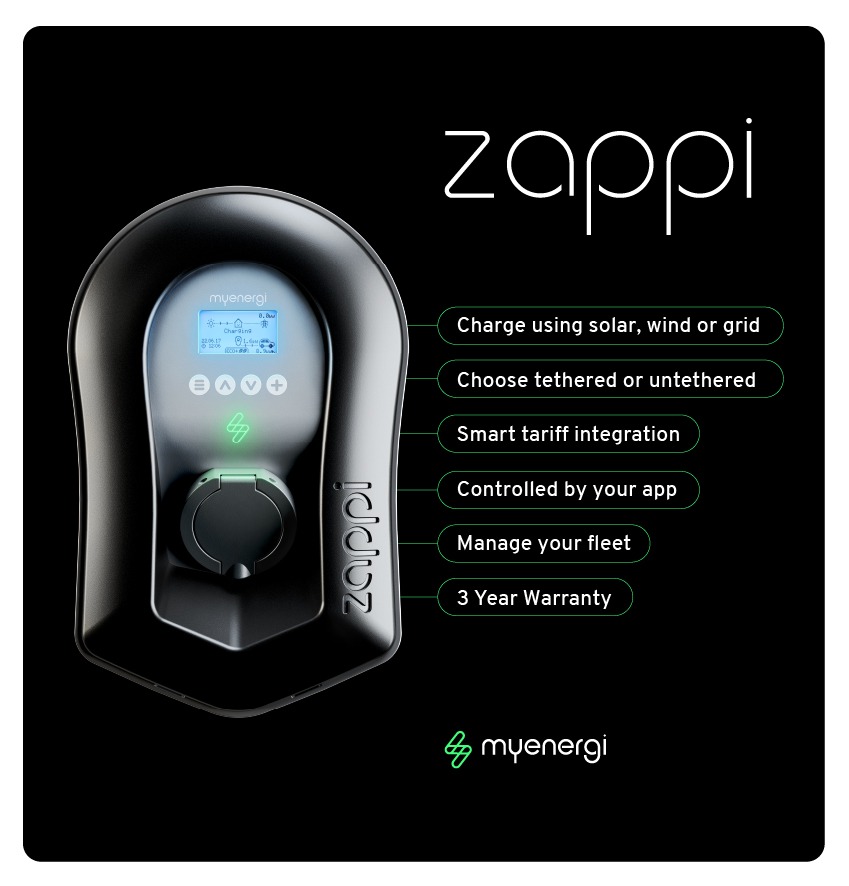
myenergi Zappi 22kW EV Charger
£78022
7.4
22
fast,eco,eco_plus
Affiliate link — we may earn a small commission at no extra cost to you
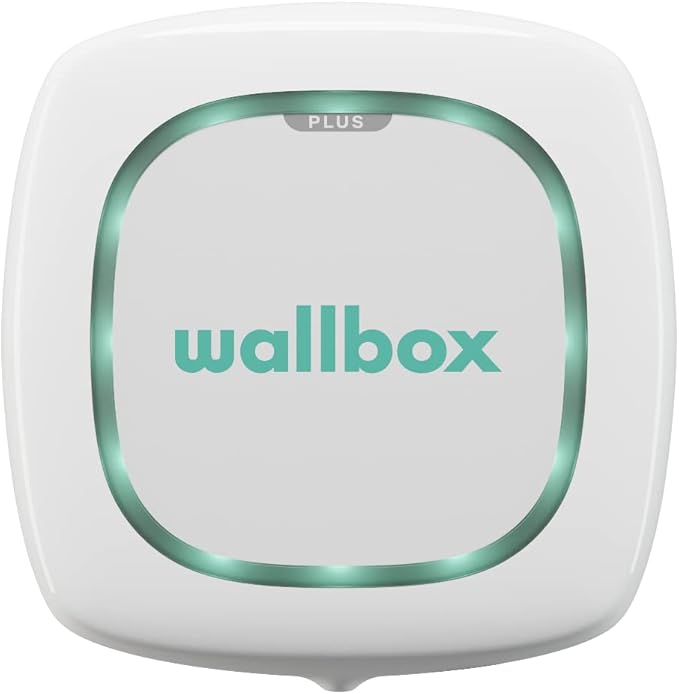
Wallbox Pulsar Plus 7.4kW EV Charger
£5507.4
smart,scheduled,manual
false
true
Affiliate link — we may earn a small commission at no extra cost to you
Installation tips
- Discuss your total electrical load with the installer — list everything: EV charger(s), heat pump, immersion heater, oven, shower. They'll calculate whether load balancing is sufficient or if a supply upgrade is needed.
- CT clamp positioning is critical — the clamp must go on the main supply cable, before any circuits branch off. Wrong position = wrong readings = ineffective load balancing.
- Test under load — after installation, turn on your high-draw appliances simultaneously while EV charging. Verify the charger reduces its draw appropriately.
- Future-proof — if you might add a second EV or heat pump, discuss this with your installer now. A system designed for today's loads may not cope with tomorrow's.
Share this article

Leading UK provider of electric car charging cables and EV accessories. Cables for all UK and EU models, with fast delivery and expert support.
Affiliate link — we may earn a small commission at no extra cost to you
Stay informed
Get free solar updates direct to your inbox
Related reading
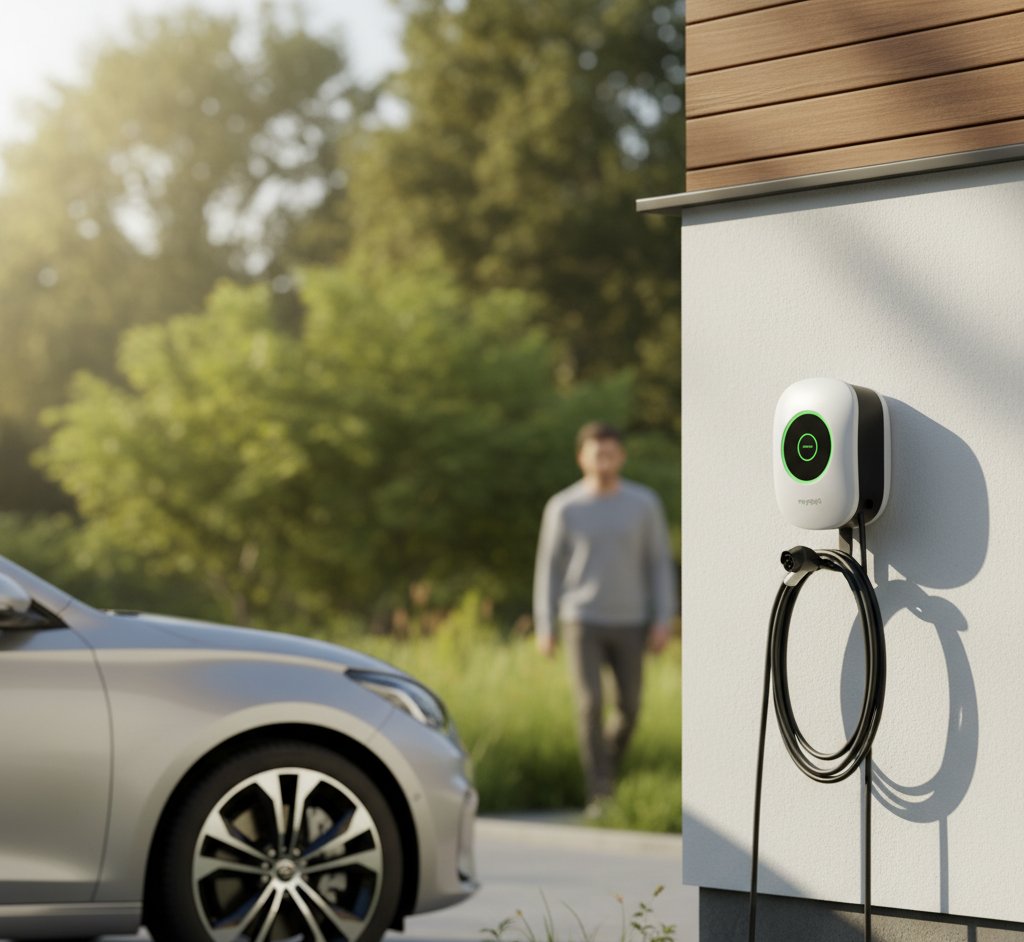
Myenergi Zappi: The Solar EV Charger
In-depth review of the Myenergi Zappi EV charger for UK solar homes — solar charging modes, installation, costs, and how it compares to standard chargers.
Three-Phase vs Single-Phase: What It Means for Solar
The difference between three-phase and single-phase power for UK solar installations — when you need three-phase, costs, EV charging, and inverter options.
Solar Inverters Explained: Types, Sizing, and Real-World Limits
String, micro, and hybrid inverters explained clearly — plus the critical G98/G99 threshold at 3.68kW and what it means for what you can run simultaneously.


Switch to Octopus Energy
Get 50 credit when you switch. We get 50 too — win-win.
What does this mean for YOUR home?
Design your perfect solar setup in under 3 minutes. Free, no sign-up required.
Build Your Solar System