This page contains affiliate links. If you purchase through them we may earn a small commission at no extra cost to you. Learn more
Battery Fire Safety: PAS 63100 and Where to Install Your Battery

What is PAS 63100?
PAS 63100:2024 is a publicly available specification published by the British Standards Institution (BSI) in March 2024. Its full title is "Protection against fire of battery energy storage systems for use in dwellings." You can download it free of charge from the BSI website.
The standard applies to:
- Domestic properties under 200 m² floor area
- Fixed battery systems (not e-bike or portable batteries)
- Systems up to 80 kWh stored energy per dwelling when installed in an outbuilding
It does not apply to e-scooters, e-bikes, commercial installations, or portable power stations.
Is it legally required?
PAS 63100 itself is not a statutory instrument — it cannot be enforced in court on its own. But it carries significant practical weight:
BS 7671 Amendment 4, which took effect in April 2026, requires domestic battery installations to comply with PAS 63100. BS 7671 is the wiring regulations that underpin Part P of the Building Regulations — so for any notifiable electrical installation, compliance with PAS 63100 is now effectively mandatory.
Beyond the wiring regulations, MCS and the majority of professional installers treat PAS 63100 as a de facto standard. Insurers and building control officers increasingly reference it when assessing battery installations. Ignoring it carries real risk — both in terms of safety and insurance validity.
Where can you install a battery?
PAS 63100 establishes a preference order for where a home battery should be placed. The standard works on the principle that the further a battery is from sleeping areas and escape routes, the more time occupants have to evacuate safely if a fault occurs.
1. Outdoors — the best option
A purpose-built outdoor enclosure, positioned away from building openings such as windows and doors. This keeps any thermal runaway event entirely outside the building envelope.
2. Outbuilding — very good
A detached garage, shed, or other separate building. The 80 kWh maximum stored energy limit applies here. Because the building is detached from the dwelling, there is inherent separation.
3. Attached garage — acceptable with compartmentation
An integral or attached garage is permitted, but fire compartmentation between the garage and the dwelling is required. Many modern attached garages already have some degree of fire separation built in — your installer will need to assess and confirm this.
4. Indoors — permitted but with conditions
An indoor installation in a utility room, plant room, or similar space is allowed, but the location must be fire-compartmented to REI 120 from any adjacent habitable room. More on what that means below.
Prohibited locations
Batteries must not be installed in these locations
PAS 63100 prohibits battery installation in:
- Lofts and roof spaces — thermal runaway in a roof space is extremely difficult to fight and cuts off escape routes below
- Voids and concealed spaces — a hidden battery fire may go undetected until it is well established
- Bedrooms — occupants are asleep and evacuation time is critically reduced
- Stairwells and corridors — these are escape routes; blocking or compromising them during a fire can be fatal
- Protected escape routes — any route designated for evacuation
- Small cupboards without adequate compartmentation — confined spaces with combustible surroundings and no containment
The reason for these prohibitions comes down to the nature of lithium-ion battery fires. Thermal runaway — the chain reaction that causes a battery cell to heat uncontrollably — can escalate from warning to full fire in a matter of seconds to minutes. Placement in escape routes or sleeping areas dramatically reduces the time available to get out safely.
What is fire compartmentation?
If your battery is installed indoors, PAS 63100 requires the space to achieve REI 120 fire performance to BS EN 13501-2 between the battery and any habitable room.
REI 120 breaks down as:
- R — load-bearing capacity: the structure does not collapse for at least 120 minutes
- E — integrity: flames and hot gases do not pass through for at least 120 minutes
- I — insulation: the unexposed side does not overheat for at least 120 minutes
In plain terms, the wall, floor, or ceiling between your battery and the rest of the house must be able to contain a fire on the battery side for two hours without allowing it to spread.
In practice, achieving REI 120 typically involves:
- Plasterboard construction: double layers of 15mm fire-rated plasterboard (or equivalent) on a suitable stud or masonry structure
- Fire-rated doors: an FD30S minimum self-closing fire door if access to the battery space passes through a habitable area
- Sealed penetrations: any cable, pipe, or duct passing through the compartment wall must be fire-stopped with intumescent sealant or sleeves rated to match the wall construction
Your installer should document that the compartmentation has been verified, and this should appear in the installation paperwork. If it does not, ask for it.
Ventilation and clearances
PAS 63100 also addresses ventilation and physical clearances. The key points:
- Battery clearances: follow the manufacturer's minimum clearances on all sides — typically 100–200mm. Cramming a battery into a tight space is a thermal risk in normal operation, not just during a fault.
- Ventilation: the installation space should have adequate ventilation to prevent heat build-up. This does not necessarily mean active ventilation — passive venting may be sufficient depending on the space size and battery rating. Your installer should assess this.
- Cable entries: any cables entering the battery enclosure through a compartment wall must pass through a fire-rated cable gland or fitting with intumescent properties. Ordinary cable glands create a gap in the compartmentation.
Smoke and heat detection
PAS 63100 requires a smoke alarm or heat detector to be installed if the battery or inverter is in a location that is not visited daily — for example, a utility room, plant room, or garage that you rarely enter.
Where your home already has an interlinked alarm system, the new detector must be interlinked with it. This ensures that a battery fault in a seldom-visited space triggers an alarm throughout the house, not just a local sounder that no one hears.
What about DIY battery installations?
PAS 63100 applies to DIY builds too
PAS 63100 does not distinguish between professionally installed and DIY-built battery systems. The location rules, compartmentation requirements, and ventilation guidance apply equally regardless of who physically assembled and installed the battery.
This matters for insurance. If a battery fire occurs in a prohibited location — a loft, say, or an under-stair cupboard without adequate compartmentation — your insurer may decline the claim on the basis that the installation did not meet the applicable safety standard. That risk exists whether the system was installed by an MCS contractor or built by you at the weekend.
Good wiring and fusing are essential for a safe DIY battery, but getting the location right is equally important. A well-wired battery in the wrong place is still non-compliant.
What about batteries installed before March 2024?
PAS 63100 does not apply retrospectively. If your battery was installed before 31 March 2024, you are not legally required to move it to comply with the standard.
That said, the underlying safety principles are not new — batteries in lofts, escape routes, or bedrooms were considered poor practice before PAS 63100 formalised the rules. If your battery is in a location that would be prohibited under the current standard and you have concerns about it, it is worth asking a qualified installer to assess whether the location or compartmentation could be improved.
What to check with your installer
Before committing to a battery installation, these five questions are worth raising:
-
Does the proposed location comply with PAS 63100? Ask your installer to confirm in writing which location tier applies (outdoor, outbuilding, attached garage, or indoor) and why it meets the standard.
-
If the location is indoors, what fire compartmentation is in place? Ask them to explain what achieves the REI 120 requirement — existing masonry, added plasterboard, fire door — and request documentation.
-
How are cable penetrations through any compartment walls fire-stopped? A compartment wall with an unfilled cable hole is not REI 120.
-
Is ventilation adequate? Ask whether passive or active ventilation is required for your specific installation.
-
Will the installation paperwork include a PAS 63100 compliance statement? This is important for insurance purposes and for any future property sale.
A professional installer should be able to answer all of these without hesitation. If the answer is vague or dismissive, that is a signal worth heeding.
Further reading
For a broader look at battery options and sizing, the solar battery storage guide covers the full picture. If you are planning a DIY build, the wiring and fusing guide covers the electrical safety side in detail. Once your battery is installed, it is worth checking that your home insurance policy covers the system — the solar panel insurance guide explains what to look for.
Share this article

OVO has carefully selected trusted teams across the UK to install solar panels and heat pumps. Enjoy the personal touch of a local expert with the peace of mind of a household name.
Affiliate link — we may earn a small commission at no extra cost to you
Stay informed
Get free solar updates direct to your inbox
Related reading
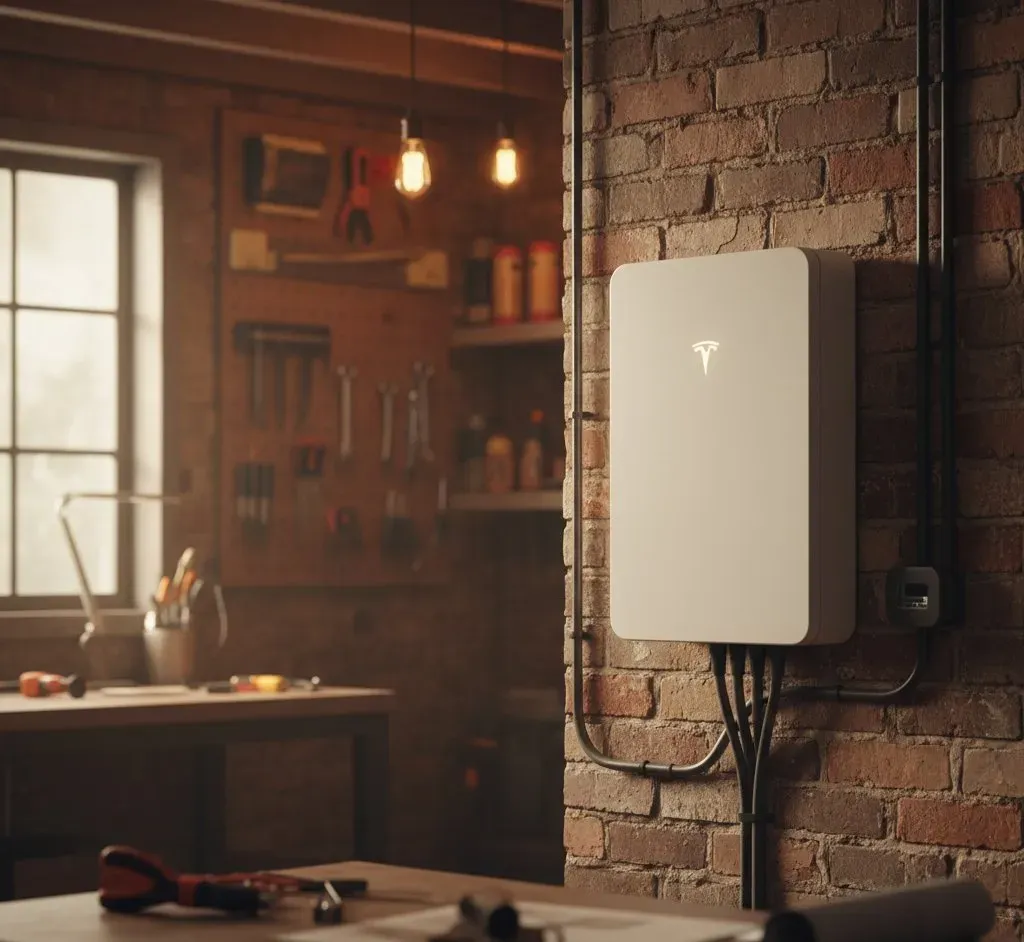
Solar Battery Storage: Complete UK Guide 2026
Adding battery storage to a UK solar installation — types, sizing, costs, and which products are worth considering in 2026.
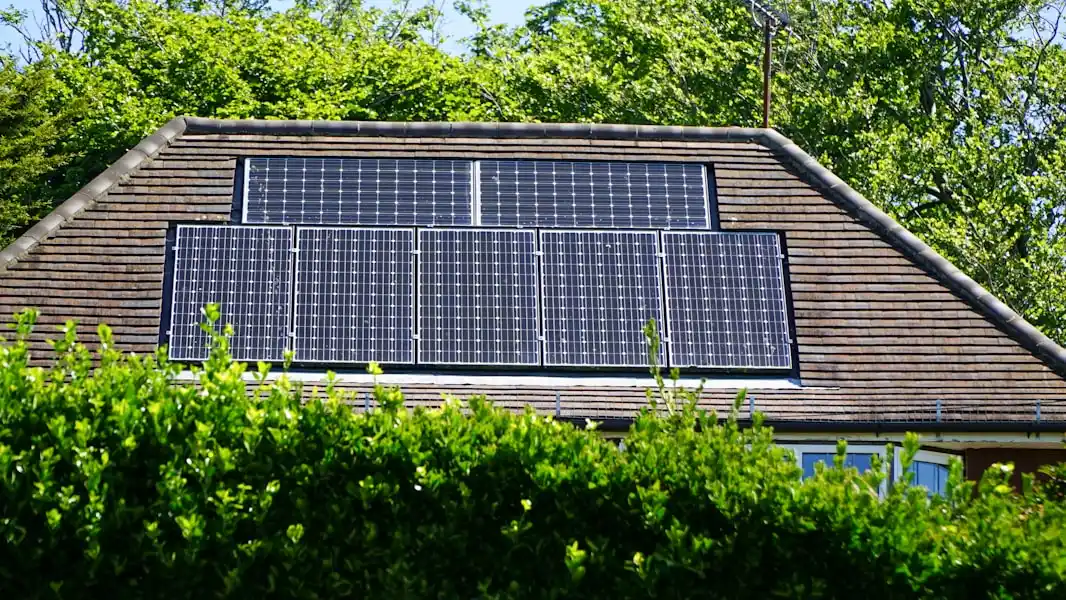
Adding a Battery to Existing Solar: What's Involved
How to add battery storage to an existing solar panel system. Compatibility, costs, installation options, and what to ask your installer before committing.
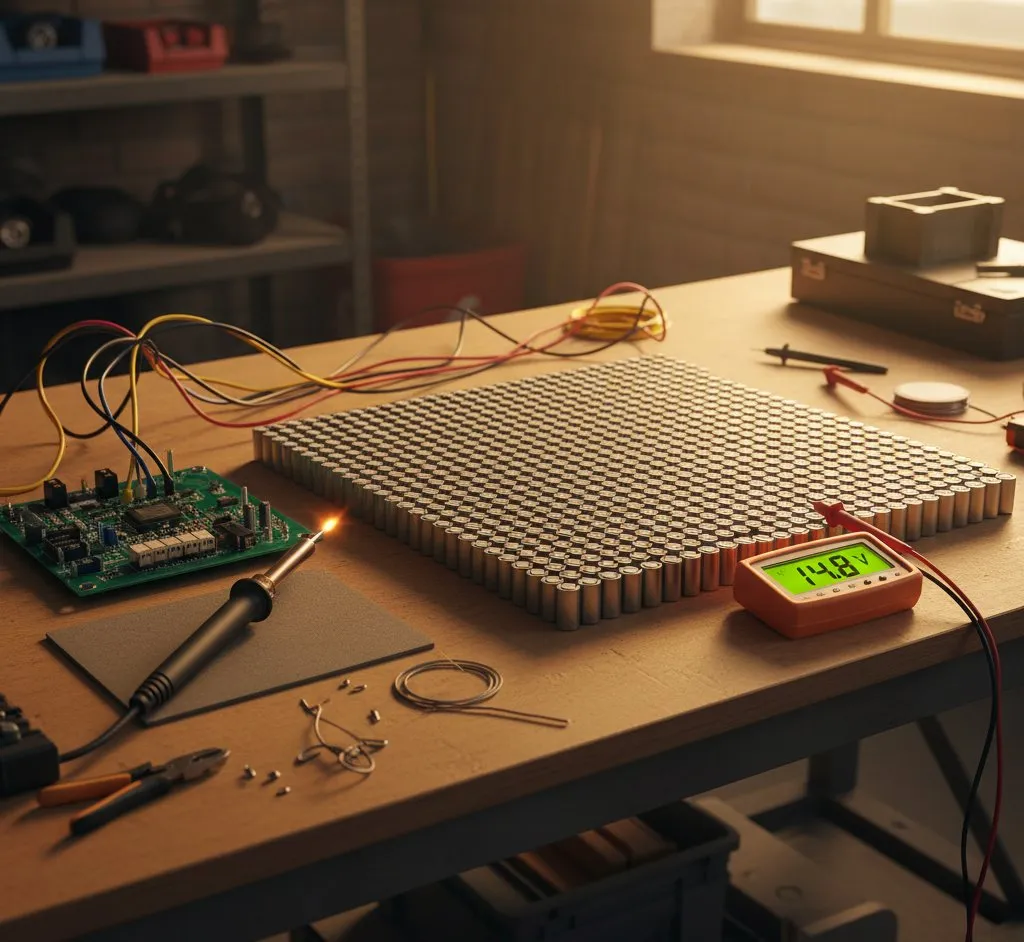
DIY Battery Wiring & Fusing: Cable Sizing, Fuse Selection, and Safety
How to correctly wire and fuse a DIY LiFePO4 solar battery system in the UK — cable sizing, fuse types, isolators, and common mistakes to avoid.


Switch to Octopus Energy
Get 50 credit when you switch. We get 50 too — win-win.
What does this mean for YOUR home?
Design your perfect solar setup in under 3 minutes. Free, no sign-up required.
Build Your Solar System