This page contains affiliate links. If you purchase through them we may earn a small commission at no extra cost to you. Learn more
Solar Battery Storage: Complete UK Guide 2026
Why add a battery to a solar system?
Solar panels generate electricity when the sun shines. Your household uses electricity around the clock. These two curves don't naturally align.
Without a battery, surplus solar electricity exports to the grid at whatever your SEG tariff pays — 3.3–15p/kWh depending on tariff (April 2026). You then buy that electricity back in the evening at ~24.5p per kWh. The maths is unflattering.
A battery closes that gap. Instead of exporting at 12p and re-importing at 25p, you store the surplus and use it yourself. The effective value of each stored kWh is the import rate you avoid — a far better return.
Beyond the economics, a battery provides a degree of energy independence. Some hybrid systems offer backup power during grid outages. And time-of-use tariffs like Octopus Go or Agile make battery economics even stronger: you can charge cheaply overnight (5.5p/kWh on Go) and use stored power during peak hours.
Battery chemistry: lithium-ion vs LiFePO4
In 2026, the conversation has largely settled. Lithium iron phosphate (LiFePO4 or LFP) is the right chemistry for home energy storage in nearly all cases. Here's why:
Older lithium-ion (NMC/NCA)
Early home batteries — including original Powerwall 1 units and many 2018-era products — used nickel manganese cobalt (NMC) or nickel cobalt aluminium (NCA) chemistries. These offer higher energy density (smaller, lighter batteries) but:
- Are more prone to thermal runaway (fire risk) if damaged or overcharged
- Degrade faster, especially at high temperatures
- Typically rated for 3,000–4,000 cycles
LiFePO4 (LFP)
The chemistry now used in Tesla Powerwall 3, GivEnergy, Fogstar Drift, EcoFlow, and most serious 2024–2026 products:
- Significantly safer — far less likely to experience thermal runaway
- 4,000–6,000+ cycle ratings (10+ years at daily use)
- Slightly lower energy density (batteries are a bit heavier/larger for the same kWh)
- Better performance in the temperature ranges typical of UK garages and utility rooms
Unless you have a specific reason to choose otherwise, look for LFP. Almost every reputable product on the market now uses it.
If you want a portable LFP option with no installation required, the EcoFlow Delta Pro is the most popular choice in the UK — buy direct from EcoFlow →
How to size your battery
Battery sizing is one of the most misunderstood aspects of solar planning. Bigger is not always better.
Start with your evening usage pattern. The goal is to cover your electricity consumption from around 4pm until midnight — when your panels aren't generating but your household is active. For most UK homes, this is 5–8 kWh per day in winter, less in summer.
Consider your solar system size. A 4kW solar system on a good summer day generates 20+ kWh. You can't store all of that in a 5kWh battery — but that's fine, because your summer days will naturally have a lot of export anyway. Size the battery for the shoulder seasons (spring and autumn) when matching generation to evening use matters most.
Practical recommendations by household:
| Household size | Annual usage | Recommended battery |
|---|---|---|
| 1–2 people, low usage | 2,000–2,500 kWh | 5kWh usable |
| 3–4 people, average | 3,000–4,000 kWh | 7.5–10kWh usable |
| 4+ people, high usage / EV | 4,500+ kWh | 10–15kWh usable |
Note that "usable capacity" is what matters, not headline capacity. A battery rated at 10kWh with 90% depth of discharge (DoD) gives you 9kWh of usable storage. Always check the usable figure.
Don't oversize on day one
A common mistake is buying the largest battery available "for future-proofing." A battery that sits at 80% charge most days isn't cycling efficiently and the economics deteriorate. It's often better to start with 5kWh and add a second unit later — most modern systems are stackable or expandable.
Comparing popular battery options

Professional install vs DIY: what's right for you?
Professional install
Products like the GivEnergy All-in-One and Tesla Powerwall 3 are sold and installed as complete systems. You get:
- MCS-certified installation (required for SEG and many grant schemes)
- Manufacturer warranty honoured
- DNO notification handled for you
- Full compliance with BS 7671 and relevant G99/G98 requirements
Cost: £4,000–£10,000 for battery + installation depending on capacity and product.
DIY rack-mount batteries
Products like the Fogstar Drift are designed to be installed alongside a separately purchased inverter. With the right skills (or a friendly electrician), the hardware cost is lower. The 5.12kWh Fogstar Drift at £1,500 is genuinely good value for a professional-grade LFP unit.
DIY doesn't mean "done in an afternoon." The battery still needs to be connected to a hybrid inverter, the installation must comply with Part P of the Building Regulations, and if you want SEG payments, the whole system needs MCS certification.
Budget DIY modules
The EcoWorthy bulk deal worth knowing about
The ECO-WORTHY 5.12kWh LiFePO4 module at around £700 per unit (as of early 2026 — prices vary, check current listings) is one of the more affordable entry points into DIY battery storage. Buy four units and you have 20kWh of capacity for roughly £2,800 in hardware — a fraction of a professional install system. The trade-off: 5-year warranty (vs 10 for premium brands), lower build quality, and you'll need a suitable inverter and technical confidence to integrate it safely. Best suited to off-grid setups or experienced DIYers who understand the compliance picture.
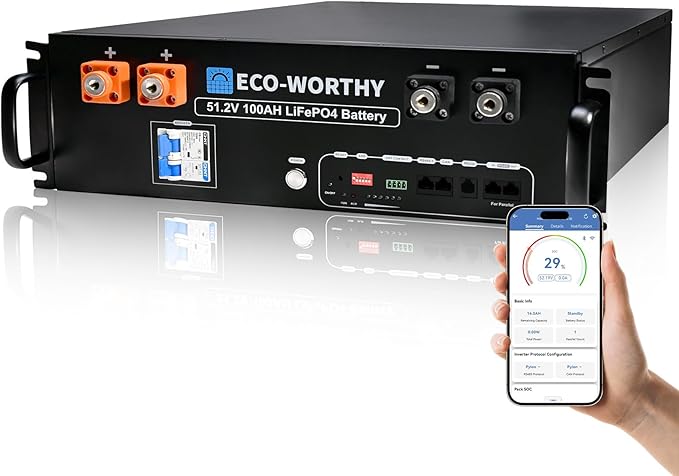
ECO-WORTHY 5.12kWh LiFePO4 Battery Module
£7005.12
4.9
LFP
4000
Affiliate link — we may earn a small commission at no extra cost to you
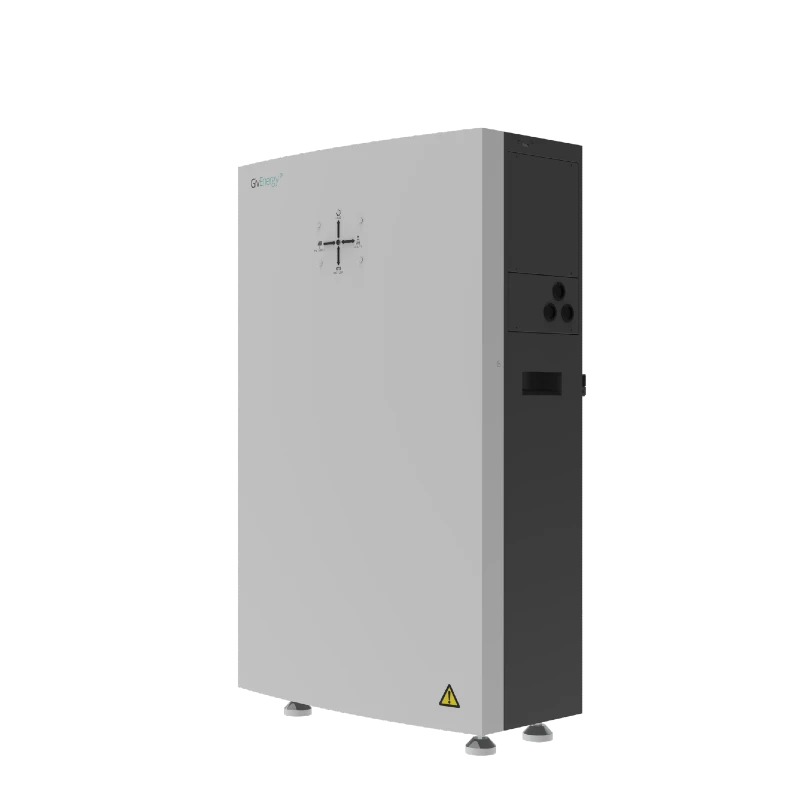
GivEnergy All-in-One 9.5kWh Battery
£5,5009.5
8.6
LFP
6000
Affiliate link — we may earn a small commission at no extra cost to you
Costs and payback
A battery added to an existing solar system typically costs:
- 5kWh professional install: £3,000–£4,500 installed
- 9.5–10kWh professional install: £5,500–£8,000 installed
- 13.5kWh (Powerwall 3): £8,000–£10,000 installed
Payback depends heavily on your tariff and usage patterns. On a standard variable tariff at 24.5p/kWh, a 10kWh battery saving 6kWh per day of imports adds up to £536/year. That's a payback of roughly 10–15 years — longer than many people expect.
However, on an Octopus Go-style time-of-use tariff where you charge at 5.5p overnight and displace 24.5p daytime imports, the economics improve considerably. The most financially engaged battery owners are seeing paybacks of 6–9 years.
The battery also adds value to your solar panels by increasing self-consumption — so it's worth modelling the combined system, not the battery in isolation.
Key questions to ask before buying
- What is the usable capacity (not headline)?
- How many cycles is it rated for, and what's the warranty?
- Does it offer backup power if the grid goes down?
- Is it compatible with my existing or planned inverter?
- Is the installation MCS-certified (required for SEG)?
- Can it be expanded if I want more capacity later?
A well-chosen battery, properly sized and installed, makes a solar system substantially more useful. The key is not to let enthusiasm for energy independence lead you to oversize — match the battery to your actual evening usage, and let the economics do their job.
Energy independence meter
What percentage of your electricity comes from your own roof? Slide to explore.
Generated
3,600 kWh
Self-used
1,440 kWh
From grid
2,060 kWh
Grid cost
£505/yr
Share this article

OVO has carefully selected trusted teams across the UK to install solar panels and heat pumps. Enjoy the personal touch of a local expert with the peace of mind of a household name.
Affiliate link — we may earn a small commission at no extra cost to you
Stay informed
Get free solar updates direct to your inbox
Related reading
Solar Inverters Explained: Types, Sizing, and Real-World Limits
String, micro, and hybrid inverters explained clearly — plus the critical G98/G99 threshold at 3.68kW and what it means for what you can run simultaneously.

How Much Do Solar Panels Cost in the UK in 2026?
Realistic UK solar panel costs broken down by system size, installation, and what actually affects the price you'll be quoted.

How Do Solar Panels Work? A Simple Explanation
A plain-English explanation of the photovoltaic effect, how solar electricity gets from your roof into your home, and what happens at night or on cloudy days.


Switch to Octopus Energy
Get 50 credit when you switch. We get 50 too — win-win.
What does this mean for YOUR home?
Design your perfect solar setup in under 3 minutes. Free, no sign-up required.
Build Your Solar System