This page contains affiliate links. If you purchase through them we may earn a small commission at no extra cost to you. Learn more
BMS Comparison: JK vs JBD vs Daly for DIY Solar Batteries

What does a BMS do?
A Battery Management System monitors and protects your lithium battery pack. Without a BMS, you're relying on luck to prevent overcharging, over-discharging, overcurrent, and thermal events — any of which can damage cells or cause fires.
Every BMS handles these core functions:
- Cell voltage monitoring — measures each cell individually
- Overvoltage protection — disconnects charging if any cell exceeds safe voltage (typically 3.65V for LFP)
- Undervoltage protection — disconnects load if any cell drops below safe voltage (typically 2.5V)
- Overcurrent protection — disconnects if current exceeds safe limits
- Temperature monitoring — shuts down if cells get too hot or too cold
- Cell balancing — redistributes energy between cells to keep them matched
The balancing function is where the three major BMS brands diverge significantly.
Active vs passive balancing
Passive balancing bleeds excess energy from the highest cells as heat through resistors. It can only balance during charging, and typical balance currents are 50–100mA. This means balancing a 200mAh cell voltage difference takes hours or days.
Active balancing transfers energy from high cells to low cells using an inductor-based circuit. No energy is wasted as heat. Balance currents of 1–2A are typical, meaning the same 200mAh imbalance is corrected in minutes rather than days.
For a well-matched new cell pack, passive balancing is adequate. For packs with any cell variation, or packs that will be used for years as cells age differently, active balancing provides significantly better long-term performance.
JK BMS
The JK (Jikong) BMS has become the default recommendation in UK and global DIY battery communities since 2024. The current popular models are the B2A8S20P (8S–20S, 200A) and the newer BD6A series.
What makes it popular
Active balancing is the headline feature. The JK BMS uses inductor-based active balancing at 1–2A, which keeps cells tightly matched even as they age. This directly translates to more usable capacity and longer pack life.
Bluetooth and app — every JK BMS includes Bluetooth connectivity and a surprisingly good mobile app. You can see individual cell voltages, temperatures, current flow, SoC, and balance status in real time. You can also configure all protection parameters through the app.
CAN bus and RS485 — the BD6A series supports CAN bus communication with inverters, making it compatible with GivEnergy, Victron, Deye, and SoFar systems. More on communication protocols.
Heated charging support — some models include a self-heating function that warms cells before charging in cold conditions. Useful for UK garages in winter.
Specifications (BD6A24S, popular 16S model)
| Spec | Value |
|---|---|
| Cell count | 8S–24S configurable |
| Max continuous current | 200A |
| Balance current | 2A active |
| Communication | CAN bus, RS485, UART, Bluetooth |
| Temperature sensors | 2 (NTC) |
| Price | £100–£150 |
Downsides
- Documentation is improving but still translated from Chinese with gaps
- Firmware updates occasionally introduce bugs (the community tracks stable versions)
- The CAN bus implementation, while functional, sometimes needs manual protocol tuning
- Physically larger than JBD equivalents due to the active balancing components
Which JK model to buy
For a standard 16S LiFePO4 pack (51.2V), the JK BD6A24S with 200A rating is the go-to. Make sure you get the version with the CAN bus expansion board if you need inverter communication — not all SKUs include it. Buy from the official JK AliExpress store or a UK reseller like Fogstar.
JBD (Xiaoxiang) BMS
JBD (also known as Xiaoxiang) makes the most widely used budget BMS in the world. If you've bought any off-the-shelf LiFePO4 battery from Amazon, there's a good chance it has a JBD BMS inside.
Strengths
Proven reliability — JBD units have been in the field for years in millions of batteries. The failure rate is very low for what is essentially a simple protection circuit.
Small form factor — passive-only design means compact PCBs that fit in tight enclosures.
Very affordable — a 16S 100A JBD BMS costs £30–£60.
Bluetooth option — some models include Bluetooth for monitoring via the Xiaoxiang app.
Specifications (SP16S100A, typical 16S model)
| Spec | Value |
|---|---|
| Cell count | 16S (fixed) |
| Max continuous current | 100A |
| Balance current | 60–80mA passive |
| Communication | UART, Bluetooth (optional) |
| Temperature sensors | 1–2 (NTC) |
| Price | £30–£60 |
Downsides
- Passive balancing only — at 60–80mA, a 500mAh imbalance takes 6–8 hours to correct. For packs with well-matched cells this is fine; for aging packs it becomes a bottleneck.
- No CAN bus — the JBD communicates via UART only. No direct inverter communication. You'll need to use voltage-based integration or an external CAN adapter.
- Basic protection parameters — fewer configurable options than JK.
Daly BMS

Daly is a Chinese manufacturer offering a wide range of BMS products, from tiny 4S boards to industrial 32S systems. They're popular in the off-grid and EV conversion communities.
Strengths
High current ratings — Daly offers BMS units rated for 250A, 500A, and even higher. If you're building a large pack with high discharge requirements, Daly has options.
Industrial pedigree — Daly's BMS products are used in commercial energy storage and electric vehicle applications, lending some confidence to their reliability.
UART and Bluetooth — monitoring is available via the Daly app and UART connection.
Specifications (16S 200A Smart BMS)
| Spec | Value |
|---|---|
| Cell count | 16S |
| Max continuous current | 200A |
| Balance current | 50–68mA passive |
| Communication | UART, RS485 (some models), Bluetooth |
| Temperature sensors | 2–4 (NTC) |
| Price | £80–£120 |
Downsides
- Passive balancing only (in most models — active balance versions exist but at significantly higher prices)
- Software is dated — the Daly PC software and app feel like 2018 products. Functional but clunky.
- Documentation is poor — manuals are often incomplete or incorrectly translated.
- No CAN bus on most models — RS485 is available on some, but CAN bus support is limited to their premium range.
Head-to-head comparison
| Feature | JK (BD6A) | JBD (SP16S) | Daly (Smart) |
|---|---|---|---|
| Price (16S, 200A) | £100–£150 | £30–£60 (100A max) | £80–£120 |
| Balancing | Active 2A | Passive 60–80mA | Passive 50–68mA |
| CAN bus | Yes | No | Some models |
| RS485 | Yes | No | Some models |
| Bluetooth | Yes | Optional | Yes |
| App quality | Good | Basic | Basic |
| Community support | Excellent | Good | Fair |
| Documentation | Improving | Minimal | Poor |
Which should you buy?
JK BMS if:
- You want the best long-term pack performance (active balancing is genuinely beneficial)
- You need CAN bus communication with your inverter
- You're building a system worth £1,000+ and don't want to cheap out on the brain
- You want the best monitoring and configurability
JBD BMS if:
- Budget is the primary concern
- Your cells are well-matched and the pack is small (under 10kWh)
- You don't need inverter communication (off-grid, basic setups)
- You want the smallest possible BMS footprint
Daly BMS if:
- You need very high current ratings (250A+)
- You're building an off-grid or EV system where Daly has better documentation
- You specifically need RS485 on a budget
For the vast majority of UK DIY solar battery builds, the JK BMS is the right answer. The active balancing alone justifies the £50–£100 premium over passive alternatives, and the CAN bus support makes inverter integration vastly easier. It's the component where spending a bit more pays dividends over the 10+ year life of your system.
If you'd prefer a pre-built battery module with the BMS already integrated and tested, here's what we'd recommend:
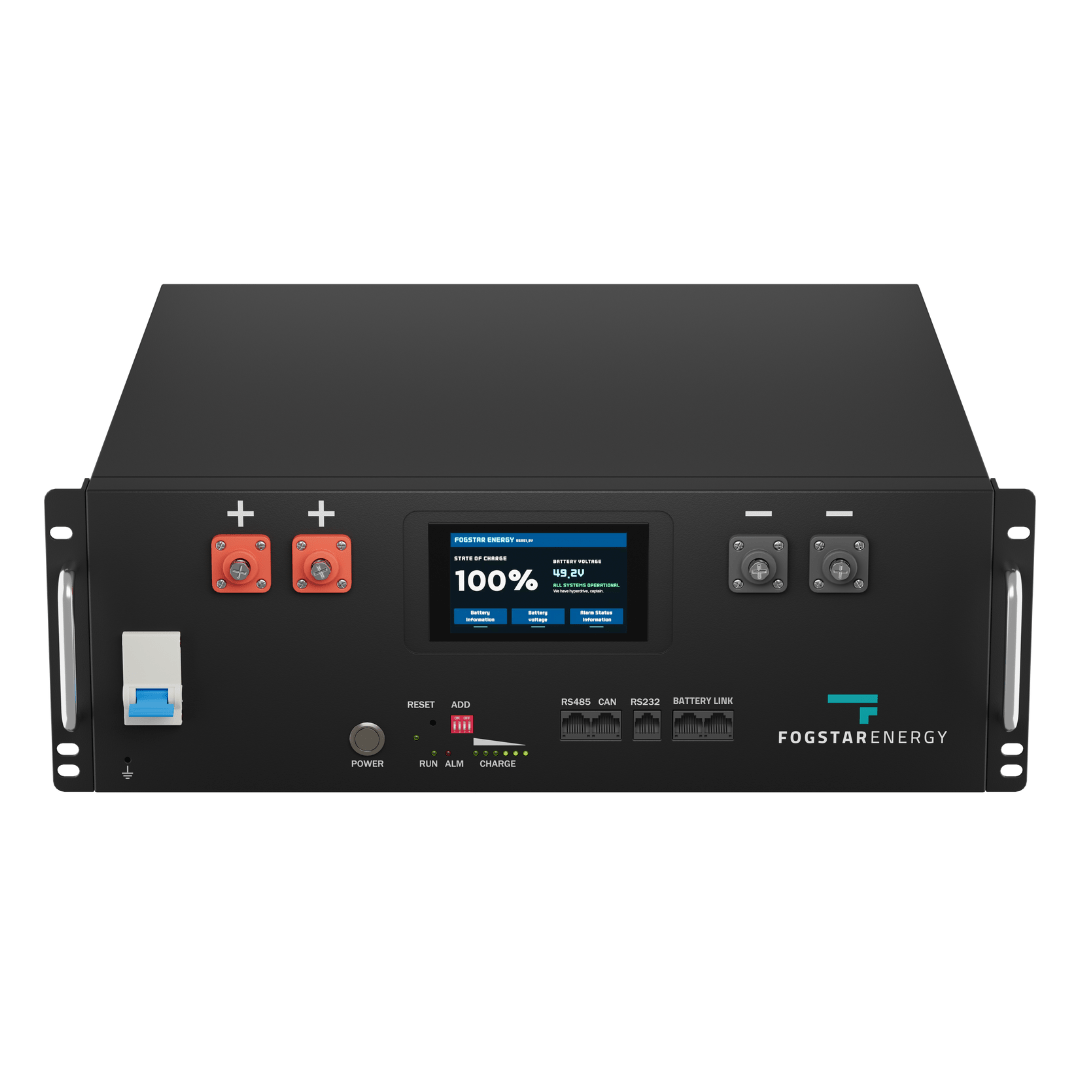
Fogstar Drift 5.12kWh LiFePO4 Battery
£1,5005.12
5
LFP
6000
Affiliate link — we may earn a small commission at no extra cost to you
For a budget-friendly option with a basic but functional built-in BMS:
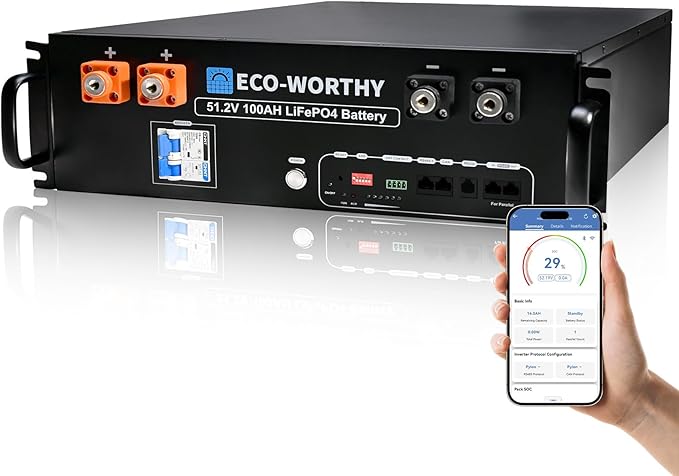
ECO-WORTHY 5.12kWh LiFePO4 Battery Module
£7005.12
4.9
LFP
4000
Affiliate link — we may earn a small commission at no extra cost to you
Share this article

OVO has carefully selected trusted teams across the UK to install solar panels and heat pumps. Enjoy the personal touch of a local expert with the peace of mind of a household name.
Affiliate link — we may earn a small commission at no extra cost to you
Stay informed
Get free solar updates direct to your inbox
Related reading
DIY Battery Storage in the UK: Complete Beginner's Guide
A practical guide to building your own DIY solar battery storage system in the UK — costs, legality, components, and whether it's actually worth it in 2026.

Battery Cell Balancing Explained: Why It Matters for DIY Solar
What battery cell balancing is, why it matters for LiFePO4 solar batteries, and the difference between active and passive balancing in DIY builds.
Battery CAN Bus & RS485 Protocols: Making Batteries Talk to Inverters
How CAN bus and RS485 communication protocols work between DIY batteries and hybrid inverters — practical guide for UK solar battery builders in 2026.


Switch to Octopus Energy
Get 50 credit when you switch. We get 50 too — win-win.
What does this mean for YOUR home?
Design your perfect solar setup in under 3 minutes. Free, no sign-up required.
Build Your Solar System