This page contains affiliate links. If you purchase through them we may earn a small commission at no extra cost to you. Learn more
Battery Cell Balancing Explained: Why It Matters for DIY Solar

The problem: cells aren't identical
Every lithium battery pack is a series string of individual cells. A typical 48V LiFePO4 pack has 16 cells in series (16S), each nominally 3.2V. When you charge the pack, all 16 cells charge in series — the same current flows through each cell.
Here's the issue: no two cells are perfectly identical. Even Grade-A cells from the same production batch have slight differences in capacity, internal resistance, and self-discharge rate. Over hundreds of charge cycles, these differences compound.
A cell with slightly lower capacity reaches full charge (3.65V) before its neighbours. A cell with slightly higher self-discharge drifts lower over time. Without intervention, the gap between your strongest and weakest cell grows steadily.
Why imbalance matters
Your BMS protects the pack by monitoring individual cell voltages. If any single cell hits the overvoltage threshold (typically 3.65V), the BMS stops charging — even if the other 15 cells have room to absorb more energy. Similarly, if any cell hits the undervoltage threshold (typically 2.5V), the BMS disconnects the load.
In an imbalanced pack, your weakest cell becomes the bottleneck. A pack with one cell that's 200mAh below the others effectively loses 200mAh × 51.2V = 10.2Wh of usable capacity. That doesn't sound like much, but over years of cycling, imbalance grows. A badly imbalanced 5kWh pack might only deliver 3.5–4kWh of usable capacity — with BMS cutoffs that confuse your inverter and frustrate your monitoring.
How cells drift apart
Several mechanisms cause cell imbalance:
Manufacturing variation — even Grade-A cells have 1–2% capacity spread. In a 280Ah pack, that's 2.8–5.6Ah of variation.
Self-discharge differences — LiFePO4 cells self-discharge at very low rates (1–3% per month), but the rate varies between cells. Over months of partial cycling, this creates a slow drift.
Temperature gradients — cells at the ends of a pack or closer to heat sources operate at slightly different temperatures. Higher temperature increases self-discharge and affects charge acceptance.
Ageing — as cells accumulate cycles, their capacity degrades at slightly different rates. After 2,000 cycles, the cell that started 2Ah lower might now be 8Ah lower.
Passive balancing
Passive balancing is the simplest approach and is used by most budget BMS units (JBD, Daly).
How it works
When a cell reaches a threshold voltage during charging (typically 3.45–3.55V), the BMS switches a small resistor across that cell, bleeding current as heat. The other cells continue charging normally. This continues until all cells reach the threshold voltage.
The numbers
Typical passive balance current: 50–100mA
To correct a 200mAh imbalance at 80mA: 2.5 hours
To correct a 2Ah imbalance at 80mA: 25 hours
For the small imbalances in a new, well-matched pack, passive balancing is perfectly adequate. The pack will stay balanced if it regularly reaches full charge (where balancing occurs).
Limitations
- Only works during charging — specifically at the top of charge. If you never fully charge your battery (common with time-of-use tariff strategies), passive balancing may rarely activate.
- Slow — large imbalances take days or weeks to correct.
- Wastes energy — the bled current becomes heat. At 80mA × 3.5V per cell, it's trivial power (0.28W), but it's still waste.
- Can't recover from deep imbalance — if a cell has drifted significantly, passive balancing simply can't keep up with daily cycling.
Active balancing
Active balancing transfers energy from higher cells to lower cells using inductor-based switching circuits. Instead of wasting energy as heat, it redistributes it.
The JK BMS is the most popular active-balancing BMS in UK DIY builds.
How it works
The BMS monitors all cell voltages continuously. When it detects a difference above a threshold (typically 5–20mV), it activates a switching circuit that draws current from the highest cell and pushes it into the lowest cell via an inductor. The process is about 85–90% efficient.
The numbers
Typical active balance current: 1–2A (JK BMS)
To correct a 200mAh imbalance at 1.5A: 8 minutes
To correct a 2Ah imbalance at 1.5A: 80 minutes
The speed difference is dramatic. What takes passive balancing 25 hours, active balancing handles in under 90 minutes.
Advantages
- Works during charging AND discharging — balancing can occur at any time
- Fast enough to keep up with daily cycling — imbalance doesn't accumulate
- Energy-efficient — most transferred energy reaches the target cell
- Extends pack life — cells age more evenly when kept balanced
- Forgiving of cell mismatch — can compensate for moderate capacity differences
Active balancing extends the useful life of budget cells
If you're building with EcoWorthy modules or ungraded cells, active balancing provides a meaningful safety net. The cells are more likely to be slightly mismatched, and the active balancing compensates continuously. The £70–£100 premium for a JK BMS over a JBD is excellent insurance for a budget build.
Do I need active balancing?
Active balancing is worth the premium if:
- You're building from individually sourced cells that may not be perfectly matched
- You plan to keep the battery for 10+ years (imbalance grows with age)
- You use time-of-use tariffs and rarely charge to 100% (passive balancing needs full charge to activate)
- You're building a large pack (16S+) where more cells means more potential for imbalance
- You want peace of mind and don't want to worry about balancing issues
Passive balancing is fine if:
- You're using pre-assembled modules with well-matched cells (Fogstar Drift, etc.)
- You regularly charge to 100% (giving passive balancing time to work)
- Your pack is small (8S or under)
- Budget is very tight and you'd rather spend the savings on more capacity
Monitoring balance state
Regardless of BMS type, you should periodically check your cell balance:
- Charge the battery to 100% and let it sit for 30 minutes
- Read individual cell voltages via the BMS app (Bluetooth)
- All cells should be within 20mV of each other at full charge
- At rest (50% SoC), cells should be within 5–10mV
If you see one cell consistently 50mV+ away from the others, investigate. It may be a weak cell that needs replacing, or the BMS balance circuit for that cell position may have failed.
Don't ignore persistent imbalance
A single cell that consistently reads 100mV+ lower than its neighbours — and doesn't improve with balancing — may have an internal defect. Continuing to cycle a pack with a seriously weak cell stresses the weak cell further and can lead to thermal events. Isolate the pack, test the suspect cell independently, and replace if necessary.
The bottom line
Cell balancing isn't glamorous, but it's the difference between a battery pack that delivers its rated capacity for 10 years and one that gradually loses performance and triggers random shutdowns.
For a new DIY build with quality cells, either balancing method works. But if you're building for the long term — and most solar battery installations are a 10–15 year commitment — active balancing with a JK BMS is the smart investment. The extra £70–£100 is trivial compared to the cost of the cells it's protecting.
If you'd rather avoid the complexity of cell-level balancing entirely, a pre-built module with integrated BMS is the simplest route. This is the model most UK DIYers trust:
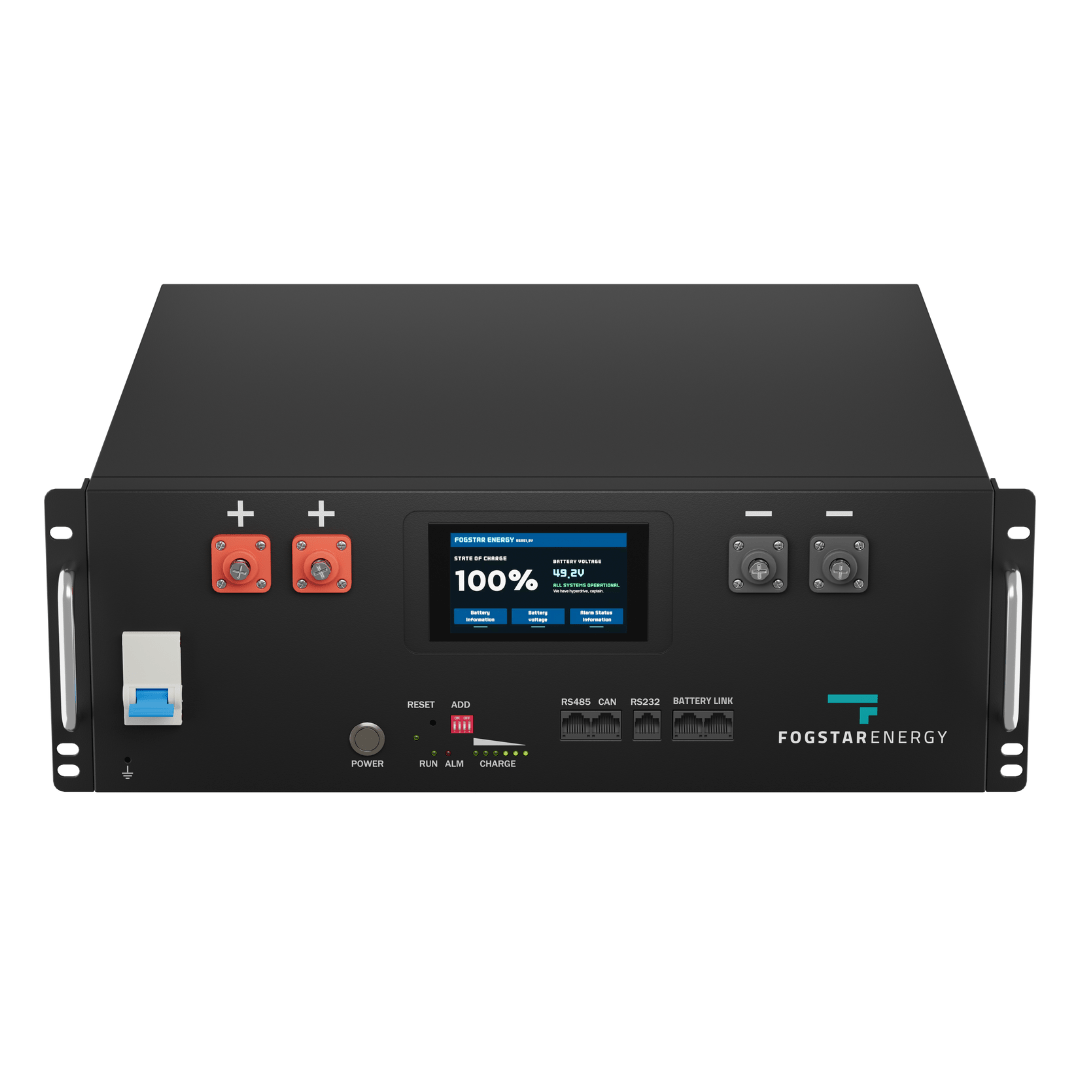
Fogstar Drift 5.12kWh LiFePO4 Battery
£1,5005.12
5
LFP
6000
Affiliate link — we may earn a small commission at no extra cost to you
For a budget-friendly alternative with decent passive balancing built in:
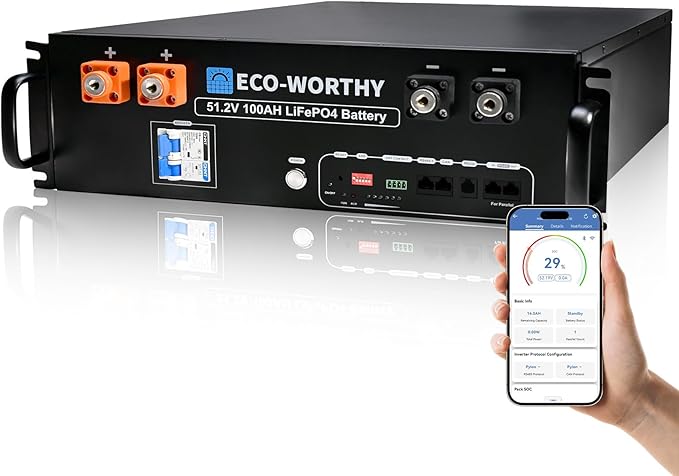
ECO-WORTHY 5.12kWh LiFePO4 Battery Module
£7005.12
4.9
LFP
4000
Affiliate link — we may earn a small commission at no extra cost to you
Share this article

OVO has carefully selected trusted teams across the UK to install solar panels and heat pumps. Enjoy the personal touch of a local expert with the peace of mind of a household name.
Affiliate link — we may earn a small commission at no extra cost to you
Stay informed
Get free solar updates direct to your inbox
Related reading

BMS Comparison: JK vs JBD vs Daly for DIY Solar Batteries
Comparing the three most popular BMS options for UK DIY LiFePO4 battery builds — JK, JBD, and Daly. Features, pricing, and which to choose in 2026.
Battery Cycle Life Explained: How Long Will Your Solar Battery Last?
What battery cycle life really means for UK solar storage — how cycles are counted, what affects degradation, and realistic lifespan expectations.
DIY Battery Storage in the UK: Complete Beginner's Guide
A practical guide to building your own DIY solar battery storage system in the UK — costs, legality, components, and whether it's actually worth it in 2026.


Switch to Octopus Energy
Get 50 credit when you switch. We get 50 too — win-win.
What does this mean for YOUR home?
Design your perfect solar setup in under 3 minutes. Free, no sign-up required.
Build Your Solar System