This page contains affiliate links. If you purchase through them we may earn a small commission at no extra cost to you. Learn more
EcoFlow STREAM: UK's Plug-In Solar Battery System Explained

What is the EcoFlow STREAM?
A quick note on units: A kWh (kilowatt-hour) is a unit of electricity — roughly what you'd use running an electric kettle for an hour. Your electricity bill charges you per kWh. You'll see this unit a lot in this article when we talk about how much the STREAM stores and uses.
The EcoFlow STREAM is not a portable power station. That distinction matters.
EcoFlow's Delta Pro and River series are portable power stations — large battery packs with handles, wheels, and USB ports, designed for camping, van life, and emergency backup. They happen to sit in your home, but they're fundamentally mobile devices.
The STREAM is something different. It's a wall-mounted plug-in home battery system designed specifically for two jobs: buying cheap electricity overnight and using it during the day when it costs more and balcony solar integration (accepting power directly from solar panels via built-in solar charging controllers). It plugs into a standard 13A socket. No electrician is required for the battery unit itself. No DNO notification needed.
The key innovation is those built-in solar charging controllers (called MPPTs). On a conventional plug-in battery setup, connecting balcony solar panels means buying a separate microinverter or a dedicated charge controller. The STREAM handles this internally — solar panels connect directly into the unit via MC4 connectors, and the STREAM manages both solar charging and grid charging in one app-controlled package.
This makes the STREAM the closest thing in the UK market to a genuinely integrated balcony solar and storage system that you can set up in an afternoon.
What 800W actually powers
Before diving into models and specs, here's the most important thing to understand about the STREAM's output.
The STREAM's 800W continuous output is enough to run a fridge (50–150W), a few LED lights (5–10W each), a Wi-Fi router (10–15W), and a television (80–150W) simultaneously without any issues.
What it will not run: a kettle (2,000–3,000W), an electric oven (2,000–3,500W), an electric shower (7,000–10,000W), or a heat pump at full load. The STREAM is designed to offset your background consumption — the stuff that ticks along all day — not to act as a whole-home backup system.
The UK STREAM Lineup
EcoFlow currently sells six STREAM variants in the UK. Here is how they compare:
| Model | Price | Solar Panel Ports | Max Solar Panel Power | Capacity | Key Difference |
|---|---|---|---|---|---|
| STREAM AC | £689 | 0 | None | 1.92 kWh | Tariff shifting only — no solar input |
| STREAM AC Pro | £699 | 2 | 1,200W | 1.92 kWh | Entry solar model, 2 panel strings |
| STREAM Max | £879 | 2 | 1,000W | 1.92 kWh | Higher build quality, 2 solar ports |
| STREAM Pro | £823 | 3 | 1,500W | 1.92 kWh | Three panel strings |
| STREAM Ultra | £949 | 4 | 2,000W | 1.92 kWh | Four solar ports, maximum flexibility |
| STREAM Ultra X | ~£1,400+ | 4 | 2,000W | 3.84 kWh | Double capacity, same footprint |
All models share the same core specs: weatherproof (IP65-rated — safe for garages, sheds, and covered outdoor areas), 10-year warranty, LFP (lithium iron phosphate) battery chemistry — a safer, longer-lasting type than older lithium batteries, the same type used in many electric cars — 800W continuous AC output, app monitoring, and stackable design (you can add more units for more storage).
A note on the STREAM Microinverter: EcoFlow also sells a STREAM Microinverter (£129–179) as a companion product. Despite the STREAM branding, this is a separate device that connects your balcony panels to your home's ring main — and it requires a hardwired electrical installation that needs a qualified electrician and grid approval (known as a G98 notification — the standard fit-and-notify process for microinverters under 3.68 kW). It is not a plug-in product, and it is distinct from the STREAM battery units described above.
How the STREAM Works
The STREAM operates in two complementary modes that can run together.
Tariff shifting mode (buying cheap, using later)
You set a charging schedule in the EcoFlow app — typically the off-peak window on your tariff. The STREAM charges from the grid overnight when electricity is cheapest, then automatically discharges during the day to offset what you would otherwise draw from the grid at the higher peak rate. This is sometimes called "cheap-rate charging" or tariff shifting.
The app integrates with your tariff schedule, so once you've set it up, it runs automatically. You don't need to touch it day to day.
Solar charging mode (STREAM AC Pro, Max, Pro, Ultra, Ultra X only)
If you have balcony solar panels, you connect them directly to the STREAM's MC4 inputs. The built-in solar charging controllers (MPPTs) optimise the power harvest from each string independently. Solar charges the battery during the day; any excess beyond what the battery can absorb goes straight into your home circuits via the plug connection.
At night, the battery discharges to cover your evening consumption. During the day, solar covers as much as it can and the battery tops up any shortfall. The system balances all of this automatically.
UK Tariff Compatibility
The STREAM works with any electricity tariff, but it earns its keep on time-of-use tariffs where there is a meaningful spread between overnight and daytime rates.
The tariffs worth pairing with a STREAM:
- Octopus Go — overnight off-peak window at a low rate, day rate broadly in line with the standard price cap. Widely available and straightforward to configure.
- Intelligent Octopus Go — similar structure to Go but with a longer off-peak window and smart dispatch features.
- E.ON Next Drive — an overnight off-peak rate that is meaningfully lower than the day rate, suitable for non-Octopus customers.
- Octopus Agile — half-hourly variable pricing that can go very low (or even negative) overnight. More complex to optimise but potentially the best spread for cheap-rate charging.
For current rates on each of these tariffs, see verified-rates.json — rates change quarterly with the Ofgem price cap and we do not hardcode them in articles.
The savings formula
The more difference between your cheap overnight rate and your normal daytime rate, the faster the STREAM pays for itself. Here's how the maths works — but you can skip this and just check our tariff comparison for the bottom line.
The annual saving from cheap-rate charging follows a straightforward formula:
(Peak rate − Overnight rate) × 1.92 kWh × 365 days × ~85% round-trip efficiency
Round-trip efficiency means how much electricity you get back out compared to what you put in. The STREAM returns about 85% — so for every 100 units you store, you get 85 back. The other 15% is lost as heat during charging and discharging. The bigger the spread between your overnight rate and your peak rate, the faster the STREAM pays back.
Adding balcony solar to a solar-capable STREAM improves the economics further: each unit of solar energy you self-consume is a unit you do not buy from the grid at any rate, which is always worth more than tariff shifting alone.
Realistic Payback and Savings
Let's be honest about the numbers.
At £689 for the STREAM AC, even a strong tariff spread will likely deliver a payback period in the range of 3–5 years, depending on your specific tariff, how consistently you cycle the battery, and local electricity price movements.
The STREAM AC Pro at £699 is only £10 more and adds two MPPT inputs for solar. If you have or plan to add balcony panels, the AC Pro is worth the marginal extra cost over the AC.
The STREAM Ultra at £949 makes more sense if you want to maximise solar self-consumption with up to four panel strings — for example, panels on different aspects of a balcony or small roof area.
For the STREAM Ultra X at ~£1,400+, you're paying a significant premium for doubled capacity. At 3.84 kWh, it covers more of your evening consumption, but the payback period extends accordingly. It makes more sense if you're planning a multi-unit stacked setup from the outset.
If you have rooftop solar and a larger budget, a full installed home battery (GivEnergy, Tesla Powerwall) will almost certainly be more cost-effective per kWh than stacking STREAM units. The STREAM's value proposition is specifically for people who cannot or do not want a professionally installed system.
Not a Full Home Battery
The STREAM's 1.92 kWh capacity covers roughly 20% of an average UK household's daily electricity consumption (around 9–10 kWh/day). It is a tariff-shifting and self-consumption tool — not a replacement for a GivEnergy All-in-One or Tesla Powerwall.
For whole-home storage coverage, you would need five to eight stacked STREAM units, costing approximately £3,400–£7,600 before you factor in the installation work for a stacked setup. At that price point, a professionally installed 9.5–10 kWh home battery system with proper inverter integration starts to look competitive — and will almost certainly deliver better performance.
The STREAM is an excellent entry point. Just be clear-eyed about what it can and cannot do.
Limitations Worth Knowing
Capacity is small
1.92 kWh is honest storage. A single STREAM will not see you through an evening of normal UK household use — it will take the edge off your peak-rate consumption, not eliminate it.
No EPS or backup power
Unlike some home battery systems, the STREAM does not provide emergency power supply (EPS) during a grid outage. If the grid goes down, the STREAM switches off. This is standard for plug-in systems in the UK — only hardwired battery systems with transfer switches can provide backup power.
Not MCS certified
The STREAM is not MCS (Microgeneration Certification Scheme) certified. This means it does not qualify for the Smart Export Guarantee (SEG) export tariff — you cannot be paid for electricity you export to the grid from a STREAM. It is designed for self-consumption, not export.
The Microinverter is not plug-in
If you are attracted to the STREAM Microinverter for its ability to feed balcony solar into your ring main, be aware that this product requires a hardwired electrical installation that needs a qualified electrician and grid approval (a G98 notification — the standard fit-and-notify process for microinverters under 3.68 kW). Despite the "STREAM" branding it shares with the plug-in battery units, the Microinverter is a fundamentally different product with fundamentally different installation requirements.
It's weatherproof, but it's still a battery near a socket
The STREAM is weatherproof (IP65-rated — safe for garages, sheds, and covered outdoor areas) — dust-tight and protected against jets of water. That said, common sense applies: the unit plugs into a 13A socket and should not be installed in a location where it will be directly rained on or submerged.
Who Should Consider the STREAM
The STREAM makes most sense for:
Renters who cannot install rooftop solar. The STREAM requires no structural work, no planning permission, and no landlord consent (beyond plugging something in). It is a meaningful first step into solar storage for people renting a house or flat.
Flat-dwellers with a balcony. If you can mount one or two solar panels on your balcony, the MPPT-equipped STREAM models let you store that energy rather than immediately consuming or wasting it.
Anyone wanting to try cheap-rate charging before committing. Before spending thousands on a full home battery system, the STREAM lets you understand how tariff shifting actually works with your household — your consumption patterns, your tariff, your routines — at low financial risk.
People in listed buildings or conservation areas where rooftop panel installation may be restricted but a balcony or garden panel placement is still feasible.
The STREAM is less suitable for homeowners with existing rooftop solar and an inverter — in that scenario, a properly installed home battery that integrates with your inverter will almost always be better value.
The STREAM Ultra is the sweet spot for most buyers
The STREAM Ultra (£949) offers four solar panel ports (MPPTs), accepting up to 2,000W of solar input across four independent panel strings. This makes it far more flexible than the two-port models when it comes to balcony panel placement — you can put panels on different aspects of your balcony or at different angles without the losses you'd get from stringing mismatched panels together. If you are planning to pair a STREAM with balcony solar, the Ultra's flexibility is worth the extra cost over the AC Pro or Max.
Setting Up a STREAM: What to Expect
The setup process is straightforward:
- Position the STREAM — it can sit on the floor or be wall-mounted. Choose a location near a 13A socket and, if using solar, near where you'll route the panel cables.
- Connect solar panels via MC4 connectors to the MPPT inputs (MPPT-equipped models only).
- Plug the STREAM into the wall socket.
- Download the EcoFlow app, pair the unit, and configure your tariff charging schedule.
- The STREAM takes care of the rest.
There is no notification to your DNO (Distribution Network Operator) required for the plug-in battery. If you add the STREAM Microinverter as a separate product, that does require a hardwired installation with grid approval (a G98 notification — the standard fit-and-notify process for microinverters under 3.68 kW) — but that is a separate product, not the battery.
Zero Export with Shelly Pro 3EM
The STREAM is primarily a tariff-arbitrage and balcony-solar device — but there is an official accessory that turns it into something more capable: the EcoFlow × Shelly Smart Meter (Shelly Pro 3EM, co-branded with EcoFlow).
What it does
The Shelly Pro 3EM is a three-phase smart energy meter that clips onto the incoming supply cables inside your consumer unit. It measures your household's real-time grid import and export — to the watt, updated continuously. That data feeds into the EcoFlow app via your home Wi-Fi network.
Once connected, the EcoFlow OASIS algorithm uses the smart meter readings to direct the STREAM to absorb any surplus solar energy rather than letting it spill onto the grid. In practice: when your solar panels are producing more than your household is consuming, the STREAM starts charging to soak up that surplus. When consumption rises again, the STREAM backs off. The result is very close to zero export — all the solar you generate stays in your home rather than being exported at the low Smart Export Guarantee rate (typically 3–15p/kWh).
This is sometimes called a self-consumption optimiser or a zero-feed-in configuration. It is different from the basic tariff-shifting setup: rather than charging overnight on a cheap tariff, the STREAM is now responding dynamically to your solar generation throughout the day.
Why it matters
Without a smart meter, the STREAM does not know what your solar panels are producing relative to what your household is using. It can follow a fixed tariff schedule, but it cannot respond to the moment-by-moment ebb and flow of solar generation.
With the Shelly Pro 3EM in place, the STREAM becomes aware of your whole-home energy picture. Surplus solar that would otherwise be exported — often at well under 10p/kWh — is stored in the battery instead, where it is worth roughly 24p/kWh when you use it later. This is especially valuable if you are not on a favourable SEG export tariff, or if your STREAM is already charged from overnight cheap-rate electricity and you want to top it up further from daytime solar.
This combination is most useful on STREAM AC Pro, STREAM Pro, and STREAM Ultra models — the solar-capable units. The STREAM AC (no solar inputs) cannot take advantage of zero-export diversion in the same way.
Professional installation required
The Shelly Pro 3EM mounts on a DIN rail inside your consumer unit and connects via CT (current transformer) clamps around your supply cables. This is work inside your consumer unit — notifiable under Part P of the Building Regulations in England and Wales and equivalent regulations in Scotland and Northern Ireland.
A qualified electrician is required to install this device in accordance with UK Wiring Regulations (BS 7671). Do not attempt this as a DIY project. The Shelly device itself is low-voltage and not inherently dangerous, but opening your consumer unit and working near live busbars is a job for someone with the appropriate qualifications and insurance.
Budget for an electrician visit on top of the hardware cost.
Cost
| Item | Approx. cost |
|---|---|
| EcoFlow × Shelly Smart Meter (Shelly Pro 3EM) | £149 (EcoFlow UK direct) |
| Electrician installation (1–2 hours) | £80–180 depending on location |
| Total | ~£230–330 |
This is a meaningful additional investment on top of the STREAM itself, but for households with balcony or garden solar generating meaningful surpluses, the ability to capture that generation rather than export it cheaply can shorten the system payback period.
EcoFlow × Shelly Smart Meter on EcoFlow UK (Affiliate link — we may earn a small commission at no extra cost to you)
Smart meter or tariff shifting — you don't have to choose
The Shelly Pro 3EM integration and overnight cheap-rate charging are complementary, not competing. Configure your STREAM to charge on a cheap overnight tariff (Octopus Go, for example), and add the Shelly smart meter to capture any daytime solar surplus on top. The two modes stack: the battery fills cheaply at night, and any daytime solar surplus the household doesn't use tops it up further during the day.
Summary
The EcoFlow STREAM is a genuinely useful product for a specific audience: people who want to get into solar storage without the cost, complexity, or commitment of a full professional installation.
It does what it says: plugs in, connects to balcony solar, charges cheaply overnight and runs that power during the day, and pays for itself over a few years. The 10-year warranty and LFP (lithium iron phosphate) chemistry mean it should still be working long after that payback point.
The limitations are real — small capacity, no backup power, no SEG eligibility — and you should weigh them honestly against your situation before buying. But if you're a renter, a flat-dweller with a balcony, or simply want to dip a toe into the battery storage world, the STREAM is a reasonable way to do it.

EcoFlow STREAM AC
£6891.92
1.92
LiFePO4
0.8
 View on EcoFlow UK
Affiliate link — we may earn a small commission at no extra cost to you

EcoFlow STREAM Ultra
£9491.92
1.92
LiFePO4
2
View on EcoFlow UKAffiliate link — we may earn a small commission at no extra cost to you
Share this article

OVO has carefully selected trusted teams across the UK to install solar panels and heat pumps. Enjoy the personal touch of a local expert with the peace of mind of a household name.
Affiliate link — we may earn a small commission at no extra cost to you
Stay informed
Get free solar updates direct to your inbox
Related reading
Plug-In Battery Storage: EcoFlow, Anker & Portable Power Stations
Are portable power stations like the EcoFlow Delta Pro worth it for UK home solar storage? We compare plug-in batteries to proper solar battery systems.
Battery Arbitrage: Buy Low, Sell High with Solar
How battery arbitrage works with time-of-use tariffs in the UK. Charge cheap, discharge expensive, and boost your solar savings with smart battery trading.
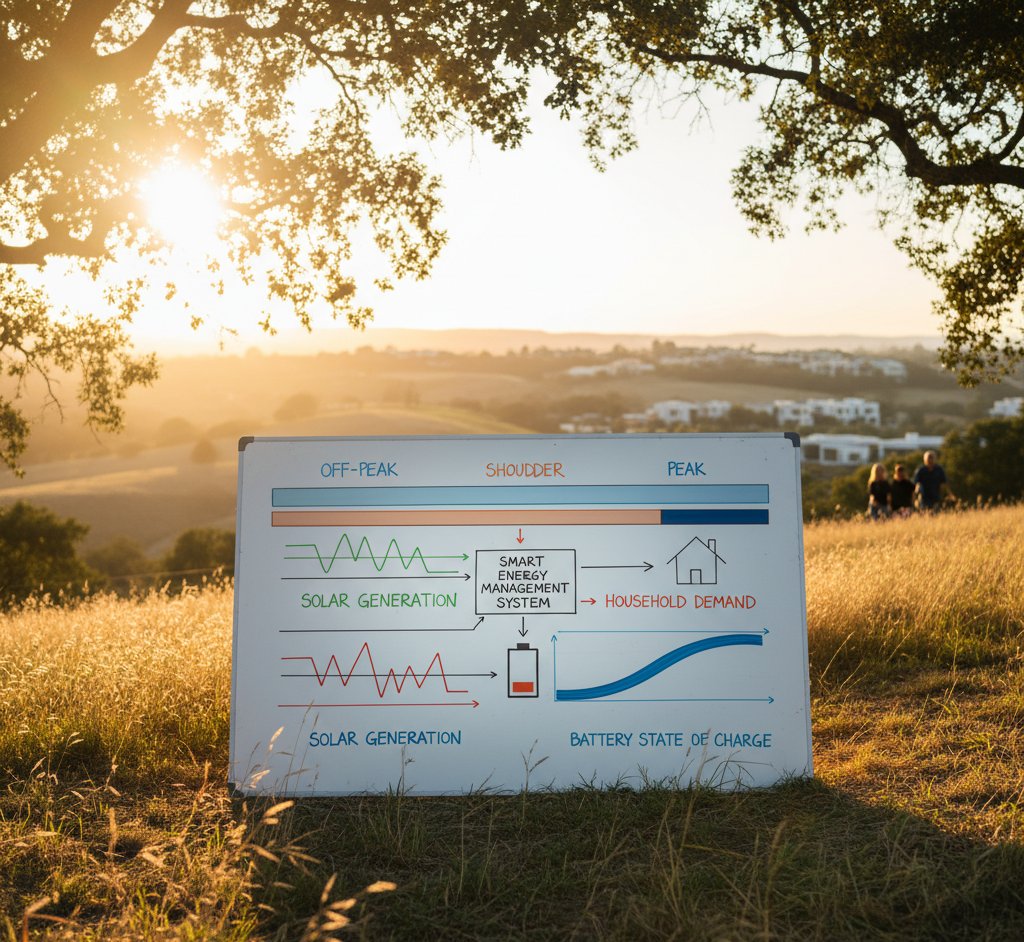
Best Smart Tariffs for Battery Storage in 2026: Head-to-Head Comparison
The best tariff for battery storage in the UK compared side by side — Octopus Go, Agile, Flux, Cosy, E.ON Drive, and Tesla Energy Plan rated for 2026.


Switch to Octopus Energy
Get 50 credit when you switch. We get 50 too — win-win.
What does this mean for YOUR home?
Design your perfect solar setup in under 3 minutes. Free, no sign-up required.
Build Your Solar System