This page contains affiliate links. If you purchase through them we may earn a small commission at no extra cost to you. Learn more
What's the Maximum Number of Solar Panels You Can Have in the UK?

When people ask about the maximum number of solar panels they can have, they are usually worried about hitting some kind of official limit. The good news is that limits are much less restrictive than most people expect, and the practical ceiling — your available roof space — is usually the binding constraint long before you run into any regulation. Here is what actually applies.
Limit 1: Planning rules
For most homes in England, solar panels fall under permitted development — meaning you do not need to apply for planning permission at all. Permitted development rights for solar panels do not specify a maximum panel count. What the rules actually say is:
- Panels must not protrude more than 200mm from the roof surface (when measured perpendicular to the slope)
- Panels must not be higher than the highest part of the roof (excluding chimneys)
- On flat roofs, panels must be at least 1 metre from the edge
That is it for roof-mounted systems. There is no "you may only have X panels" rule anywhere in UK permitted development guidance.
Ground-mounted systems have a separate rule: the array must not exceed 9 square metres in area, and there are restrictions on proximity to public roads and on listed land. If you want more than 9m² of ground-mounted panels, you would need a planning application.
Listed buildings of any grade require full planning permission for any solar installation — permitted development does not apply.
Conservation areas present a middle ground: permitted development applies to panels on the rear of the property but not the front elevation (the side facing a highway). If you want panels on the front of a house in a conservation area, you need to apply.
Wales, Scotland, and Northern Ireland have their own versions of permitted development with slightly different thresholds — if you are outside England, check with your local planning authority.
When in doubt, apply anyway
Permitted development applications are free and take around eight weeks. If your installation is borderline in any way — large ground mount, unusual roof configuration, nearby conservation area boundary — submitting a permitted development certificate application gives you written confirmation that no planning permission is needed. This is useful when you come to sell the property.
Limit 2: Grid connection rules
This is the limit people most often do not know about, and it is more relevant to larger systems.
The grid connection rules that apply to solar in the UK come down to two standards:
G98: up to 3.68kW — notify and go
For systems up to 3.68kW total inverter output, you (or your installer) simply notify your DNO (Distribution Network Operator — the company that owns the local grid infrastructure, separate from your energy supplier) using a standard G98 form. You can install once the notification is submitted; you do not need to wait for approval. Most DNOs acknowledge within a few days.
3.68kW of inverter capacity typically corresponds to 8–10 panels, depending on panel wattage.
G99: above 3.68kW — get approval first
For systems with inverter output above 3.68kW, you must submit a G99 application and wait for your DNO to approve it before you install. DNOs typically respond within 45 working days. For most residential systems, approval is straightforward — but it adds time to the project.
What these limits actually mean
Importantly, the G98/G99 limit is about inverter output capacity — how much your system can push onto the grid — not about how many panels you have. This distinction matters when we talk about export limiting (see below).
Export limiting: installing more panels than your grid connection allows
Here is something that surprises many people: you can legally install more panel capacity than your inverter is rated for, and more panel capacity than your grid connection limit — as long as the inverter is configured to cap what it exports.
This technique has a few names: export limiting, zero export, or power diversion. Your inverter is set (or a controller is added) to ensure that no more than a specified amount of power flows out to the grid at any time. Typically this is set to the G98 limit of 3.68kW.
Why would you do this? Because panels are cheap and east/west splits, shading, or seasonal variation mean you often generate less than the inverter's peak rating anyway. Fitting, say, 6kWp of panels on a 3.68kW inverter with export limiting means you self-consume more of your generation, have more resilience on low-irradiance days, and stay within the G98 notification threshold.
This approach is fully legal and increasingly common on larger self-consumption systems. Your installer needs to configure it correctly and declare it to the DNO on the notification form.
Limit 3: Practical limits on your specific property
In practice, most homeowners hit a practical ceiling well before any regulatory one. The real constraints are:
Roof area. A standard 400W panel is approximately 1.7m × 1.1m (about 1.9m²). A typical UK semi-detached rear roof might offer 20–30m² of usable south-facing space, enough for 10–15 panels. A larger detached property might have 40–60m² of combined roof space.
Structural capacity. Solar panels add approximately 12–15kg per square metre to the roof. Most UK roofs are designed to handle this, but older or unusual structures may need an assessment. Your installer should check this as part of their survey.
Shading. Chimneys, dormers, skylights, and neighbouring trees reduce usable area and can significantly affect output. Even if you have space for 20 panels, half-shading on five of them in the afternoon may make those five panels poor value.
Budget. Panel costs have fallen dramatically — around £80–120 per panel at current wholesale prices — but inverters, mounting, labour, and scaffolding mean the economics of filling every last metre of roof need careful assessment.
8–16 panels
what most UK homes install — 3.6–7.2kWp, well within G98 limits, fitting on a single rear roof slope
Size your systemThe bottom line
For a typical UK home, the answer to "how many panels can I have?" is essentially: as many as will fit on your roof sensibly, subject to your DNO being notified or approving the connection. The planning rules give you enormous flexibility. The grid rules are manageable — and export limiting removes even those constraints if you want to go larger.
If you are trying to work out the right number of panels for your specific property and usage, the sizing question (how much you generate, how much you use, what payback looks like) is the more useful one to start with.
Share this article

Energy-saving LED lighting — make the most of your solar electricity with efficient bulbs and fixtures
Affiliate link — we may earn a small commission at no extra cost to you
Stay informed
Get free solar updates direct to your inbox
Related reading
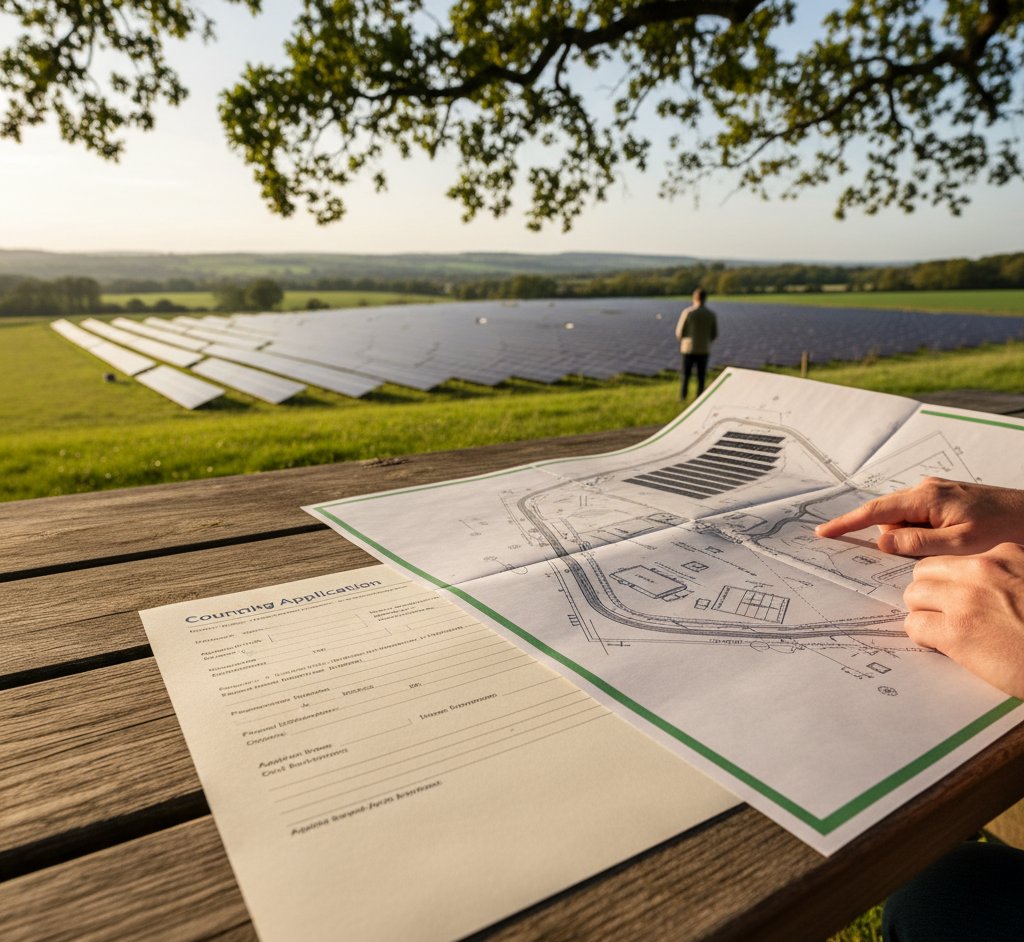
Solar Panel Planning Permission UK: What You Need to Know
Do you need planning permission for solar panels in the UK? Permitted development rules, when you need to apply, and what happens in special areas.

How to Size a Solar Panel System for Your Home
How to size a solar panel system for your UK home. Factor in electricity usage, roof space, budget, and future plans like EVs and heat pumps.
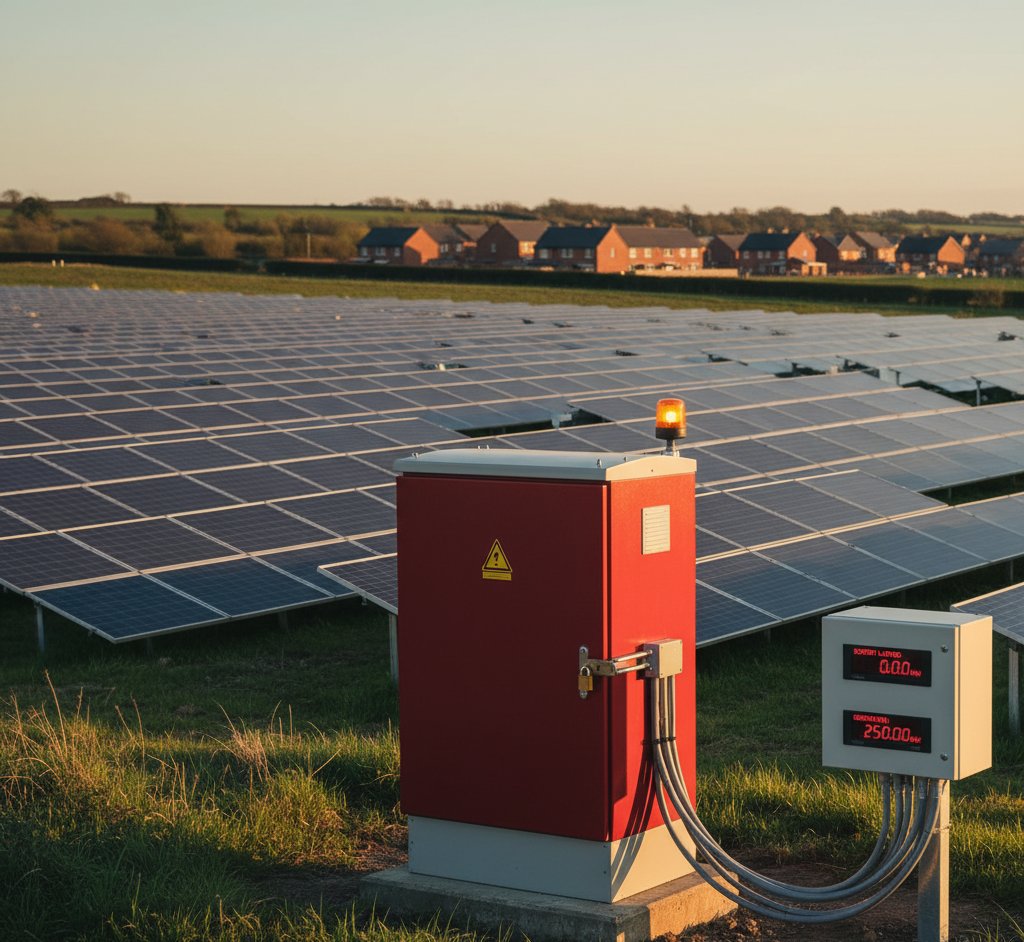
G100 Export Limitation: What It Is and How It Affects You
G100 export limitation caps how much solar electricity you can send to the grid. What it means, when it applies, and strategies to minimise the impact.


Switch to Octopus Energy
Get 50 credit when you switch. We get 50 too — win-win.
What does this mean for YOUR home?
Design your perfect solar setup in under 3 minutes. Free, no sign-up required.
Build Your Solar System