This page contains affiliate links. If you purchase through them we may earn a small commission at no extra cost to you. Learn more
Monocrystalline vs Polycrystalline Panels: Does It Still Matter?
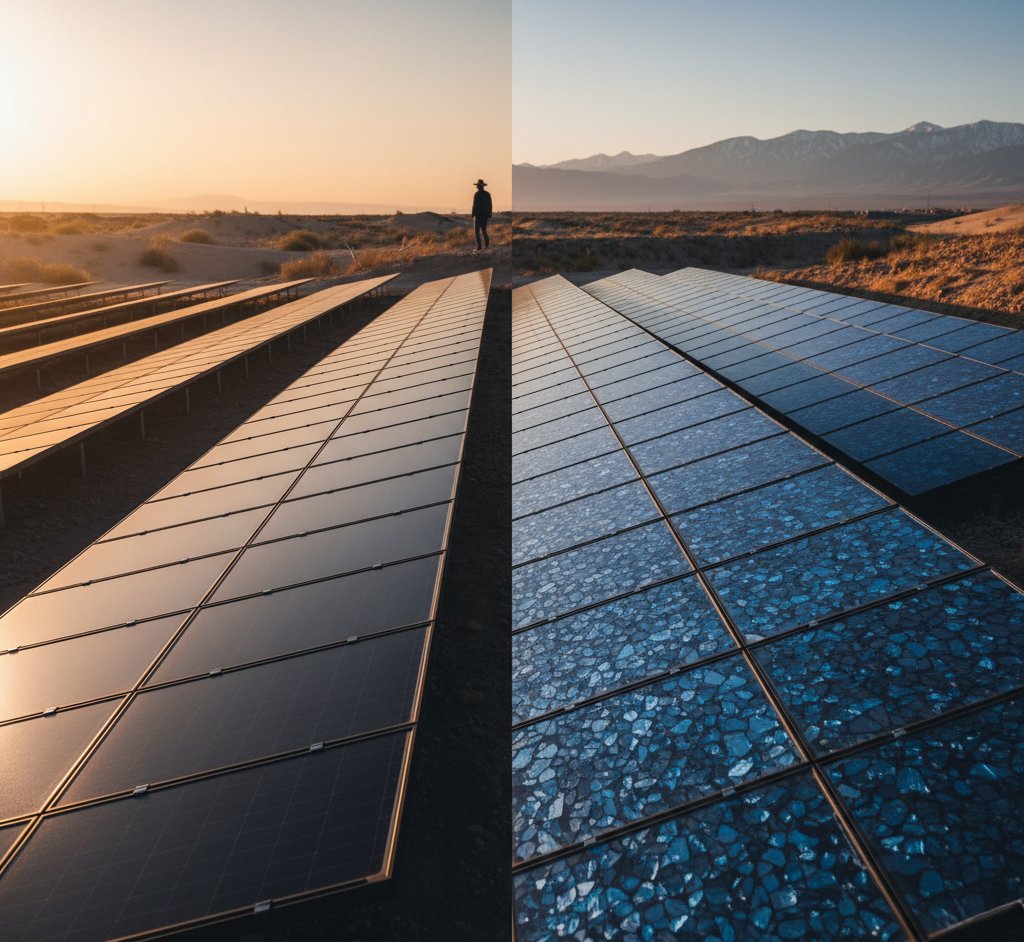
If you've been researching solar panels, you've probably seen the mono vs poly debate. Here's the truth in 2026: it barely matters anymore. Monocrystalline panels have effectively won, and the distinction is largely academic for UK homeowners.
The Difference Explained
Both types are made from silicon, but the manufacturing process differs:
Monocrystalline (Mono): Made from a single crystal of silicon. The cells are uniform in colour (dark black) and more efficient at converting sunlight to electricity. Premium product, premium performance.
Polycrystalline (Poly): Made from multiple silicon crystals melted together. The cells have a blue, speckled appearance and are slightly less efficient. Cheaper to manufacture.
The Numbers
| Specification | Monocrystalline | Polycrystalline |
|---|---|---|
| Cell efficiency | 20–24% | 15–18% |
| Panel wattage (standard size) | 380–440W | 300–340W |
| Appearance | Black/dark | Blue/speckled |
| Temperature coefficient | Better (less output loss in heat) | Worse |
| Cost per watt (2026) | £0.18–£0.25 | £0.14–£0.20 |
| Market share (UK residential) | ~95% | ~5% |
| Lifespan | 25–30 years | 25–30 years |
The efficiency gap means that for the same roof space, mono panels generate 15–25% more electricity. Given that UK roofs are often space-constrained, this efficiency advantage is decisive.
Why Mono Has Won
Price Gap Has Collapsed
Ten years ago, mono panels cost 30–50% more per watt than poly. In 2026, the gap is down to 15–25%. For a 4kW system, the total cost difference is perhaps £200–£400 — not enough to offset the efficiency disadvantage.
Roof Space Is Precious
Most UK homes have limited roof space. Getting maximum generation from available area matters. Ten mono panels at 420W give you 4.2kW. Ten poly panels at 320W give you 3.2kW. The mono system generates roughly 25% more from the same roof.
Aesthetic Preference
All-black mono panels look better on most roofs than blue poly panels. As solar becomes more mainstream, visual appearance matters to homeowners.
Manufacturer Focus
All major panel manufacturers (JA Solar, Trina, LONGi, Canadian Solar) now focus their R&D on monocrystalline technology. The best panels available are all mono. Poly is essentially a legacy product.
When Poly Panels Might Still Make Sense
There are narrow situations where polycrystalline panels could be worth considering:
Very Large Roof, Tight Budget
If you have a large south-facing roof (barn conversion, warehouse, large bungalow) and your budget is tight, poly panels let you install more total capacity for less money. If space isn't the constraint but budget is, the lower cost per watt helps.
Ground-Mount System
For ground-mounted arrays where space is effectively unlimited, the lower cost per watt of poly panels reduces total system cost. The lower efficiency doesn't matter when you can simply add more panels.
Budget Commercial Installations
Some commercial installations on large flat roofs use poly panels because the cost saving across hundreds of panels is significant and roof space is abundant.
For typical UK residential installations with limited roof space, none of these situations apply.

What to Focus On Instead
Rather than worrying about mono vs poly (which is essentially a settled question), focus on these genuinely meaningful differences between panels:
Efficiency Rating
Within monocrystalline technology, efficiency varies from 19% to 23%+. Higher efficiency means more power per panel and per square metre of roof.
Wattage
Panel wattage ranges from 380W to 440W+ for residential-sized panels. Higher wattage means fewer panels needed, simpler installation, and better use of limited roof space.
Degradation Rate
The best panels guarantee 87.4% output at year 25. Some cheaper panels only guarantee 80.7%. Over 25 years, this difference adds up to significant extra generation from the better panel.
Temperature Coefficient
Panels lose efficiency as they heat up. A lower temperature coefficient (e.g., -0.29%/°C vs -0.37%/°C) means better performance on hot summer days. Look for panels below -0.35%/°C.
Warranty Terms
Product warranty (covering defects) ranges from 12 to 30 years. Performance warranty (guaranteeing minimum output) is standard at 25 years but the guaranteed percentage varies. Longer product warranties from financially stable manufacturers are worth paying for.
Manufacturer Reputation
Choose panels from established manufacturers with a UK presence and financial stability. JA Solar, Trina, LONGi, and Canadian Solar all have strong track records. A 25-year warranty is only valuable if the company will still exist in 25 years.
Focus on Total System Cost and Output
The panel technology (mono vs poly) is just one variable. The inverter, installation quality, roof orientation, and system design matter at least as much. A well-designed system with mid-range mono panels will outperform a poorly designed system with premium panels. Focus on the total package, not just the panel spec sheet.
A Brief History
For context on how we got here:
- 2000s–2010s: Poly panels dominated due to lower cost. Mono was the premium option.
- 2015–2018: Mono costs dropped rapidly. PERC technology boosted mono efficiency further.
- 2019–2022: Mono overtook poly in market share. Major manufacturers shifted production.
- 2023–2026: Mono dominates. Poly is niche. New cell technologies (TOPCon, HJT) are all mono-based.
The technology has moved on. TOPCon and heterojunction (HJT) cells — both monocrystalline — are pushing residential panel efficiency above 22%, with 25% on the horizon. Polycrystalline technology has effectively reached its ceiling.
These top-rated monocrystalline panels offer excellent value for UK installations:
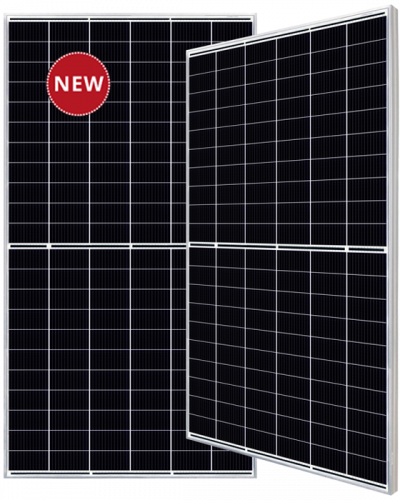
Canadian Solar HiKu7 455W
£80455
22.9
1762 x 1134 x 30
22
Affiliate link — we may earn a small commission at no extra cost to you
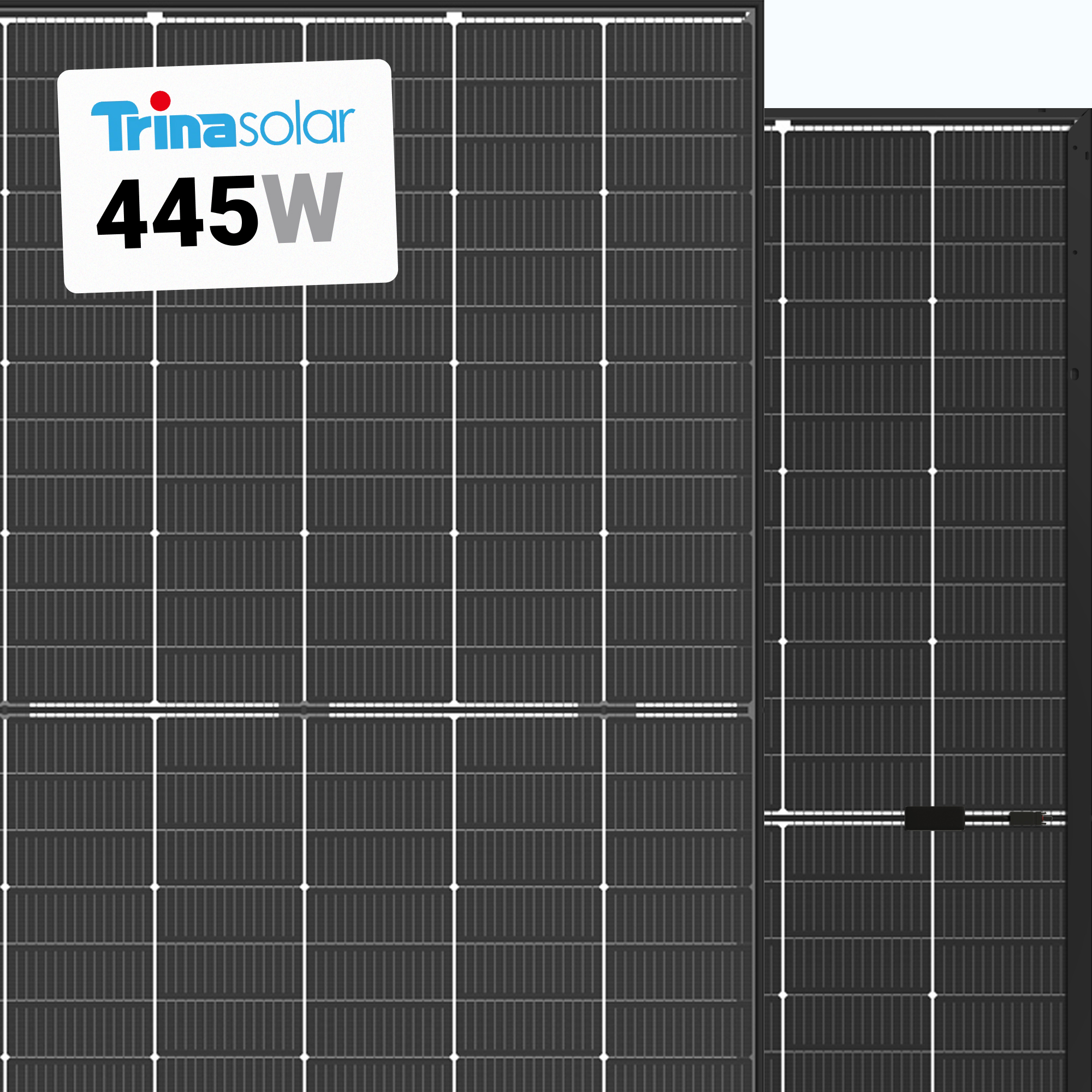
Trina Solar Vertex S+ 445W
£75445
22.5
1762 x 1134 x 30
21.8
Affiliate link — we may earn a small commission at no extra cost to you
The Bottom Line
Don't spend time deliberating between mono and poly. Choose monocrystalline panels (which is what virtually every UK installer will quote you anyway) and focus your research on:
- Which specific panel offers the best efficiency and warranty for the price
- Which inverter suits your roof and shading situation
- Which installer has the best reputation and aftercare
For our recommendations on specific panels, see our best solar panels guide. For understanding how panel efficiency translates to real-world generation, see our efficiency guide.
Share this article

OVO has carefully selected trusted teams across the UK to install solar panels and heat pumps. Enjoy the personal touch of a local expert with the peace of mind of a household name.
Affiliate link — we may earn a small commission at no extra cost to you
Stay informed
Get free solar updates direct to your inbox
Related reading
Best Solar Panels for UK Homes 2026
An honest look at the best solar panels available for UK homes in 2026 — covering JA Solar, Trina, Canadian Solar, and LONGi, with real specs and what to look for.
Solar Panel Efficiency: What It Means and Why It's Not Everything
Panel efficiency explained plainly — what the percentage actually means, why the gap between 20% and 22% barely matters for most UK homes, and what you should actually be comparing.

How Do Solar Panels Work? A Simple Explanation
A plain-English explanation of the photovoltaic effect, how solar electricity gets from your roof into your home, and what happens at night or on cloudy days.


Switch to Octopus Energy
Get 50 credit when you switch. We get 50 too — win-win.
What does this mean for YOUR home?
Design your perfect solar setup in under 3 minutes. Free, no sign-up required.
Build Your Solar System