This page contains affiliate links. If you purchase through them we may earn a small commission at no extra cost to you. Learn more
Myenergi Eddi: Solar Hot Water Diverter
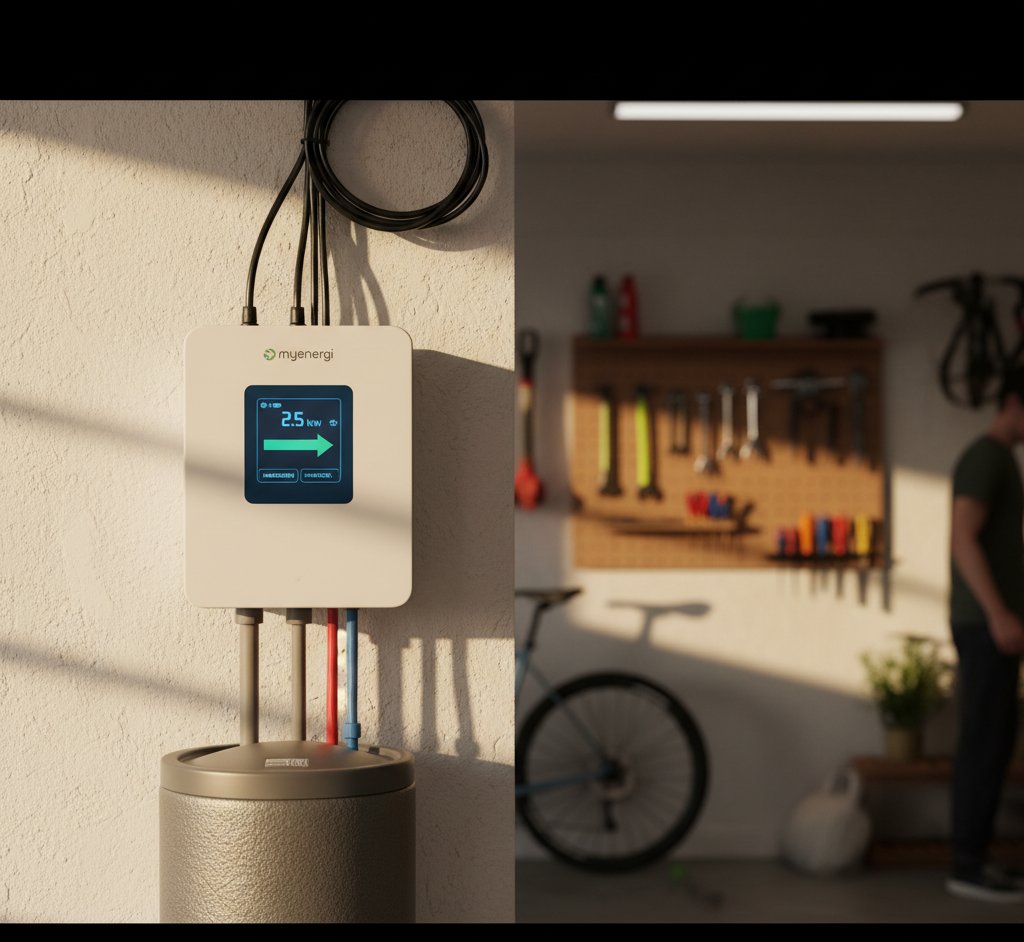
What does the Myenergi Eddi do?
The Eddi is a solar power diverter. It monitors your solar generation and household consumption in real time, and when it detects surplus solar (electricity you'd otherwise export), it diverts that energy to your immersion heater.
The result: free hot water from electricity that would have been exported at SEG rates of around 12p/kWh. Since heating water with grid electricity costs ~24p/kWh, every diverted kWh is worth significantly more than the export payment you'd receive.
The Eddi is essentially the hot water equivalent of the Myenergi Zappi for EV charging — same principle, different load.
How the Eddi works
The Eddi uses the same CT clamp system as the Zappi. A sensor on your main supply cable monitors net electricity flow:
- Surplus detected (you're exporting): Eddi starts feeding power to your immersion heater
- No surplus (you're importing): Eddi stops, so you don't draw grid electricity for hot water
- Variable surplus: Eddi modulates its output using phase-angle control, matching the exact level of surplus available — from 100W to 3.6kW
This proportional control is important. Unlike a simple relay that's either fully on or fully off, the Eddi continuously adjusts. If your surplus is 800W, the Eddi sends exactly 800W to the immersion heater. No grid import, no wasted surplus.
Two-heater priority system
A distinctive Eddi feature: it can control two separate heating loads with configurable priority.
Example setup:
- Priority 1: Hot water cylinder immersion heater
- Priority 2: Towel rail, underfloor heating, or storage heater
The Eddi heats the priority 1 load first. Once the hot water tank reaches its target temperature (detected via the tank thermostat), surplus solar automatically diverts to the priority 2 load.
This is genuinely useful. On a sunny summer day, your hot water tank might be fully heated by midday. Rather than exporting the afternoon surplus at 12p/kWh, the Eddi can divert it to a secondary heating load — reducing your overall energy consumption further.
Pair with a Zappi for whole-home solar management
If you have both an Eddi and a Zappi, the Myenergi system coordinates them. You choose the priority order — typically EV first (higher value per kWh saved), then hot water. Both devices share the same CT clamp and communicate wirelessly to divide surplus solar optimally.
Installation and costs
Unit cost: £400–£500 Installation cost: £150–£300 Total installed cost: £550–£800
Installation involves:
- Mounting the Eddi near your consumer unit or hot water cylinder
- Wiring to your immersion heater element(s)
- Installing or sharing a CT clamp on the main supply
- Optionally connecting a Myenergi Hub for smart features
- Configuring temperature limits and priorities
A qualified electrician is required. If you already have a Zappi with a CT clamp installed, the Eddi can share it — simplifying installation.
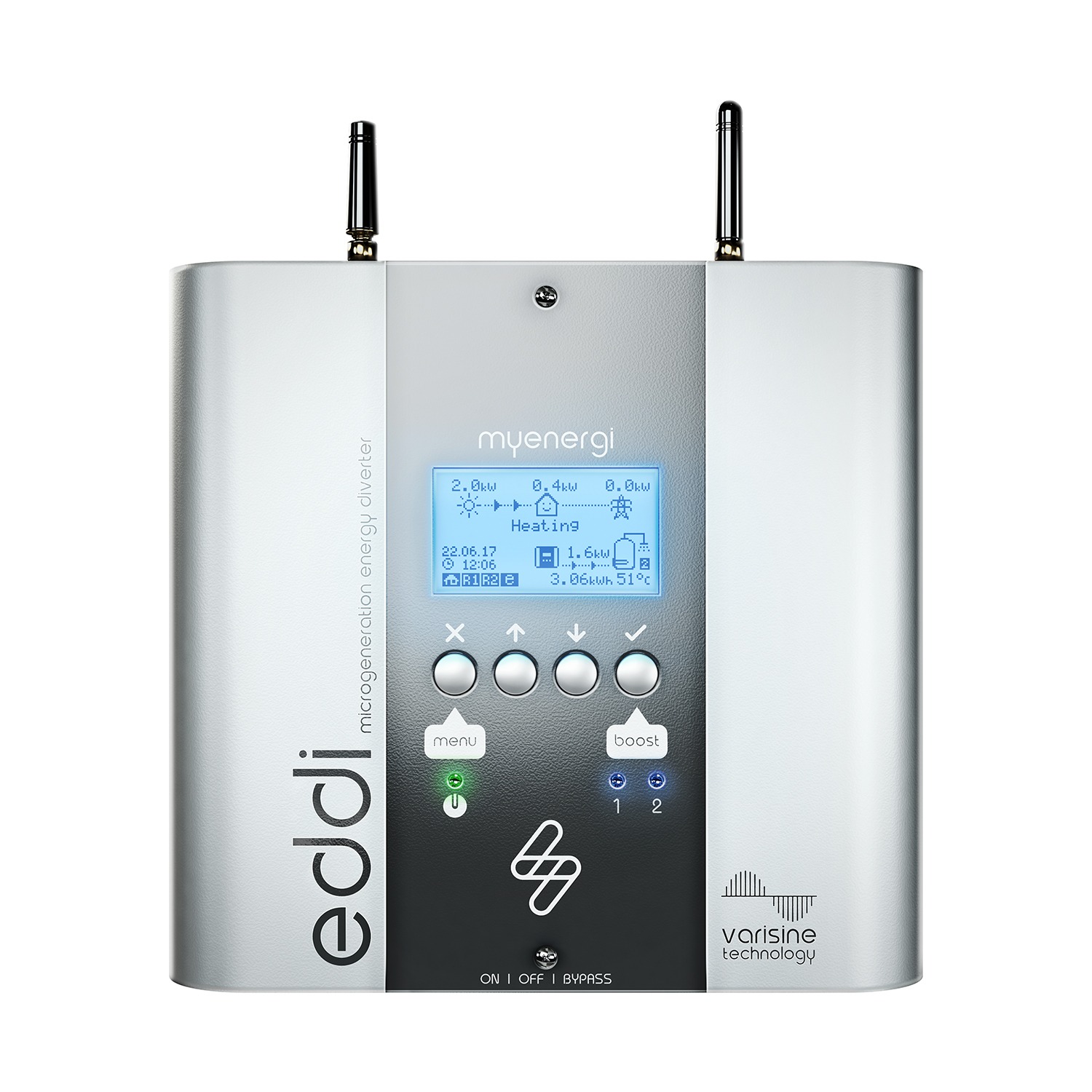
myenergi Eddi Solar Diverter
£1853000
power_divert,timed_boost
2
configurable
Affiliate link — we may earn a small commission at no extra cost to you
How much can you save?
The savings depend on your solar surplus, hot water usage, and current heating method.
Typical UK household hot water consumption: 3–5 kWh/day (roughly 50–80 litres at comfortable temperature)
Without Eddi (gas combi boiler): Gas heating cost: ~5p/kWh × efficiency losses = roughly £120–200/year for hot water
Without Eddi (electric immersion, flat tariff): Electricity: ~4 kWh/day × 24p = £0.96/day = £350/year
With Eddi (solar diversion):
- Summer (April–September): Solar provides 80–100% of hot water needs = ~£0/day
- Winter (October–March): Solar provides 20–40% of hot water, grid covers the rest
- Annual saving vs electric immersion: £150–£250/year
- Annual saving vs gas: £80–£150/year (less because gas is cheaper to begin with)
Payback period: 3–5 years for most installations, less if replacing expensive grid-electric water heating.
Eddi vs a solar battery for hot water
A common question: should you buy an Eddi or a battery to use surplus solar?
Eddi advantages:
- Much cheaper (£600–800 vs £4,000–10,000 for a battery)
- Simple installation
- Directly heats water — efficient energy conversion
- No degradation over time (no battery chemistry to wear out)
Battery advantages:
- Stores energy for any use, not just hot water
- Can power your home during evening peak hours
- Works with time-of-use tariffs for arbitrage
- Provides potential backup power during outages
The honest answer: If hot water is your main surplus-solar challenge and budget is limited, the Eddi is excellent value. If you want comprehensive energy management including evening self-consumption, peak avoidance, and tariff optimisation, a battery is the more versatile investment.
Many households end up with both — a battery for general energy management and an Eddi as a secondary dump load once the battery is full.
Do you need a hot water cylinder?
Yes. The Eddi heats water via an immersion heater element, which requires a hot water cylinder (tank). If you have a combi boiler that heats water on demand with no storage tank, the Eddi has nothing to heat.
Options if you have a combi boiler:
- Install a hot water cylinder with an immersion element (significant plumbing work)
- Use a thermal store / buffer tank
- Consider a Zappi for EV charging instead (if applicable)
- Look at a battery for general surplus management
If you're replacing a gas boiler with a heat pump, the new system will almost certainly include a hot water cylinder — making it an ideal time to add an Eddi.
Check your immersion heater rating
The Eddi can handle up to 3.6kW immersion elements. Most standard immersion heaters are 3kW, which is fine. If your cylinder has an unusually small element (1kW), it will still work but heat water more slowly. If you have a dual-element cylinder (top and bottom), the Eddi can control both.
Smart features and monitoring
With the Myenergi Hub connected:
- App monitoring: See real-time diversion, daily/weekly/monthly hot water generation
- Boost function: Remotely heat water using grid power if needed (e.g., guests arriving)
- Scheduling: Set times when the Eddi should boost from the grid (useful with cheap overnight tariffs)
- Integration: Works with smart tariff platforms for grid-charging during off-peak hours
The app data is genuinely useful. You can see exactly how much free hot water you're generating from solar and track the seasonal variation. It turns an invisible saving into something tangible.
The Eddi works best as part of a complete myenergi ecosystem:
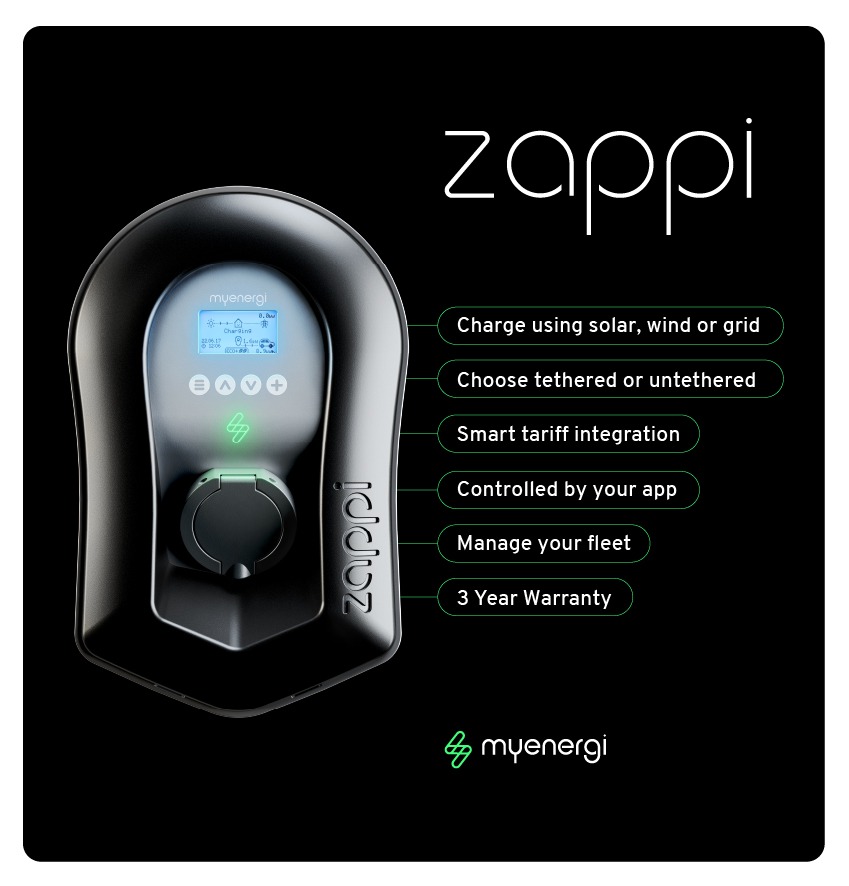
myenergi Zappi 22kW EV Charger
£78022
7.4
22
fast,eco,eco_plus
Affiliate link — we may earn a small commission at no extra cost to you
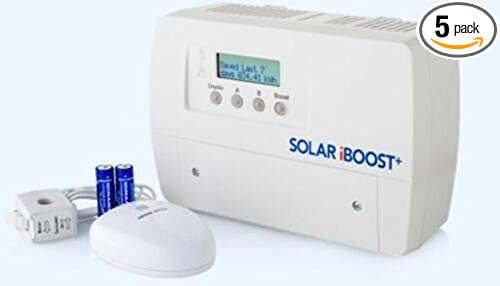
Solar iBoost+ Immersion Heater Controller
£1503000
auto_divert,manual_boost
1
true
Affiliate link — we may earn a small commission at no extra cost to you
Tips for maximising Eddi savings
- Set the right temperature — 60°C is recommended for the cylinder (kills Legionella bacteria). Don't set it higher than needed — you'll waste energy heating water you'll mix with cold anyway.
- Use hot water in the evening — let solar heat the tank during the day, then use it in the evening. This maximises solar utilisation.
- Pair with a timer — if solar doesn't fully heat the tank, set the Eddi to boost from the grid during overnight cheap rate hours.
- Consider your priority order — if you have a Zappi too, experiment with which gets priority. In summer when there's ample surplus, let both run. In winter, prioritise whichever saves more money.
- Insulate your cylinder — a well-insulated tank retains heat longer, meaning solar-heated water stays hot into the evening without needing a grid top-up.
Share this article

Leading UK provider of electric car charging cables and EV accessories. Cables for all UK and EU models, with fast delivery and expert support.
Affiliate link — we may earn a small commission at no extra cost to you
Stay informed
Get free solar updates direct to your inbox
Related reading
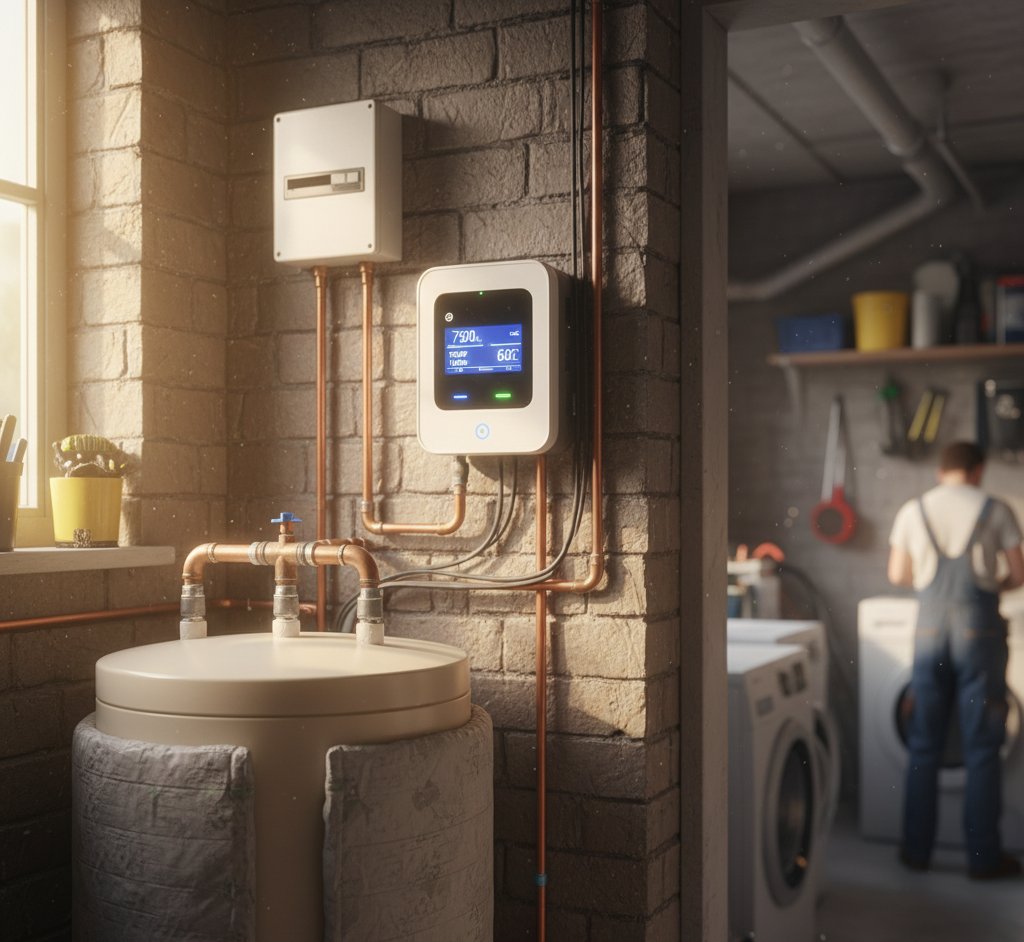
iBoost vs Eddi: Which Solar Diverter Is Better?
A head-to-head comparison of the Solar iBoost+ and Myenergi Eddi solar hot water diverters — features, costs, performance, and which suits your setup.
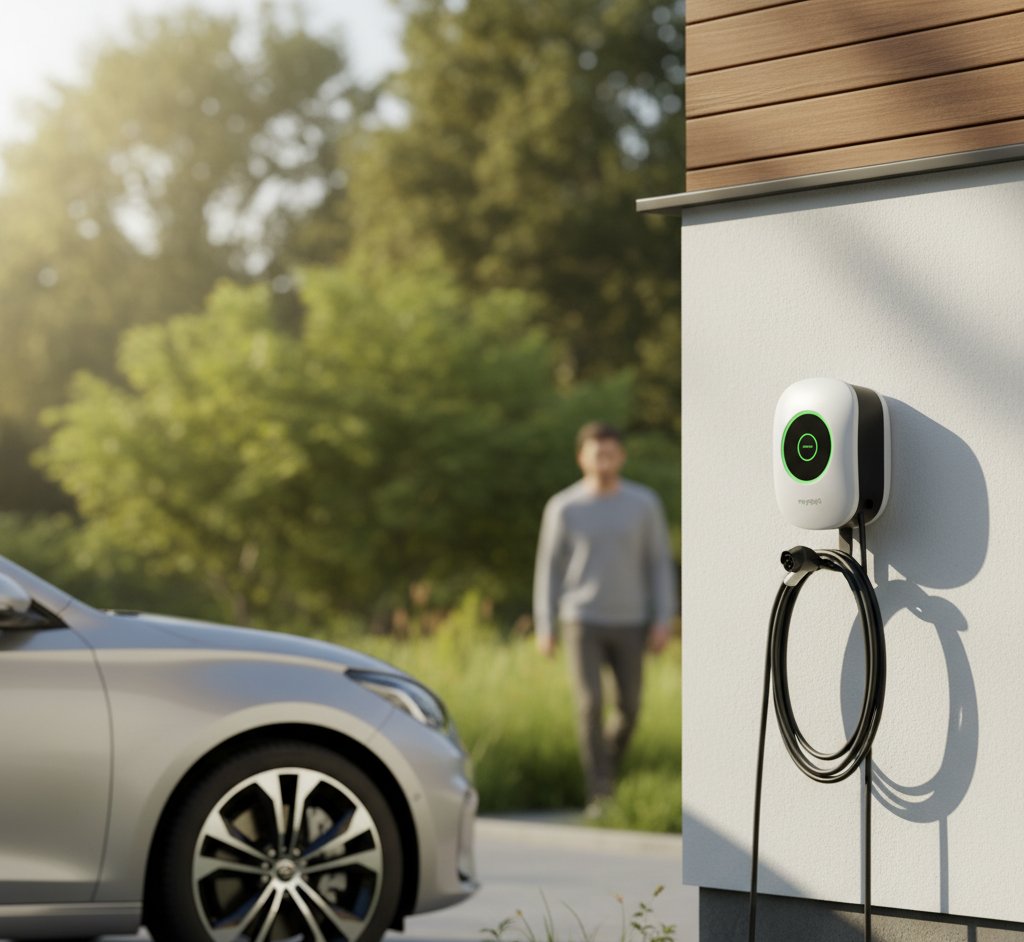
Myenergi Zappi: The Solar EV Charger
In-depth review of the Myenergi Zappi EV charger for UK solar homes — solar charging modes, installation, costs, and how it compares to standard chargers.
Solar Battery Storage: Complete UK Guide 2026
Everything you need to know about adding battery storage to a UK solar installation — types, sizing, costs, and which products are worth considering in 2026.


Switch to Octopus Energy
Get 50 credit when you switch. We get 50 too — win-win.
What does this mean for YOUR home?
Design your perfect solar setup in under 3 minutes. Free, no sign-up required.
Build Your Solar System