This page contains affiliate links. If you purchase through them we may earn a small commission at no extra cost to you. Learn more
Solar System Age Guide: What to Check at 2, 5, 10, and 25 Years

Solar panels carry a 25-year performance warranty and can run for 30 years or more. The inverter, however, typically lasts 10–15 years. Battery storage adds its own lifecycle. Understanding what to check and when saves you money, prevents missed faults, and helps you make smart decisions at each stage.
This guide works through the key milestones from installation to the end of the first quarter-century.
Year 1–2: get the foundations right
The first two years are about verification, not maintenance. Your system should simply be generating and earning — your job is to confirm it is.
Check actual generation against the estimate. Your MCS certificate includes an annual generation estimate. A new system should produce within 10–15% of that figure in year one. Significantly less warrants a call to your installer.
Confirm monitoring is working. Connect the inverter to your home WiFi and ensure the portal or app is logging generation and export correctly. A CT clamp or smart meter should be recording both what you generate and what you send to the grid. If the inverter keeps dropping off WiFi (common when the router is far away), a powerline adapter or WiFi extender can fix this.
Confirm SEG payments are arriving. If your installer registered you for the Smart Export Guarantee, export payments should appear on your energy bill or in your supplier account. If they are not, chase your installer — it is their responsibility to complete registration, but the obligation can get lost.
Store your documentation. Keep your MCS certificate, workmanship warranty, and product warranty documents somewhere you can find them. You will need them if you sell the property or make an insurance claim.
Year 3–5: first performance review
By year three, you have enough data to spot trends. This is also when certain practical issues become relevant for the first time.
Compare generation year-on-year. Some degradation in years 1–2 is normal — this is called the Light-Induced Degradation (LID) effect, where cells settle slightly. After that, expect roughly 0.3–0.5% per year. A sharp year-on-year drop (more than 5–7%) that you cannot explain by weather difference warrants investigation.
Check for bird activity. Pigeons often establish nesting habits under solar panels between years 2–4. Signs include concentrated droppings, noise from under the array, and visible nesting material at the panel edges. If this is happening, bird-proofing mesh should be fitted. The cost is approximately £50 per panel. Crucially, installation must take place between September and February — the Wildlife and Countryside Act 1981 makes it illegal to disturb active nests, so you cannot install during the nesting season (March–August).
Revisit the battery question. Battery prices have fallen significantly since 2022. If you installed solar in 2020–2022 without adding a battery, the economics may look very different now. If your household has grown, you have added an EV, or you have started working from home, running the numbers again makes sense. See battery payback analysis for the current figures.
Check your workmanship warranty coverage. MCS requires a minimum two-year workmanship warranty. After year two, defects in how the system was installed may no longer be covered by the original installer. Panel and inverter product warranties remain in force, but labour costs for fixes become your responsibility.
Year 5–10: mid-life management
A solar system at year five to ten is in good shape — but several worthwhile interventions are now in play.
Update inverter firmware. Most inverters receive firmware updates over their first several years. Outdated firmware can reduce efficiency or cause compatibility issues with monitoring platforms. Log into your inverter's web interface or manufacturer portal, check the current firmware version against the latest release, and apply any available update. Most can be done remotely.
Review your electricity tariff. A system installed in 2017–2019 may still be on a flat tariff that made sense then. Time-of-use tariffs have improved significantly. With a battery, Octopus Go (overnight rate currently 5.5p/kWh) lets you charge cheaply at night and use that energy during the day instead of importing at the standard rate (~24p/kWh). That gap is where savings are made.
Consider a Virtual Power Plant (VPP). If your inverter is from a compatible brand — GivEnergy, Solis, Fox ESS, SunSynk, or Tesla Powerwall — you may qualify for a VPP programme that pays you to dispatch stored energy during grid demand events. Estimated income is £200–400 per year. Events are short (typically 15–60 minutes) and opt-out clauses are available.
Panel cleaning. In most UK locations, rainfall keeps panels acceptably clean. But if your property is near a busy road, agricultural land, or in an area with high air pollution, soiling losses of 2–7% per year can accumulate. Professional cleaning once or twice a year, using water only (no detergent), is worth considering in those situations.
Year 10–15: the inverter milestone
This is the most significant event in your solar system's lifecycle, and it is also a genuine upgrade opportunity.
String inverters typically last 10–15 years. The inverter is the component most likely to need replacing before the panels. When it fails — or when a pre-emptive replacement makes sense — you face a choice.
£800–2,500
depending on upgrade path — A like-for-like string inverter replacement costs £800–1,500 installed. Upgrading to a hybrid invert
Learn moreTreat inverter replacement as an upgrade
Replacing a 2012 string inverter in 2024–2027 with a modern hybrid inverter (GivEnergy, SunSynk, Solis, Fox ESS, or Growatt) adds battery capability at minimal extra cost compared with buying a separate battery inverter later. You also get improved monitoring, time-of-use tariff compatibility, and potential VPP eligibility — all things your original inverter could not offer.
Panel degradation at year 10–15 is around 85–92% of original output. This is within performance warranty bounds for most panel manufacturers and is not a cause for concern.
Has your consumption changed? A 4 kWp system sized for a two-person household in 2012 may be undersized if you have since added an EV or a heat pump. If you are replacing the inverter anyway, it is worth discussing a system expansion at the same time — adding panels on the same roof with no new roof penetrations is straightforward if the inverter is being changed.
Year 15–20: FIT contract horizon
If your system was installed before April 2019, you are likely on the Feed-in Tariff (FIT). FIT contracts were 20 years from the installation date.
Systems installed in 2010 begin reaching FIT contract expiry from 2030. The generation payment and the deemed or metered export payment both cease when the contract ends.
At that point, your options are:
- Switch to SEG for export payments. For some older FIT systems with low legacy export rates, SEG rates (currently up to 15p/kWh for the best fixed tariffs) may actually be higher per unit than your original FIT export payment.
- Add a battery before FIT expiry to maximise self-consumption, reducing your reliance on export income.
- Keep exporting unpaid. Legal, but not financially optimal.
A second inverter replacement may also be due at this stage for systems where the original inverter was replaced at year 10–12.
Your panels at year 15–20 are typically generating at 80–85% of original output — still very productive.
Year 25+: end of warranty period
Most solar panels carry a 25-year performance guarantee at 80–84% of original rated output. When that period ends, the panels themselves typically continue generating at 75–80% of original capacity and can run indefinitely.
At this point you have three realistic options:
Keep running. The system has long since paid back its cost. Free electricity is free electricity. Unless a component fails, no action is needed.
Replace the panels. Residential panels have grown significantly in power output over the past two decades. Replacing 12 × 250W panels from 2003 with 12 × 450W panels today increases output by around 80% on the same roof area, with no new roof penetrations. You will likely need a new inverter too — treat the project as a whole-system refresh.
Remove the system. Only worth considering if the roof needs major structural work. Solar panels are classified as Waste Electrical and Electronic Equipment (WEEE), which means manufacturers and importers are legally obligated to fund free recycling. You pay for the labour to remove panels from the roof (typically £10–15 per panel). The recycling itself is free via the UK compliance scheme, PV CYCLE.
Do not panic about degradation
A panel generating at 78% of its year-one output at year 27 is performing exactly as expected — and still generating significant value. Do not let degradation statistics alarm you into premature replacement. Calculate the actual output, compare it with your consumption, and make the decision on the numbers.
Quick reference: age-based action summary
| Age band | Priority action |
|---|---|
| Year 1–2 | Verify generation, confirm SEG, store documentation |
| Year 3–5 | Year-on-year comparison, bird proofing if needed, revisit battery |
| Year 5–10 | Firmware update, tariff review, VPP check, battery retrofit |
| Year 10–15 | Inverter replacement — consider hybrid upgrade |
| Year 15–20 | FIT contract horizon — plan SEG switch, second inverter |
| Year 25+ | Keep/replace/remove decision based on actual output |
For more on ongoing maintenance, see solar maintenance checklist. For the inverter replacement decision in detail, see inverter replacement guide.
Share this article

Smart home energy monitoring and automation — track your solar generation and control your home with Wi-Fi devices
Affiliate link — we may earn a small commission at no extra cost to you
Stay informed
Get free solar updates direct to your inbox
Related reading
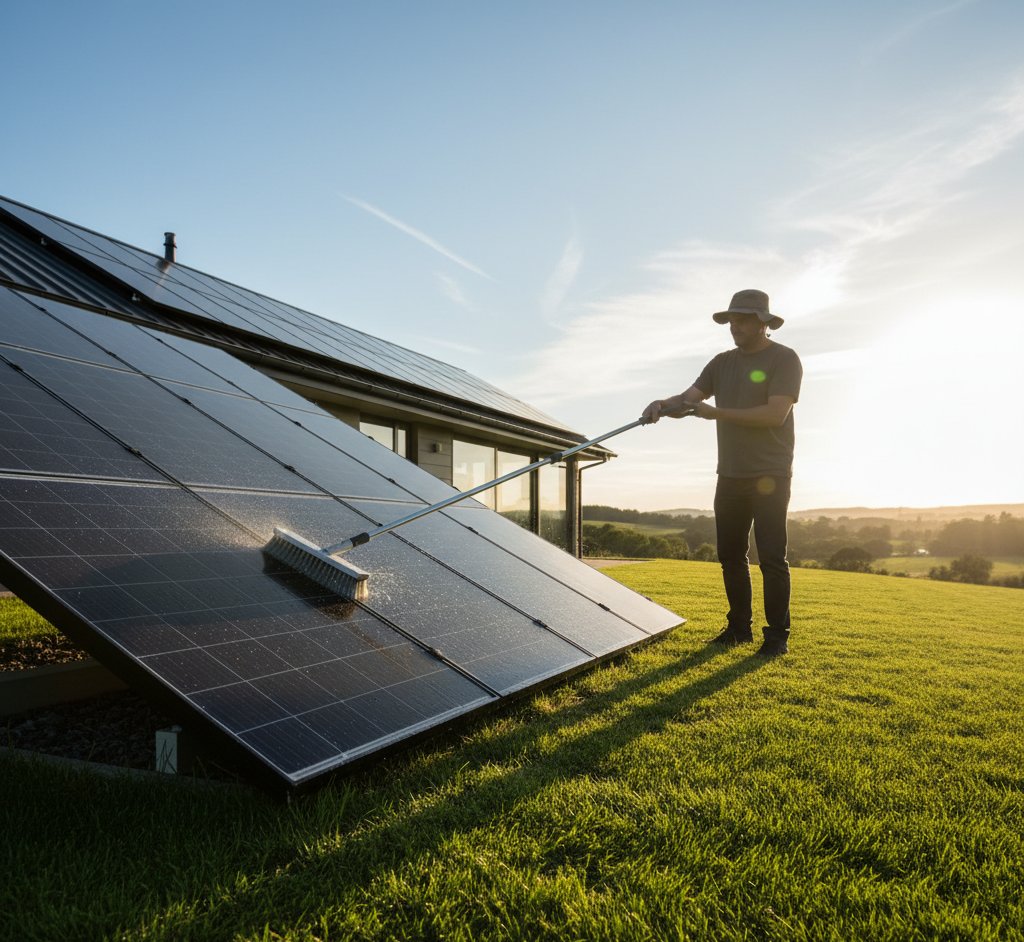
Annual Solar Panel Maintenance Checklist
A simple annual maintenance checklist for UK solar panel owners. What to check, when to check it, and when to call a professional.
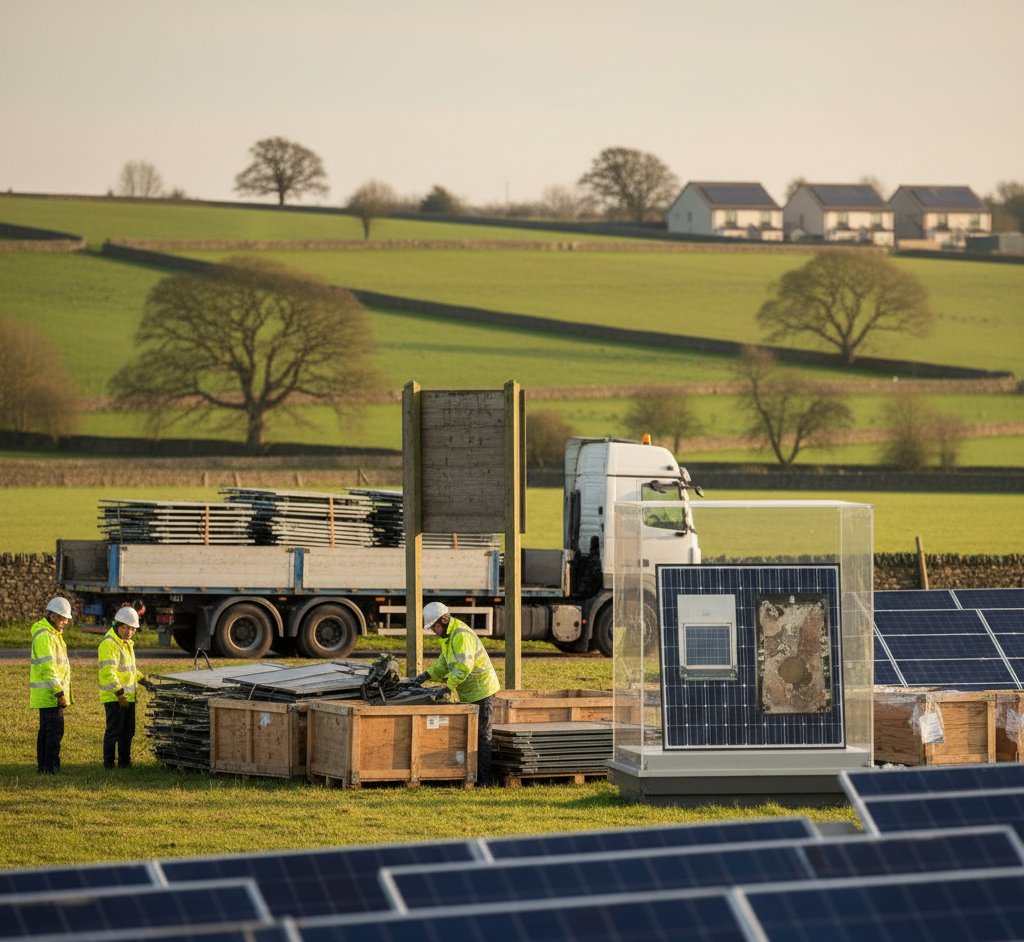
How Long Do Solar Panels Last? The Honest Answer
Solar panels rated for 25–30 years — but what does that mean? Degradation rates, warranty types, what happens after 25 years, and why inverters fail first.
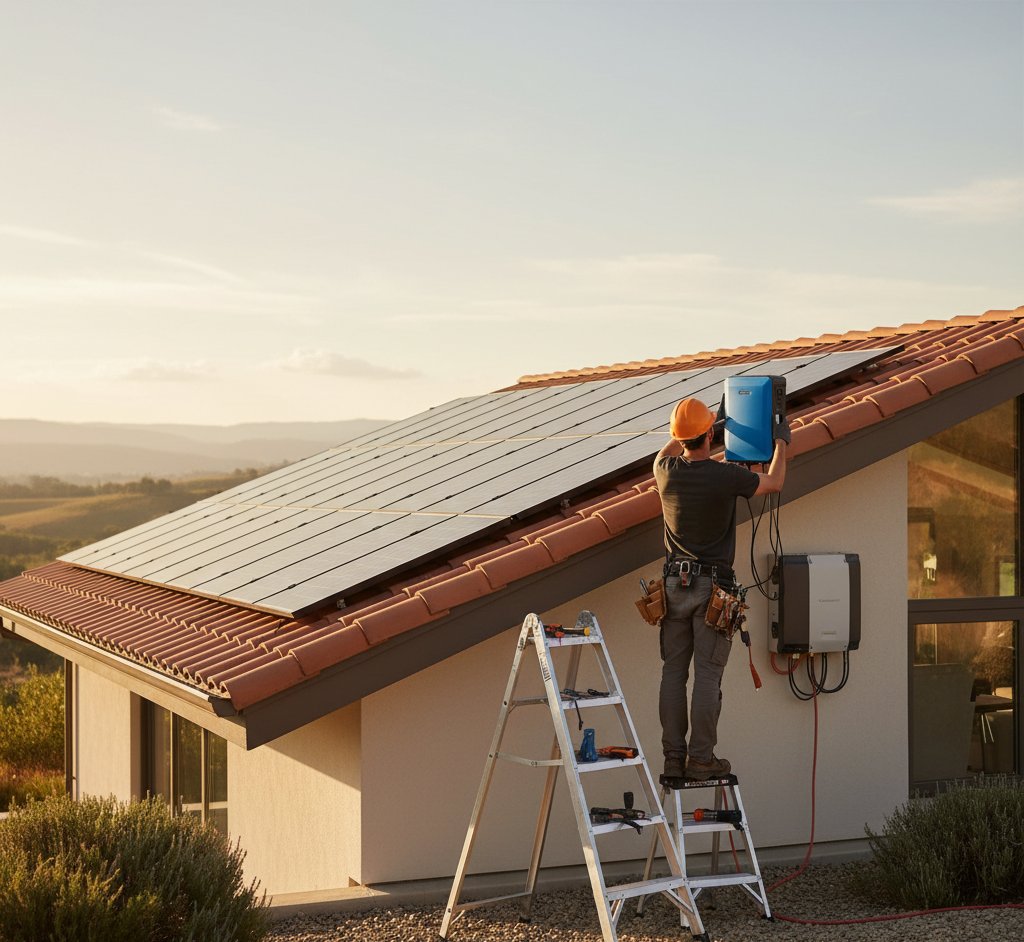
Inverter Replacement: When, Why, and How Much
Solar inverters typically need replacing after 10–15 years. What replacement costs, signs of failure, and whether to upgrade when you replace.


Switch to Octopus Energy
Get 50 credit when you switch. We get 50 too — win-win.
What does this mean for YOUR home?
Design your perfect solar setup in under 3 minutes. Free, no sign-up required.
Build Your Solar System