This page contains affiliate links. If you purchase through them we may earn a small commission at no extra cost to you. Learn more
Solar Thermal vs Solar PV: Which Is Better?
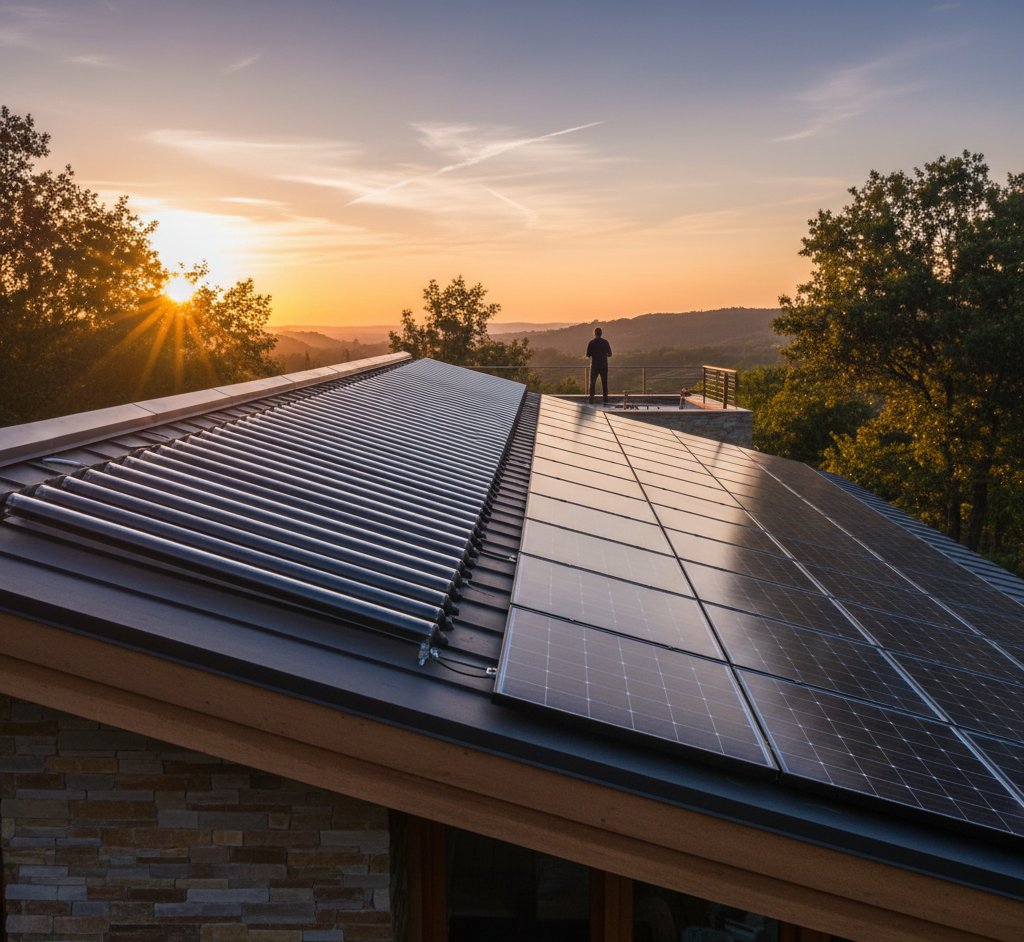
Solar thermal heats water directly using the sun. Solar PV generates electricity. Twenty years ago, thermal was the obvious choice for hot water. In 2026, PV has largely won the argument — but thermal still has its niche.
The Fundamental Difference
Solar thermal panels contain fluid that absorbs heat from the sun. This hot fluid passes through a coil in your hot water cylinder, heating the water directly. It's a plumbing system.
Solar PV panels convert sunlight into electricity. That electricity can power anything — appliances, lighting, EV charging, or an immersion heater to heat water. It's an electrical system.
Solar thermal is a specialist: it does one thing (heat water) very well. Solar PV is a generalist: it does everything adequately, including heating water.
Head-to-Head Comparison
| Factor | Solar Thermal | Solar PV (4kW) |
|---|---|---|
| Typical cost (installed) | £3,000–£5,000 | £6,000–£8,000 |
| Roof space needed | 3–4 m² | 16–20 m² |
| Annual hot water contribution | 50–70% of demand | 100% possible (with diverter) |
| Generates electricity? | No | Yes |
| Needs hot water cylinder? | Yes (mandatory) | Yes (if heating water) |
| Maintenance | Annual fluid check, pump replacement | Minimal |
| Lifespan | 15–20 years | 25–30 years |
| Works in winter? | Limited | Limited (but still generates electricity) |
| SEG export income? | No | Yes |
| EPC improvement | Moderate | Significant |
Why PV Has Won for Most Homes
Flexibility
PV electricity can do anything. On a sunny day, your panels power your appliances, charge your car, and heat your water. Solar thermal only heats water — if your cylinder is already hot, the excess heat is wasted (or the system stagnates).
Economics
A 4kW PV system costs roughly £6,500 and saves £600–£900/year across all electricity uses. A solar thermal system costs roughly £4,000 and saves £100–£200/year on hot water alone. The payback is faster for PV because it offsets more expensive grid electricity across all uses.
PV + Diverter = Hot Water Too
Products like the myenergi Eddi and Solar iBoost+ divert surplus PV electricity to your immersion heater. Instead of exporting excess generation at 12p/kWh, you heat water with it — saving the 26p/kWh you'd have spent on grid electricity for heating.
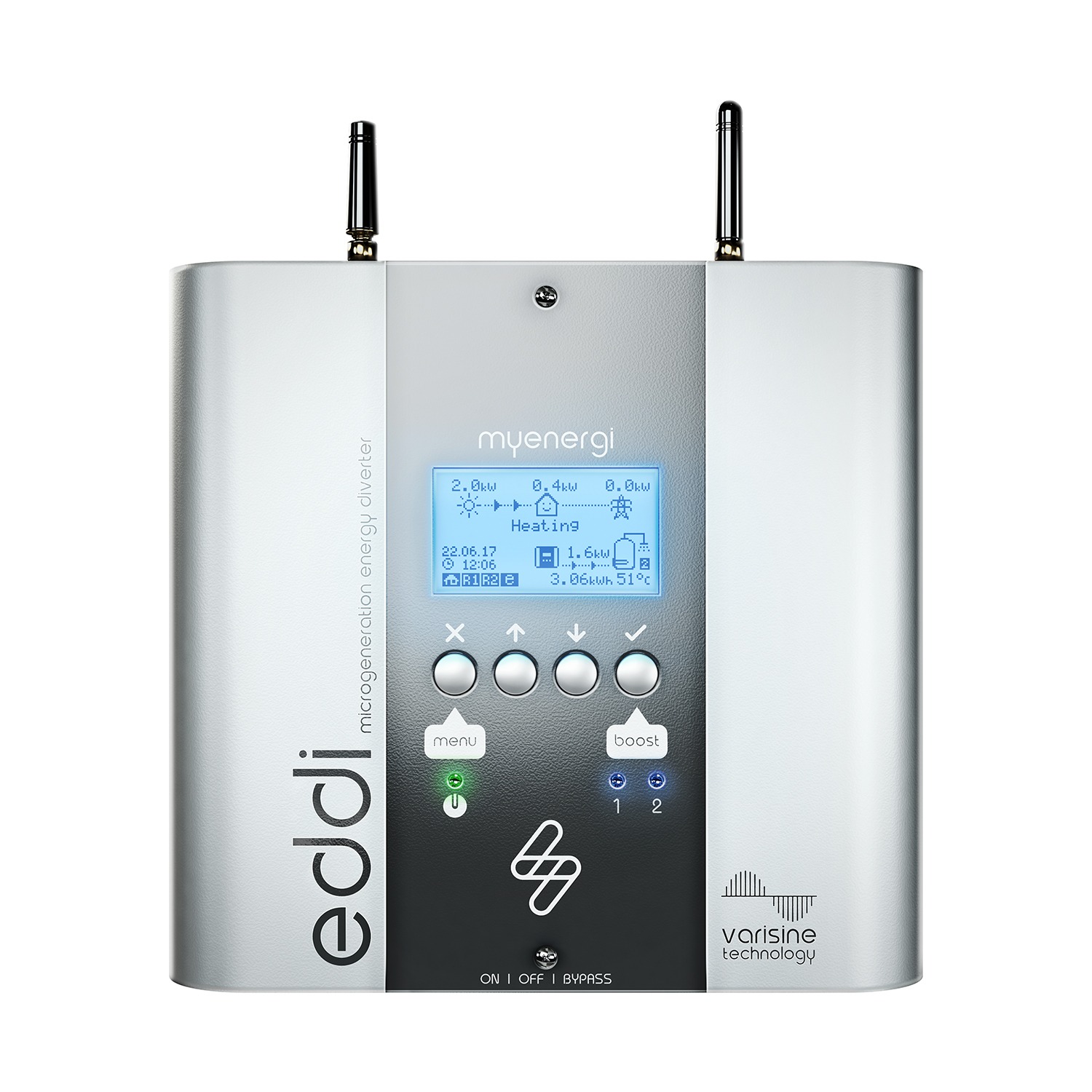
myenergi Eddi Solar Diverter
£1853000
power_divert,timed_boost
2
configurable
Affiliate link — we may earn a small commission at no extra cost to you
This gives you the best of both worlds: electricity when you need it, hot water when you don't.
Lower Maintenance
PV panels have no moving parts and need minimal maintenance. Solar thermal systems have a pump, fluid, valves, and expansion vessel — all of which need periodic checking and eventual replacement.
Longer Lifespan
PV panels are warranted for 25 years and typically last 30+. Solar thermal panels are warranted for 10–15 years, and the associated pump and fluid need attention before then.

When Solar Thermal Still Makes Sense
Very Limited Roof Space
If you only have 3–4 m² of suitable roof, you can't fit enough PV panels to be worthwhile. Two solar thermal panels in that space could provide 50–70% of your hot water.
High Hot Water Demand
Households using lots of hot water (large families, frequent bathing rather than showering) get more from thermal because the panels are more efficient per square metre at converting sunlight to usable heat.
No Immersion Heater or Cylinder
If your home doesn't have a hot water cylinder (common with combi boilers) and you want solar hot water, thermal panels with a new cylinder is a viable option. PV + diverter also needs a cylinder, so neither option avoids this cost.
Existing System Replacement
If you already have a solar thermal system that's reached end of life, replacing like-for-like may be simpler and cheaper than converting to PV + diverter.
The PV + Diverter Setup Explained
Here's how solar PV heats water in practice:
- Solar panels generate electricity
- Your home uses what it needs for appliances, lights, etc.
- Any surplus is detected by the diverter (Eddi, iBoost+, or similar)
- The diverter sends surplus electricity to the immersion heater in your hot water cylinder
- Only genuine surplus after home use and hot water goes to grid export
This is intelligent: it prioritises your immediate electricity needs, then hot water, then export. On a good summer day, your cylinder will be fully heated by solar by mid-afternoon. In winter, the immersion tops up less but you're still generating some electricity for other uses.
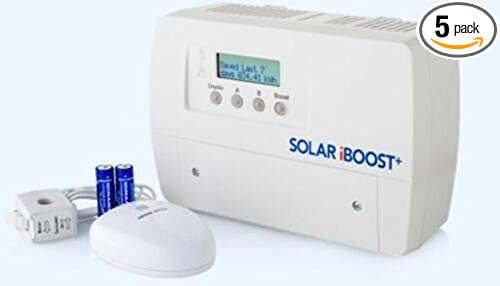
Solar iBoost+ Immersion Heater Controller
£1503000
auto_divert,manual_boost
1
true
Affiliate link — we may earn a small commission at no extra cost to you
Diverter Costs
A myenergi Eddi costs around £400–£500 installed. A Solar iBoost+ costs around £300–£400. Compare this with a full solar thermal installation at £3,000–£5,000. The diverter route is dramatically cheaper if you already have PV panels and a hot water cylinder with an immersion heater element.
What About Solar Thermal + PV Together?
Some homes have both — typically where thermal was installed years ago and PV has been added later. This works but there are diminishing returns: both systems compete for the same solar resource (roof space and sunlight), and in summer both may try to heat water that's already hot.
If you're starting from scratch, PV + diverter is almost always better value than PV + thermal.
The Efficiency Myth
Solar thermal advocates correctly point out that thermal panels are more efficient per square metre at converting sunlight to usable heat (typically 60–70% efficiency vs PV's 20–22%).
But this comparison is misleading for two reasons:
- PV panels are cheaper per square metre, so you can install more of them for the same budget
- PV electricity is more valuable because it's versatile — the 26p/kWh you save on electricity is worth more than the gas you'd save heating water (~7p/kWh equivalent)
When you compare value per pound spent rather than efficiency per square metre, PV wins decisively.

Our Recommendation
For the vast majority of UK homes in 2026:
- Install solar PV as your primary solar technology
- Add a diverter (Eddi or iBoost+) to handle hot water with surplus generation
- Skip solar thermal unless you have very limited roof space and high hot water demand
The PV + diverter combination costs less, lasts longer, earns export income, and gives you both electricity and hot water. Solar thermal's niche has shrunk to the point where it's rarely the best choice for a new installation.
For more on heating water with solar, see our solar hot water guide.
Share this article

OVO has carefully selected trusted teams across the UK to install solar panels and heat pumps. Enjoy the personal touch of a local expert with the peace of mind of a household name.
Affiliate link — we may earn a small commission at no extra cost to you
Stay informed
Get free solar updates direct to your inbox
Related reading
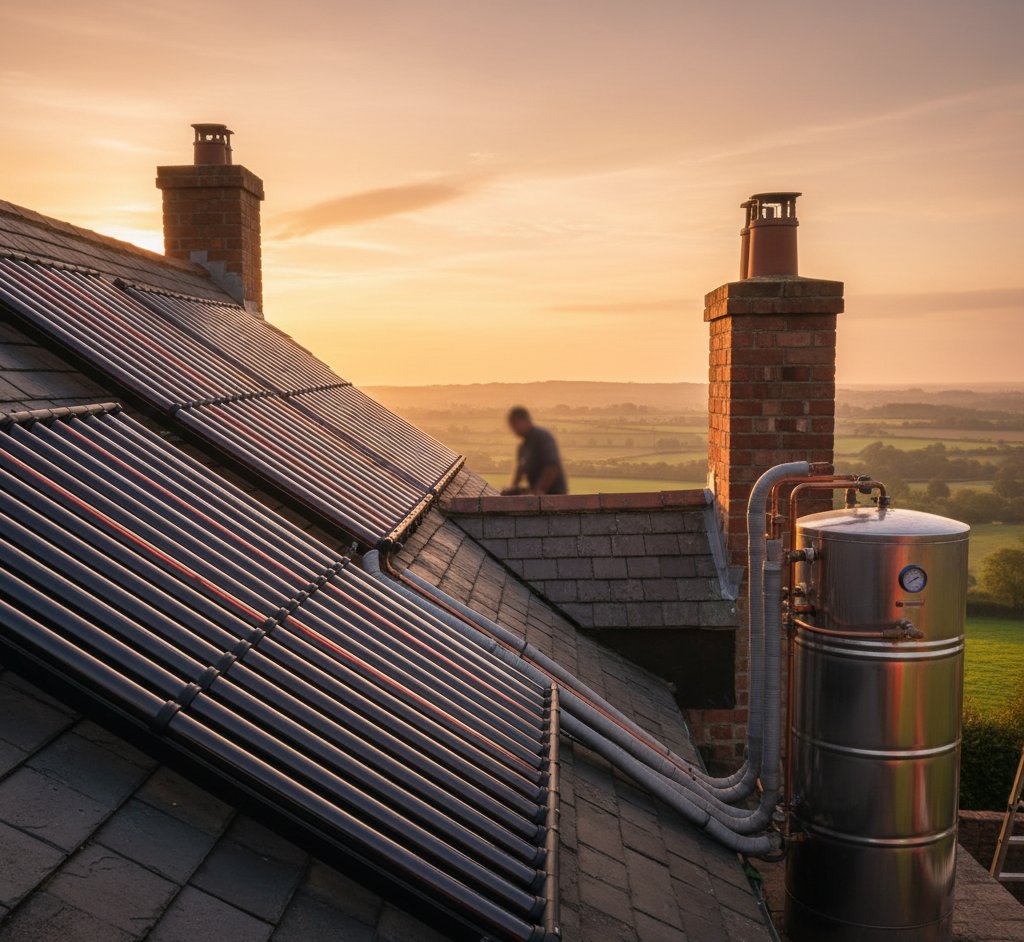
Solar Hot Water: Thermal Panels vs PV Diverters
How to heat your hot water with solar energy in the UK. Compare solar thermal panels, PV diverters like the Eddi and iBoost+, and which approach makes sense in 2026.

How Do Solar Panels Work? A Simple Explanation
A plain-English explanation of the photovoltaic effect, how solar electricity gets from your roof into your home, and what happens at night or on cloudy days.

How Much Do Solar Panels Cost in the UK in 2026?
Realistic UK solar panel costs broken down by system size, installation, and what actually affects the price you'll be quoted.


Switch to Octopus Energy
Get 50 credit when you switch. We get 50 too — win-win.
What does this mean for YOUR home?
Design your perfect solar setup in under 3 minutes. Free, no sign-up required.
Build Your Solar System