This page contains affiliate links. If you purchase through them we may earn a small commission at no extra cost to you. Learn more
V2X Explained: The Future of EV Energy Integration
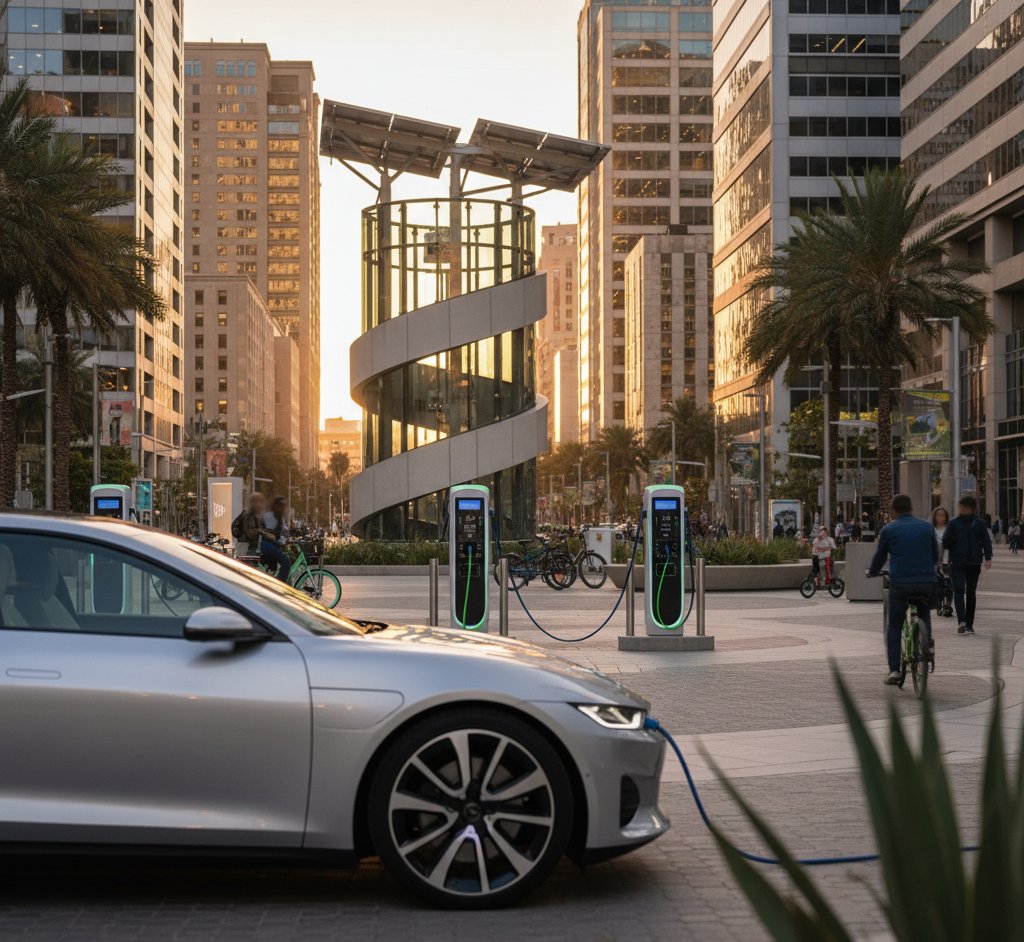
What does V2X mean?
V2X stands for "Vehicle-to-Everything" — it's the catch-all term for any technology that allows an electric vehicle to discharge its battery to something other than its own wheels.
The "X" can be:
- V2L — Vehicle-to-Load (powering devices and appliances directly)
- V2H — Vehicle-to-Home (powering your house)
- V2B — Vehicle-to-Building (powering commercial buildings or workplaces)
- V2G — Vehicle-to-Grid (exporting power to the electricity grid)
Each represents a different scale and complexity of energy flow, but they all share the same core idea: your EV battery is a large, mobile energy store that can do useful work beyond transportation.
The four types of V2X
V2L — Vehicle-to-Load
The simplest form. A standard household socket (typically 13A, 3kW) built into the car lets you plug in devices directly. Think of it as a massive portable power bank.
Common uses:
- Camping (lights, fridge, cooker)
- Outdoor events and markets
- Power tools on a building site
- Emergency power for essential devices
Available now on: Hyundai Ioniq 5/6, Kia EV6/EV9, BYD models, Genesis GV60, MG4, and others.
V2L doesn't require any special charger or home installation. The car has a built-in socket — you just plug things in. Most V2L-capable EVs provide 3.6kW, enough to run a kettle, microwave, or small heater.
V2H — Vehicle-to-Home
A step up from V2L. V2H integrates your EV with your home's electrical system through a bidirectional charger. Instead of plugging individual devices into the car, your entire home draws power from the EV battery.
Key differences from V2L:
- Requires a bidirectional charger (£3,000–6,000)
- Professional installation required
- Powers your whole home, not just what you can plug in
- Can provide backup power during grid outages
- Integrates with solar and home energy management
V2B — Vehicle-to-Building
The commercial version of V2H. Employee EVs plugged into workplace chargers can provide power to the office building during peak demand, reducing the building's electricity costs.
How it works in practice:
- Employees arrive and plug in their EVs
- Building energy management system draws power from EVs during expensive peak hours
- EVs recharge during cheaper off-peak periods
- Employees are compensated for the energy used
V2B is primarily being developed for fleet operators and commercial settings. For individual homeowners, V2H is the relevant technology.
V2G — Vehicle-to-Grid
The most ambitious form. V2G allows your EV to export power to the national electricity grid, not just your home. You become a micro power station, earning money by providing electricity and grid-balancing services during peak demand.
Why V2X matters for solar owners
If you have solar panels, V2X amplifies your investment:
Without V2X: Solar generates → you use what you can → surplus exports at around 12p/kWh → evening you buy electricity at ~24p/kWh.
With V2X: Solar generates → charges your EV for free → evening your EV powers your home (V2H) or exports to the grid at peak rates (V2G) → overnight your EV recharges cheaply.
The EV battery bridges the gap between when solar generates (daytime) and when you need power (evening). It's essentially a home battery that also drives you to work.
The scale advantage: A typical home battery stores 5–10kWh. A typical EV battery stores 50–80kWh. Even dedicating just 25% of an EV's battery to home energy provides 12.5–20kWh of storage — more than most home battery systems.
V2X turns a cost centre into an asset
Without V2X, your EV is purely a cost — electricity in, miles out. With V2X, your EV generates income from grid services, saves money by powering your home from cheap/free electricity, and provides emergency backup. It shifts from a depreciating transport asset to an appreciating energy asset.
The current state of V2X in the UK

What works today
- V2L is widely available and works out of the box on many EVs
- V2H is possible with select vehicles (Nissan Leaf, Ioniq 5, EV6) and bidirectional chargers
- V2G is operational in trials and early commercial deployments
What's coming
- CCS bidirectional standard — the main European charging standard (CCS) is finalising its bidirectional specification, which will dramatically expand compatible vehicles
- More bidirectional chargers — several manufacturers are bringing products to market at lower price points
- Software unlocks — some existing EVs may gain bidirectional capability through software updates (VW Group has announced this)
- Regulatory framework — Ofgem and BEIS are developing rules for widespread V2X deployment
What's blocking progress
- Vehicle manufacturer hesitancy — concerns about battery warranty implications
- Charger costs — bidirectional chargers remain 3–5x more expensive than standard ones
- Grid connection rules — V2G requires DNO approval, similar to solar but less streamlined
- Consumer awareness — most EV owners don't know V2X exists
Don't buy V2X capability you can't use yet
Some EV manufacturers market V2L capability prominently while V2H/V2G requires specific chargers that may not be available in the UK yet. Before paying extra for a V2X-capable vehicle specifically for home energy use, confirm that compatible bidirectional chargers are actually available and that your DNO will approve the installation.
V2X and the UK energy transition
The UK has committed to decarbonising its electricity grid by 2035 and reaching net zero by 2050. V2X plays a crucial role in this transition:
The challenge: Renewable energy (wind and solar) is intermittent. The grid needs massive amounts of energy storage to balance supply and demand.
The V2X solution: By 2030, the UK could have 10+ million EVs. If even 20% participate in V2X, that's 2 million vehicles × 60kWh average = 120GWh of distributed storage. For context, the UK's total grid-scale battery storage in 2025 was approximately 4GWh.
V2X doesn't require building new battery factories or finding sites for grid-scale installations. The batteries are already being manufactured and purchased by consumers for transport. V2X simply unlocks their potential as energy assets.
What to consider when buying an EV
If V2X matters to you (and it probably should, given the direction things are heading), consider these factors:
-
Battery chemistry — LFP (lithium iron phosphate) batteries handle cycling better than NMC. They're becoming more common in EVs (Tesla Model 3 Standard Range, BYD models).
-
Bidirectional hardware — check if the vehicle supports bidirectional charging. CCS bidirectional is the standard to watch. CHAdeMO (Nissan Leaf) works but is being phased out.
-
Battery size — larger batteries give more V2X headroom while maintaining driving range. A 77kWh battery can dedicate 20kWh to V2X and still have 57kWh for driving.
-
Manufacturer warranty position — get clarity on whether V2X usage is covered. Some manufacturers explicitly support it; others are silent.
-
Compatible charger availability — no point having a V2X-capable car if no charger works with it in the UK.

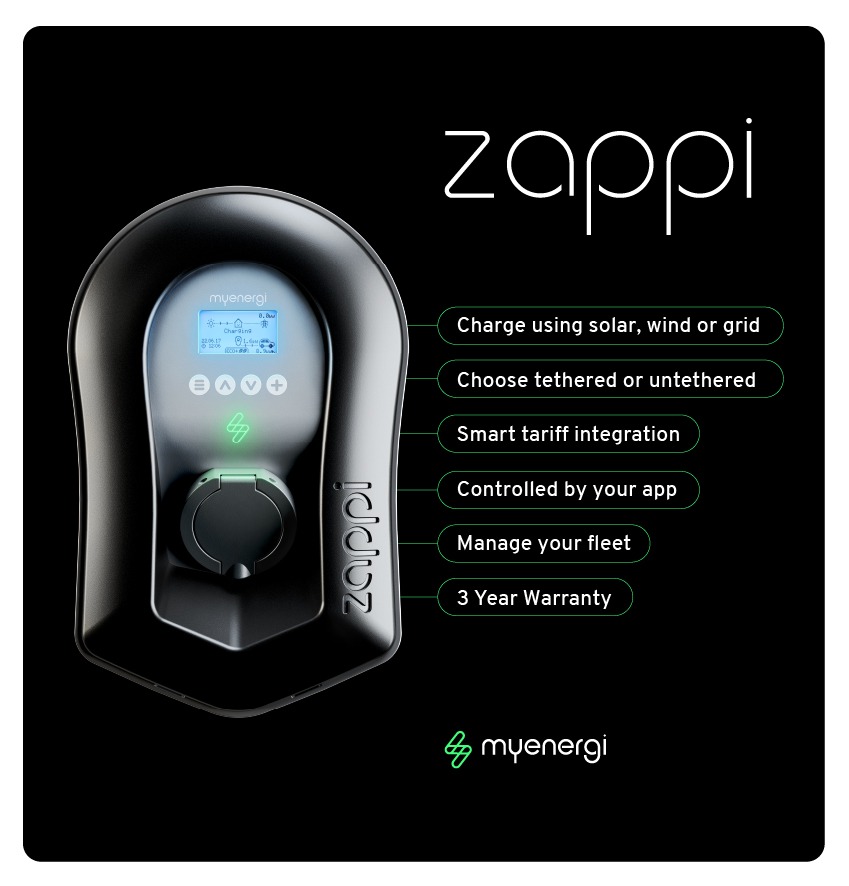
myenergi Zappi 22kW EV Charger
£78022
7.4
22
fast,eco,eco_plus
Affiliate link — we may earn a small commission at no extra cost to you
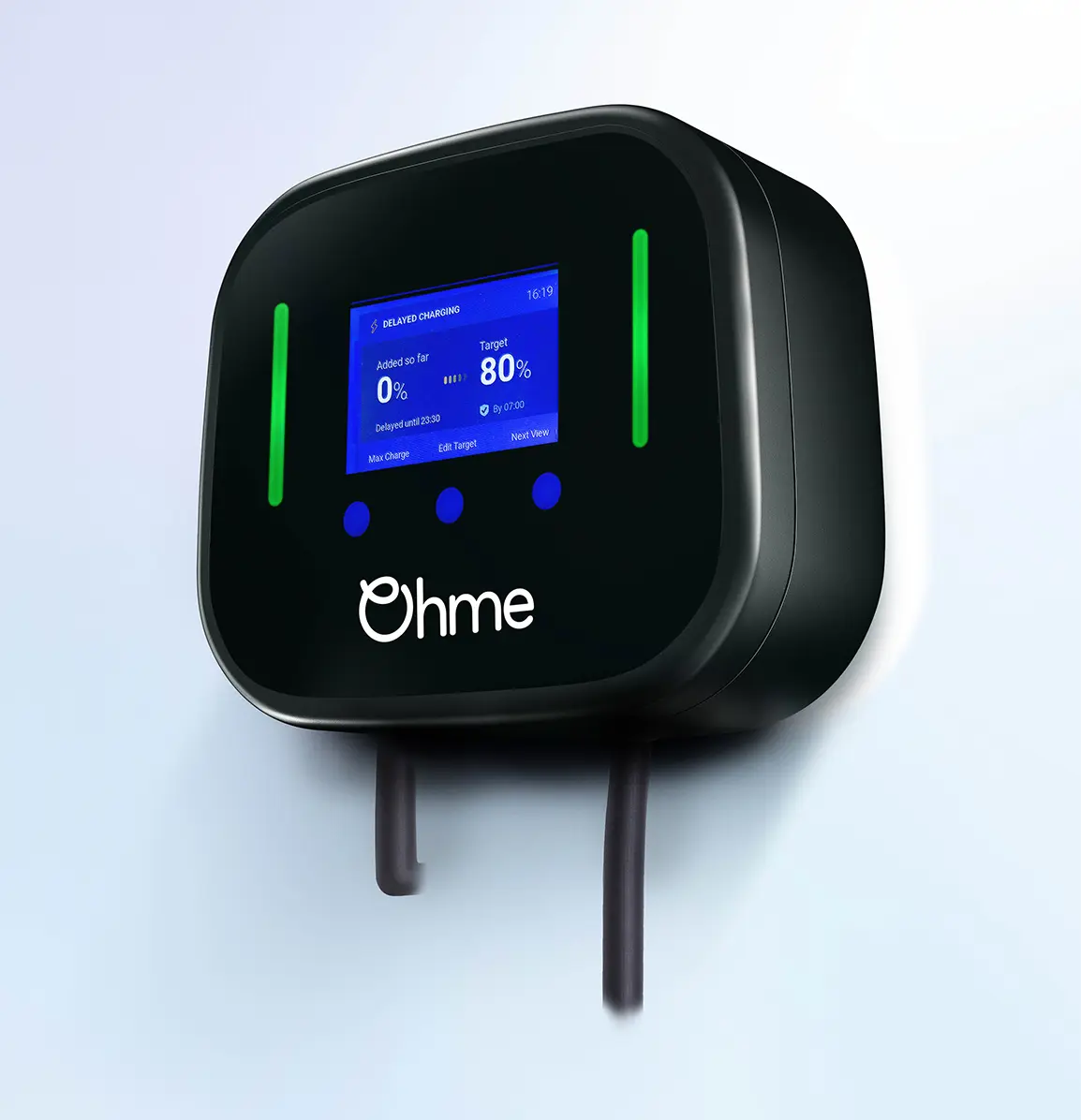
Ohme Home Pro 7.4kW EV Charger
£6007.4
smart,scheduled,manual
false
true
Affiliate link — we may earn a small commission at no extra cost to you
The bottom line
V2X is not a distant future technology — parts of it (V2L) work today, and V2H/V2G are operational for early adopters. The economics are compelling, especially for solar households.
Within the next 3–5 years, V2X will likely become a standard feature of EV ownership. When buying your next EV, future-proofing for V2X capability is a smart move. When planning your solar + battery system, consider whether a V2X-capable EV might reduce or eliminate the need for a dedicated home battery.
The convergence of solar, EVs, and smart energy management is happening. V2X is the technology that ties them all together.
Share this article

Leading UK provider of electric car charging cables and EV accessories. Cables for all UK and EU models, with fast delivery and expert support.
Affiliate link — we may earn a small commission at no extra cost to you
Stay informed
Get free solar updates direct to your inbox
Related reading

Vehicle to Home (V2H): Using Your EV as a Battery
How vehicle-to-home (V2H) technology lets you power your UK home from your EV battery — compatible cars, chargers, savings potential, and current limitations.
Vehicle to Grid (V2G): Getting Paid to Charge Your EV
How vehicle-to-grid (V2G) technology works in the UK — earning money by sending EV power back to the grid, trial results, and when it will become mainstream.
Solar Battery Storage: Complete UK Guide 2026
Everything you need to know about adding battery storage to a UK solar installation — types, sizing, costs, and which products are worth considering in 2026.


Switch to Octopus Energy
Get 50 credit when you switch. We get 50 too — win-win.
What does this mean for YOUR home?
Design your perfect solar setup in under 3 minutes. Free, no sign-up required.
Build Your Solar System