This page contains affiliate links. If you purchase through them we may earn a small commission at no extra cost to you. Learn more
Vehicle to Grid (V2G): Getting Paid to Charge Your EV
What is Vehicle to Grid (V2G)?
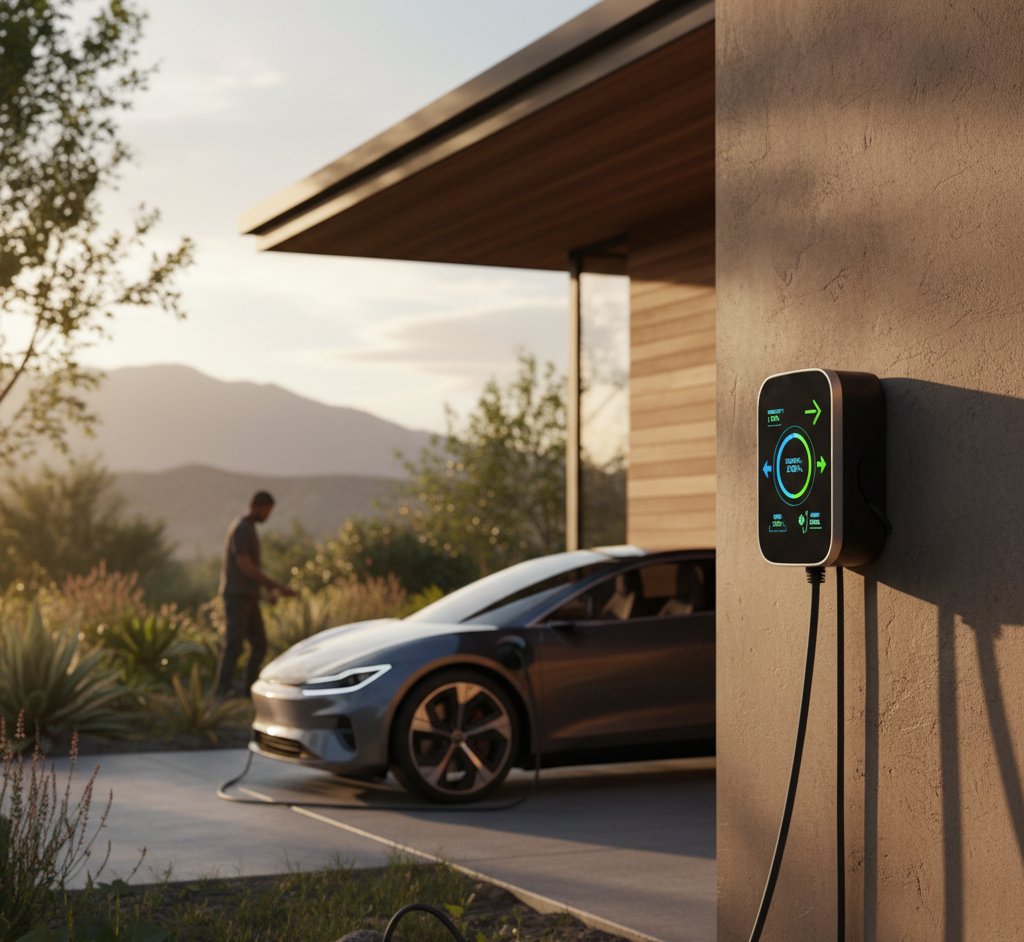
Vehicle to Grid takes V2H a step further. Instead of just powering your home, V2G allows your EV to export electricity back to the national grid — and get paid for it.
The concept is simple: charge your EV when electricity is cheap or free (overnight, from solar), then sell that stored energy back to the grid during peak demand periods when wholesale prices are high. Your car becomes a mobile power station.
The UK grid operator (NESO) desperately needs flexible storage to balance the increasing proportion of renewable generation. Millions of EVs sitting on driveways represent an enormous distributed battery network. V2G is the mechanism to unlock that potential.
How V2G makes money
V2G income comes from several sources:
Arbitrage (buy low, sell high)
Charge at ~5.5p/kWh overnight on Octopus Go. Export at 25–35p/kWh during the 4–7pm peak via Agile Outgoing or a V2G aggregator. The spread (20–30p/kWh) is your profit.
On 10kWh of daily cycling: 10 × 22p average spread = £2.20/day = £803/year.
Grid services (frequency response)
The grid must maintain a frequency of exactly 50Hz. When demand exceeds supply, frequency drops; when supply exceeds demand, it rises. V2G-connected EVs can respond in milliseconds — injecting or absorbing power to help maintain 50Hz.
Grid operators pay a premium for this service. V2G aggregators (companies that coordinate many EVs to act as one virtual power plant) pass some of this payment to you. UK trial participants have earned £200–400/year from frequency response alone.
Demand flexibility services
Schemes like Octopus's "Saving Sessions" and National Grid ESO's Demand Flexibility Service pay households to reduce consumption or export during stress events. A V2G-connected EV can export several kWh during these events, earning premium payments.
UK V2G trials and results
Several significant V2G trials have run in the UK:
Octopus Energy Powerloop:
- Participants used Nissan Leafs with V2G chargers
- Average savings/earnings of £600–800/year
- Demonstrated that V2G is technically viable for everyday users
- Informed the development of Octopus's smart tariff offerings
Indra V2G trials:
- UK-designed bidirectional charger
- Working with multiple vehicle manufacturers
- Focused on domestic installations with solar integration
Innovate UK / UKRI funded projects:
- Multiple projects exploring V2G at scale
- Testing how thousands of V2G vehicles can act as a virtual power plant
- Exploring the regulatory framework needed for widespread deployment
V2G aggregators are key
Individual households can't sell grid services directly to National Grid. V2G aggregators combine thousands of EVs into a "virtual power plant" and sell services on behalf of all participants. They handle the complexity — you just plug in your car and collect payments. Think of it like a solar farm, but made of car batteries spread across the country.
V2G + solar: the complete picture
Solar panels make V2G even more profitable:
Morning: Solar starts generating. Your home runs on solar.
Midday: Solar surplus charges your EV for free. Every kWh stored costs you nothing.
4–7pm: V2G discharges your EV to the grid at peak rates (25–35p/kWh). Since the electricity was free (solar), the entire payment is profit.
7pm–midnight: Your home runs on remaining EV charge or grid at standard rates.
Midnight–5am: EV recharges from the grid at cheap overnight rates (~5.5p/kWh on Octopus Go), ready for both driving and tomorrow's V2G cycle.
Annual value of solar + V2G (estimated):
- Solar generation value (self-consumption): £400–600
- V2G arbitrage income: £400–700
- V2G grid services income: £200–400
- Total energy value: £1,000–£1,700/year
This is on top of the value of free EV driving from solar and cheap overnight charging. The combination of solar + EV + V2G creates a remarkably efficient energy system.

V2G vs V2H: what's the difference?

| V2H | V2G | |
|---|---|---|
| Power flows to | Your home only | The grid (and your home) |
| Income source | Avoided import costs | Grid payments + avoided imports |
| Grid connection | Can work off-grid | Requires grid connection |
| Complexity | Moderate | Higher |
| Potential earnings | £600–800/year (savings) | £600–1,200/year (savings + income) |
| Regulatory requirements | Minimal | Must meet grid export standards |
V2G includes V2H capability — if you can export to the grid, you can certainly power your home. V2G is the more ambitious and potentially more lucrative option, but V2H is simpler to implement.
Current V2G limitations
Vehicle compatibility
The same constraints as V2H apply. Most EVs currently can't do bidirectional charging. The Nissan Leaf (via CHAdeMO), Hyundai Ioniq 5, Kia EV6, and select others support it. Tesla has announced but not yet delivered bidirectional capability in the UK.
Charger costs
Bidirectional chargers capable of V2G cost £3,000–£6,000 installed. This is a significant upfront investment, though payback from V2G income can be 4–7 years.
Regulatory framework
V2G requires your system to meet G98/G99 grid connection standards (the same as solar panels). Your DNO (distribution network operator) must approve the installation. The process is similar to solar panel grid connection but less well-established.
Battery degradation
The same concern as V2H, amplified slightly by more aggressive cycling for grid services. However, V2G income is intended to more than offset any accelerated battery wear. See the degradation discussion in our V2H guide.
Check your EV warranty carefully
Some EV manufacturers haven't explicitly stated whether V2G cycling is covered under their battery warranty. Before investing in a V2G charger, contact your vehicle manufacturer and get written confirmation that V2G use won't void your warranty. This is especially important for NMC-chemistry batteries, which are more sensitive to cycling than LFP.
When will V2G go mainstream?
The technology works. The economics work. The main barriers are vehicle compatibility and charger cost. Here's the expected timeline:
2026: Early adopters with compatible vehicles (Nissan Leaf, Ioniq 5, EV6) can participate. Limited charger options. V2G trials expanding.
2027–2028: More vehicles support bidirectional CCS charging. Charger costs drop below £2,000. V2G aggregator platforms mature. Government incentives likely.
2029–2030: V2G becomes a standard consideration when buying an EV. Most new EVs support it. Charger costs comparable to today's smart chargers. V2G income becomes a common factor in EV ownership economics.
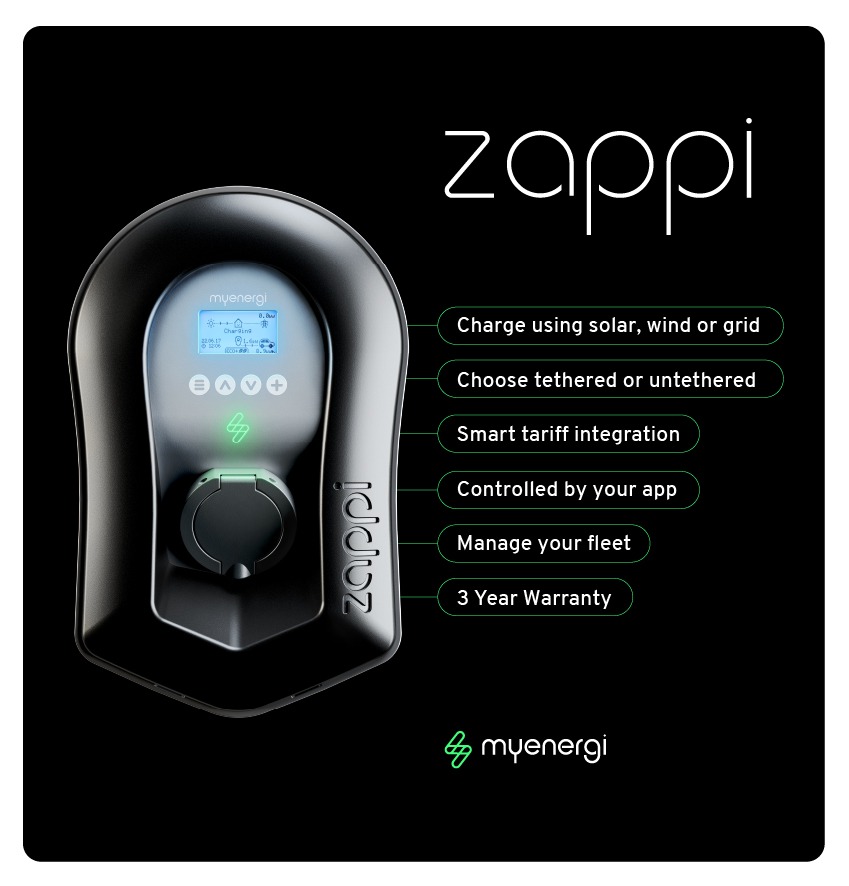
myenergi Zappi 22kW EV Charger
£78022
7.4
22
fast,eco,eco_plus
Affiliate link — we may earn a small commission at no extra cost to you

Wallbox Pulsar Plus 7.4kW EV Charger
£5507.4
smart,scheduled,manual
false
true
Affiliate link — we may earn a small commission at no extra cost to you
Should you plan for V2G?
If buying an EV now: Choose one that supports bidirectional charging, even if you don't plan to use V2G immediately. Future-proofing costs nothing if the vehicle already has the capability.
If installing a charger now: Consider whether a standard charger meets your needs today, or whether spending more on a bidirectional unit will pay off. If you're already investing in solar and plan to keep the EV for 5+ years, a bidirectional charger could be worthwhile.
If you have solar panels: V2G represents the next logical step in your home energy journey. Solar generates → battery stores → V2G earns. Each layer adds value to the one before it.
The UK's energy future depends on flexibility. V2G is one of the most powerful tools available to households. Even if you're not ready today, understanding V2G will help you make better decisions about your next EV, charger, and energy setup.
Share this article

Leading UK provider of electric car charging cables and EV accessories. Cables for all UK and EU models, with fast delivery and expert support.
Affiliate link — we may earn a small commission at no extra cost to you
Stay informed
Get free solar updates direct to your inbox
Related reading

Vehicle to Home (V2H): Using Your EV as a Battery
How vehicle-to-home (V2H) technology lets you power your UK home from your EV battery — compatible cars, chargers, savings potential, and current limitations.
V2X Explained: The Future of EV Energy Integration
What V2X means for UK EV and solar owners — vehicle-to-everything technology covering V2H, V2G, V2L, and V2B, and why it matters for the energy transition.

Octopus Agile Tariff: Is It Worth It with Solar?
A detailed look at the Octopus Agile tariff for UK solar households — how half-hourly pricing works, real savings potential, and who should avoid it.


Switch to Octopus Energy
Get 50 credit when you switch. We get 50 too — win-win.
What does this mean for YOUR home?
Design your perfect solar setup in under 3 minutes. Free, no sign-up required.
Build Your Solar System