This page contains affiliate links. If you purchase through them we may earn a small commission at no extra cost to you. Learn more
On-Street EV Charging: No Driveway Solutions
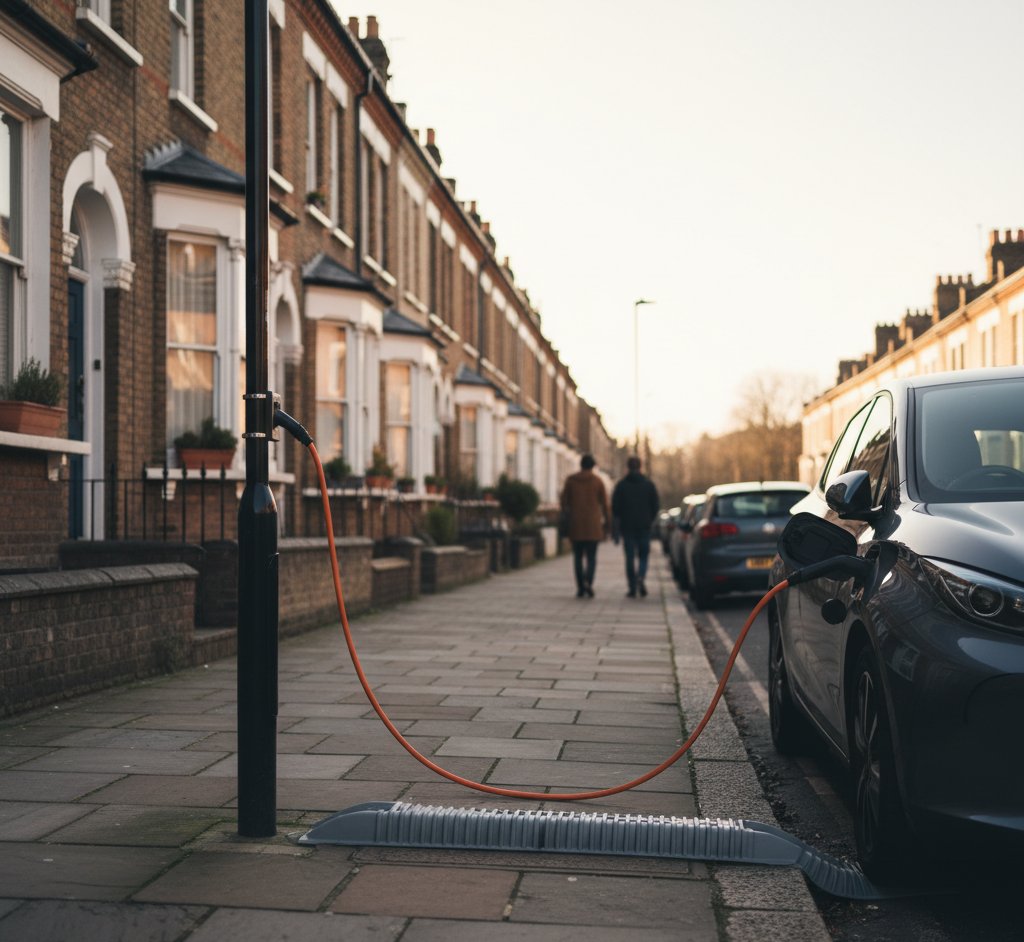
The UK's driveway problem
Around 40% of UK households park on the street — no driveway, no garage, no private off-street parking. For these households, the standard advice of "install a home charger" doesn't apply. This is one of the biggest barriers to EV adoption in the UK.
The good news: solutions are developing rapidly. The bad news: they're not yet as convenient or cheap as having a charger on your own wall.
Current on-street charging options
Lamppost chargers
Companies like Ubitricity, Trojan Energy, and char.gy have partnered with local councils to install EV charging sockets inside or alongside existing lampposts. These are the most common on-street solution.
How they work: A slow charger (3.6–7kW) is integrated into a street lamppost near your home. You plug in overnight and charge at similar speeds to a home wallbox. You typically pay via an app.
Costs: 30–45p/kWh (more expensive than home charging at 7–24p/kWh, depending on tariff). No installation cost to you — the council and charging company handle it.
Availability: Patchy. Coverage is expanding (10,000+ lamppost chargers in the UK by 2026), but availability depends entirely on your local council's investment. London boroughs lead; rural areas lag significantly.
Dedicated on-street charge points
Purpose-built on-street chargers installed by networks like BP Pulse, Connected Kerb, or local authority initiatives. These are standalone units on the pavement, typically offering 7–22kW.
Advantages: Faster than lamppost chargers, dedicated parking bay, more reliable. Disadvantages: Still more expensive than home charging, parking bay may be occupied by non-EVs, and coverage is inconsistent.
Community charging hubs
Centralised locations with multiple chargers — often in car parks, supermarkets, or purpose-built hubs. Some offer rapid charging (50kW+) for quick top-ups.
For regular use: More practical than you might think. If there's a hub within walking distance of your home, you can leave the car charging while you shop or walk home. Some people develop a weekly routine of hub-charging.
Costs: Rapid chargers: 55–80p/kWh. Slower destination chargers: 30–50p/kWh. Significantly more expensive per kWh than home charging.
Cable channels and gullies
Some councils now allow the installation of cable channels — small covered troughs cut into the pavement that allow you to run a charging cable from your house to a car parked on the street without creating a trip hazard.
How they work: A permanent channel is cut across the pavement. A flat, flush cable channel cover sits over it. You run your charging cable through the channel when charging and remove it when done.
Council permission: Essential. You must apply for a pavement licence. Some councils actively encourage this; others refuse. It varies enormously by area.
Cost: £500–£1,500 for the channel installation, plus the cost of a home charger inside your property (from which the cable runs).
Check your council's EV charging policy
Every local authority has a different approach to on-street charging. Some have ambitious plans with hundreds of chargers; others have done almost nothing. Before choosing an EV, search "[your council name] EV charging strategy" to understand what infrastructure exists and what's planned.
The cable-across-the-pavement question
Many prospective EV owners ask: "Can't I just run a cable from my house across the pavement to my car?"
The short answer: Generally, no.
The legal position: Running a cable across a public pavement creates a trip hazard. Under the Highways Act 1980, you can be held liable for any injuries. Your home insurance may not cover claims from someone tripping over your cable. Local authorities can issue notices requiring removal.
The practical position: Some people do it, using cable covers/ramps. A few areas tolerate it informally. But it's not a reliable long-term solution, and it's technically not permitted in most places.
Cable channels (discussed above) are the legal alternative — a permanent, flush installation that eliminates the trip hazard.
Insurance and liability warning
If someone trips over your EV charging cable on a public pavement and is injured, you could face a personal injury claim. Standard home insurance may not cover this. If you're considering running a cable across a pavement, check with your insurer AND your local council first. The safer route is to apply for a proper cable channel installation.
How solar panels still help without home charging

If you have solar panels but can't charge at home, solar still reduces your EV running costs — just indirectly:
Lower electricity bills free up money for public charging
Solar panels reduce your grid electricity consumption. The money saved on home electricity bills (£400–800/year) offsets the higher cost of public charging.
Workplace charging
If your employer has EV chargers (increasingly common), you can charge during work hours — sometimes for free. Your solar panels at home handle the household while you're away.
Smart tariff benefits
Even without home EV charging, solar panels make time-of-use tariffs more attractive. Your panels cover daytime needs while you benefit from cheap overnight rates for general household use.
Selling surplus strategically
Without an EV to charge at home, your solar surplus exports to the grid via the SEG or Agile Outgoing. On a good export tariff, this income partially offsets public charging costs.


Ohme Home Pro 7.4kW EV Charger
£6007.4
smart,scheduled,manual
false
true
Affiliate link — we may earn a small commission at no extra cost to you
What's coming: the future of on-street charging
The UK government recognises that on-street charging is critical to meeting EV adoption targets:
Local Electric Vehicle Infrastructure (LEVI) Fund: £381 million allocated to help local authorities install on-street charging. This is driving rapid expansion across England.
ORCS (On-street Residential Chargepoint Scheme): Provides funding to local authorities for chargepoints dedicated to residential on-street parking. Being rolled into the LEVI fund.
Right to charge legislation: Potential future legislation giving residents a legal right to request on-street charging near their home, similar to the right to a dropped kerb.
Wireless charging: Inductive charging pads embedded in the road surface are being trialled. No cable, no plugging in — you park over the pad and charging starts automatically. Still years from widespread deployment, but technically proven.
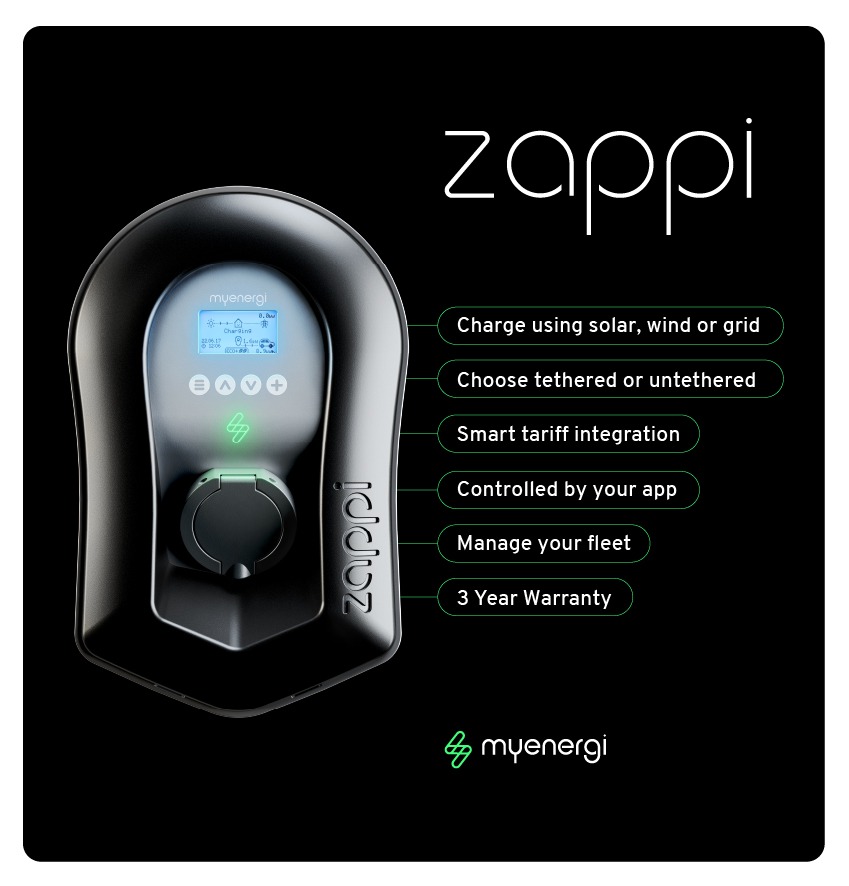
myenergi Zappi 22kW EV Charger
£78022
7.4
22
fast,eco,eco_plus
Affiliate link — we may earn a small commission at no extra cost to you
Practical advice for no-driveway EV ownership
-
Map your charging options — use Zap-Map to find every charger within walking distance of your home. Include lampposts, public car parks, supermarkets, and workplace chargers.
-
Calculate the cost honestly — on-street charging at 35–45p/kWh costs roughly 9–12p per mile. A petrol car costs 15–20p per mile. You still save money, just less than someone charging at home at 7p/kWh (2p per mile).
-
Petition your council — if there's no on-street charging near you, contact your local councillor and the council's transport department. The LEVI fund means money is available; councils need to know where demand exists.
-
Consider a cable channel — if your house fronts directly onto the street, a council-approved cable channel can give you the home-charging convenience. Apply early — the process takes months.
-
Plan your EV choice carefully — choose an EV with a large battery and efficient motor. Fewer charging sessions needed = less inconvenience.
The honest verdict
Not having a driveway makes EV ownership harder and more expensive than it should be. The infrastructure is improving rapidly, but it's not yet where it needs to be. If you're in this position, an EV is still likely cheaper than petrol over your ownership period — but the convenience factor depends heavily on your local charging infrastructure.
Solar panels at home remain a worthwhile investment regardless. They reduce your overall energy costs, provide export income, and position your home for a future where on-street and home charging converge. When charging does reach your street — and it will — the combination of solar generation and cheap EV charging will deliver substantial savings.
Share this article

Leading UK provider of electric car charging cables and EV accessories. Cables for all UK and EU models, with fast delivery and expert support.
Affiliate link — we may earn a small commission at no extra cost to you
Stay informed
Get free solar updates direct to your inbox
Related reading
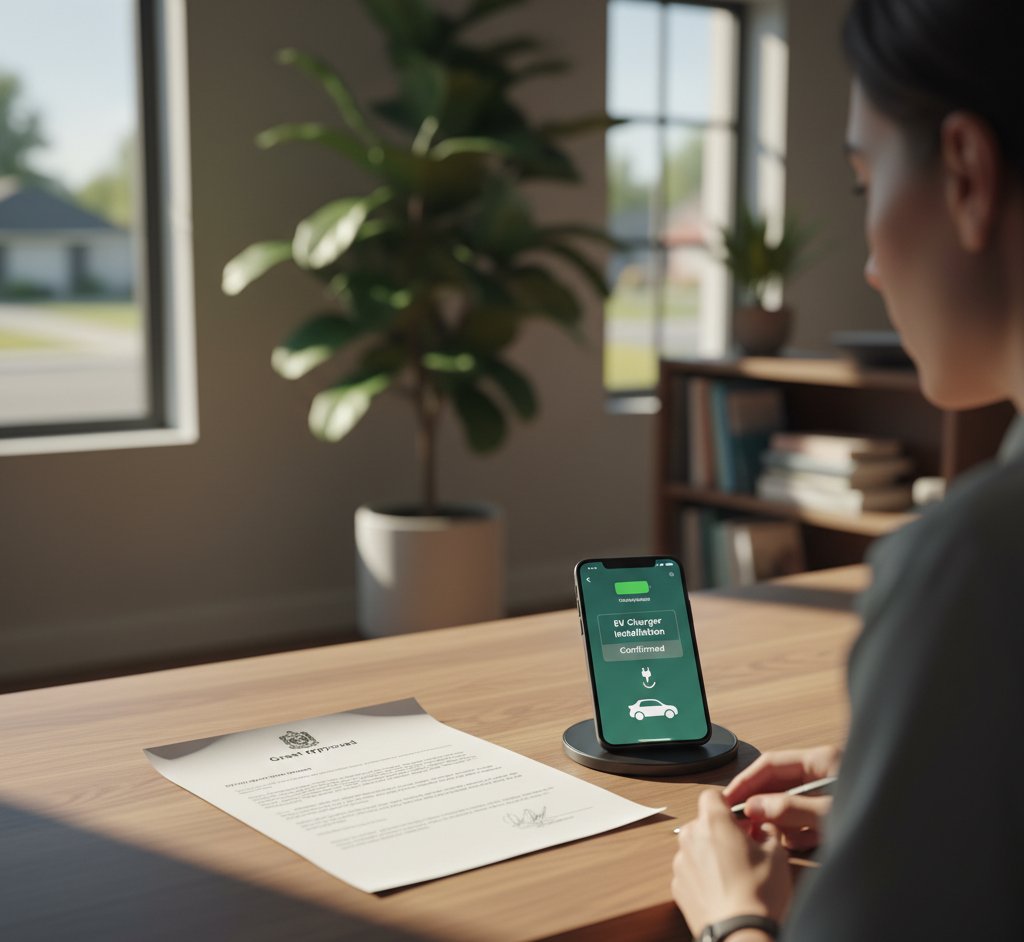
OZEV EV Charger Grant: How to Claim
How to claim the OZEV EV charger grant in the UK — eligibility criteria, how much you get, which chargers qualify, and the application process explained.
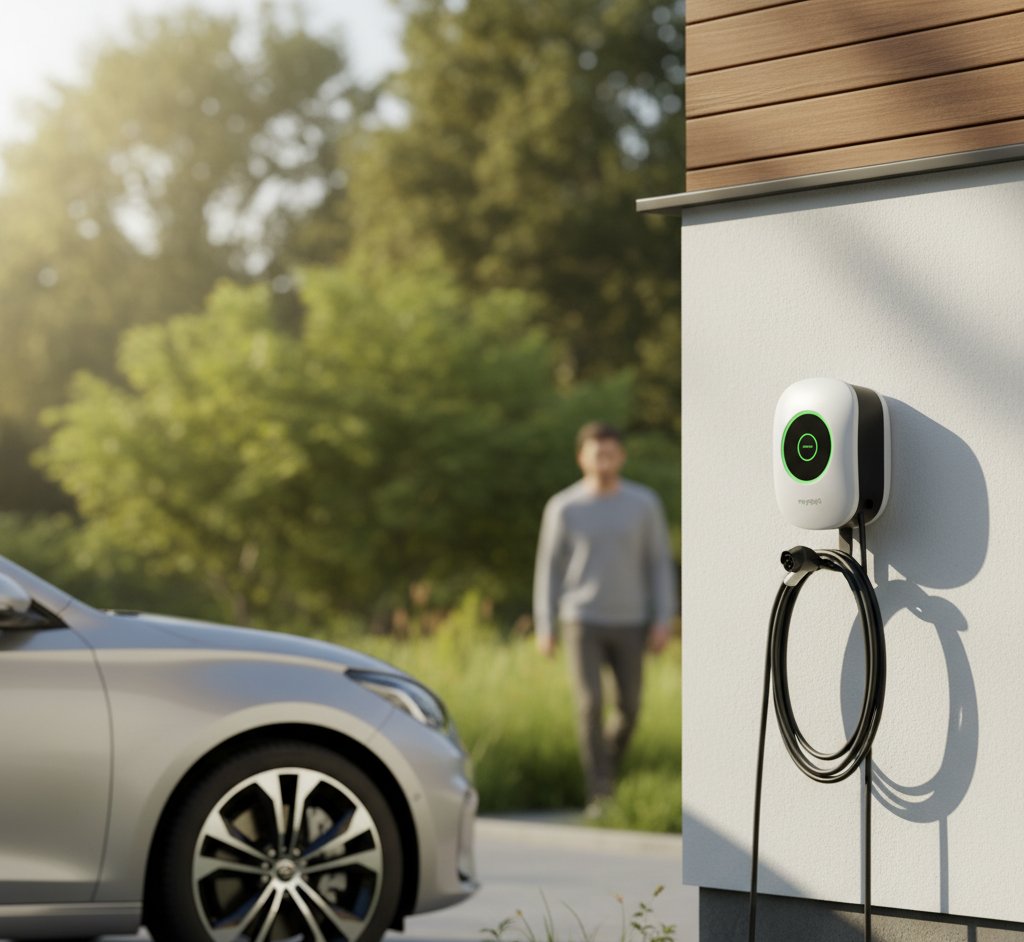
Myenergi Zappi: The Solar EV Charger
In-depth review of the Myenergi Zappi EV charger for UK solar homes — solar charging modes, installation, costs, and how it compares to standard chargers.
Smart Tariff EV Charging: Scheduling for Maximum Savings
How to schedule EV charging with UK smart tariffs and solar panels — combining Octopus Go, Agile, and Flux with solar to minimise your cost per mile.


Switch to Octopus Energy
Get 50 credit when you switch. We get 50 too — win-win.
What does this mean for YOUR home?
Design your perfect solar setup in under 3 minutes. Free, no sign-up required.
Build Your Solar System