This page contains affiliate links. If you purchase through them we may earn a small commission at no extra cost to you. Learn more
Smart Tariff EV Charging: Scheduling for Maximum Savings
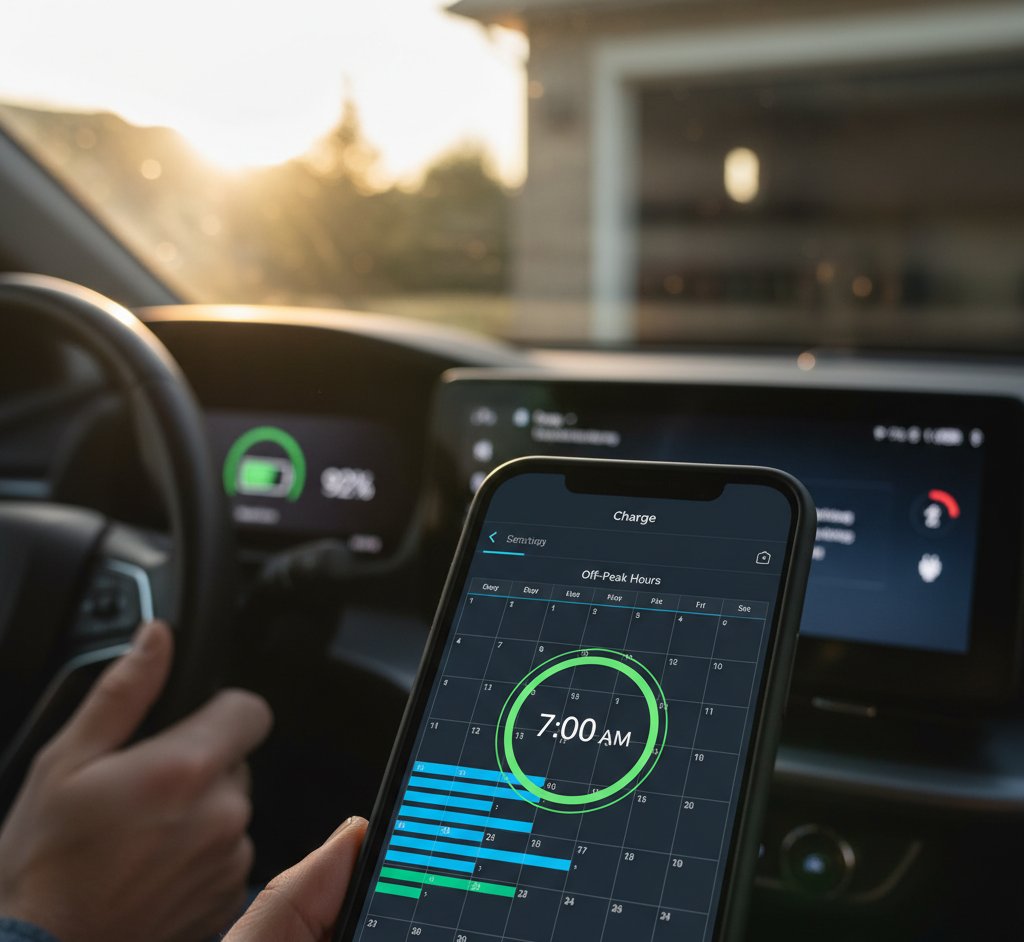
Why scheduling matters
The price of electricity varies dramatically depending on when you use it:
| Time | Typical cost | Source |
|---|---|---|
| Solar generation hours | 0p/kWh | Your roof |
| Overnight cheap tariff | 5.5p/kWh | Grid (Octopus Go etc.) |
| Standard daytime rate | 24p/kWh | Grid |
| Peak (4–7pm) | 24–32p/kWh | Grid (Agile/Flux peak) |
An EV consuming 2,400 kWh/year costs:
- At peak rate (28p): £672/year — 8.4p per mile
- At standard rate (24p): £576/year — 7.2p per mile
- At overnight rate (5.5p): £132/year — 1.65p per mile
- From solar (0p): £0/year — 0p per mile
The difference between the worst and best case is £672/year. Smart scheduling captures most of that saving with minimal effort.
The optimal daily charging strategy
For a solar household with a smart charger and time-of-use tariff, the ideal day looks like this:
Morning (6am–9am)
Your EV is fully charged from overnight cheap-rate electricity. You drive to work or start your day.
Midday (9am–4pm) — if car is home
Solar panels generate. A Zappi in Eco/Eco+ mode diverts surplus solar to the EV. Every kWh from solar is free — zero cost, zero carbon.
If you're at work, look for workplace charging. Many employers now offer free or cheap charging, often powered by their own solar installations.
Evening (4pm–midnight)
Car is plugged in but not charging. Electricity is expensive during peak hours. The charger waits for the cheap overnight window.
Overnight (midnight–5am)
The cheap tariff window opens. The charger starts automatically, topping up whatever the solar didn't cover during the day. At 5.5p/kWh, overnight charging costs roughly 1.6p per mile.
Matching charger to tariff
Different charger/tariff combinations offer different levels of automation:
Zappi + Octopus Go
- Daytime: Zappi Eco+ mode diverts solar surplus to EV
- Overnight: Zappi scheduled timer charges at Go's cheap rate
- Setup: Configure Zappi timer for 00:30–04:30 (Go window) and leave Eco+ on during the day
- Automation level: Semi-automatic (you set the timer once)
Zappi + Intelligent Octopus Go
- Daytime: Zappi Eco+ mode for solar charging
- Overnight: Intelligent Go controls charge scheduling via the Myenergi Hub
- Bonus: Intelligent Go provides extra cheap slots throughout the day
- Automation level: Fully automatic (Octopus manages the overnight schedule)
Ohme Home Pro + Octopus Agile
- Daytime: Limited solar awareness (Ohme has some solar features but less sophisticated than Zappi)
- Overnight: Ohme's built-in Agile integration selects the cheapest half-hour slots automatically
- Automation level: Fully automatic for grid scheduling, limited solar integration
Any smart charger + Octopus Flux
- Daytime: Solar charges EV if home; battery charges from solar
- Overnight: Charge during Flux off-peak window (02:00–05:00) at ~5.5p/kWh
- Peak (4–7pm): Battery exports at premium rate; EV doesn't charge
- Automation level: Timer-based, straightforward
The Zappi's solar modes are the differentiator
For solar households, the Myenergi Zappi stands out because it genuinely maximises solar self-consumption for EV charging. Other smart chargers are excellent at grid scheduling but weaker at solar diversion. If you have solar panels and an EV, the Zappi's Eco+ mode earns its premium through free daytime charging that other chargers can't match as effectively.
Real cost per mile across scenarios

Let's calculate the actual cost per mile for different setups (assuming 3.5 miles per kWh, typical for a modern EV):
No solar, no smart tariff (flat 24p):
- 24p ÷ 3.5 = 6.9p per mile
- Annual cost (8,000 miles): £549
No solar, Octopus Go (overnight at 5.5p):
- 5.5p ÷ 3.5 = 1.6p per mile
- Annual cost: £126
Solar + Zappi (50% solar, 50% Go overnight):
- Average: (0p × 0.5 + 5.5p × 0.5) ÷ 3.5 = 0.8p per mile
- Annual cost: £63
Solar + Zappi (80% solar in summer, mix year-round):
- Average effective rate: ~3p/kWh
- 3p ÷ 3.5 = 0.9p per mile
- Annual cost: £69
For comparison: a petrol car doing 40mpg costs approximately 17p per mile at current fuel prices. Even the worst EV scenario (7.1p) is less than half the petrol cost. The best solar scenario (0.9p) is twenty times cheaper.

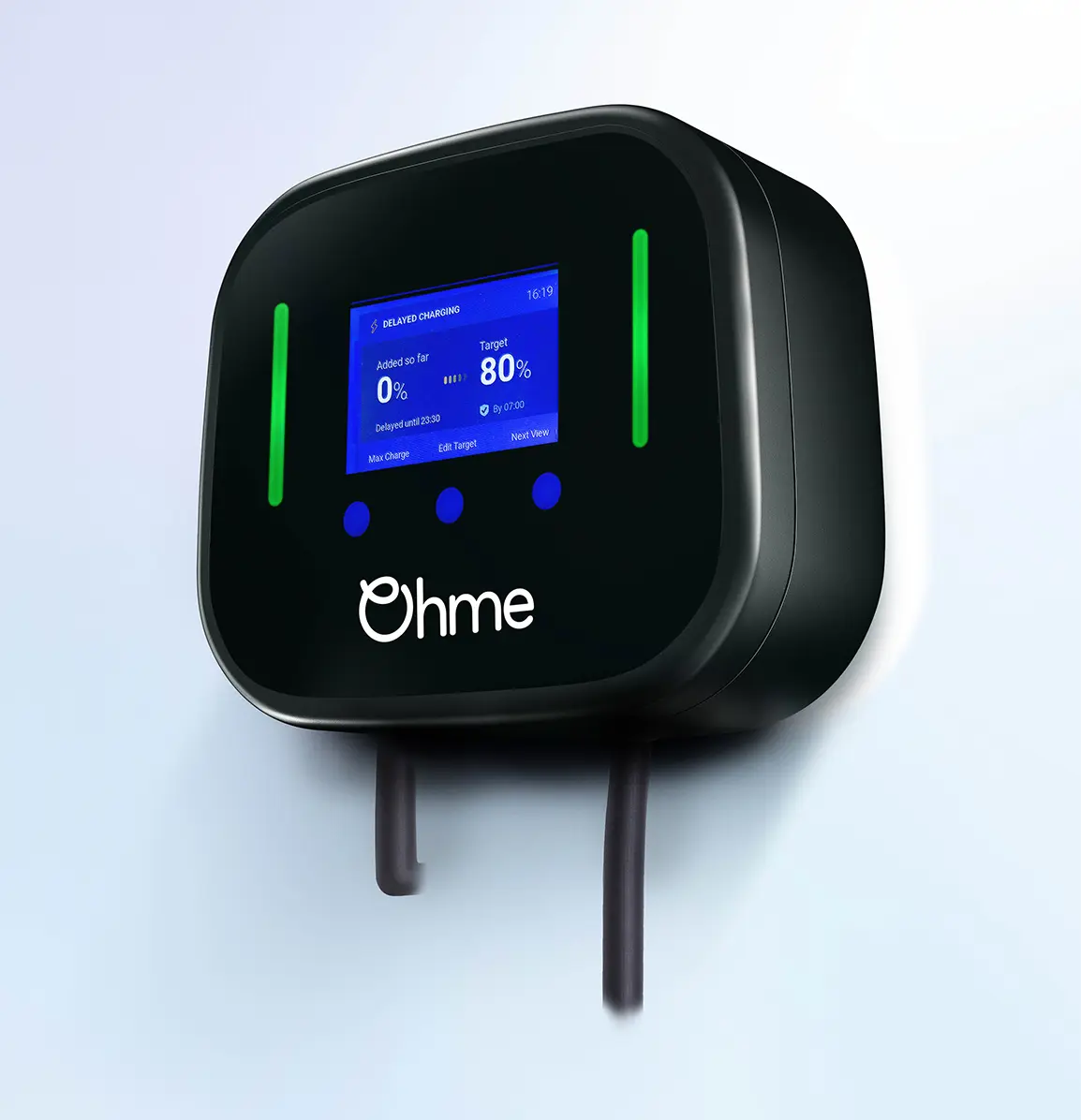
Ohme Home Pro 7.4kW EV Charger
£6007.4
smart,scheduled,manual
false
true
Affiliate link — we may earn a small commission at no extra cost to you
Setting up automated scheduling
Step 1: Choose your tariff
Match your tariff to your setup. See the tariff comparison guide for help choosing between Go, Intelligent Go, Agile, and Flux.
Step 2: Configure your charger
Zappi users:
- Set a boost timer for your tariff's cheap window (e.g., 00:30–04:30 for Go)
- Enable Eco+ mode for daytime solar charging
- Connect the Myenergi Hub for app control and Intelligent Go integration
Ohme users:
- Link your Octopus account in the Ohme app
- Select your tariff — Ohme automatically identifies cheap slots
- Set your departure time and target charge level
Other smart chargers:
- Use the charger's built-in timer to schedule overnight charging during your tariff's cheap window
- For Agile, you may need a third-party tool (Home Assistant, IFTTT) to optimise slot selection
Step 3: Set and forget
Once configured, the system handles daily scheduling automatically. Check the app occasionally to verify it's working, but resist the urge to over-manage. The automation does a better job than manual intervention in most cases.
Don't double-schedule
If you set a timer on both your charger AND your car's built-in charge scheduler, they can conflict. One might try to charge while the other blocks it, or both might activate at different times. Choose one control point — either the charger or the car — and disable scheduling on the other.
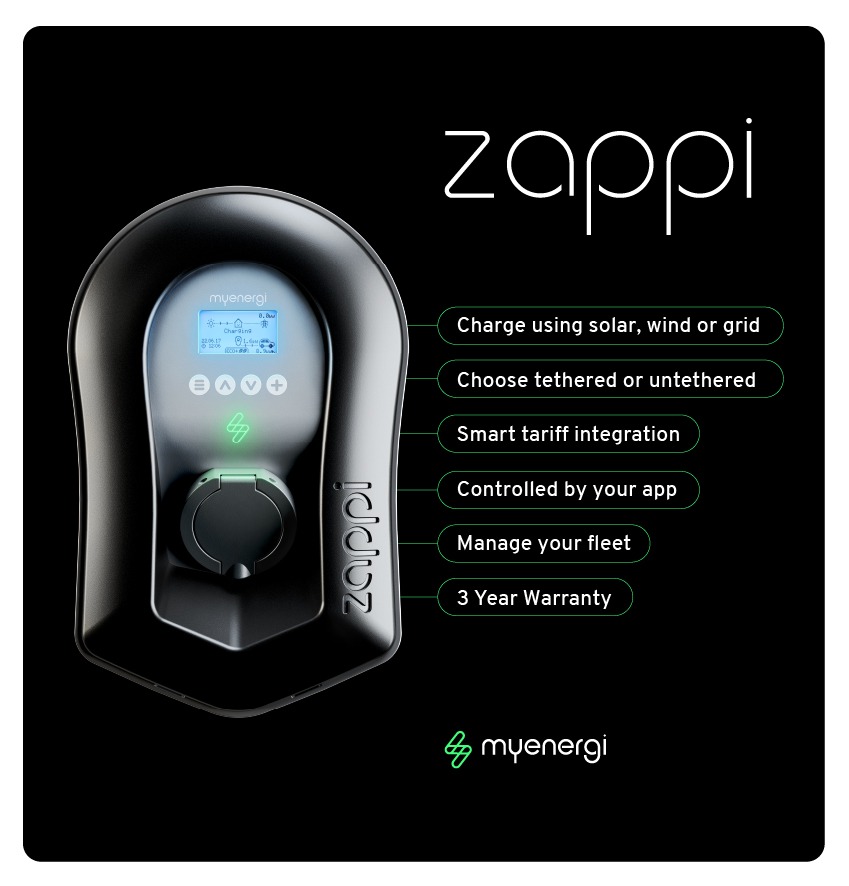
myenergi Zappi 22kW EV Charger
£78022
7.4
22
fast,eco,eco_plus
Affiliate link — we may earn a small commission at no extra cost to you
Advanced strategies
Pre-conditioning from solar
Many EVs let you pre-condition the cabin (heat or cool it) before driving. If your EV is plugged into a solar charger, pre-conditioning uses solar power — saving battery range for driving. Schedule pre-conditioning to complete just before you leave on a sunny day.
Weekend solar top-ups
If you drive to work on weekdays and the car is home on weekends, weekends are your prime solar charging opportunity. Leave the car plugged in all day Saturday and Sunday in Eco+ mode. A sunny weekend can add 30–50kWh — enough for a full week of commuting.
Seasonal adjustment
In summer, you may not need overnight grid charging at all — solar covers everything. Reduce or eliminate the overnight boost timer from April to September to avoid paying 5.5p for electricity you don't need. In winter, maximise overnight charging since solar contribution drops significantly.
Battery buffer strategy
If you have a home battery as well as an EV, consider the priority order. In most cases, the home battery should charge first (it covers your household's evening needs), with the EV getting whatever solar surplus remains. But if you need the car for a long drive tomorrow, override the priority and charge the EV first.
The numbers speak for themselves
The combination of solar panels, a smart EV charger, and a time-of-use tariff creates the cheapest possible personal transport. At 1–2p per mile, you're paying less than a bicycle when you factor in tyre and maintenance costs.
The upfront investment (solar + charger: £7,000–£12,000) pays back through combined electricity savings, reduced fuel costs, and export income. For a household that would otherwise spend £1,500/year on petrol and £600/year on electricity, the payback period is typically 5–8 years — after which you're saving £1,500+/year indefinitely.
That's not marketing spin. That's maths.
Share this article

Leading UK provider of electric car charging cables and EV accessories. Cables for all UK and EU models, with fast delivery and expert support.
Affiliate link — we may earn a small commission at no extra cost to you
Stay informed
Get free solar updates direct to your inbox
Related reading

Octopus Go and Intelligent Go Explained
How Octopus Go and Intelligent Octopus Go work for UK households with EVs and solar panels — rates, eligibility, and real-world savings in 2026.
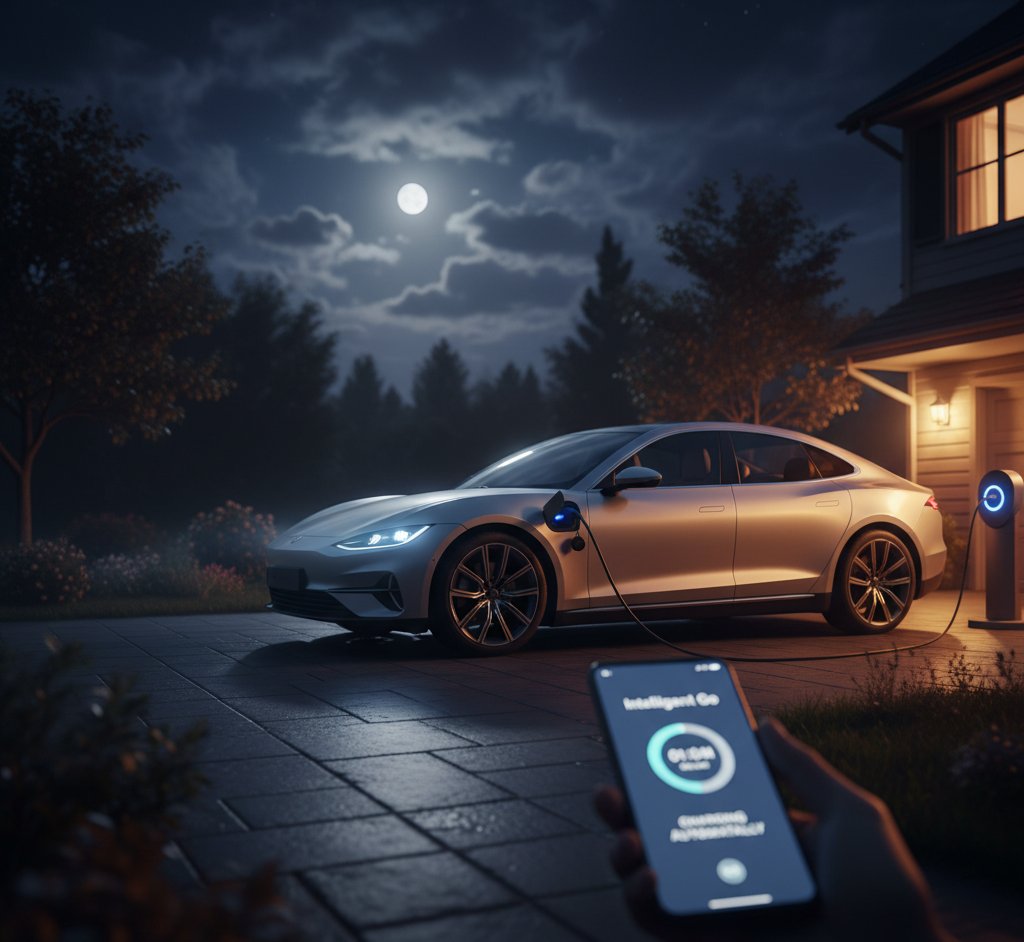
Intelligent Octopus Go: Solar + EV Charging
How Intelligent Octopus Go optimises EV charging for UK solar households — compatible chargers, smart scheduling, and real savings vs standard Go.
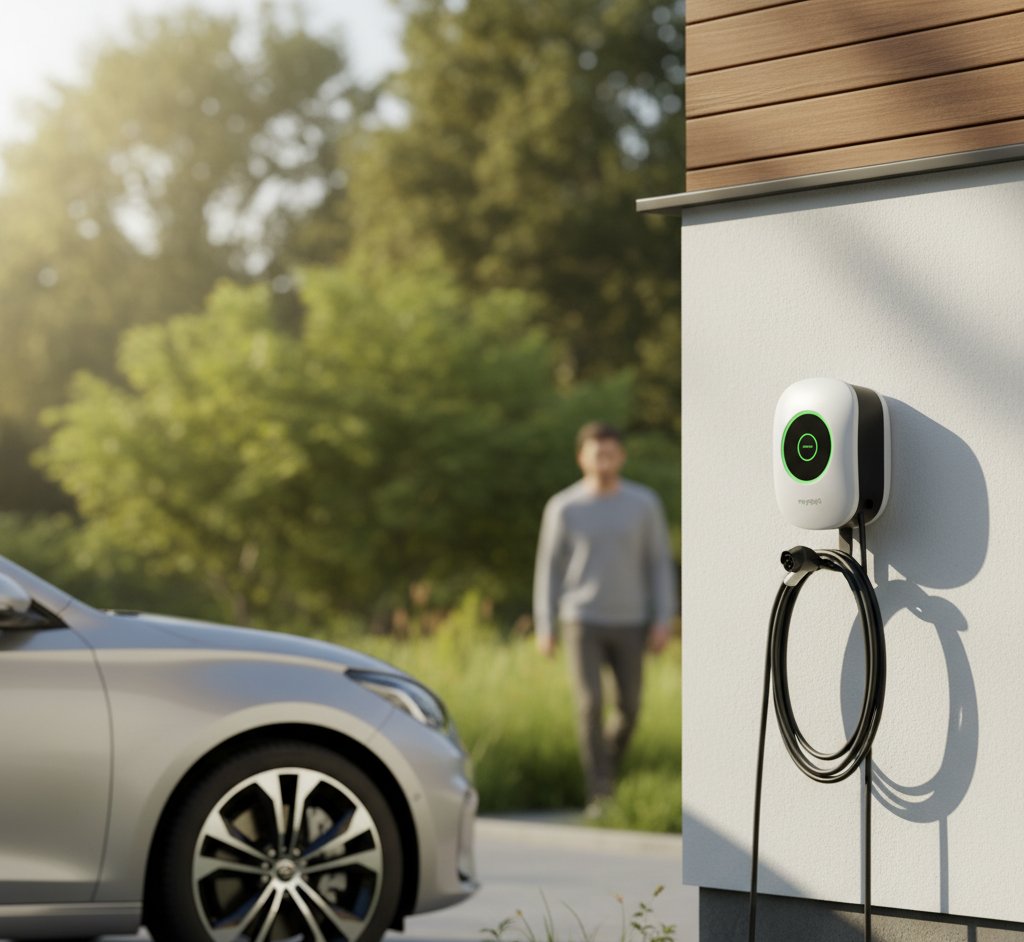
Myenergi Zappi: The Solar EV Charger
In-depth review of the Myenergi Zappi EV charger for UK solar homes — solar charging modes, installation, costs, and how it compares to standard chargers.


Switch to Octopus Energy
Get 50 credit when you switch. We get 50 too — win-win.
What does this mean for YOUR home?
Design your perfect solar setup in under 3 minutes. Free, no sign-up required.
Build Your Solar System