This page contains affiliate links. If you purchase through them we may earn a small commission at no extra cost to you. Learn more
Solar Immersion Heating: Using Surplus Power for Hot Water
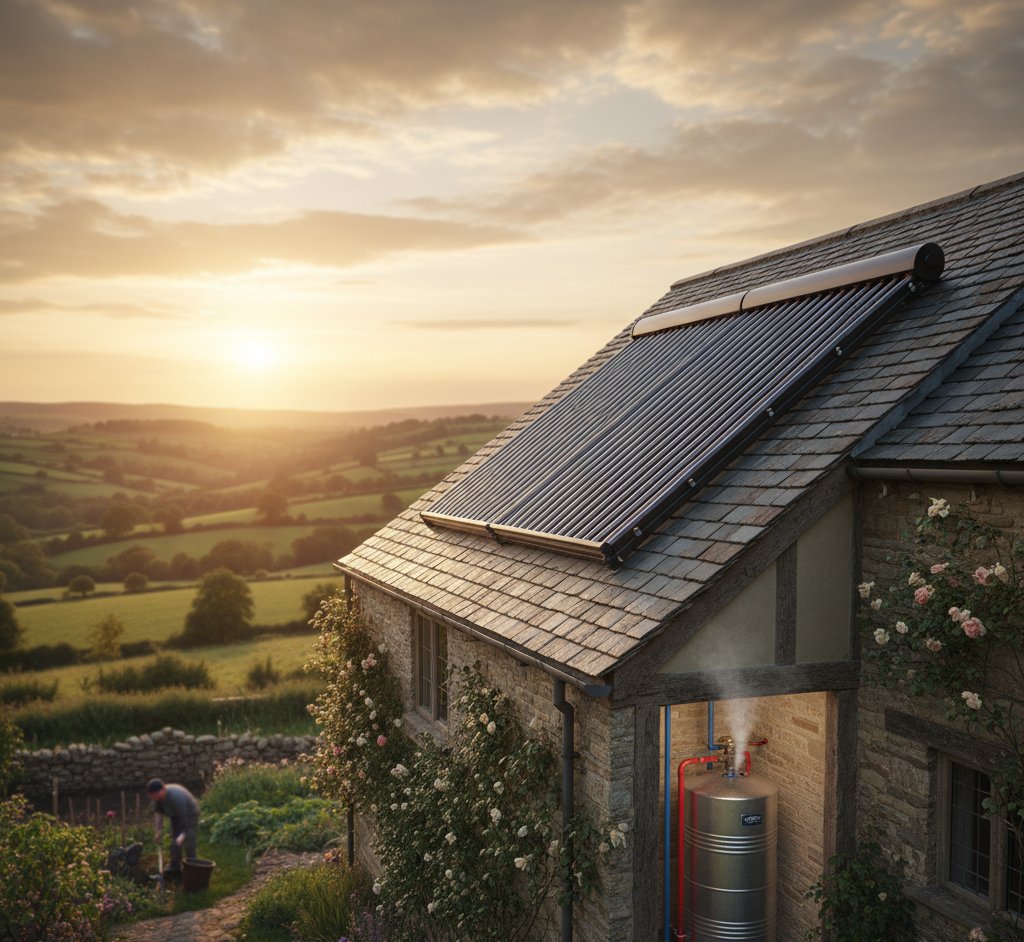
What a solar immersion diverter does
When your solar panels produce more electricity than your home is consuming, the surplus has to go somewhere. Without a diverter or battery, it flows to the grid, earning you a modest SEG rate — typically 12–15p per kWh in 2026.
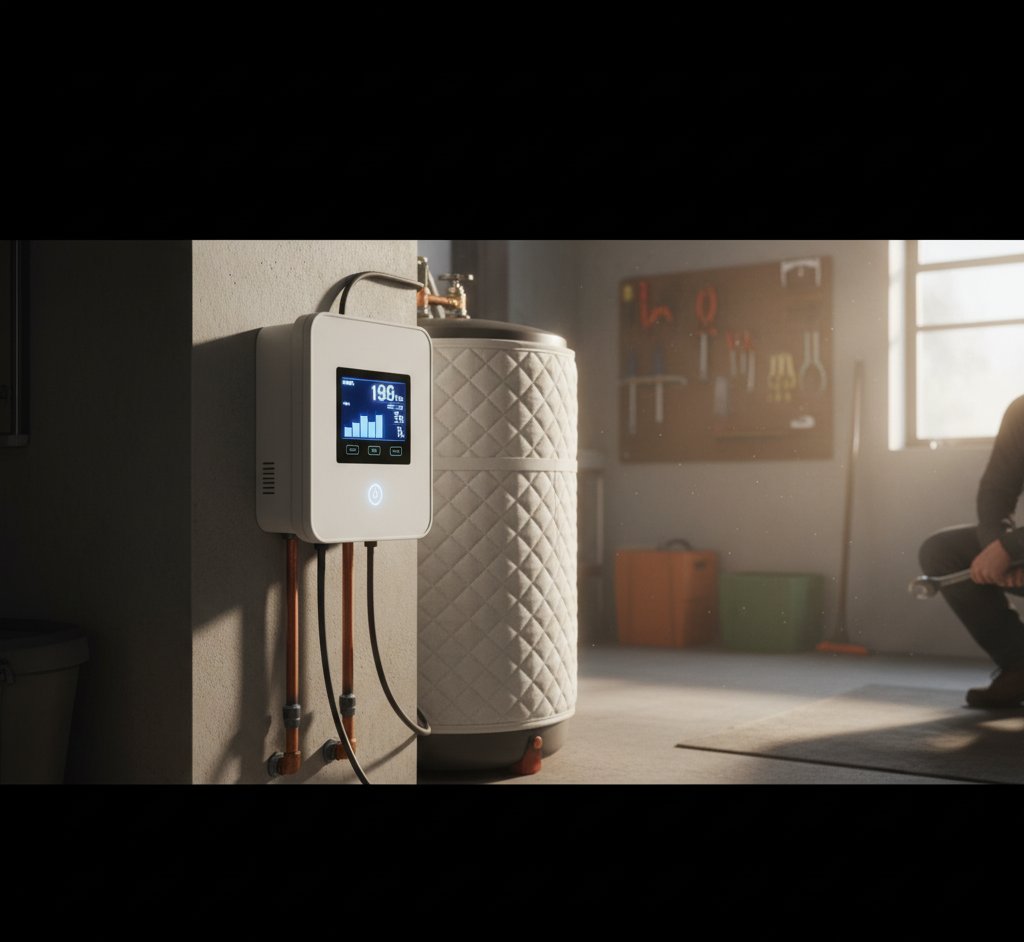
A solar immersion diverter monitors your generation and consumption in real time using a CT clamp on your meter tails. The moment it detects surplus power, it diverts that electricity to an immersion heater element in your hot water cylinder. The diversion is proportional — if you have 800W of surplus, the diverter sends exactly 800W to the heater, not the full 3kW the element can draw.
This is fundamentally different from a timer or thermostat switching on the immersion. The diverter modulates the power continuously, using only what would otherwise be exported.
Why hot water is the ideal dump load
Hot water storage is essentially a thermal battery. A typical 200-litre cylinder stores around 7–10 kWh of energy when heated from cold to 60°C. That's comparable to a small home battery, but the cylinder costs nothing extra if you already have one.
The beauty of hot water as a dump load is that:
- It's always useful. Every household needs hot water year-round.
- There's no degradation. Unlike lithium batteries, a hot water tank doesn't wear out from cycling.
- The conversion is 100% efficient. Electricity to heat via an immersion element is a perfect 1:1 conversion.
- It displaces gas. If your boiler normally heats the water, every kWh diverted to the immersion saves roughly 5–7p of gas, depending on your tariff.
Do you have the right setup?
You need a hot water cylinder
This is the deal-breaker. If you have a combi boiler — which heats water on demand with no storage tank — you cannot use a standard immersion diverter. There are workarounds (see our immersion with combi boiler guide), but they involve adding a cylinder, which changes the economics significantly.
If you have a system boiler, regular boiler, or heat pump with a cylinder, you're in good shape.
You need an immersion heater element
Most hot water cylinders already have one. Check for a 1¾-inch BSP boss on the side or top of your tank. If there's a thermostat cable and wiring running to it, you almost certainly have an immersion element installed. Some cylinders have two elements — one at the top for quick top-up heating and one at the bottom for full-tank heating. For solar, the bottom element is ideal because it heats the entire volume.
Your consumer unit needs a spare way
The diverter typically requires a dedicated circuit, usually a 16A or 20A radial to the immersion. If your consumer unit is full, you may need a small upgrade.
Check your immersion element rating
Most UK immersion elements are 3kW, which is perfect for solar diversion. However, if yours is an older 1kW or 2kW element, it will still work — the diverter just won't be able to absorb as much surplus at peak times. This rarely matters in practice since most residential systems export 1–2kW on average rather than sustained 3kW.
How much can you actually save?
The maths depends on three factors:
- How much surplus you generate. A 4kW system on a south-facing roof typically exports 1,500–2,200 kWh per year without a battery.
- How much hot water you use. The average UK household uses 3–5 kWh per day for hot water.
- Whether you have a battery. If you already have battery storage, your surplus available for diversion is smaller.
Without a battery
A well-sized system might divert 1,000–1,500 kWh per year to hot water. At a gas cost of 7p/kWh, that saves £70–£105 in gas. But you're also forgoing SEG income of around 12p/kWh, so diverting to displace gas heating (7p/kWh) actually costs you about 5p/kWh vs exporting. Diversion to hot water only makes financial sense if it's displacing electric immersion heating, in which case the savings are much higher.
If you're on an expensive electricity tariff and using the immersion on a timer, a diverter converting free solar to hot water saves you 24p+ per kWh. In that scenario, diverting 1,200 kWh saves around £290.
With a battery
The battery gets first priority in most setups. A diverter mops up what's left — usually less surplus, but still worthwhile. Expect to divert 500–800 kWh per year if you have a 5–10kWh battery.
Installation and costs
| Item | Typical cost |
|---|---|
| Solar diverter unit (e.g., Eddi, iBoost+) | £250–£500 |
| Installation labour | £100–£300 |
| CT clamp (if not included) | £20–£40 |
| New immersion element (if needed) | £30–£60 |
| Total installed | £350–£800 |
Installation is straightforward for a qualified electrician — typically 2–3 hours. The diverter mounts near your consumer unit, a CT clamp goes around your meter tails, and a cable runs to the immersion. No changes to your solar system are required.
Diverter vs battery: which first?
If you're choosing between the two, a battery offers more flexibility — it stores electricity for evening use, can provide backup power, and enables time-of-use tariff arbitrage. But it costs £3,000–£6,000+.
A diverter at £400–£700 has a much faster payback. Many households install a diverter first, then add a battery later. The two work well together.
Don't forget legionella protection
If your diverter heats the cylinder, you still need to ensure water reaches 60°C at least once a week to prevent legionella bacteria growth. Most diverters have a legionella cycle or boost function, but check that your installer configures this. You may need to keep your boiler's weekly hot water cycle active during winter months when solar surplus alone won't reach 60°C.
What about in winter?
Let's be honest: solar diverters deliver most of their value between April and September. In December and January, a 4kW system in the UK might only produce 3–5 kWh per day total, most of which you'll consume directly. Surplus available for diversion will be minimal.
This doesn't undermine the investment — the summer savings more than justify a £400 diverter — but don't expect year-round free hot water.
Is it worth it?
For homes with a hot water cylinder and a solar system of 3kW or larger, a diverter is one of the best-value additions you can make. The hardware is affordable, installation is simple, payback is fast, and the device should last 10–15 years with no maintenance.
If you're trying to maximise the value of every kWh your panels produce, a diverter is a no-brainer — especially if adding a battery isn't in the budget yet.
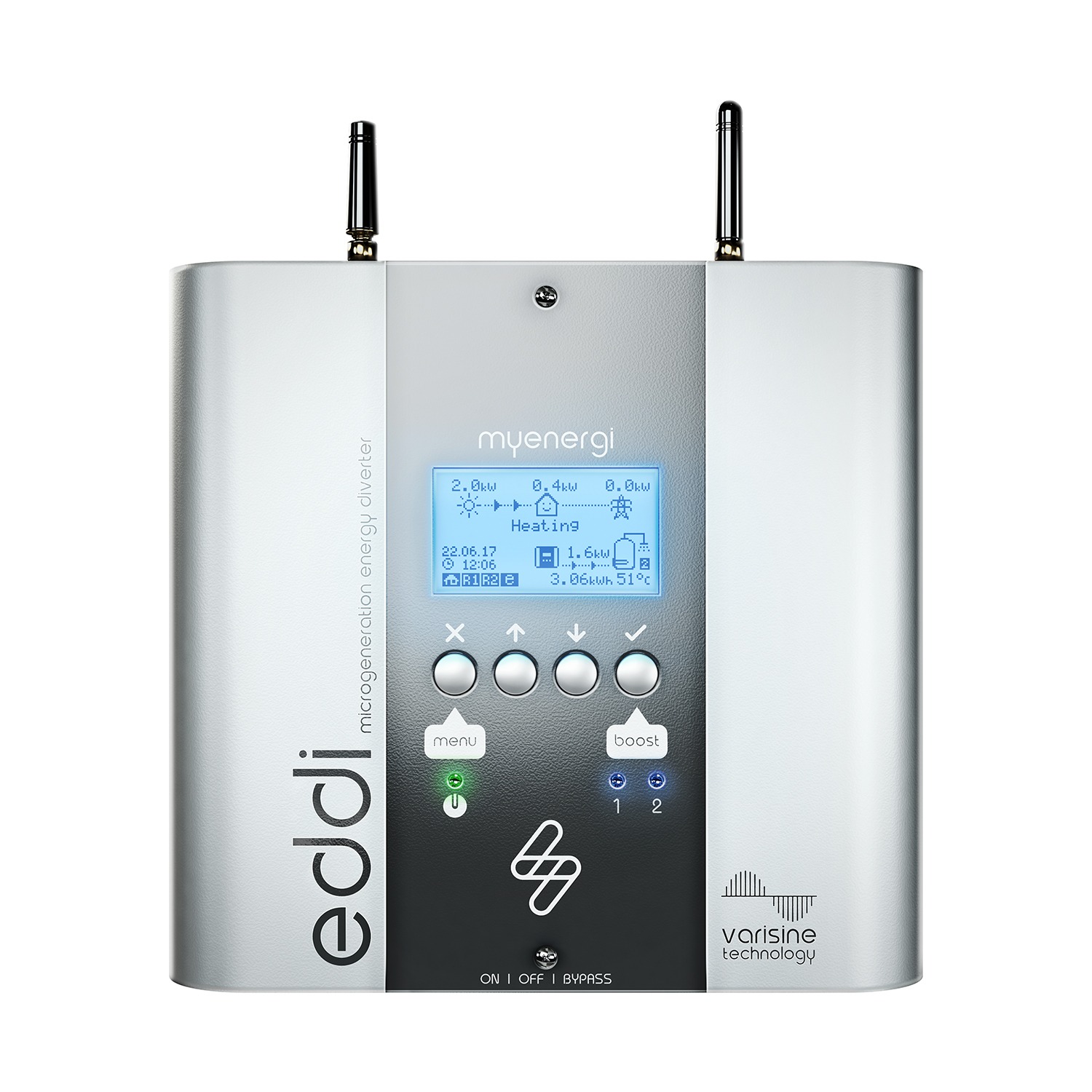
myenergi Eddi Solar Diverter
£1853000
power_divert,timed_boost
2
configurable
Affiliate link — we may earn a small commission at no extra cost to you
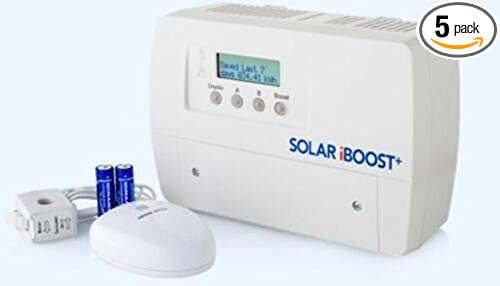
Solar iBoost+ Immersion Heater Controller
£1503000
auto_divert,manual_boost
1
true
Affiliate link — we may earn a small commission at no extra cost to you
Share this article

The UK's fastest boiler installation service — from quote to fitted in as little as 24 hours. Award-winning, Trustpilot rated, with no pushy salesmen.
Affiliate link — we may earn a small commission at no extra cost to you
Stay informed
Get free solar updates direct to your inbox
Related reading
Solar Inverters Explained: Types, Sizing, and Real-World Limits
String, micro, and hybrid inverters explained clearly — plus the critical G98/G99 threshold at 3.68kW and what it means for what you can run simultaneously.
Solar Battery Storage: Complete UK Guide 2026
Everything you need to know about adding battery storage to a UK solar installation — types, sizing, costs, and which products are worth considering in 2026.
iBoost vs Eddi vs Immersun: Solar Diverter Showdown
Comparing the iBoost+, myenergi Eddi, and Immersun solar diverters. Features, prices, and which suits your UK solar setup best in 2026.


Switch to Octopus Energy
Get 50 credit when you switch. We get 50 too — win-win.
What does this mean for YOUR home?
Design your perfect solar setup in under 3 minutes. Free, no sign-up required.
Build Your Solar System