This page contains affiliate links. If you purchase through them we may earn a small commission at no extra cost to you. Learn more
iBoost vs Eddi vs Immersun: Solar Diverter Showdown
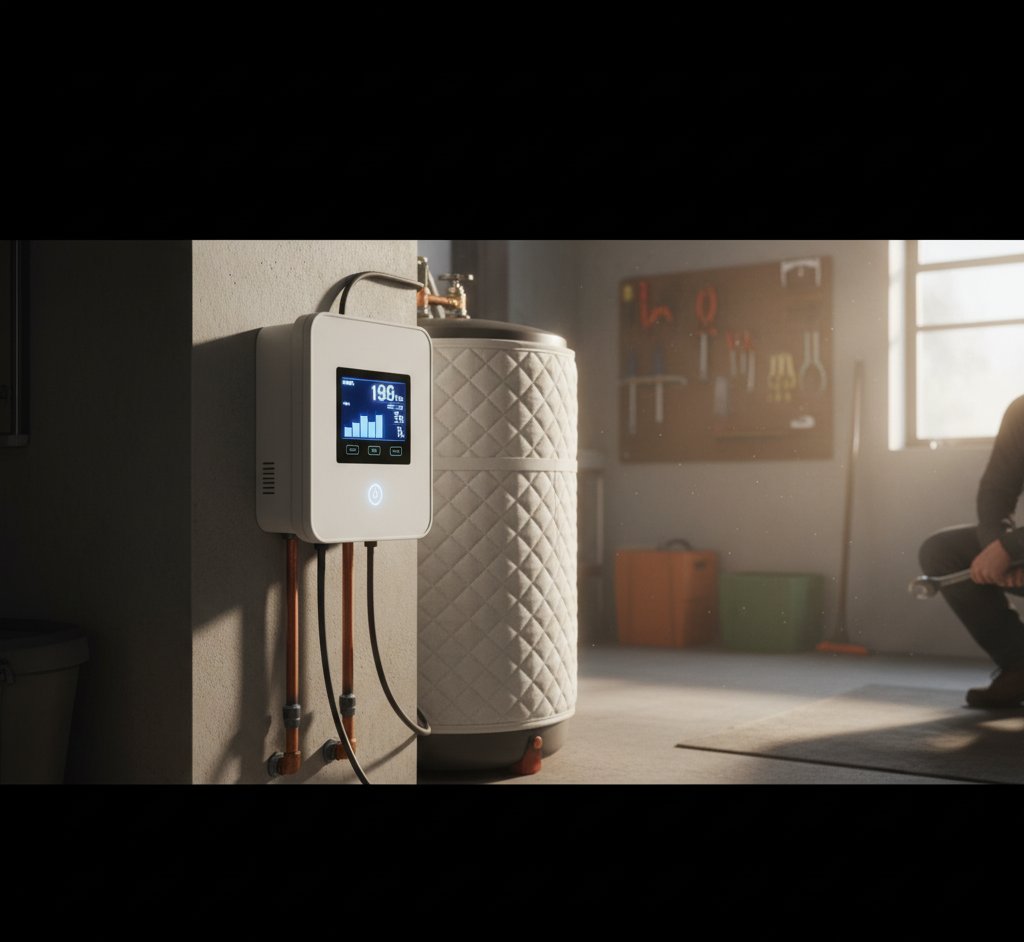
The three main contenders
The UK solar diverter market has consolidated around a few key products. Here's how the main options compare in 2026.
Solar iBoost+ by Marlec
The iBoost+ has been the best-selling solar diverter in the UK for years, largely because it's simple, reliable, and affordable. It does one thing well: diverts surplus solar electricity to your immersion heater.
Key features:
- Single immersion heater output (3kW max)
- Wireless sender unit (CT clamp) communicates with the receiver unit — no signal cable needed between them
- Simple LCD display showing diverted energy, savings, and status
- Boost button for manual top-up heating
- Legionella cycle (weekly automatic boost to 60°C+)
What it doesn't do:
- No second output for a second dump load
- No smart tariff integration
- No app or internet connectivity (though the iBoost+ Buddy wireless display is available separately)
- No integration with other smart home systems
The iBoost+ is the Toyota Corolla of diverters. It works, it's proven, and it doesn't try to be clever. For many households, that's exactly what's needed.
Typical price: £300–£400 installed
myenergi Eddi
The Eddi is myenergi's solar diverter, from the same company that makes the Zappi EV charger. It's a step up in both features and price.
Key features:
- Two heater outputs (called "Heater 1" and "Heater 2") — divert to immersion first, then underfloor heating, towel rails, or another load
- Priority scheduling between the two outputs
- Smart tariff integration via the myenergi app — can boost during cheap Agile/Go rate periods
- Full app monitoring and control via the myenergi hub
- Works as part of the myenergi ecosystem alongside Zappi and Libbi
- CT clamp or Harvi wireless sensor for generation/grid measurement
- Boost timers and schedules
What makes it different: The Eddi's killer feature is the dual output with priority control. You can heat water as priority one, then divert remaining surplus to an electric towel rail or storage heater as priority two. Combined with smart tariff awareness, it becomes genuinely intelligent about when and where to send energy.
Typical price: £400–£550 installed
Immersun
The original Immersun was one of the first solar diverters on the UK market. However, the company has had a turbulent history — ownership changes and periods of limited availability have made it harder to recommend for new purchases.
Key features:
- Proportional diversion to immersion heater
- Optional second output
- Basic monitoring display
- Proven hardware in thousands of UK installations
Current status: As of 2026, new Immersun units are difficult to source. If you have one already installed and working, it's fine to keep using it. For new purchases, the iBoost+ or Eddi are more practical choices with better ongoing support.
Head-to-head comparison
| Feature | iBoost+ | Eddi | Immersun |
|---|---|---|---|
| Price (installed) | £300–£400 | £400–£550 | £350–£450 (if available) |
| Heater outputs | 1 | 2 | 1–2 |
| Max power per output | 3kW | 3.68kW | 3kW |
| Smart tariff integration | No | Yes | No |
| App/internet monitoring | No (display only) | Yes (via hub) | Limited |
| Wireless CT option | Yes (built-in) | Yes (Harvi add-on) | No |
| Ecosystem integration | Standalone | Zappi, Libbi | Standalone |
| Legionella protection | Yes | Yes | Yes |
| Boost function | Manual button | App + scheduled | Manual |
| Availability (2026) | Widely available | Widely available | Limited |
Which should you choose?
Choose the iBoost+ if:
- You just want hot water diversion with minimal complexity
- You don't have or want a myenergi hub
- Budget is the main concern
- You're not on a smart/agile electricity tariff
- Your installer recommends it (many electricians know the iBoost+ inside out)
Choose the Eddi if:
- You want to divert to two different loads (e.g., immersion + towel rail)
- You're on Octopus Agile, Go, or another smart tariff and want the diverter to boost during cheap periods
- You already have or plan to get a Zappi or Libbi
- You want app-based monitoring and control
- You want to build a priority chain with multiple devices
Avoid the Immersun for new installs
Unless you find a specific deal, the limited availability and uncertain future support make the Immersun hard to recommend in 2026. The technology works, but the after-sales ecosystem matters.
The myenergi ecosystem advantage
If you have an EV and solar panels, myenergi's ecosystem is compelling. A Zappi charges your car with surplus solar, an Eddi diverts the rest to hot water, and the hub coordinates priority between them. This level of integrated surplus management is hard to replicate with standalone devices from different manufacturers.
Installation considerations
All three diverters require:
- A CT clamp on your meter tails — this measures the net import/export to determine surplus. Some systems use two CTs (grid + generation) for more accurate measurement.
- A dedicated circuit to the immersion — typically 16A or 20A on its own MCB in the consumer unit.
- The immersion element to be wired through the diverter — the diverter sits between the consumer unit and the immersion, controlling power delivery.
Installation takes 2–3 hours for a qualified electrician. If you already have a working immersion circuit, it's even simpler.
CT clamp placement matters
The CT clamp must go around the correct cable — the grid supply, not a circuit cable. If placed on the wrong cable, the diverter won't detect surplus correctly and may either not divert at all or, worse, pull power from the grid to heat water. Always have a qualified electrician install and commission the device.

Real-world performance
In practice, both the iBoost+ and Eddi deliver similar energy savings because the fundamental function is the same — proportional diversion of surplus to an immersion element. The difference is in the extras: monitoring granularity, smart tariff intelligence, and multi-load capability.
Users of both devices commonly report diverting 800–1,500 kWh per year to hot water from a 4kW solar system, depending on household consumption patterns, season, and whether a battery is also installed.
The Eddi's smart tariff integration can add extra value — boosting hot water at 7p/kWh during Agile plunge periods instead of using gas at similar rates. This isn't diversion of solar surplus; it's intelligent use of cheap grid electricity. It's a bonus feature that the iBoost+ can't match.
Both leading diverters are available here:
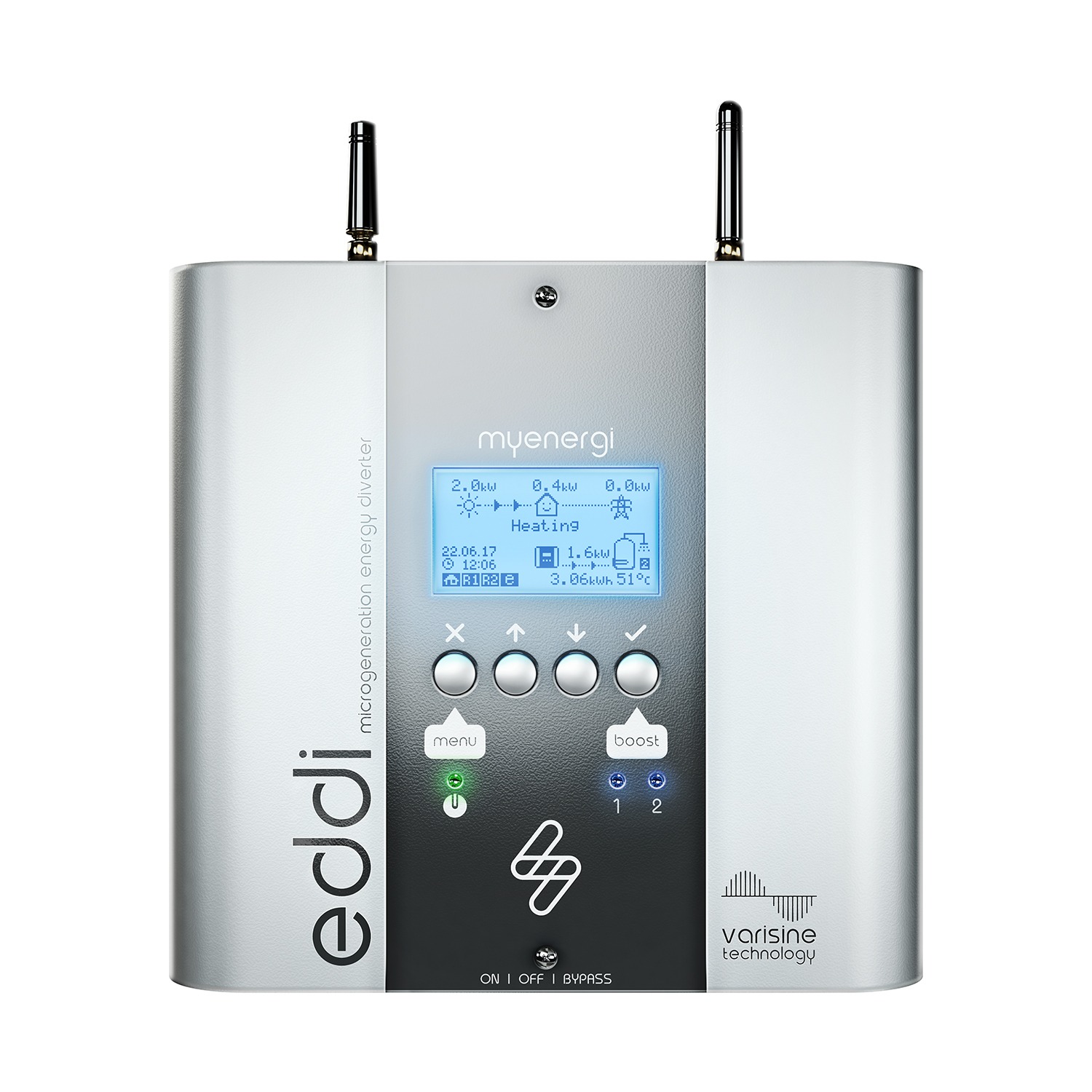
myenergi Eddi Solar Diverter
£1853000
power_divert,timed_boost
2
configurable
Affiliate link — we may earn a small commission at no extra cost to you
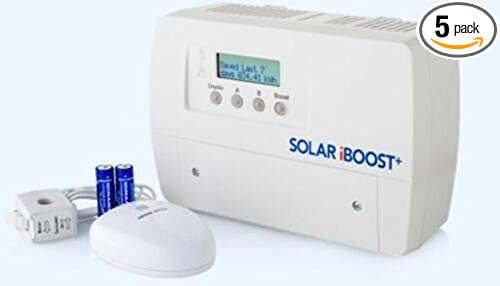
Solar iBoost+ Immersion Heater Controller
£1503000
auto_divert,manual_boost
1
true
Affiliate link — we may earn a small commission at no extra cost to you
The verdict
For most UK households adding a diverter to an existing solar system, the iBoost+ remains the sensible default. It's cheaper, simpler, and does the core job well.
If you're building a myenergi ecosystem, want smart tariff features, or need dual-output diversion, the Eddi justifies the premium. It's the more future-proof choice, especially as smart tariffs become the norm.
Both are solid products. Neither is a bad choice.
Share this article

The UK's fastest boiler installation service — from quote to fitted in as little as 24 hours. Award-winning, Trustpilot rated, with no pushy salesmen.
Affiliate link — we may earn a small commission at no extra cost to you
Stay informed
Get free solar updates direct to your inbox
Related reading

Solar Immersion Heating: Using Surplus Power for Hot Water
How solar immersion diverters send surplus electricity to your hot water tank, cutting gas bills. UK costs, setup requirements, and realistic savings.
Solar Inverters Explained: Types, Sizing, and Real-World Limits
String, micro, and hybrid inverters explained clearly — plus the critical G98/G99 threshold at 3.68kW and what it means for what you can run simultaneously.
Diverter Priority Chains: Optimising Surplus Solar
How to set up a priority chain for surplus solar energy — battery, hot water, EV charging, and more. Maximise self-consumption with smart load ordering.

Switch to Octopus Energy
Get 50 credit when you switch. We get 50 too — win-win.
What does this mean for YOUR home?
Design your perfect solar setup in under 3 minutes. Free, no sign-up required.
Build Your Solar System